
For a quicker response, please send all inquiries
via info@canfloor.com or
text to
416-735-0075.
| Monday - Friday | 10:00 am - 7:00 pm |
| Saturday & Sunday | 10:30 am - 4:00 pm |
The biggest mistake buyers make with brazilian cherry flooring pros and cons is treating hardness like the whole story. Jatoba can be an excellent floor if you want a rich, dramatic hardwood and accept that it will darken with light exposure, but it is not the right fit for every room or every design style.
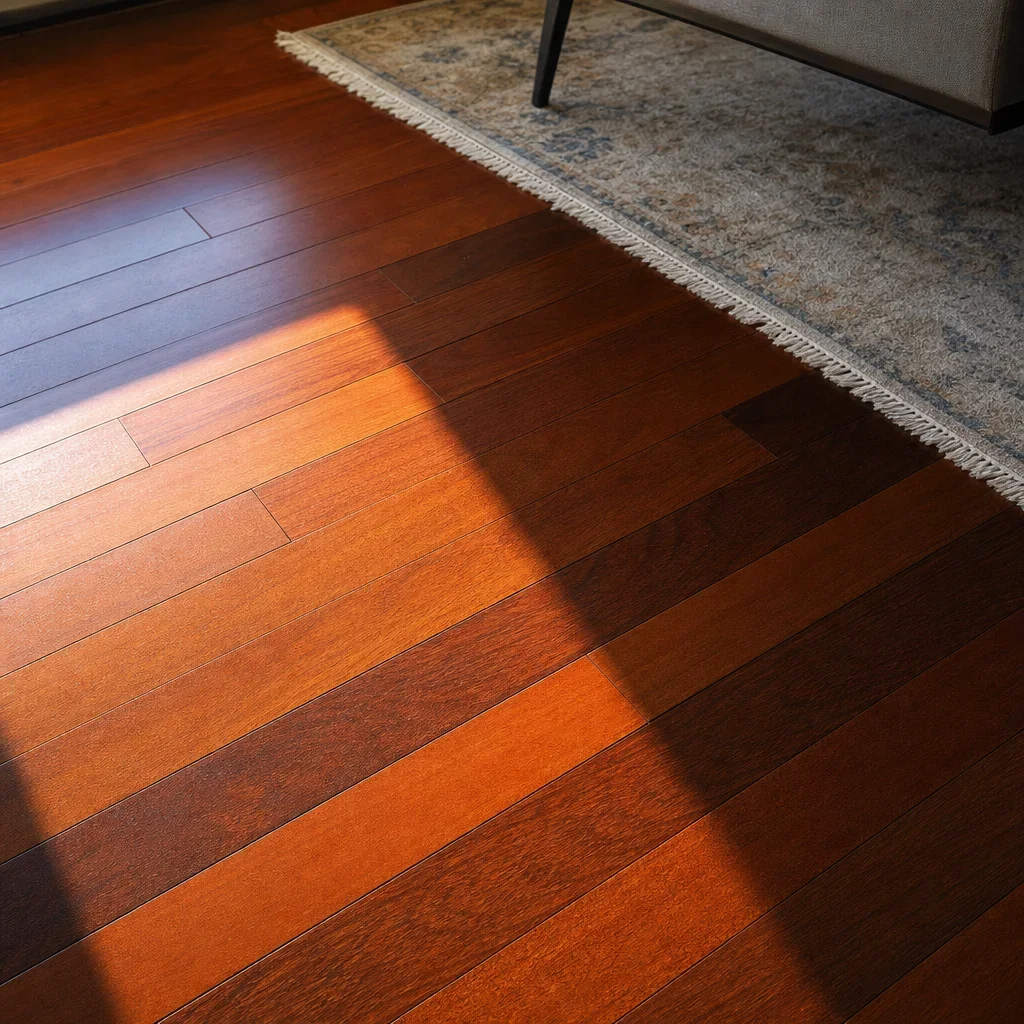
Brazilian cherry hardwood flooring pros and cons come down to one tradeoff: you get a very hard, striking floor, but you also get a strong red-brown look that deepens over time. Jatoba is generally chosen for durability, warmth, and visual impact, not for a pale or minimalist look.
Brazilian cherry's main advantages are high dent resistance, long-term refinishing potential in the right product, and a premium natural hardwood appearance. Its main drawbacks are noticeable colour change from UV exposure, a heavier visual feel in small or dim spaces, and premium pricing compared with entry-level wood and synthetic floors.
Brazilian cherry is usually best for living rooms, dining rooms, larger bedrooms, and main-floor spaces where buyers want a statement floor. It is usually a weaker fit for bathrooms, laundry rooms, and any area with repeated standing water or unstable humidity.
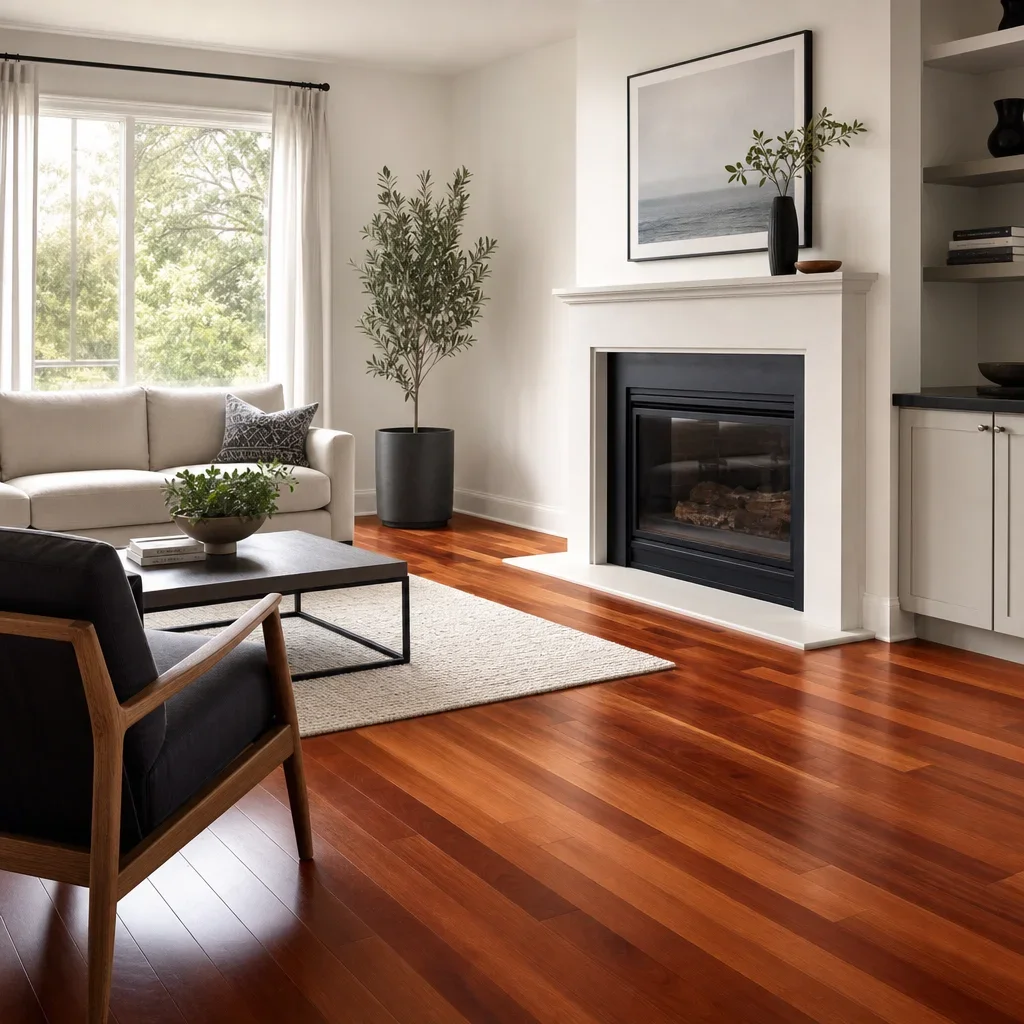
Brazilian cherry wood, also sold as Jatoba flooring, usually shows warm red-brown to reddish tones with visible variation from board to board. That variation is natural hardwood character, and the exact shade changes with grade, cut, finish, and light exposure.
Buyers usually choose Brazilian Cherry hardwood flooring in Canada because it looks rich and substantial. It suits traditional homes, formal interiors, and updated spaces that use simpler wall colours and less competing wood tone.
Brazilian cherry can still work in a modern home, but it needs balance. Cleaner furniture lines, lighter walls, lower-sheen finishes, and fewer orange or yellow companion tones help the floor look intentional instead of dated.
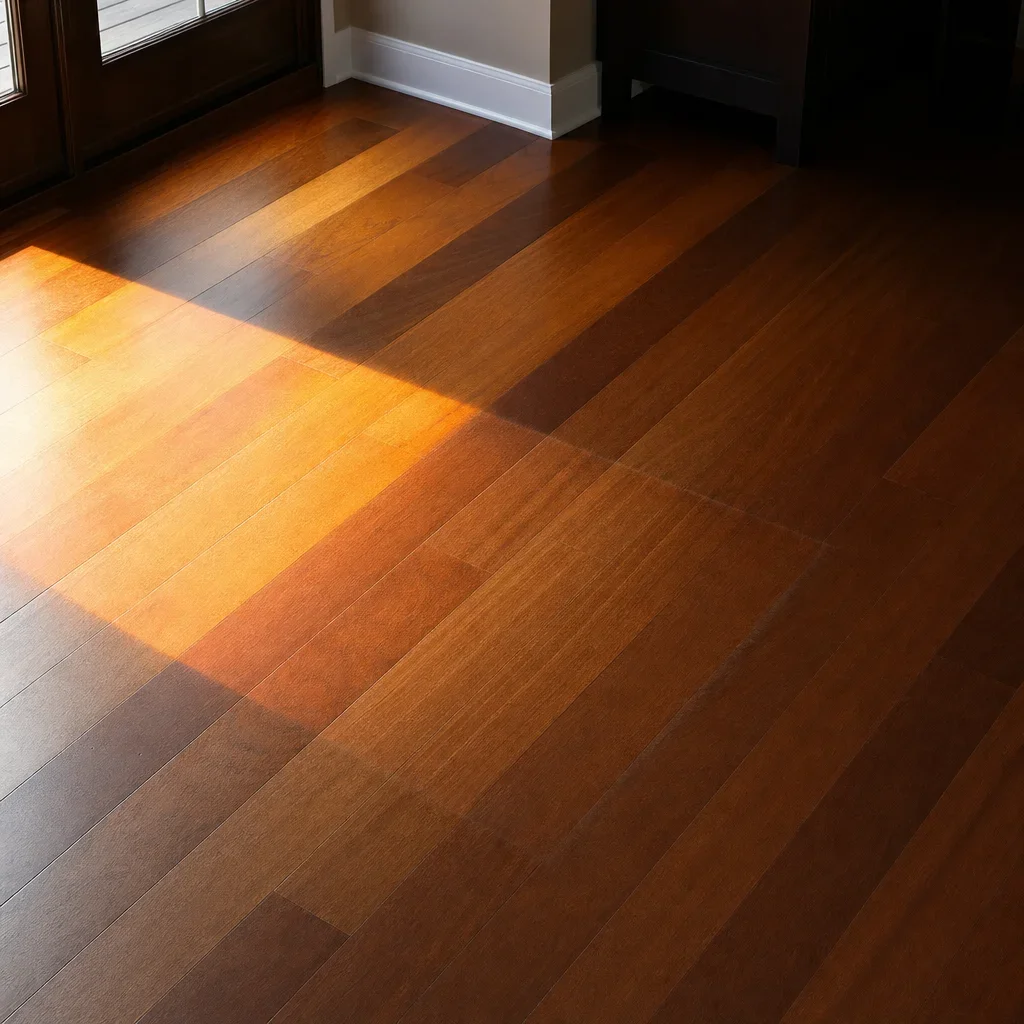
Yes, Brazilian cherry flooring does get darker over time because UV light and normal oxidation deepen its colour. This species is known for a more noticeable colour shift than many common domestic hardwoods.
The colour change is usually most obvious where sunlight hits open areas while rugs and furniture block exposure. That creates temporary contrast lines, so uncovered boards may deepen faster than protected sections.
You can slow uneven darkening by rotating rugs, moving furniture periodically, and using window coverings in strong sun. You can reduce the effect, but you cannot stop natural colour change completely in a real wood floor.
Lower-sheen finishes can make the floor's maturing colour feel softer and less sharp in reflected light. Buyers who love the lighter, fresher look of new Brazilian cherry should be honest with themselves before buying, because the tone will settle deeper with time.
Brazilian cherry is not inherently outdated, but it is more opinionated than light oak. Current broad preferences lean lighter and more matte, while Brazilian cherry leans warmer, darker, and more traditional.
A floor becomes dated faster from bad pairings than from species alone. Heavy red walls, yellow-beige paint, glossy finishes, and too many competing warm woods are what usually push Brazilian cherry in the wrong direction.
You can make cherry wood floors look modern with warm whites, soft greiges, muted taupes, restrained black accents, and matte or satin finishes. Simpler trim colours and lighter rugs also help reduce the floor's visual weight.
Brazilian cherry can feel heavy in apartments, small rooms, or low-light spaces because darker floors absorb more light visually. In those rooms, lighter walls, better lighting, and less bulky furniture matter more than the species name itself.
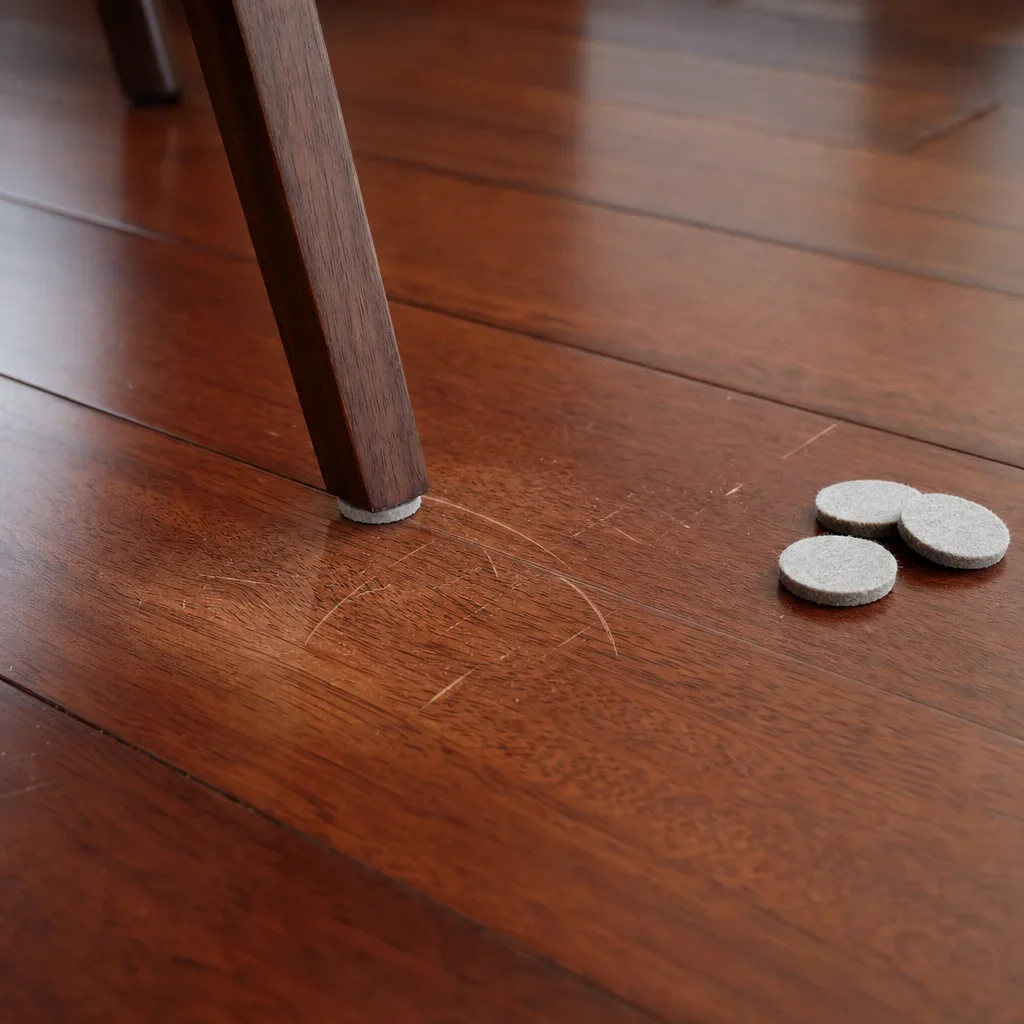
Brazilian cherry is harder than oak on the Janka hardness scale, so it generally resists dents better than red oak and many other domestic hardwoods. Hardness helps with indentation resistance, but it does not make the floor scratch-proof.
Scratches can still show on Brazilian cherry because rich colour and reflected light make surface marks easier to see. Pet nails, grit at entrances, chair movement, and higher-gloss finishes all increase visible scratching.
Dents, scratches, and scuffs are different problems. A harder species helps more with dents from dropped objects or furniture pressure, while scratches still depend heavily on finish, sheen, household habits, and maintenance.
Brazilian cherry vs oak is really a choice between drama and flexibility. Oak is usually easier to style and easier to live with visually, while Brazilian cherry feels richer and harder but less forgiving if you dislike red undertones.
Brazilian cherry vs walnut usually comes down to durability versus softness and colour depth. Walnut tends to look more muted and dark-chocolate, but it is softer underfoot than Brazilian cherry.
Brazilian cherry vs Brazilian walnut is a different comparison again. Brazilian walnut is usually darker, heavier-looking, and often even more extreme visually, so buyers should compare samples side by side instead of choosing by species reputation alone.
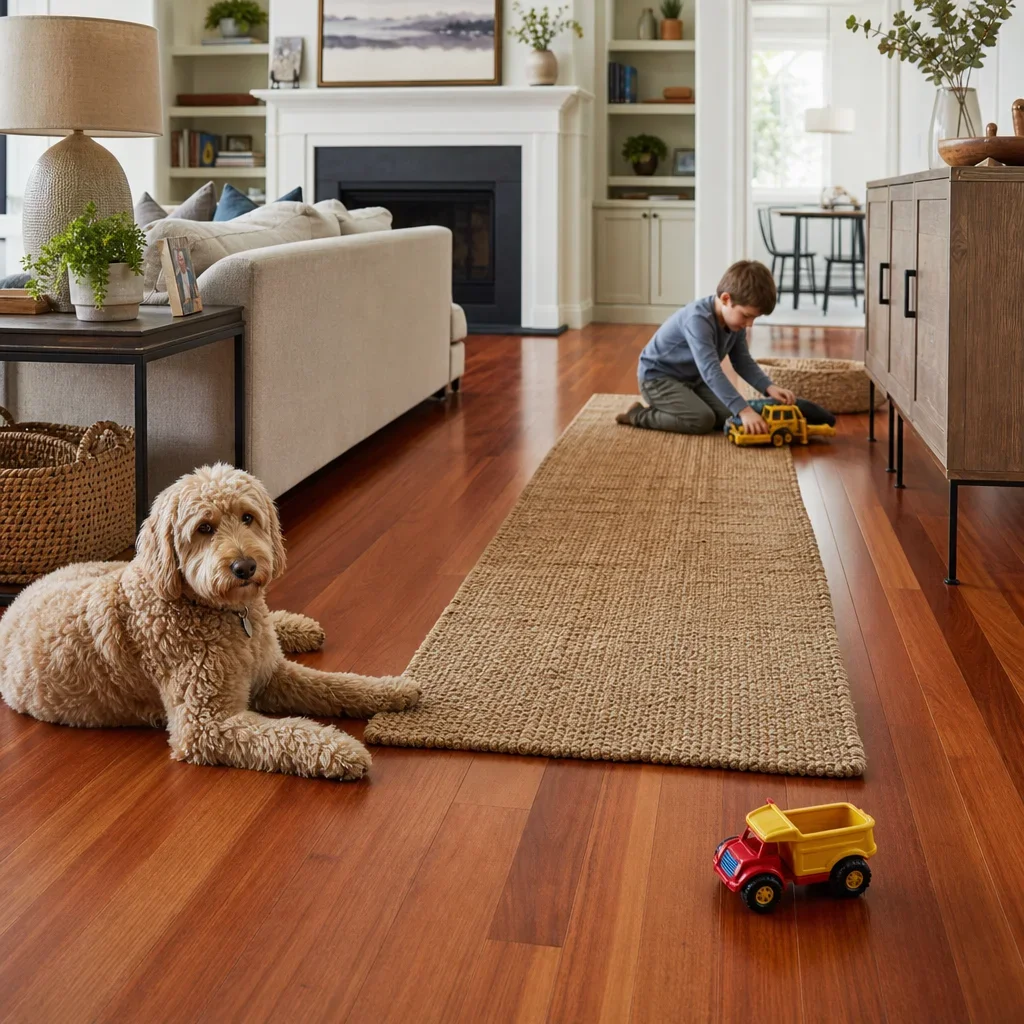
Brazilian cherry is a solid choice for busy households if your priority is dent resistance and long wear from a real hardwood. It handles toy traffic, chair use, and normal family movement well when grit is controlled and furniture has felt protection.
Homes with pets need realistic expectations. Does Brazilian cherry scratch easily? Not compared with softer woods, but claw scratches can still show because visible scratching is about finish and colour contrast as much as hardness.
Families with children usually do well with Brazilian cherry when they choose a lower-sheen finish and use runners or rugs in heavy traffic lanes. Satin and matte surfaces usually hide dust and fine marks better than semi-gloss or gloss.
Hard-surface flooring can be easier to clean than carpet because it does not trap the same level of surface debris in fibres. That said, sound transfer is higher with dense wood, so condos and upstairs rooms may need underlayment and local rule checks.
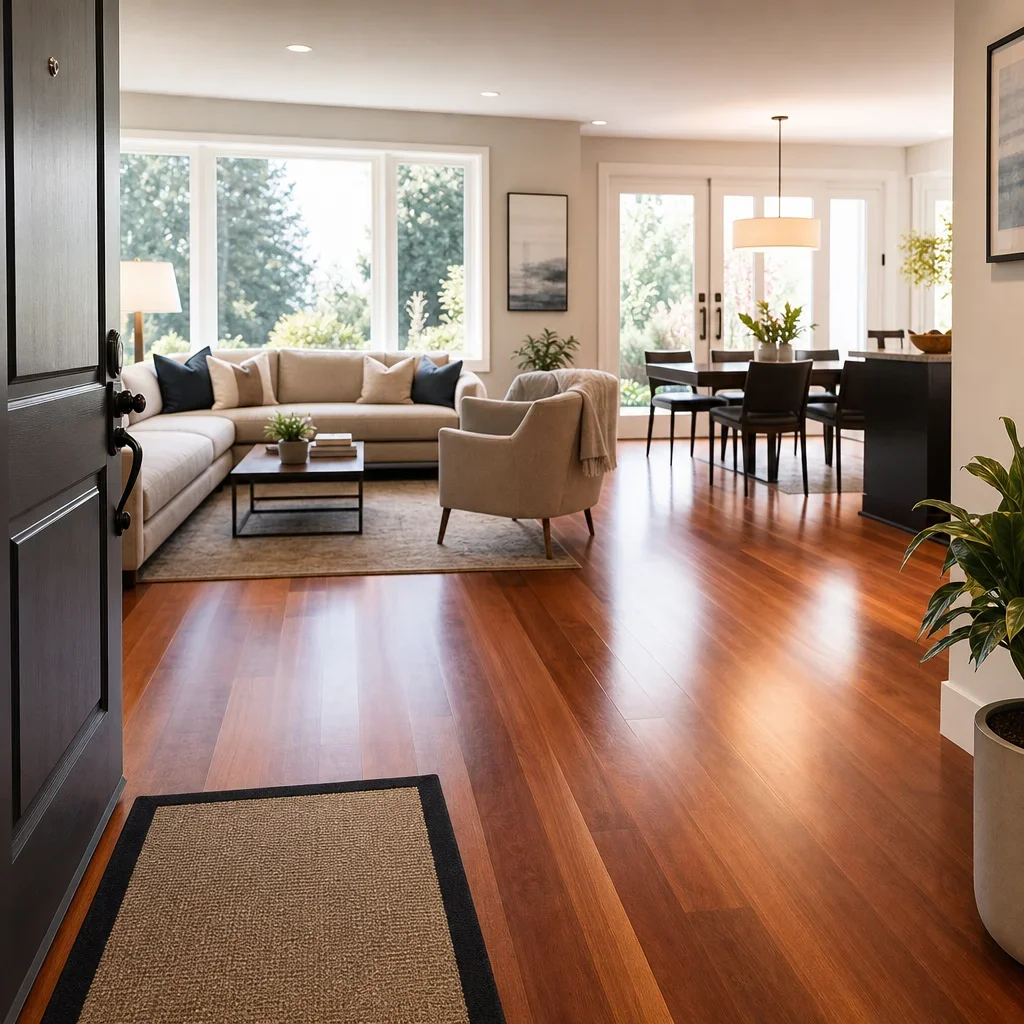
Brazilian cherry works best in living rooms, dining rooms, hallways, and larger bedrooms where its depth and colour can anchor the space. Entryways can also work well if mats catch grit and wet shoes before they reach the wood.
Kitchens are possible if spills are wiped promptly and indoor conditions stay stable. The tradeoff is simple: real hardwood gives a better natural look, but repeated water exposure always raises the risk of swelling, staining, or finish wear.
Bathrooms and laundry rooms are generally poor choices for solid hardwood because repeated moisture is the enemy of real wood. If the room sees regular splashing or damp air, buyers should look hard at other flooring types.
Basements below grade are usually a weak fit for solid Brazilian cherry because concrete and seasonal moisture movement create more risk. Engineered hardwood, vinyl, or laminate often makes more sense there depending on the site conditions and product approval.
Condos and apartments need one extra check before installation: building acoustic rules and approved underlayment details. Those requirements are building-specific, so they need verification before you order material or plan the install.
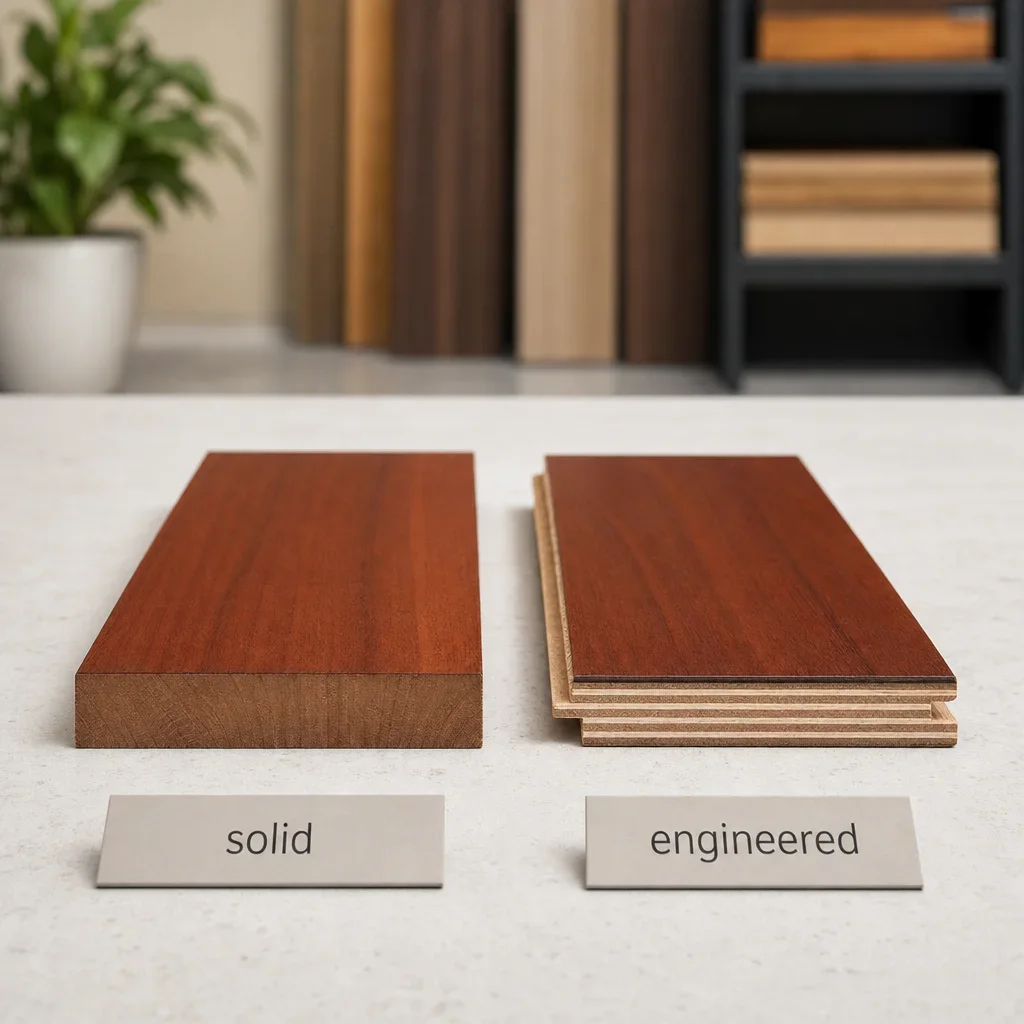
The core difference is simple: solid Brazilian cherry is one piece of hardwood, while engineered Brazilian cherry uses a real wood wear layer over a more stable core. That makes solid vs engineered Brazilian cherry flooring a question about location, subfloor, and moisture stability, not just appearance.
Solid Brazilian cherry usually makes more sense above grade on wood subfloors when buyers want a traditional nail-down floor and maximum future refinishing potential. It is the classic choice for long-term ownership in stable indoor conditions.
Engineered Brazilian cherry usually makes more sense over concrete, in condos, in rooms with more humidity variation, and in some below-grade situations if the product is approved for that use. It can also be the better path for radiant heat when the manufacturer specifically allows it.
Use this decision matrix when choosing between the two:
| Situation | Better fit | Why |
|---|---|---|
| Above-grade room with plywood subfloor | Solid | Traditional installation and better refinishing potential |
| Concrete subfloor | Engineered | Greater dimensional stability over concrete |
| Condo or apartment | Engineered | More installation flexibility and easier acoustic planning |
| Below-grade area | Engineered if approved | Better suited to moisture variation than solid |
| Radiant heat | Engineered if manufacturer-approved | More stable construction for temperature change |
| Buyer wants maximum future sanding flexibility | Solid | Thicker real wood structure |
The right answer depends on the product, the subfloor, and the room. We would not treat solid and engineered as interchangeable just because the top colour looks similar.
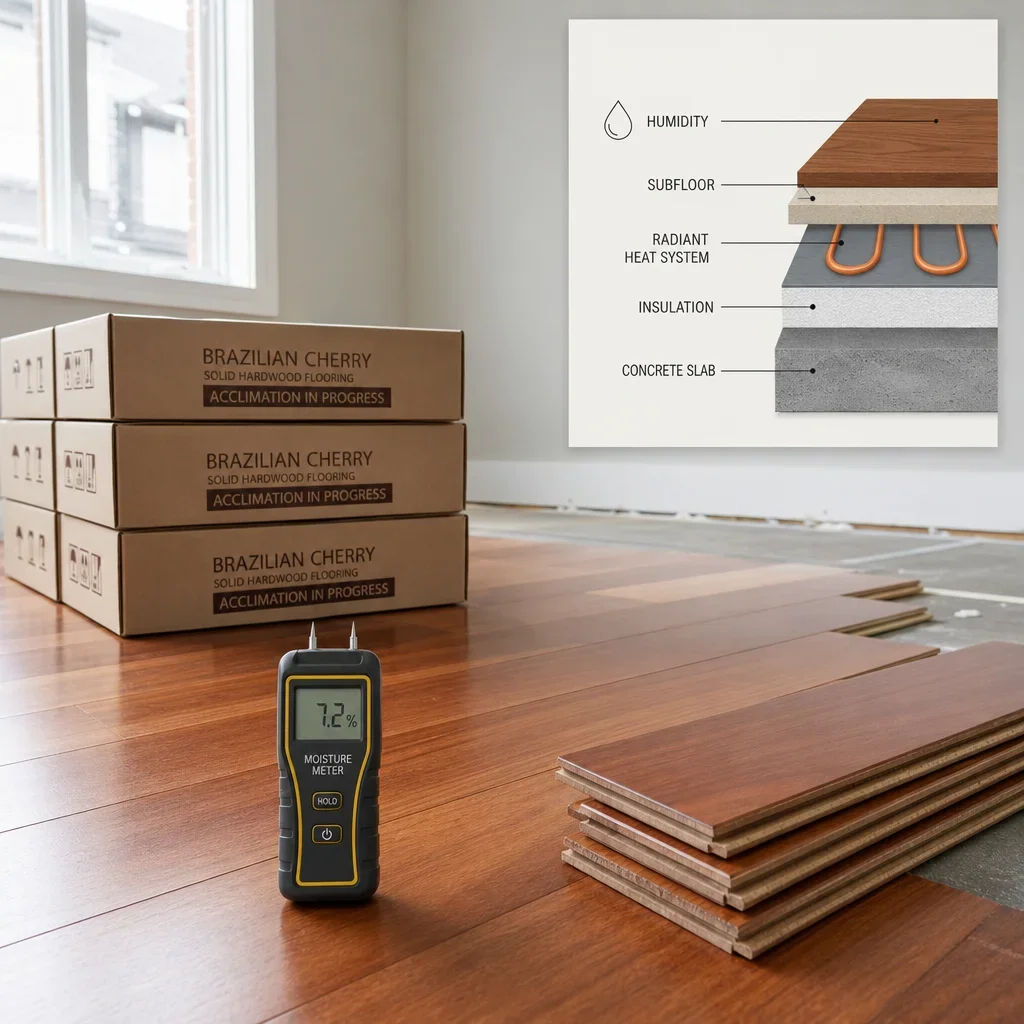
Humidity affects Brazilian cherry the same way it affects any real wood floor: boards expand with higher moisture and shrink when the home gets too dry. That movement is why proper site testing and installation planning matter as much as the species itself.
Acclimation is product-specific, not one rule for every carton. Solid and engineered boards can have different manufacturer instructions, and installers should follow the product requirements plus subfloor moisture testing before installation.
Radiant heat can work with some engineered Brazilian cherry products, but only when the manufacturer approves that exact floor for that system. Solid hardwood is usually less forgiving over radiant heat because dimensional movement is the bigger risk.
Professional installation matters more with a species like Jatoba because it is dense, less forgiving to poor prep, and not the wood you want to force onto an unverified site. Moisture meter readings, flatness checks, and subfloor prep are not optional details.
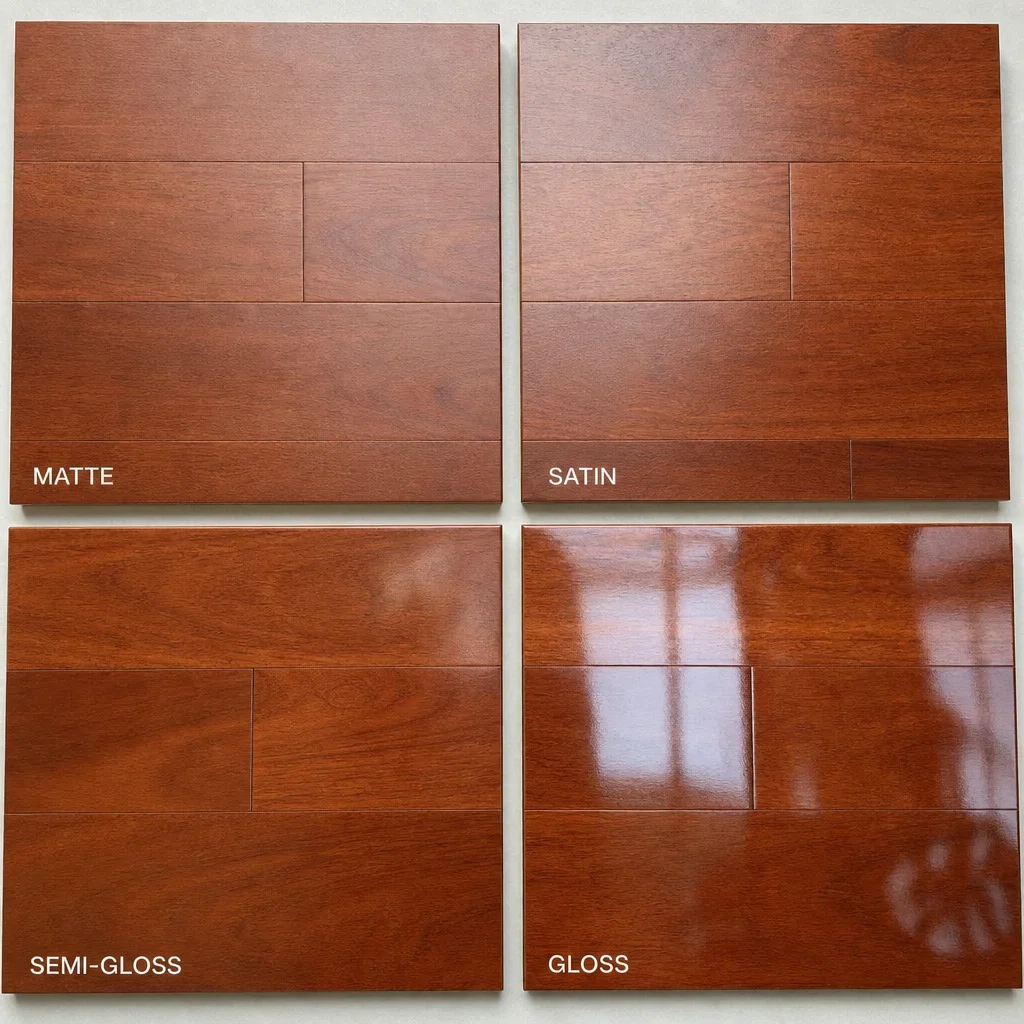
Lower sheen is usually the safer finish choice for Brazilian cherry because it makes the wood feel more current and shows fewer fine marks. Matte and satin finishes usually hide dust, hair, and light scratching better than semi-gloss or gloss.
Higher sheen gives Brazilian cherry more drama, but it also highlights every small surface issue. On a deep red-brown floor, reflected light can make footprints, dust, and hairline marks easier to notice.
Prefinished hardwood usually offers a factory-applied finish system and faster installation flow, while site-finished wood gives more control over final sheen and appearance. The better choice depends on the product line, repair expectations, and the look you want in the room.
Use this finish matrix as a practical guide:
| Finish option | Look | Scratch visibility | Dust visibility | Best for |
|---|---|---|---|---|
| Matte | Soft, updated, less reflective | Lower | Lower | Modern interiors, pets, busy homes |
| Satin | Balanced, classic | Moderate to lower | Moderate | Most households |
| Semi-gloss | Richer, brighter | Higher | Higher | Formal rooms with lighter wear |
| Gloss | Very reflective, dramatic | Highest | Highest | Buyers prioritizing shine over maintenance ease |
If you want Brazilian cherry to feel less traditional, start by lowering the sheen before you start changing wall colours or furniture. Finish choice has a bigger effect than many buyers expect.
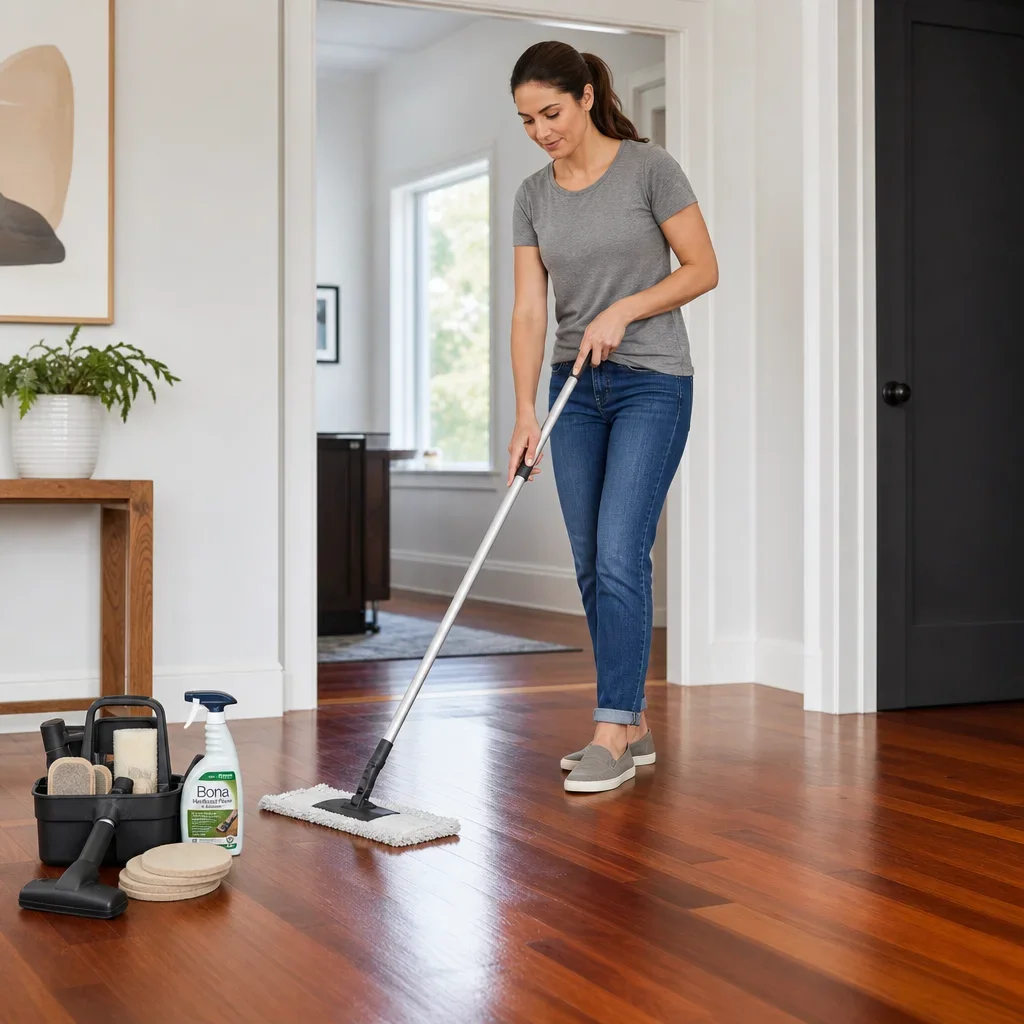
Brazilian cherry hardwood flooring should be cleaned with dry dust mopping or vacuuming on a hardwood-safe setting, plus prompt spill cleanup. Manufacturer-approved hardwood cleaners are the safe choice because harsh chemicals and excess water can damage both the finish and the wood.
Steam, soaking wet mops, abrasive pads, and the wrong wax products are the common mistakes that shorten a wood floor's good looks. Real hardwood likes controlled cleaning, not aggressive cleaning.
Can Brazilian cherry flooring be refinished? Solid flooring usually can be refinished, while engineered refinishing depends on wear layer thickness and product construction. That means refinishing potential should be confirmed product by product before you buy.
Brazilian cherry hardwood flooring refinishing can refresh worn areas and update the sheen, but it will not turn the species into pale white oak. The wood's natural tone still comes through, even after sanding and a finish update.
Use this maintenance checklist to keep the floor looking better longer:
Brazilian cherry is usually priced as a premium hardwood, so the answer to Is Brazilian Cherry wood expensive is usually yes relative to entry-level domestic hardwood, laminate, and many vinyl floors. The real comparison should be total installed value, not just the board price.
We cannot publish a verified current Toronto range for Brazilian Cherry Hardwood flooring price or Brazilian cherry hardwood floors price per square foot without live supplier or showroom data. Material cost changes with stock status, board width, grade, solid versus engineered construction, finish type, and whether the product is stocked in Canada or special order.
The installed total usually includes material, underlayment where needed, subfloor prep, trims, transitions, removal and disposal, stairs if applicable, and labour. Stairs are usually priced separately because installation detail and labour time are much higher than for open floor areas.
If you are comparing Brazilian Cherry hardwood flooring Canada suppliers, compare the full quote line by line. A cheaper material number can lose its edge fast if the quote excludes prep, trims, delivery, or installation details.
No species wins on every priority, so the right comparison is about tradeoffs. Oak is usually the most versatile, walnut is softer and darker, mahogany has its own warm character, and Brazilian walnut pushes even further toward density and darkness.
Use this side-by-side comparison table to choose by priority:
| Species | Overall look | Dent resistance | Scratch visibility | Colour change over time | Style versatility | Typical price tier |
|---|---|---|---|---|---|---|
| Brazilian cherry | Rich red-brown, bold grain | High | Moderate to high depending on sheen | Noticeable | Moderate | Premium |
| Oak | Neutral to warm, more flexible | Moderate | Moderate | Usually less dramatic | High | Mid to premium |
| Walnut | Deep brown, softer character | Lower | Moderate | Moderate | High for upscale interiors | Premium |
| Mahogany | Warm reddish-brown, elegant | Moderate | Moderate | Moderate | Moderate | Premium |
| Brazilian walnut | Dark, dense, dramatic | Very high | Moderate to high in reflected light | Less red shift visually | Lower to moderate | Premium to high premium |
Brazilian cherry vs oak is the easiest practical comparison because oak fits more homes and design directions. If you want fewer styling constraints, oak is usually safer; if you want drama and hardness, Brazilian cherry has a stronger personality.
Brazilian cherry vs walnut usually comes down to whether you want more dent resistance or a softer, darker luxury look. Brazilian cherry is the tougher floor; walnut is usually the calmer visual.
Brazilian cherry vs Brazilian walnut is a choice between red warmth and deeper brown intensity. Neither is subtle, so both should be selected from full-size samples under the room's actual lighting.
Warm whites, soft greiges, muted taupes, and some calm green-greys usually work well with Brazilian cherry floors. Those colours help balance the floor's warmth without making the room feel overly red or orange.
Paint colours to use more carefully are strong yellow beiges, orange-tinted creams, and very red accent walls. Those pairings can exaggerate the wood's undertone and make the room feel more dated.
To make Brazilian cherry look lighter and more current, keep trim clean, use lighter rugs, and avoid cabinets or furniture that match the floor too closely. Contrast usually looks better than a full room of similar red-brown wood.
Brazilian cherry is a good choice for flooring if you want a rich statement hardwood, strong dent resistance, and the long-term feel of real wood. It makes less sense if you want a very light trend-driven look, the easiest scratch camouflage, or better tolerance for wet areas.
Buy Brazilian cherry for the look it becomes, not just the look it has on day one. If you will resent darkening, red undertones, or the extra visual weight in a small room, another species will probably suit you better.
A practical next step is to compare full samples of Jatoba, oak, walnut, and engineered alternatives under your room lighting. If you are planning a supply-and-install project in the GTA, bring room photos or plans to a North York showroom so you can compare colour, sheen, and room fit side by side.
The main disadvantages are visible colour darkening with UV exposure, a heavier look in small or dark rooms, and premium hardwood pricing. Scratches can still show, especially with glossy finishes and strong side lighting.
Yes, Brazilian cherry is good for flooring when you want a hard, durable, natural wood floor and you are comfortable with its strong colour personality. It is a better fit for dry living spaces than for wet rooms.
No, but they are less neutral than today's lighter oak styles. They look best when paired with simpler wall colours, less yellow décor, and lower-sheen finishes.
It resists dents well because it is a hard wood, but visible scratching can still happen. Finish sheen, pet nails, grit, and reflected light matter as much as species hardness.
Yes, Brazilian cherry is generally harder than oak. That usually means better dent resistance, not immunity from scratching.
Yes. Light exposure and normal oxidation deepen the colour, and uncovered areas usually change faster than boards kept under rugs or furniture.
Solid Brazilian cherry usually can be refinished. Engineered products may or may not be, depending on wear layer thickness and construction.
Kitchens can work with quick spill cleanup and stable indoor conditions. Basements are usually better suited to engineered products or other flooring types, especially below grade.
Choose solid more often for above-grade wood subfloors and long-term refinishing potential. Choose engineered more often for concrete, condos, humidity variation, and approved radiant heat installs.
Warm whites, soft greiges, muted taupes, and restrained green-greys usually work best. Strong yellow or red walls tend to make the floor feel heavier and older.