
For a quicker response, please send all inquiries
via info@canfloor.com or
text to
416-735-0075.
| Monday - Friday | 10:00 am - 7:00 pm |
| Saturday & Sunday | 10:30 am - 4:00 pm |
The biggest mistake buyers make with 3/8 vs 1/2 engineered hardwood is assuming thicker automatically means better. It usually does not. What matters first is wear layer, core construction, and where the floor is going.
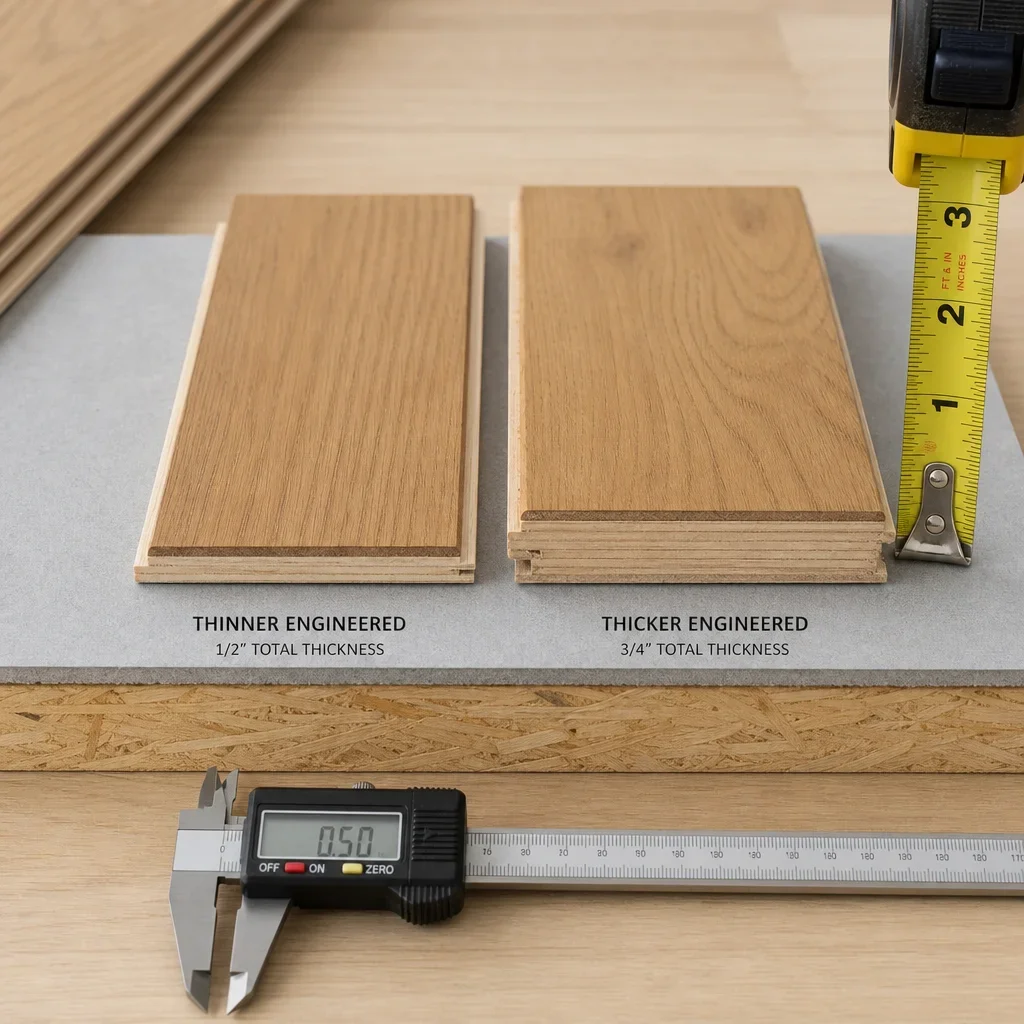
If budget allows, 1/2-inch is usually the safer all-around pick for residential projects because it tends to feel more solid, suits more nail-down applications, and gives you more structural margin. 3/8 inch equals 9.5 mm, 1/2 inch equals 12.7 mm, and 9/16 inch equals 14.3 mm.
If the wear layer is the same, total thickness mostly changes structure, feel underfoot, and installation compatibility more than scratch resistance. Engineered hardwood is a real wood top layer over a plywood, HDF, or similar stable core.
Choose 3/8 if floor height is tight, the product is approved for float or glue-down, and the project is budget-conscious. Choose 1/2 if you want a better chance of nail-down suitability, a more substantial feel, and a stronger all-purpose spec. Consider 9/16 if you want a middle-to-premium build and are comparing wider planks or busier main-floor spaces.
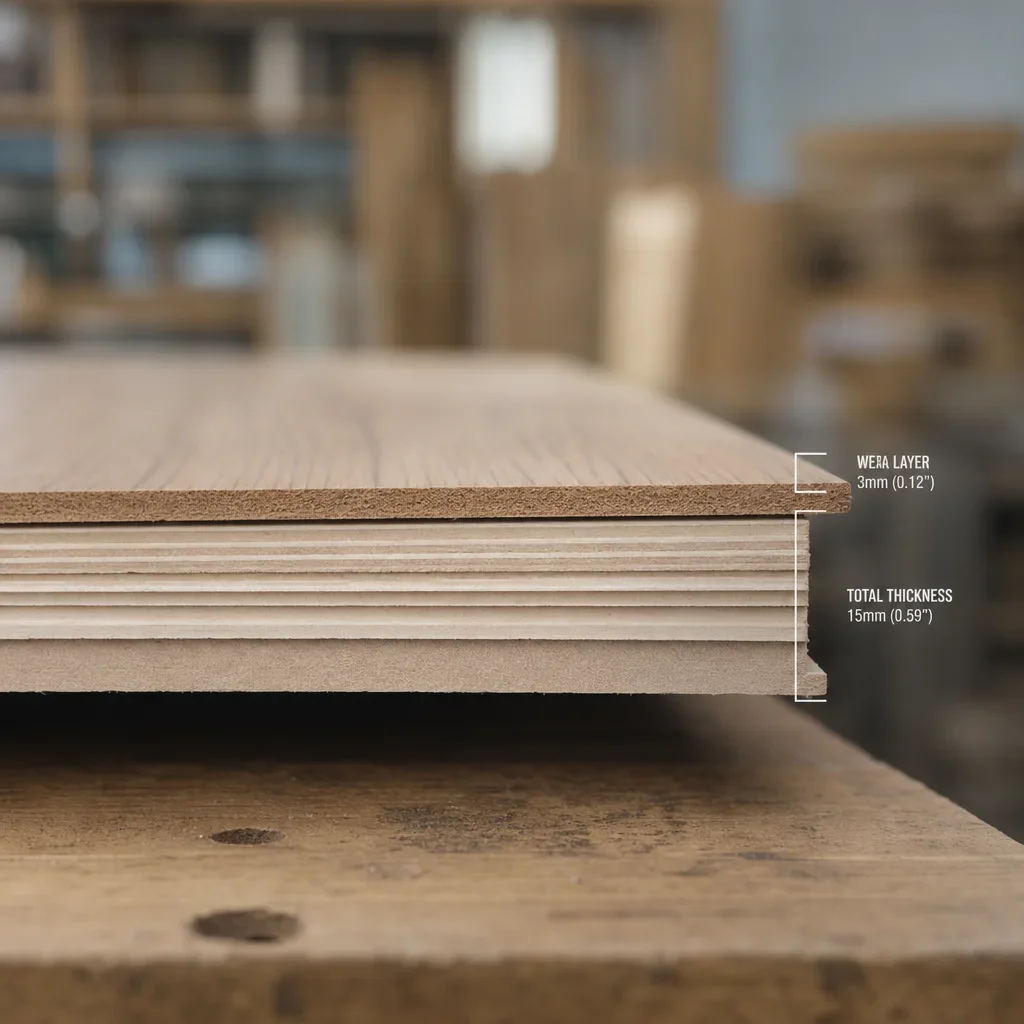
Total plank thickness and wear layer thickness are not the same thing. Total thickness is the full board from top to bottom, while the wear layer is only the real hardwood surface that can potentially be lightly sanded or refinished if the manufacturer allows it.
Scratch resistance comes more from species and finish than from total thickness. A thicker board with a soft species or weaker finish can show wear faster than a thinner board with a harder species and better factory finish.
Refinishing potential depends more on wear layer than on whether the board is 3/8 or 1/2 inch overall. Common engineered wear layers in the market are around 2 mm, 3 mm, and 4 mm or more, but you should verify the exact spec on the product sheet before buying.
A thicker board can feel stiffer and more substantial, but thickness alone does not make one floor higher quality than another. Two engineered floors at the same 1/2-inch thickness can perform very differently because core type, veneer quality, plank width, milling quality, and finish all change the result.
> Wear layer vs total thickness > > Total thickness affects structure, feel, transitions, and some install options. Wear layer affects how much real wood you have on top and whether limited refinishing may be possible. If both floors have the same 2 mm wear layer, the thicker one does not give you extra sanding wood.
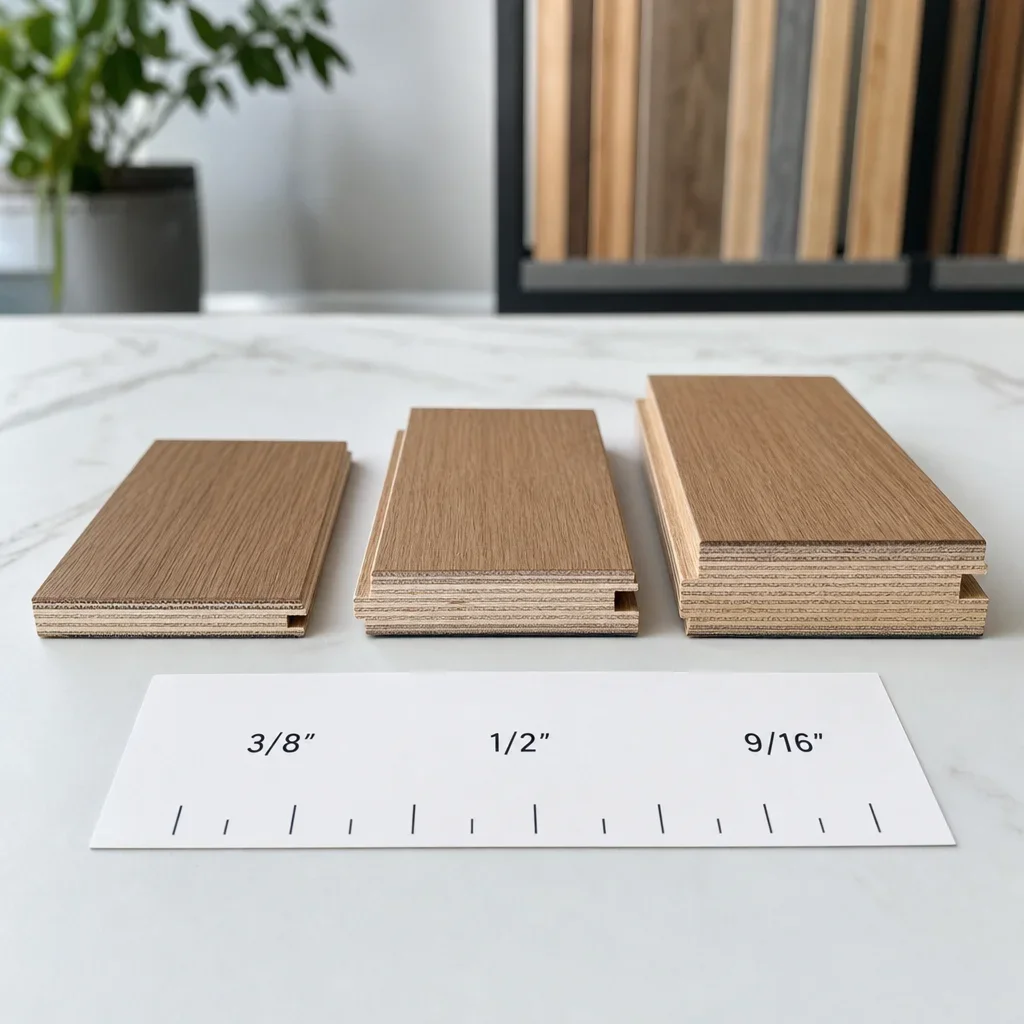
The best thickness for engineered hardwood flooring depends on the subfloor, install method, plank width, and budget, not on one number in isolation. This table is the practical version buyers usually need.
| Feature | 3/8 engineered hardwood flooring | 1/2'' Engineered Hardwood flooring | 9/16 engineered hardwood flooring |
|---|---|---|---|
| Total thickness | 9.5 mm | 12.7 mm | 14.3 mm |
| Best fit | Budget remodels, condos, height-sensitive renovations | Strong all-around residential choice | Middle-to-premium builds, often for buyers wanting a sturdier spec |
| Feel underfoot | Can feel lighter depending on core and install method | Usually more solid | Often the most substantial of the three |
| Sound | Floating installs may sound hollower | Often quieter with a nail-down or glue-down spec | Can feel and sound more substantial, depending on construction |
| Common installs | Often float or glue-down, sometimes nail-down if approved | Frequently suitable for more install methods if approved | Product-specific, often positioned above entry-level lines |
| Refinishing potential | Depends mainly on wear layer | Depends mainly on wear layer | Depends mainly on wear layer |
| Floor height impact | Lowest buildup | Moderate buildup | Highest buildup of the three |
| Budget position | Entry to mid | Mid | Mid to premium |
| If wear layer is identical | Better for savings and low buildup | Better for feel and install flexibility | Better only if the rest of the construction earns the price |
| First floor over plywood | Good only if approved and subfloor is good | Often the safer choice | Worth a look for broader planks or a more solid feel |
| Over concrete slab | Often suitable for float or glue-down if approved | Also common over concrete if approved | Works well if the product and slab conditions support it |
The 3/8 vs 1/2 engineered hardwood pros and cons are easier to judge when you separate budget from build quality. That is where most online advice gets muddy.
3/8 engineered hardwood is not too thin for every project. It is thin enough that product quality, subfloor quality, and install method matter more.
3/8 inch engineered wood is good for condos, bedrooms, moderate-traffic homes, height-sensitive renovations, and approved floating or glue-down systems. It can also make sense when you are matching adjacent floors and cannot afford extra buildup.
3/8 flooring becomes harder to recommend when planks are very wide, the subfloor is uneven, the buyer wants a full main-floor nail-down feel, or future refinishing is a priority. Those projects usually push buyers toward a better-built 1/2-inch or 9/16-inch option.
A well-made 3/8 floor can outperform a poorly made thicker floor. That is why 3/8 engineered hardwood flooring reviews are only useful if they mention the core, wear layer, and installation conditions, not just the thickness.
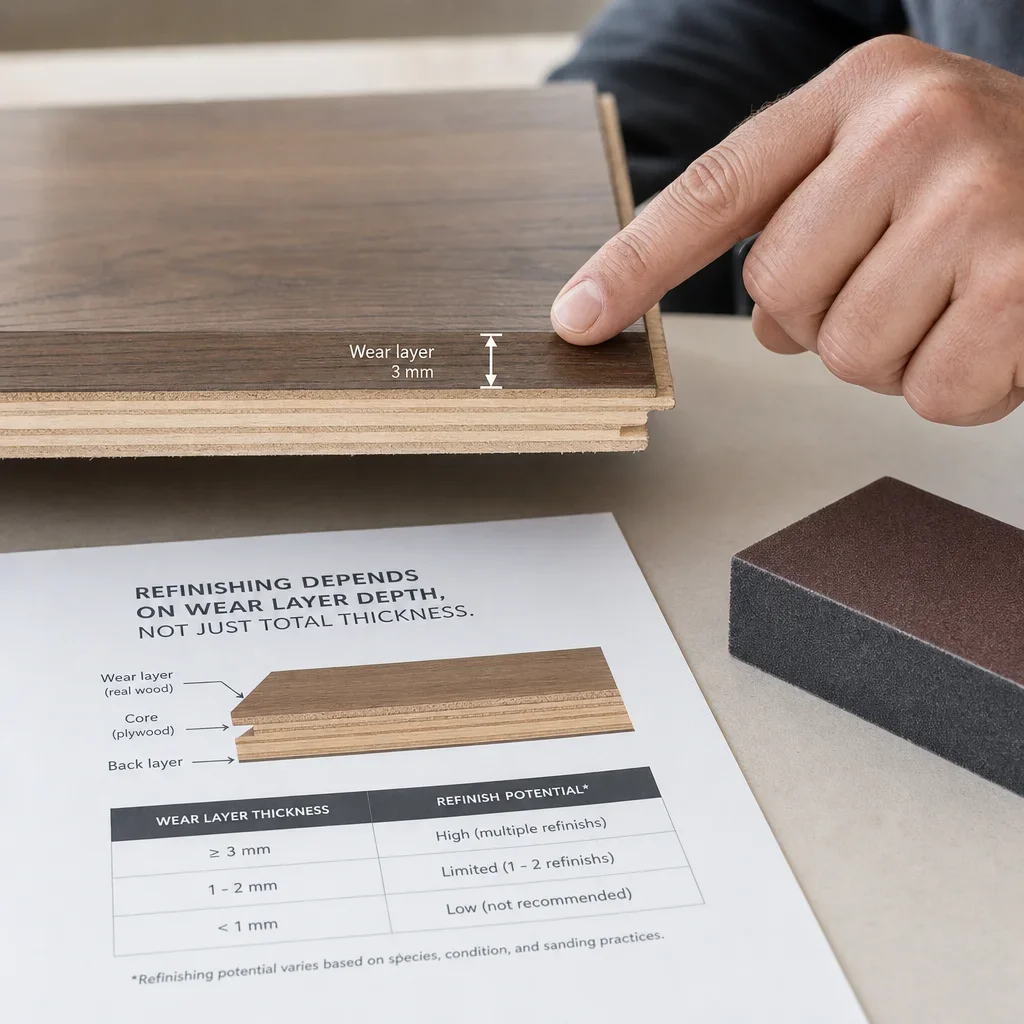
Some 3/8 engineered hardwood can be sanded or refinished, but only if the wear layer is thick enough and the manufacturer says it is allowed. A 3/8 board with a very thin veneer may allow little or no sanding, while a better-built product with a thicker wear layer may allow limited refinishing.
The safest buying question is not "can 3/8 engineered hardwood be sanded" in the abstract. It is "what is the wear layer, and does the spec sheet say refinishing is permitted?" That question gets you a real answer.
A 2 mm wear layer changes the recommendation because it may limit your refinishing margin, regardless of whether the board is 3/8 or 1/2 inch overall. If two products have the same 2 mm wear layer, the thicker one mainly changes structure and feel, not the amount of top wood available for sanding.
If you plan to stay long term, ask for both total thickness and wear-layer thickness on the quote. That one habit filters out a lot of weak-value products.
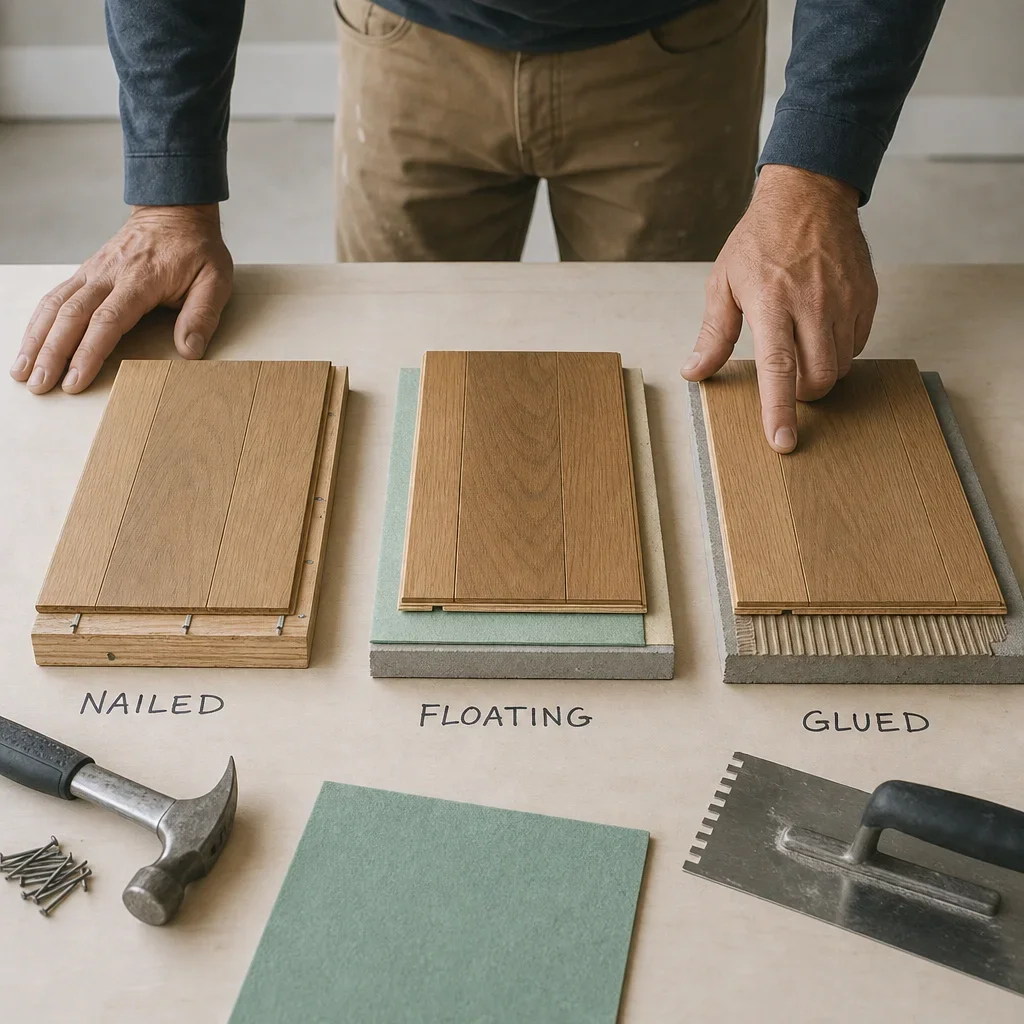
The best installation method is the one the manufacturer approves for that exact product. Thickness matters, but the product spec matters more.
For plywood or wood subfloors, many buyers prefer nail-down installation because it often feels firmer and less hollow underfoot. In practice, 1/2 inch is often the easier all-around thickness to shop for this use, especially on a first floor over plywood.
For concrete slab projects, glue-down installation and floating installation are both common, depending on the product approval and slab condition. Concrete needs moisture control and proper prep before either method goes in.
When buyers ask is it better to nail or float an engineered wood floor, the honest answer is that nail-down often wins on feel over wood subfloor, while float can win on speed, cost control, and some condo or slab applications. There is no universal winner.
For a full first-floor renovation over plywood subfloor, I would compare approved 1/2-inch and 9/16-inch products first if the goal is a more substantial feel. If floor height is tight or the budget is strict, I would still look at 3/8-inch lines, but only after checking the subfloor condition and the install approval.
Fastener size for 3/8 engineered flooring must follow the manufacturer instructions for that product. Do not let an installer improvise staple size from memory. The same rule applies to underlayment, adhesive, and fastener spacing.
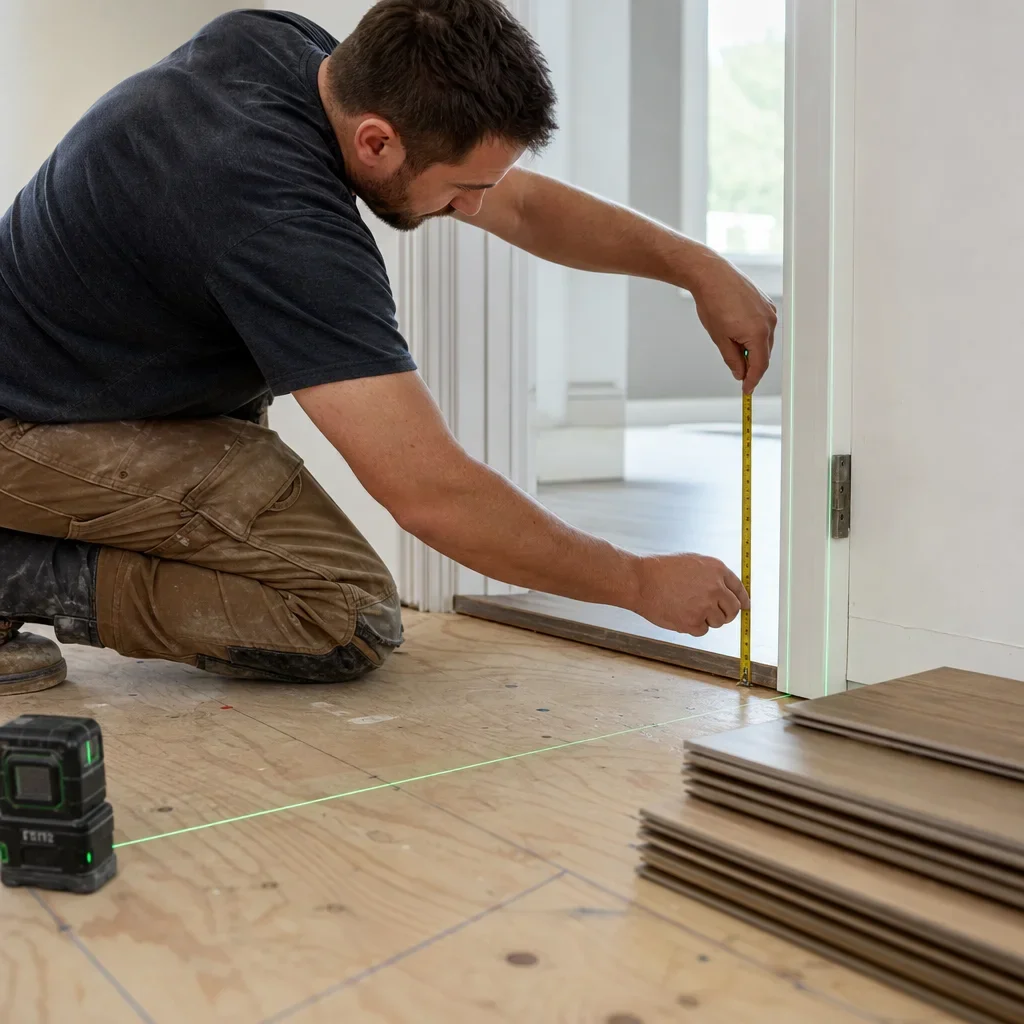
Subfloor condition causes more real-world problems than the difference between 3/8 and 1/2 inch. A flatter, drier, structurally sound subfloor gives you a better floor, whichever thickness you choose.
Plywood and OSB subfloors usually open the door to more installation methods, while concrete slab projects more often push buyers toward glue-down or floating systems. The product still has to be approved for that method.
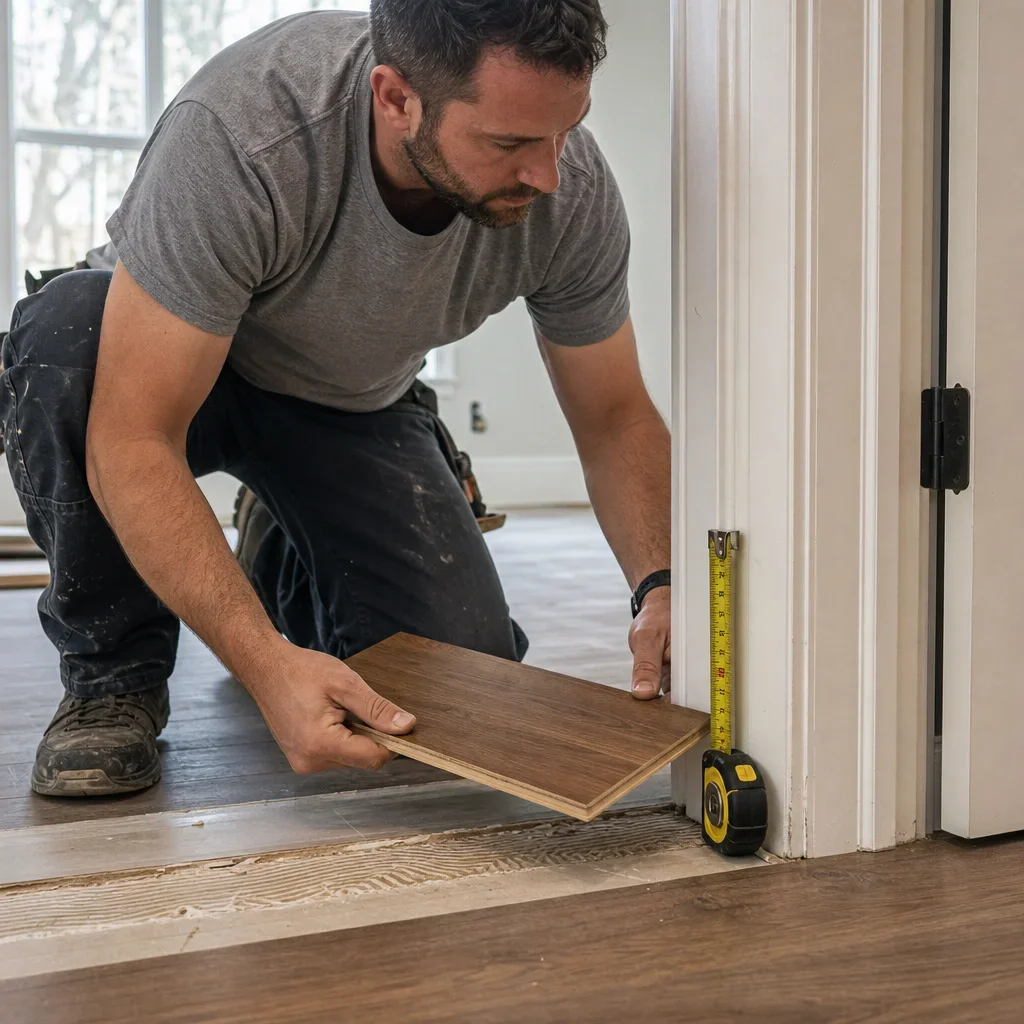
Room height and door clearance matter because the thickness change is real. Moving from 3/8 inch to 9/16 inch adds 3/16 inch of extra buildup, or about 4.8 mm.
That small number can still affect appliances, stair nosings, reducers, and whether interior doors need trimming. In renovations, that is often a bigger issue than buyers expect.
If you are comparing samples, ask whether your subfloor is flat, dry, and suitable for the chosen install method. That single check avoids a lot of callbacks and disappointment.
Thickness helps, but moisture and installation quality usually matter more for durability and stability. A thicker board is not immune to failure if site conditions are wrong.
Cupping means the board edges rise higher than the centre, usually because moisture balance is off. Buckling means the floor lifts off the subfloor, often from moisture expansion or installation failure. Delamination means the layers of the engineered board start separating. Splitting is a crack in the wood surface or board body.
Pets, kids, and heavy traffic put more pressure on finish and species than on total board thickness. Surface wear is usually about the top layer and finish system, not just whether the board is 3/8, 1/2, or 9/16 inch.
If two products have equal wear layers, the thicker one may give you some feel and structural confidence advantages, but it is not a magic durability upgrade. Good installation and moisture control still do the heavy lifting.
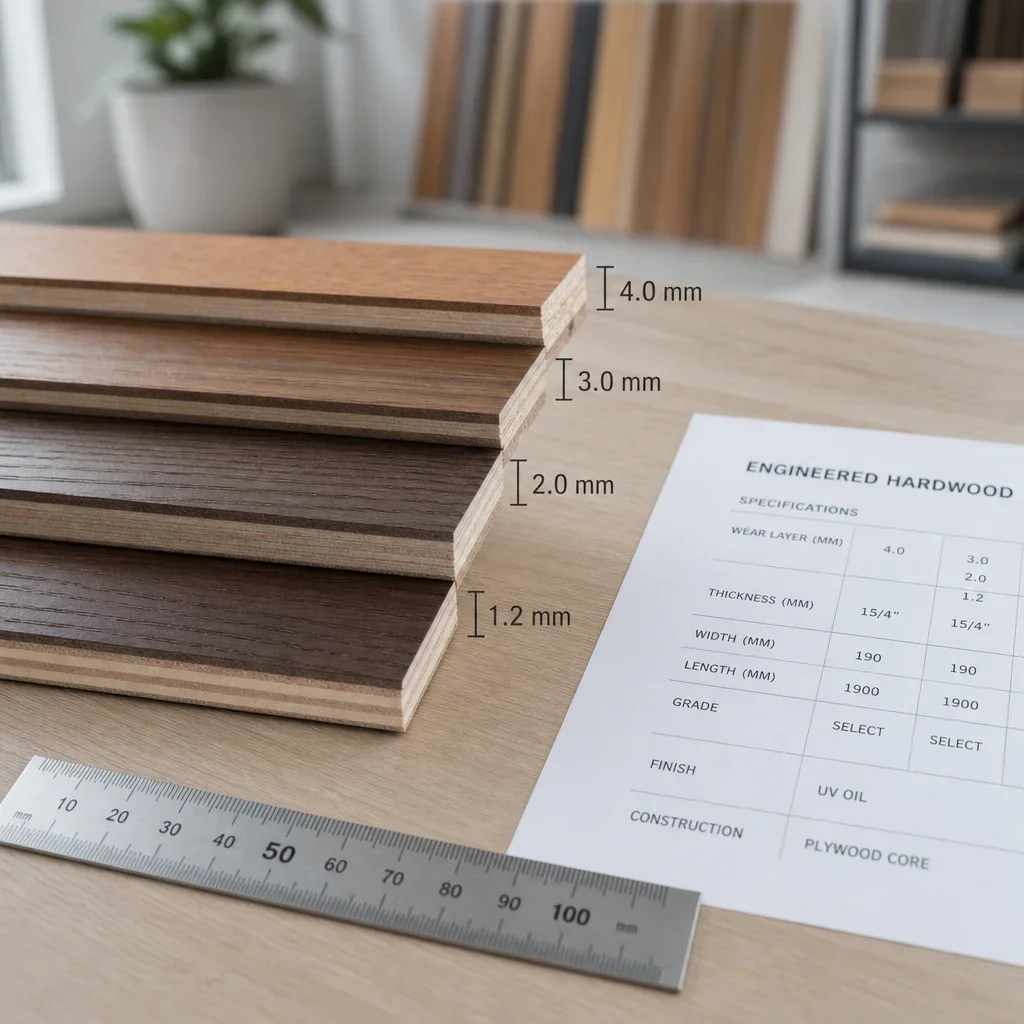
The best wear layer is the thickest one that fits the product quality and budget without ignoring the rest of the construction. Wear layers commonly discussed in engineered wood are about 2 mm, 3 mm, and 4 mm or more.
A thinner wear layer usually means less refinishing margin. A thicker wear layer usually gives you more margin, but only if the manufacturer permits sanding and the board is otherwise worth keeping long term.
If both a 3/8 and a 1/2 product have the same 2 mm wear layer, the extra thickness is mainly buying structure, feel, and possibly broader install suitability. It is not buying a thicker hardwood face.
If a retailer cannot tell you the wear layer, treat that as a warning sign. You should be able to see it on a spec sheet or product quote.
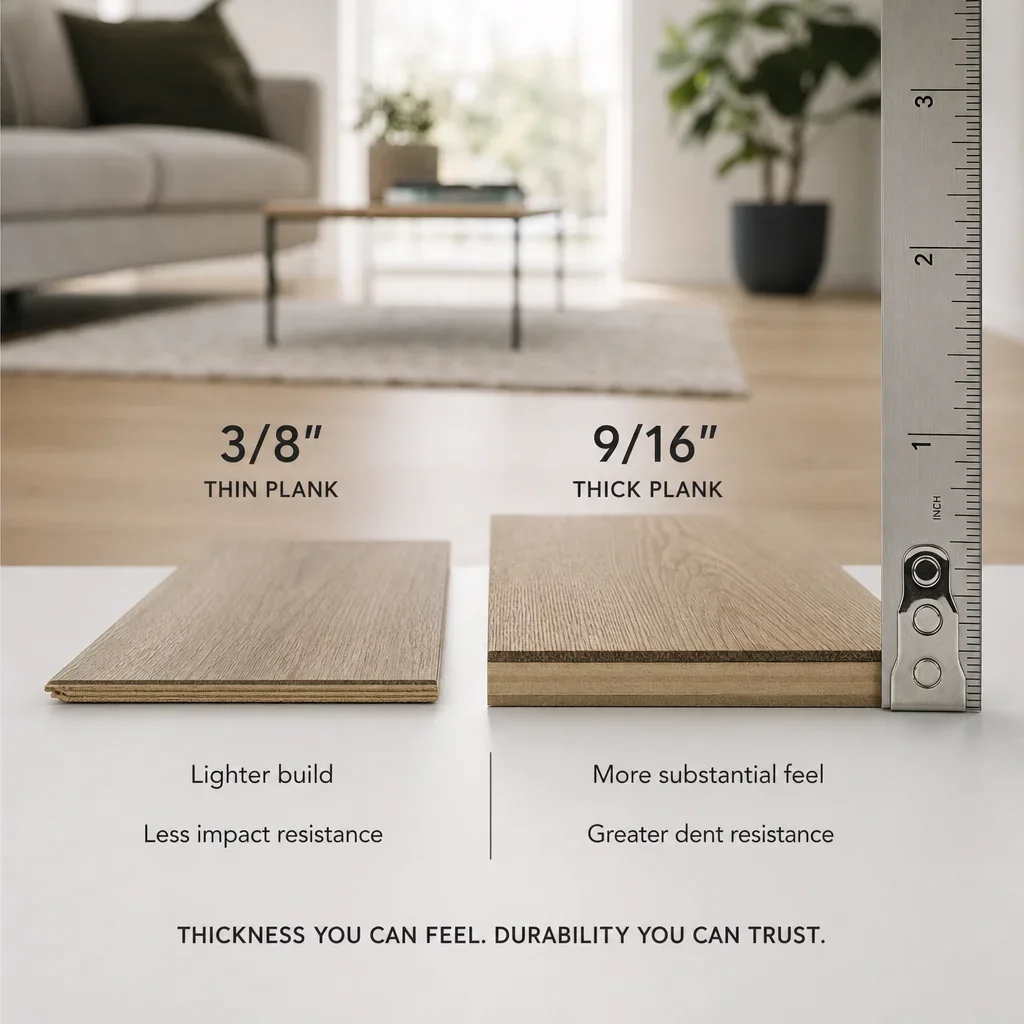
3/8 vs 9/16 engineered hardwood is a smart comparison when you want more substance than entry-level options but do not want to shop blind on price. 9/16 is 14.3 mm, which puts it above 3/8 and above 1/2 in total thickness.
9/16 engineered hardwood flooring makes sense when you want a sturdier feel, are considering wider planks, or are outfitting a busy main floor where sound and underfoot feel matter more. In Canada, that can matter in detached homes and full-floor renovations where buyers notice floor movement and transitions more.
3/8 vs 9/16 engineered hardwood pros and cons follow the same rule as 3/8 vs 1/2: thickness alone is not quality. A well-built 1/2-inch floor can beat a weak 9/16-inch product if the core, wear layer, and milling are better.
For 3/8 vs 9/16 engineered hardwood cost, the right comparison is not just the price gap. It is the price gap against wear layer, install approval, core type, plank width, and how long you plan to stay in the home.
Paying more for thickness alone is not always worth it. Paying more for a better wear layer, better core, better milling, and a more suitable installation method often is.
The practical way to compare 3/8 vs 1/2 engineered hardwood price is to line up six items on the quote: total thickness, wear layer, core type, approved install methods, plank width, and finish or warranty details. That tells you where the money is really going.
If the price jump is small and you want nail-down on a main floor, thicker can be worth it. If the jump is large and the wear layer is identical, compare the rest of the specs very carefully before paying more.
Engineered wood flooring at CanFloor starts from $2.99 per square foot. That does not mean every thickness is priced the same, and you should not assume a thicker floor is the better value without seeing the actual specification sheet.
The best way to avoid a bad engineered hardwood purchase is to ask for the full spec sheet, not just a sample board. That one step clears up most confusion around thickness, wear layer, and installation.
Use this checklist before you buy:
CARB2 refers to a formaldehyde emissions standard that buyers may still see on product literature. VOC information relates to indoor air emissions from finishes, adhesives, and materials. These are compliance and documentation questions, so ask for the actual paperwork rather than relying on a verbal claim.
Where the flooring is made can affect consistency, lead times, and the documentation available with the product. That does not make one country automatically better, but it is a fair question when you are comparing similar samples.
The best thickness for engineered wood flooring changes with the room, the subfloor, and your ownership horizon. This matrix is the simplest way to choose.
| Scenario | Best starting point | Why |
|---|---|---|
| Main floor with kids and pets | 1/2 or 9/16 | Better feel and often stronger overall spec |
| Condo renovation | 3/8 or 1/2 | Lower buildup and common float/glue options |
| Basement over concrete | 3/8 or 1/2 if approved | Concrete projects are usually more about install approval than thickness |
| Whole-home remodel | 1/2 | Good balance of feel, flexibility, and value |
| Resale-minded renovation | 1/2 or 9/16 | More substantial impression for many buyers |
| Low-budget refresh | 3/8 | Lower material cost if the specs still check out |
| Radiant heat project | Product-specific | Approval matters more than blanket thickness rules |
| Future refinishing priority | Any thickness with stronger wear layer | Wear layer matters more than total thickness |
| Nailed installation over plywood on an entire first floor | 1/2 first, then 9/16 | Often the safer place to start for feel and install suitability |
Wider planks can increase the importance of construction quality and installation conditions. That is one reason the best thickness for engineered hardwood flooring is never just one number for every room.
Yes, 3/8 thick engineered hardwood can be good when the core is solid, the wear layer is honest, and the installation conditions suit the product. It is usually a better fit for budget-conscious or height-sensitive projects than for buyers chasing maximum structural feel.
No, not automatically. It is more sensitive to product quality, plank width, and subfloor condition than thicker options, so it needs a more careful spec check.
For many homes, 1/2 inch is the safest all-purpose starting point. The real best thickness depends on wear layer, subfloor, installation method, room height, and budget.
Sometimes. The answer depends on wear layer thickness and written manufacturer approval, not thickness alone.
Sometimes, but do not assume it. Ask for the wear layer in mm and whether refinishing is permitted on the product sheet.
Nail-down often feels more solid over plywood or wood subfloor. Floating can be a practical choice for some condo or concrete-slab projects. The approved method on the spec sheet decides it.
Yes, 9/16 is a good thickness when you want a sturdier feel or are shopping broader planks and busier living areas. It is only worth the premium if the rest of the build supports it.
There is no single best width. Narrower planks can be more forgiving visually, while wider planks create a broader look but demand better construction and installation conditions.
Use only the fastener size and type the manufacturer specifies for that product. This is not something to guess on-site.
That phrase can mean different things in design and installation conversations, so it should not be treated as one fixed rule. If someone uses it in a quote or layout discussion, ask them to explain exactly what they mean.
If you are comparing 3/8 vs 1/2 engineered hardwood in Toronto or the GTA, bring measurements, photos, and any sample quotes with you. A side-by-side look at thickness, wear layer, finish, and installation approval tells you more in 10 minutes than a week of guessing online.