
For a quicker response, please send all inquiries
via info@canfloor.com or
text to
416-735-0075.
| Monday - Friday | 10:00 am - 7:00 pm |
| Saturday & Sunday | 10:30 am - 4:00 pm |
The biggest mistake buyers make with 5/8 vs 3/4 engineered hardwood flooring is assuming thicker always means better. It does not. The better choice depends on wear layer, core construction, installation method, subfloor, moisture conditions, floor height, and budget.
For many homes, 5/8 inch engineered hardwood is enough and makes renovation fit easier. It is a common mid-to-premium thickness, and the 1/8 inch difference from 3/4 inch matters less than the wear layer and core above and below it.
3/4 inch engineered hardwood flooring usually makes more sense when you need to match adjacent 3/4 inch solid hardwood, want a heavier underfoot feel, or are buying a premium wide-plank product built around that profile. Total thickness still does not guarantee a better floor, because a thicker board can still have a modest wear layer or a less impressive core.
Choose 5/8 if height is tight, transitions matter, or you are installing over concrete with a product approved for glue-down or floating. Choose 3/4 if you need a closer height match to existing hardwood, want a more substantial stair detail, or are comparing premium collections where the thicker build comes with better specs on paper and in the sample.
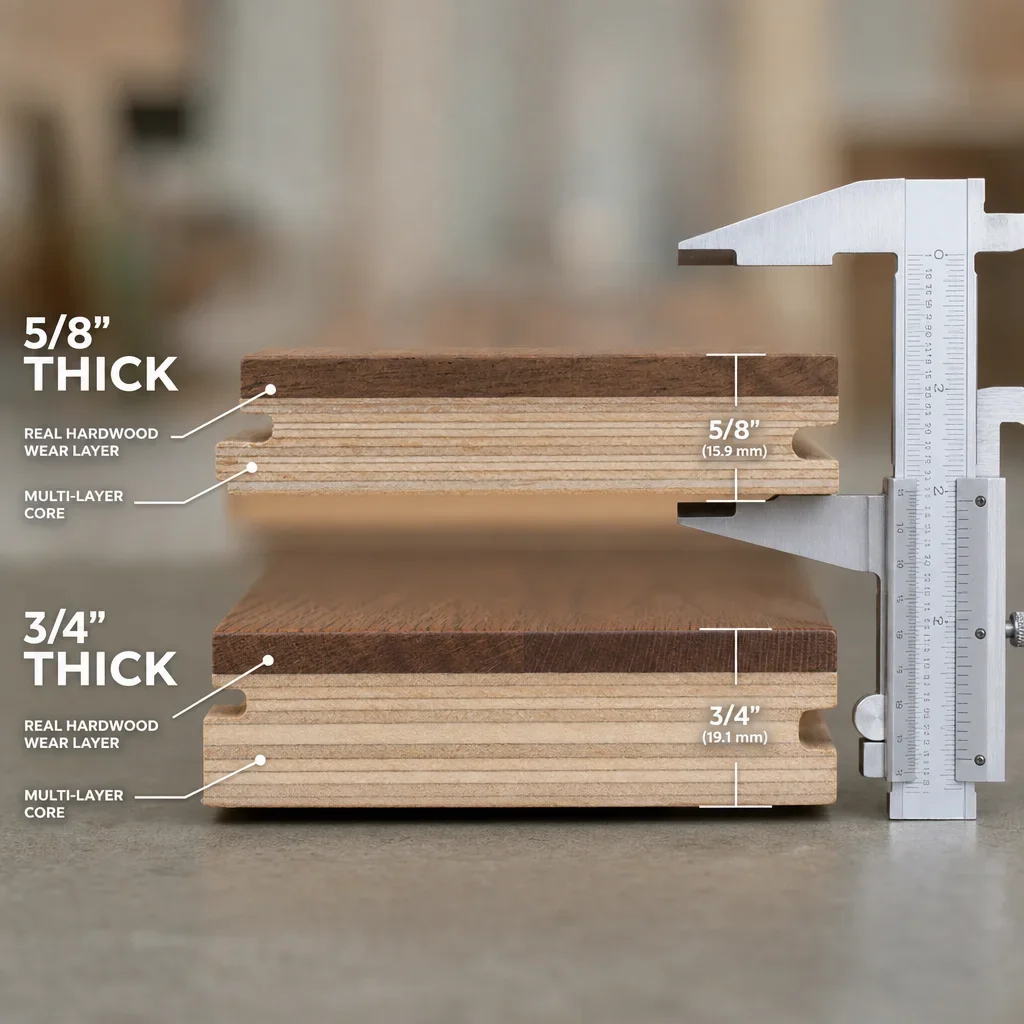
Engineered hardwood thickness means the full board thickness, not just the hardwood surface. An engineered plank uses a real wood top layer over a multi-layer core, and the total build can commonly be 3/8 inch, 1/2 inch, 5/8 inch, or 3/4 inch.
The engineered hardwood wear layer is the top hardwood veneer that you see and walk on. That layer matters more for future refinishing than the total board thickness does, because sanding happens in the surface wood, not in the core.
A thicker board does not automatically mean a thicker wear layer. One 5/8 inch product can have a better wear layer than a 3/4 inch product, so buyers should read the product sheet instead of judging by profile alone.
| Total thickness | What buyers usually use it for | Main trade-off |
|---|---|---|
| 3/8 inch | Budget projects, some floats, height-sensitive remodels | Less premium feel and usually fewer refinish options |
| 1/2 inch | Entry to mid-range engineered floors | Can fit renovations well but varies a lot by build |
| 5/8 inch | Common choice for many homes and renovations | Good balance, but still needs a solid wear layer |
| 3/4 inch | Premium builds, matching solid heights, some wide planks | More height and usually more cost |
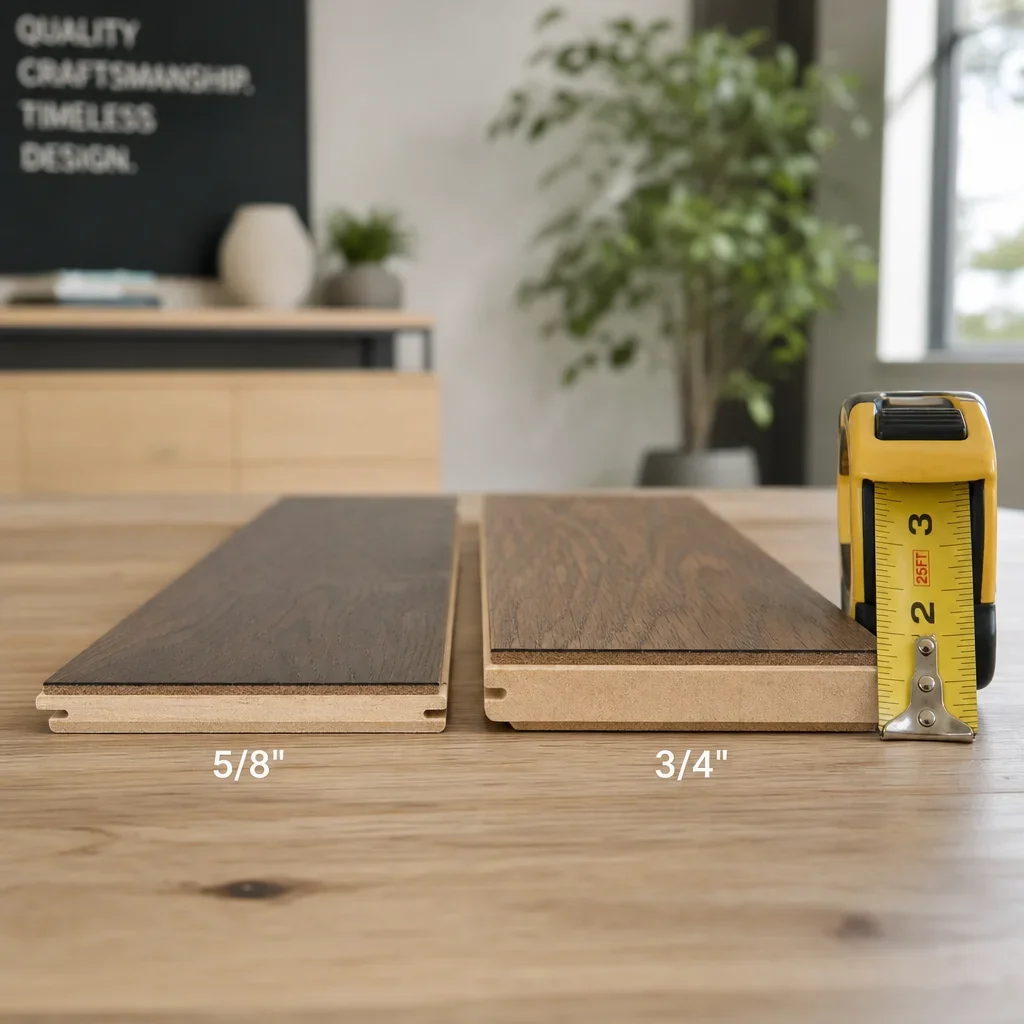
The practical difference between these two profiles is mostly about fit and construction, not a universal jump in performance. This is where most 5 8 vs 3 4 engineered hardwood flooring pros and cons discussions go off track.
| Feature | 5/8 inch | 3/4 inch |
|---|---|---|
| Profile height | Lower finished height | Higher finished height |
| Renovation fit | Often easier under appliances and doors | Often better when matching existing 3/4 floors |
| Concrete subfloor use | Common in approved glue-down or floating systems | Also available, but approval is product-specific |
| Nail-down use | Possible on some products, check manufacturer instructions | Possible on some products, check manufacturer instructions |
| Underfoot feel | Usually solid enough in a good build | Often feels heavier or more substantial |
| Sound | Depends more on install method and underlayment than 1/8 inch alone | Depends more on install method and underlayment than 1/8 inch alone |
| Stair details | Can work well if matching trims exist | Often easier to coordinate with beefier stair nosings |
| Height transitions | Usually easier when joining lower adjacent finishes | Can reduce transition issues beside 3/4 hardwood |
| Refinishing potential | Depends on wear layer, not just thickness | Depends on wear layer, not just thickness |
| Budget impact | Often lower cost if other specs are similar | Often higher cost if other specs are similar |
Yes, 5/8 inch engineered hardwood is thick enough for many residential floors when the wear layer, core quality, subfloor prep, and installation method are right. In Toronto and GTA renovations, this thickness is often a practical sweet spot because it balances durability, height control, and price.
5/8 inch is commonly chosen where buyers need to manage transitions to tile, vinyl, or existing flooring without building the whole floor too high. That matters in condos, main-floor remodels, and homes where baseboards, appliances, and doors leave little room for error.
Thick enough does not mean best for every home. If your project includes matching old 3/4 inch hardwood, building custom stairs, or installing a premium wide plank collection, 3/4 inch may still be the cleaner fit.
3/4 inch engineered hardwood is worth the extra height and cost when it solves a real installation or design problem. The best example is matching adjacent 3/4 inch solid hardwood, because keeping floors close in height can reduce visible transitions and simplify the layout.
This profile also appeals to buyers who want a more substantial feel underfoot or who are buying a premium collection with wider and longer boards. The gain is not automatic, but 3/4 inch products are often positioned higher in the lineup and may come with better wear layers, finishes, or trim options.
The thicker build can help one area of the house and create trouble in another. A floor that lines up nicely with a hardwood hallway can still interfere with dishwasher clearance, door swing, or stair nose matching if you do not calculate the full assembly height first.
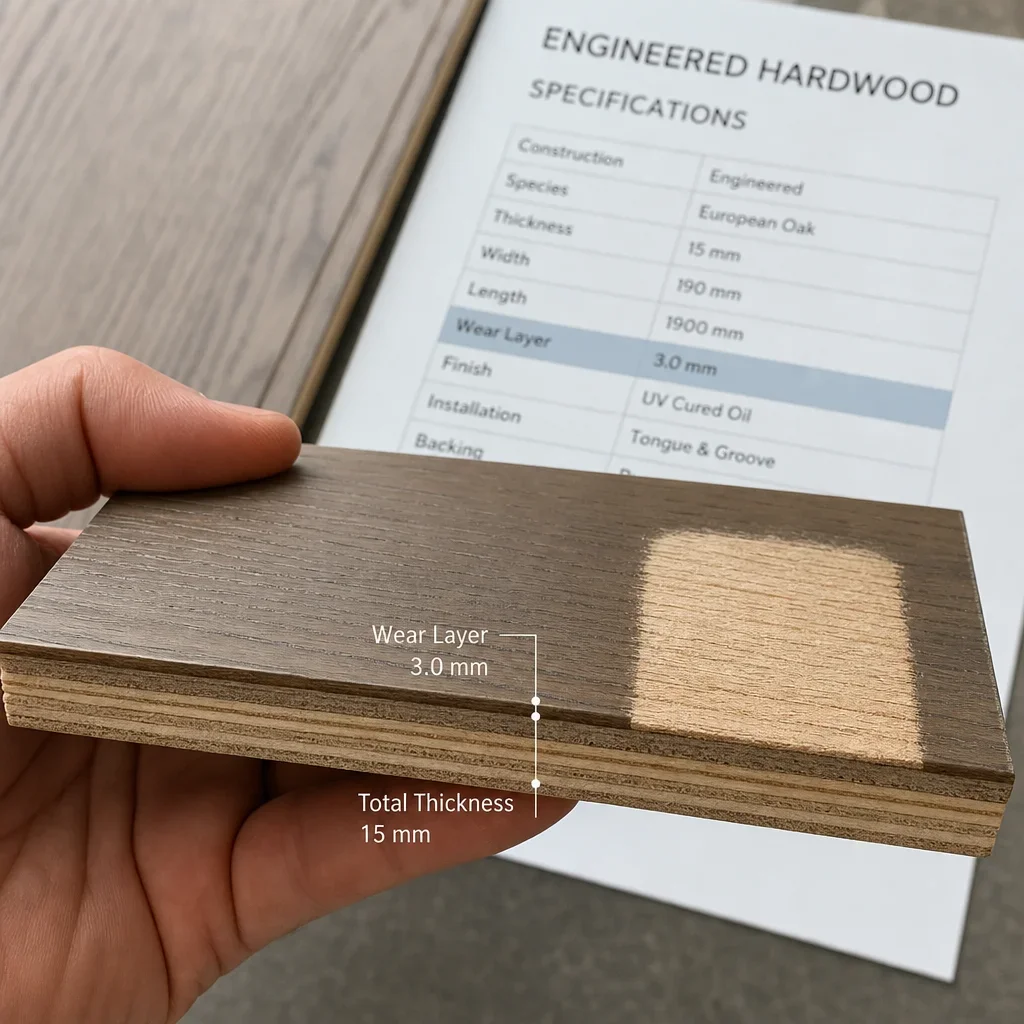
The wear layer is the spec that tells you more about long-term value than the headline board thickness. A product with a thicker hardwood surface usually gives you more room for future sanding than one with a thin veneer, but the actual refinishing outcome still depends on the species, finish, texture, and the sander's judgment.
In the market, you will often see wear layers described in millimetres, with entry-level products sometimes under 2 mm, mid-range products around 2 to 3 mm, and more substantial surfaces around 4 mm or more. Those are broad market examples, not a promise about any specific collection.
Engineered hardwood refinishing should always be treated as conditional, not guaranteed. A smoother floor with a healthy wear layer is a better candidate than a heavily hand-scraped or deeply textured floor, because aggressive texture can reduce the practical sanding margin even when the wear layer sounds generous on paper.
Use this mini-checklist when you compare samples: ask for the wear layer in mm, ask whether the finish and texture limit refinishing, ask whether site sanding is approved, and ask whether the written warranty or product sheet says anything about refinishing at all.
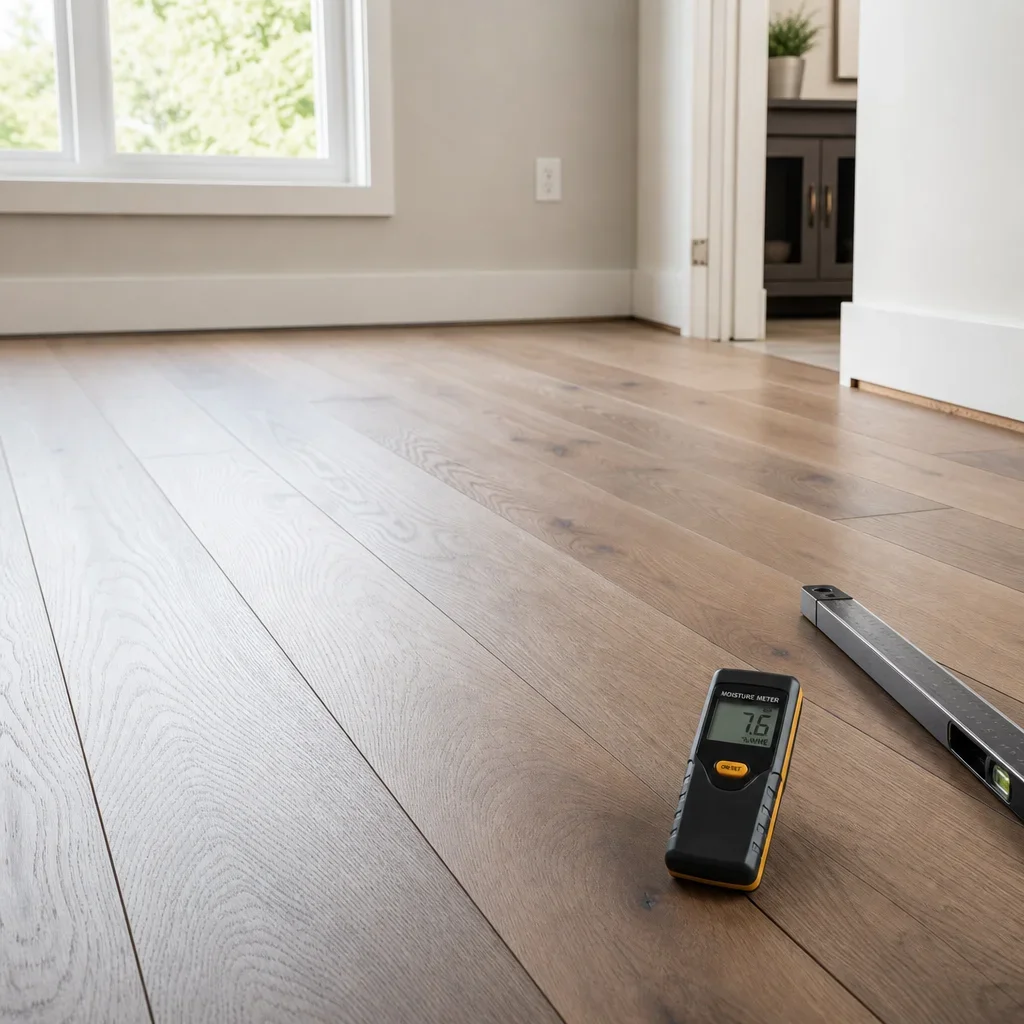
Stability comes from the full construction, not just engineered hardwood thickness. Species, core type, veneer cut, board width, board length, site humidity, and subfloor flatness all influence how the floor handles seasonal movement.
For wide plank engineered hardwood, buyers often assume 3/4 inch is always safer than 5/8 inch. That is too simple. A well-engineered 5/8 inch plank can outperform a weaker 3/4 inch plank if the core, milling, and installation specs are better.
Wider and longer boards make imperfections easier to notice. That means a slightly uneven subfloor, a poor moisture plan, or a bad install can show up faster in a wide plank floor than in a narrower board, regardless of whether the profile is 5/8 or 3/4.
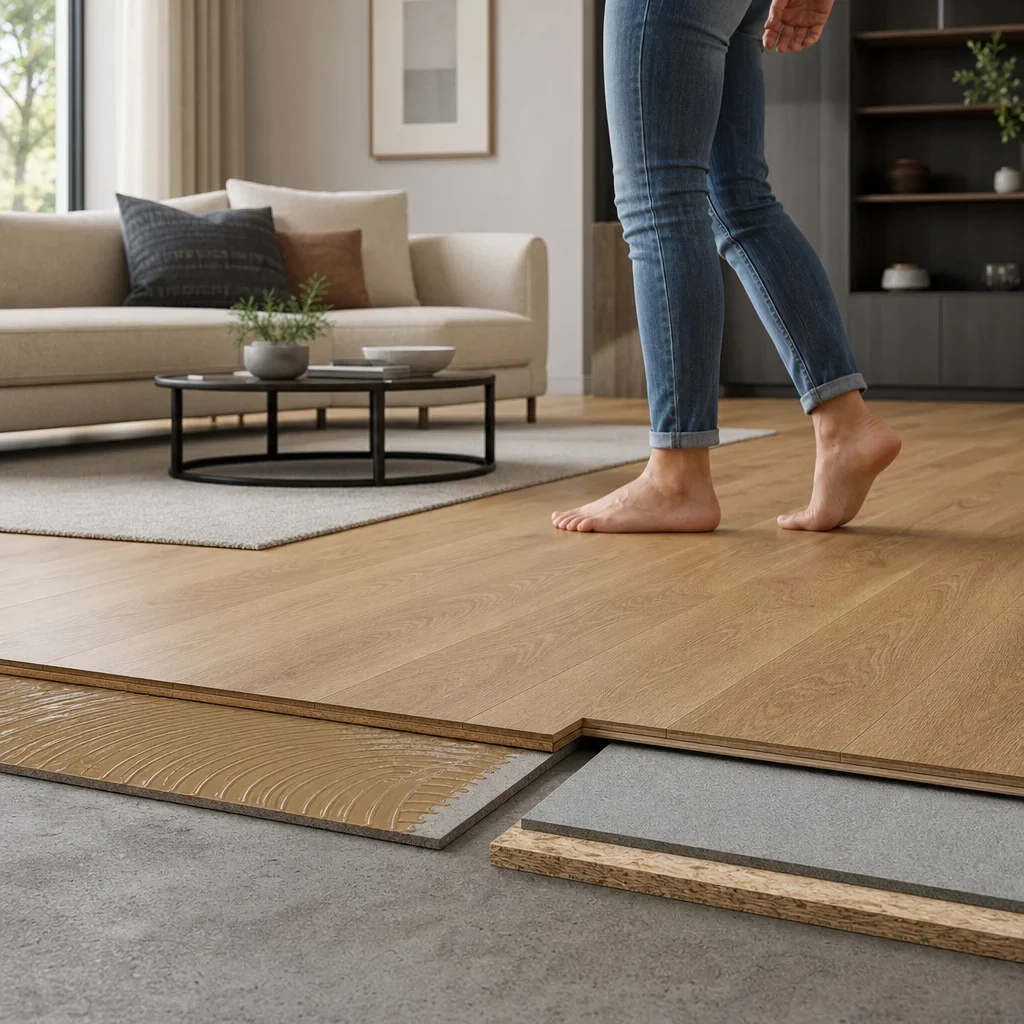
The feel and sound of a floor come from the whole assembly. Board thickness matters a bit, but subfloor flatness, core density, underlayment, adhesive coverage, and whether the floor is floated or glued down usually matter more.
Floating floors can sound more hollow than glue-down floors, even when the product thickness stays the same. That is why a well-installed 5/8 inch glue-down floor can feel quieter and more solid than a thicker floating floor with a poor underlayment choice.
A 3/4 inch profile may feel heavier underfoot, but it is not a cure for condo noise issues by itself. If sound control matters, compare the full system, including the underlayment or adhesive specification and the building rules, not just the plank height.
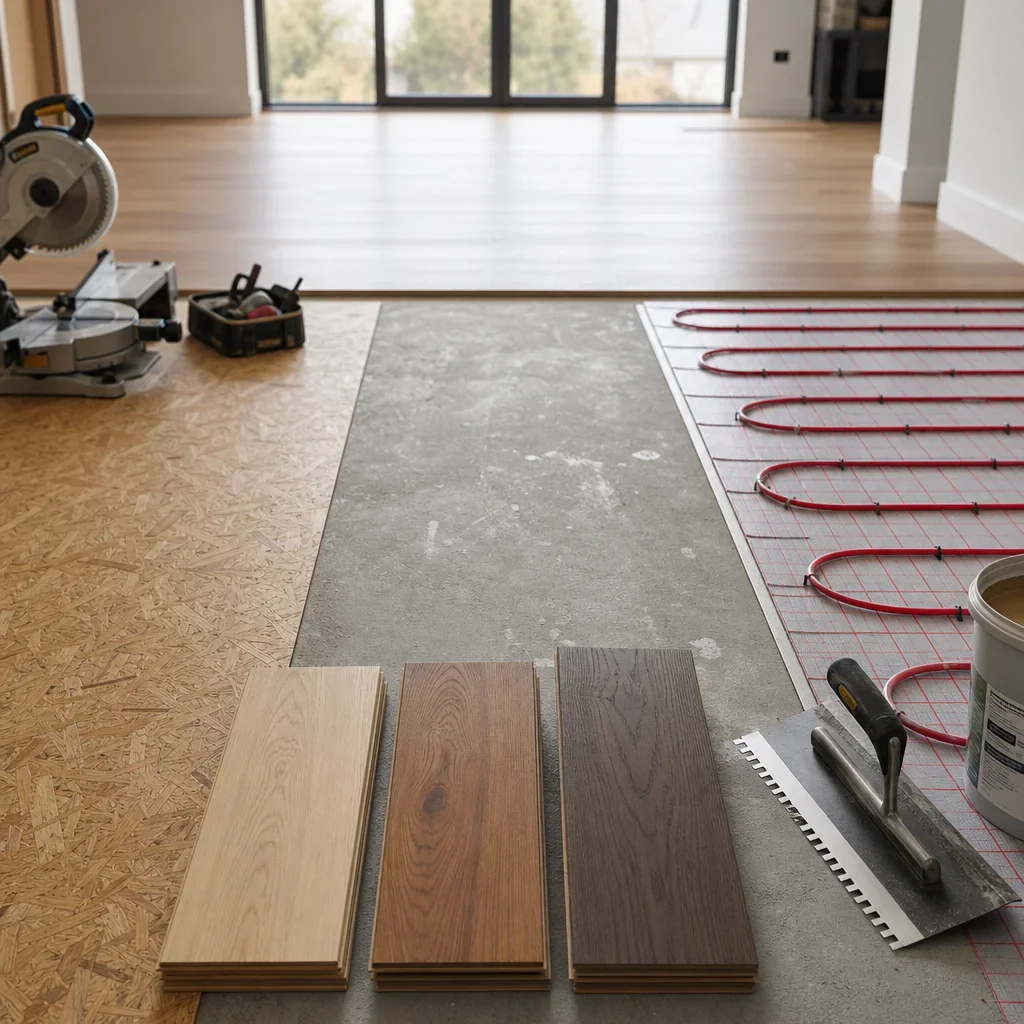
The right thickness depends first on the subfloor and the installation method the product actually allows. Plywood and OSB, concrete subfloors, and radiant heat systems can all point you toward different collections, even before you think about colour.
On plywood or OSB, both 5/8 and 3/4 inch products can work, but nail-down installation is product-specific and depends on the tongue profile and manufacturer instructions. Do not assume every engineered floor can be nailed just because it looks thick enough.
On concrete subfloors, glue-down installation is common when the product and adhesive system are approved for it. Floating installation is also possible with some click or profile systems, but that approval comes from the product sheet, not from thickness alone.
For radiant heat, manufacturer approval matters more than profile size. Some engineered floors are approved over radiant systems because of the full construction and the climate-control guidelines, while others are not, even at the same thickness.
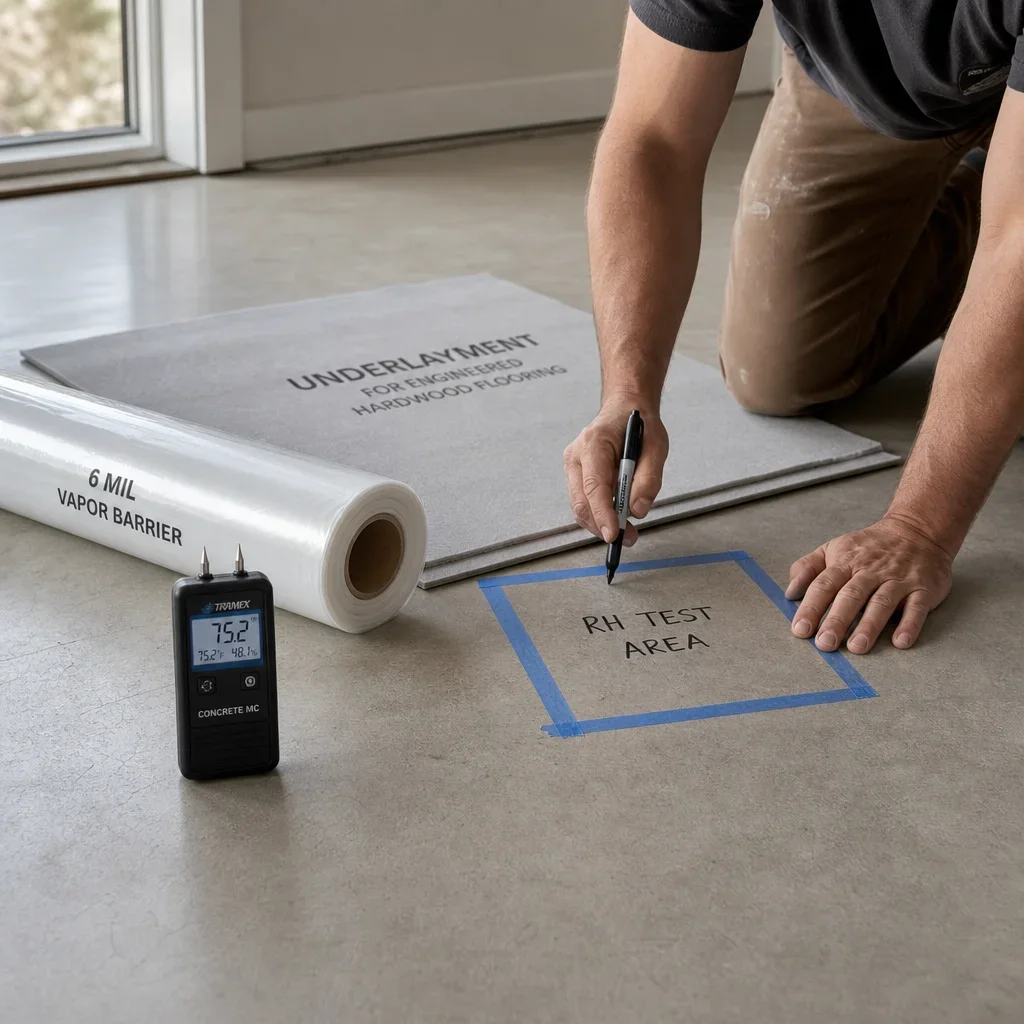
Moisture risk can outweigh the 5/8 vs 3/4 choice completely, especially on concrete or below grade. A poor moisture plan can shorten the life of either floor through movement, bond failure, cupping, or finish problems.
Concrete installations should start with slab moisture testing and the manufacturer's prep instructions. The exact test method and acceptable reading depend on the adhesive, vapor barrier, and flooring system, so this is one of those places where the written spec matters more than showroom opinion.
Underlayment and vapor barrier choices also change the result. A floating floor needs the right underlayment for that locking system, while a glue-down floor may need a compatible adhesive or moisture-control product below it.
Ask before installation who handles moisture testing, what documentation you get, and which layer in the assembly acts as the vapor barrier. That one conversation is worth more than guessing whether 3/4 inch is automatically safer than 5/8 inch.
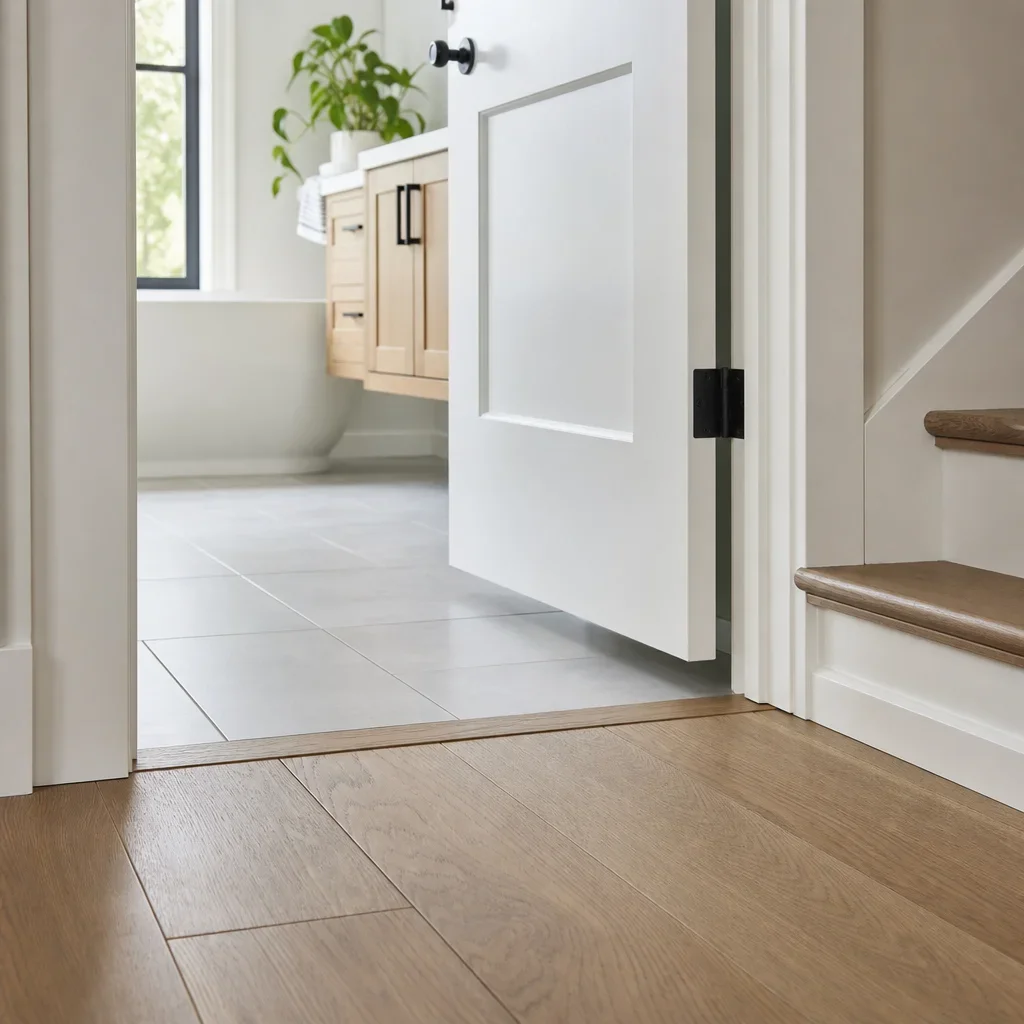
Floor height is one of the best reasons to choose one thickness over the other. In renovation work, a smaller profile can be more valuable than a theoretical durability gain because it helps the new floor meet the old house with less cutting and fewer awkward strips.
Transition strips matter where engineered hardwood meets tile, laminate, vinyl, or another wood floor. A 5/8 inch board often gives you more flexibility when adjacent finishes sit lower, while 3/4 inch can be the cleaner match when you are tying into older solid hardwood.
Doors, dishwashers, refrigerators, toe kicks, and baseboards should be checked against the full finished floor build, not just the plank label. Underlayment and adhesive add height too, so a 3/4 inch board does not stay 3/4 inch once the whole assembly is in play.
Stair nosings also deserve attention early. Some collections have matching trims and stair parts ready to order, while others need a custom solution, and that can influence whether 5/8 or 3/4 is the cleaner route.
Living rooms and bedrooms usually work well with either thickness, so the better choice comes down to wear layer, floor height, and budget. In these rooms, finish quality and installation quality usually matter more than the 1/8 inch difference.
Kitchens need more caution because spills, traffic, and transitions all meet there. A good 5/8 inch floor can work very well, but buyers should pay closer attention to the finish, subfloor prep, and the transition into tile or adjacent rooms than to thickness alone.
Main floors with existing hardwood often lean toward 3/4 inch if the goal is a closer height match. That can make the finished job look more intentional and reduce the need for stronger transition ramps between rooms.
Condos often lean toward 5/8 inch because height, underlayment, and building sound requirements are usually tighter. The exact assembly still needs to follow the building rules and the product approval.
Basements need the strictest moisture review of all. Engineered hardwood may be suitable in some basements if the product is approved and the moisture conditions are managed properly, but this is not the place to assume any wood product is safe just because it is engineered.
Stairs often lean toward whichever thickness gives you the cleanest stair nose detail and the best match to the rest of the floor. In practice, trim availability can decide the answer faster than the board profile does.
3/4 inch engineered hardwood often costs more, but thickness is only one price driver. Species, grade, plank width, surface treatment, finish, wear layer, and collection tier can move the price as much as or more than the extra 1/8 inch.
For engineered hardwood in Canada, broad material pricing often starts around $4.99 to $10+ per square foot, and professional installation can add about $3 to $5+ per square foot depending on layout, prep, stairs, and trim. Those are broad market ranges, not a quote for your project.
The real value question is whether the thicker board avoids compromises. If 3/4 inch saves you from messy transitions, gives you a better stair detail, or lines up with existing hardwood, the extra money may be justified. If 5/8 gives you the same look with fewer clearance issues, that can be the smarter buy.
If you are comparing where to buy engineered hardwood flooring in Toronto or the GTA, look beyond the board price. Samples, spec sheets, trim options, installation support, and honest guidance on subfloor and moisture prep matter just as much as the sticker.
This simple decision tree works better than online opinions and scattered 5 8 vs 3 4 engineered hardwood flooring reviews.
1. Start with the subfloor. Concrete often pushes buyers toward approved glue-down or floating systems, while wood subfloors can support more installation options. 2. Check whether you need to match an existing 3/4 inch hardwood floor. If yes, lean 3/4 first. 3. Measure finished floor height at doors, appliances, tile edges, and stairs. If height is tight, lean 5/8 first. 4. Decide whether future refinishing matters. If yes, compare wear layer in mm before you compare total thickness. 5. Look at board width and length. For wide planks, compare the whole construction and install spec, not thickness alone. 6. Review moisture conditions, especially on slab or basement projects. If the moisture plan is unclear, solve that before choosing a thickness. 7. Compare total project cost, including trim, underlayment, stair parts, and prep. If the thicker board creates more work elsewhere, lean 5/8.
The best buying decision comes from reading the sample and the product sheet together. Colour and style matter, but the spec sheet is what tells you whether the floor fits your house.
Use this buyer checklist before you order:
Bring room measurements, photos, and the height of adjacent floors when you shop. That makes it much easier to compare 3/4 inch engineered hardwood flooring against 5/8 inch options in a way that actually fits the renovation.
If you want to compare thicknesses properly, see full-size samples and product sheets in person. That is usually the fastest way to sort out wear layer, subfloor fit, transitions, and stair details before you commit.
In Toronto and North York, CanFloor supplies and installs engineered wood flooring from $2.99 per square foot , along with custom finish options and showroom support for homeowners, renovators, and contractors. The showroom is at 2687 Steeles Ave. West, North York, Ontario . Financing is available, conditions apply.
A good showroom visit should help you compare 5/8 vs 3/4 engineered hardwood flooring Canada options side by side, check trim availability, and review how the full floor assembly will work in your rooms, not just how the sample looks under bright lights.
The best thickness depends on the project. For many homes, 5/8 inch is enough, while 3/4 inch is often worth it when you need to match existing hardwood height or want a heavier premium build.
Yes, in many residential applications it is. The better test is whether the product has a solid wear layer, the right core, the right install method, and a good moisture plan.
Yes, 3/4 inch engineered hardwood can be excellent, especially in premium collections or where height matching matters. It is not automatically better than 5/8 inch without checking the wear layer and construction.
Yes. 3/4 inch engineered hardwood flooring is a common premium category, though availability varies by collection and manufacturer.
Ask for the wear layer in millimetres and compare that spec directly. Broadly, surfaces under 2 mm, around 2 to 3 mm, and around 4 mm or more can represent very different long-term value, but the finish and texture still matter.
There is no honest fixed number for every floor. Refinishing depends on wear layer thickness, wood species, texture, the current condition, and the manufacturer's guidance for that product.
Neither is automatically better. The better option is the product approved for your concrete slab condition, moisture-control plan, and installation method.
Radiant heat compatibility is manufacturer-specific. Check the product approval, climate guidelines, and full installation system before choosing by thickness alone.
Sometimes it feels more substantial, but sound is influenced more by the full assembly. Install method, underlayment, adhesive, and subfloor flatness can matter more than the 1/8 inch difference.
3/4 inch often costs more, but species, grade, finish, width, and wear layer can move pricing just as much. Broad market material ranges are about $4.99 to $10+ per square foot, with installation often about $3 to $5+ per square foot.
If you are still deciding, compare two real samples side by side and read the product sheets before you choose. That will tell you more than the thickness label ever will.