
For a quicker response, please send all inquiries
via info@canfloor.com or
text to
416-735-0075.
| Monday - Friday | 10:00 am - 7:00 pm |
| Saturday & Sunday | 10:30 am - 4:00 pm |
Are engineered hardwood floors durable? Yes, they can be very durable for normal residential use, but the label alone tells you very little. Real engineered hardwood durability comes from three things: how well the surface resists wear, how stable the boards stay around moisture, and how much real wood sits on top for future refinishing.
Engineered hardwood is durable enough for many family homes, condos, and renovations because its layered construction improves dimensional stability in changing humidity, and many products last about 20 to 40 years with normal care. Solid hardwood still tends to win on total lifetime because it can usually be refinished more times and can last 30 years to well over 100 years depending on thickness, care, and sanding history.
Durable does not mean the same thing in every room. Scratch resistance comes mostly from the wood species and factory finish, moisture performance comes from the core and installation method, and long-term renewability comes from the wear layer thickness and board condition. A cheap engineered plank and a better-built one should not be judged as the same product.
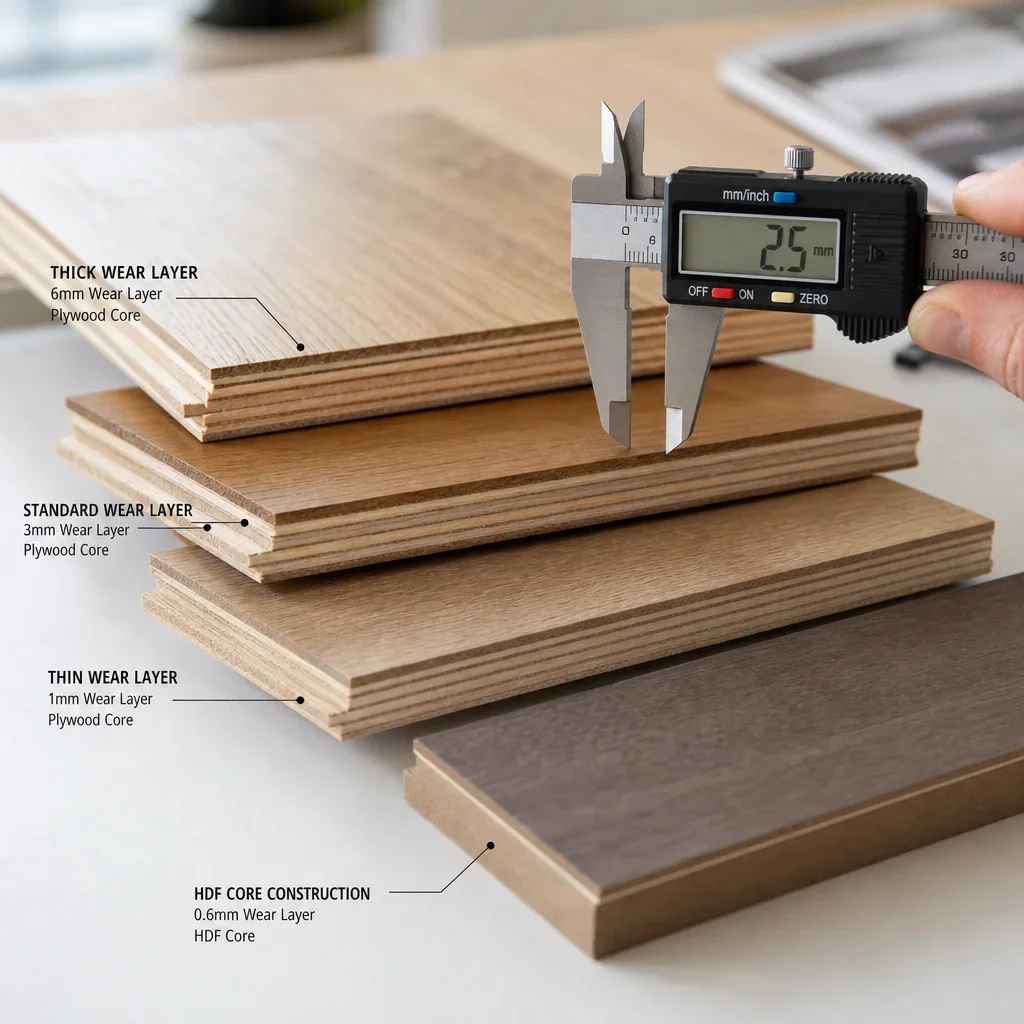
Wear layer thickness is the first thing to check because it affects both lifespan and refinishing potential. A common market range runs from under 2 mm to about 5 mm. Thinner top layers can still look good for years, but thicker wear layers usually give you more margin for future sanding and a longer ownership horizon.
Core construction matters because the floor is not just the top veneer. Many engineered floors use a plywood core, while others use HDF or fibreboard-based cores. Plywood cores are built from layered wood, which usually helps with stability and fastener holding, while HDF cores can feel dense and consistent but need good moisture control. Neither core is automatically the best durable engineered hardwood for every home.
Finish and species control day-to-day abuse more than most buyers expect. A harder species and a stronger factory-applied finish usually stand up better to dog traffic, grit, chairs, and hallway use than a softer species with a lighter finish. That is why two engineered floors with the same thickness can perform very differently.
Installation quality changes durability because movement problems often start under the floor, not on top of it. Flat subfloors, proper moisture testing, expansion space, and the right underlayment or adhesive all matter. Over concrete, below grade, and in condos, that prep work is usually the difference between a floor that stays stable and one that starts gapping, cupping, or sounding hollow.
A quick buying checklist keeps the decision practical: ask for the wear layer thickness, core type, room suitability, approved installation methods, cleaning instructions, and warranty exclusions. If a seller cannot tell you the wear layer or room-use guidance, treat that as a red flag.
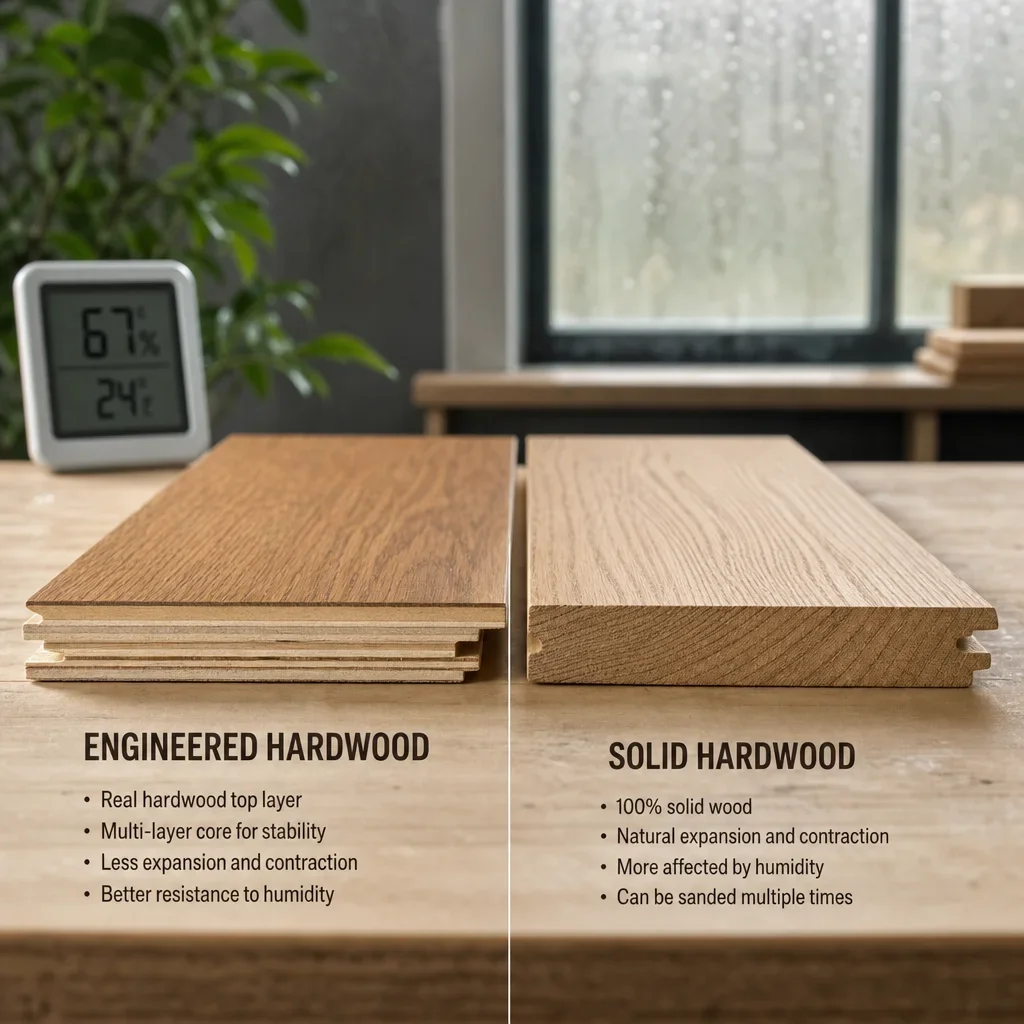
Engineered hardwood usually handles humidity swings better, while solid hardwood usually wins on repeat refinishing and very long service life. Solid boards are commonly 3/4 inch thick. That extra solid wood gives more room for future sanding, but it also means the boards react more to seasonal moisture changes.
| Feature | Engineered hardwood | Solid hardwood |
|---|---|---|
| Construction | Real wood top layer over layered core | One piece of wood throughout |
| Moisture stability | Usually better in changing humidity | Usually more movement with humidity |
| Scratch resistance | Depends mostly on species and finish | Depends mostly on species and finish |
| Refinishing potential | Some can be refinished, some cannot | Usually more refinishing capacity |
| Common lifespan | About 20 to 40 years for many products | About 30 years to 100+ years with care |
| Over concrete | Commonly used, subject to moisture testing | More limited and site-sensitive |
| Basement suitability | Often a better fit than solid | Usually less ideal below grade |
| Prestige and legacy lifespan | Strong, especially in quality tiers | Usually strongest for traditional long-term value |
Surface wear is a tie more often than people think. In engineered hardwood vs solid hardwood durability, the top finish and wood species matter more for scratches than the fact that one board is layered and the other is solid. The real split is moisture stability versus lifetime renewability.
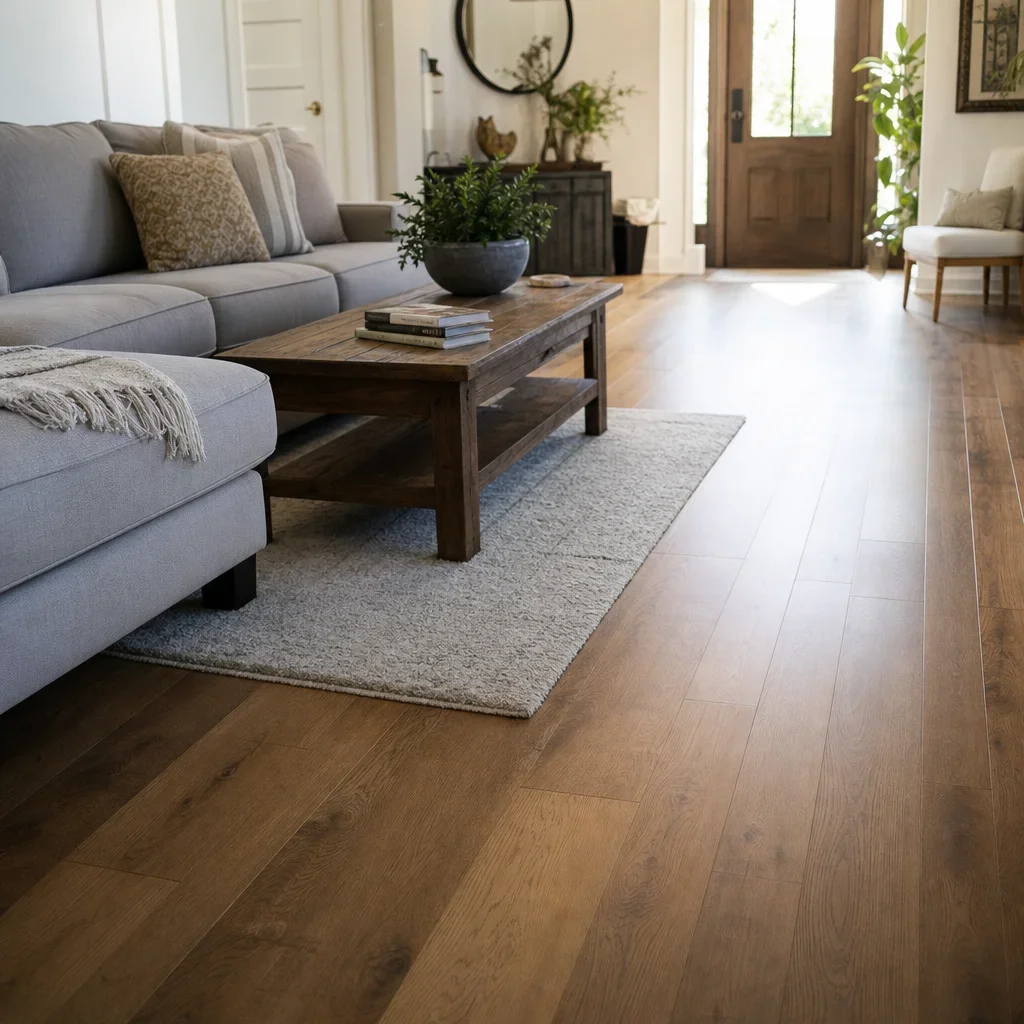
Many engineered hardwood floors last around 20 to 40 years, but that broad range only makes sense when you separate traffic, quality, and care. A condo living room with no pets and good furniture pads will age very differently from a busy entry hall or rental unit.
Lower-tier products usually show their limits earlier because the wear layer is thinner and the finish is often less forgiving. Mid-range and higher-quality products can stay attractive much longer if spills are cleaned quickly, grit is controlled at the door, and the subfloor was prepared properly from day one.
A floor can also outlast its fresh look. Some products may still be structurally usable after years of wear, but they may no longer look sharp enough for a resale-focused renovation. That is why buyers should separate how long do engineered hardwood floors last from how long they will still look the way you want.
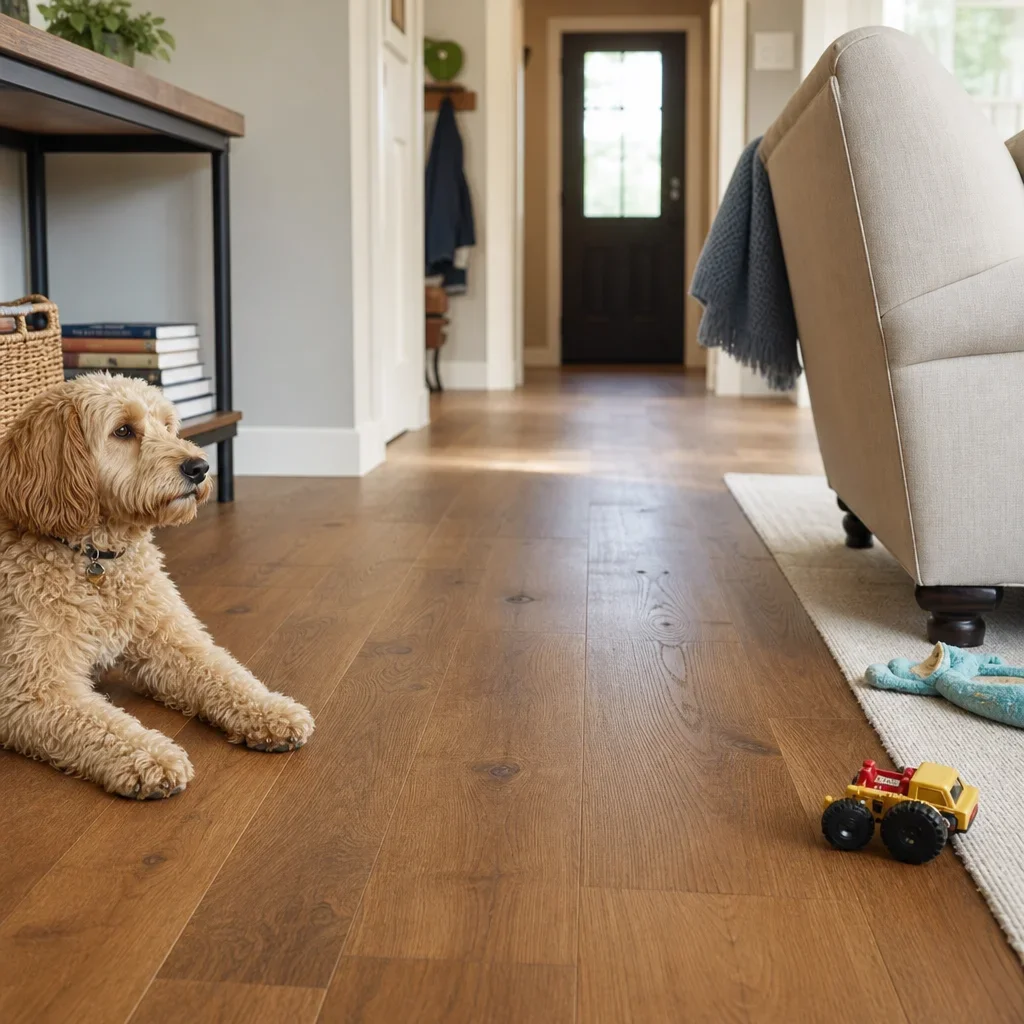
Engineered hardwood handles daily living reasonably well, but it is still real wood and real wood can scratch and dent. Dog nails can scratch engineered hardwood, especially on softer species or lower-durability finishes. Kid toys, grit from shoes, rolling office chairs, and moving furniture can also mark the surface if the finish is not built for that level of traffic.
Pet urine can ruin engineered hardwood if it sits long enough to work through seams or a damaged finish. The risk is not just staining on top. Moisture that gets into joints can discolor the wood, swell edges, and create odour issues that are much harder to fix than a surface scratch.
Busy-family performance improves when the product matches the room. For pets, choose a tougher species and finish, keep nails trimmed, and use runners in high-traffic lanes. For kids, add felt pads, avoid hard plastic chair wheels, and control grit at the entry. For rentals and rough hallways, a floor with a stronger finish and a practical colour tone usually ages better than a very dark, glossy plank that shows every mark.
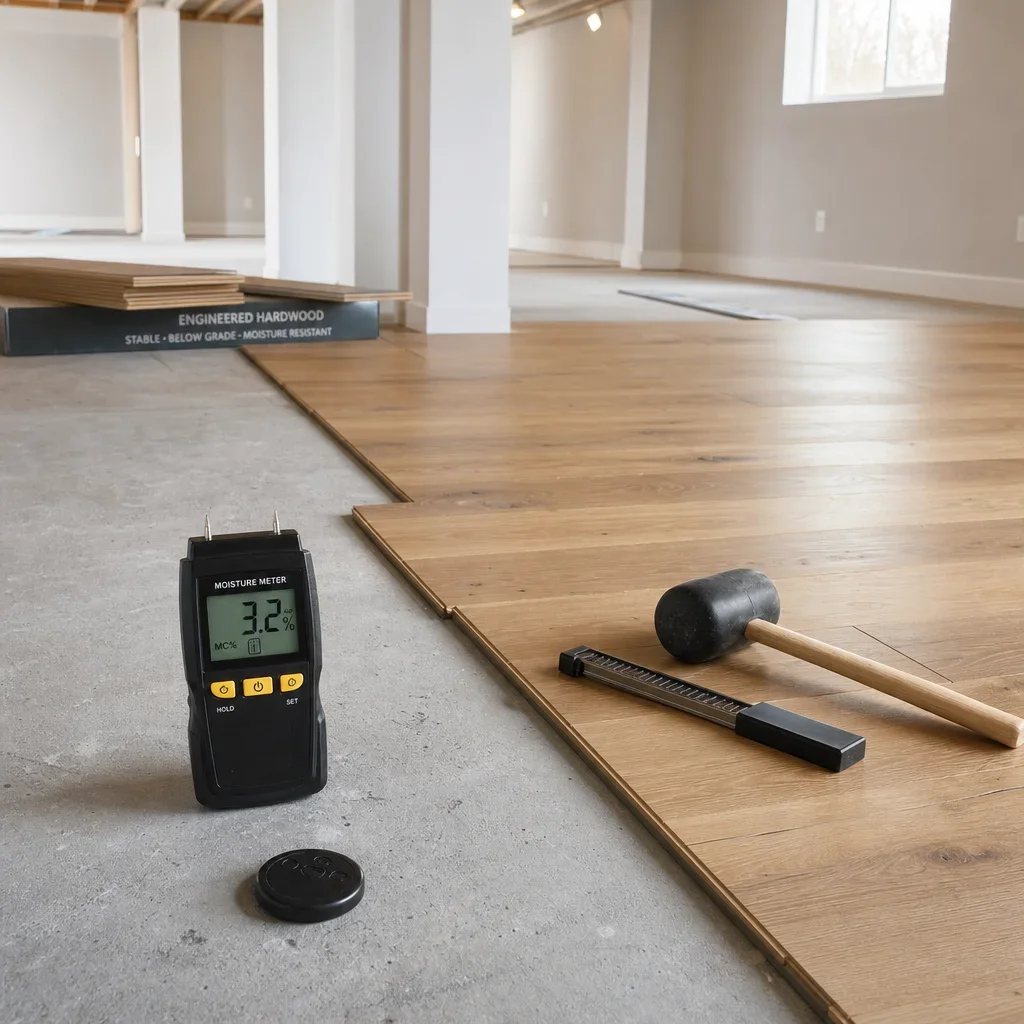
Engineered hardwood is often better than solid hardwood in humid areas because the layered core helps reduce expansion and contraction. That stability is why engineered hardwood for basements and engineered hardwood over concrete are common searches. It is also why builders and renovators often choose it for condos and slab-on-grade homes.
More moisture resistant does not mean waterproof. If a product is marketed with broad waterproof language, ask exactly what that means: surface spill resistance, a water-resistant finish, or a full room-use approval from the manufacturer. Those are not the same claim.
Engineered hardwood can often be installed over concrete or below grade, but only after moisture testing and with the installation method the product allows. Glue-down, floating, and nail-down options are not interchangeable across every line. In a basement, the slab condition and moisture reading matter as much as the floor you choose.
Engineered hardwood for kitchens can work well if spills are wiped quickly and the product is suited to that room. Full bathrooms are a different discussion. Persistently wet spaces, repeated puddling, and poor ventilation are hard on wood floors, so engineered hardwood is usually not the first recommendation there unless a specific manufacturer says otherwise.
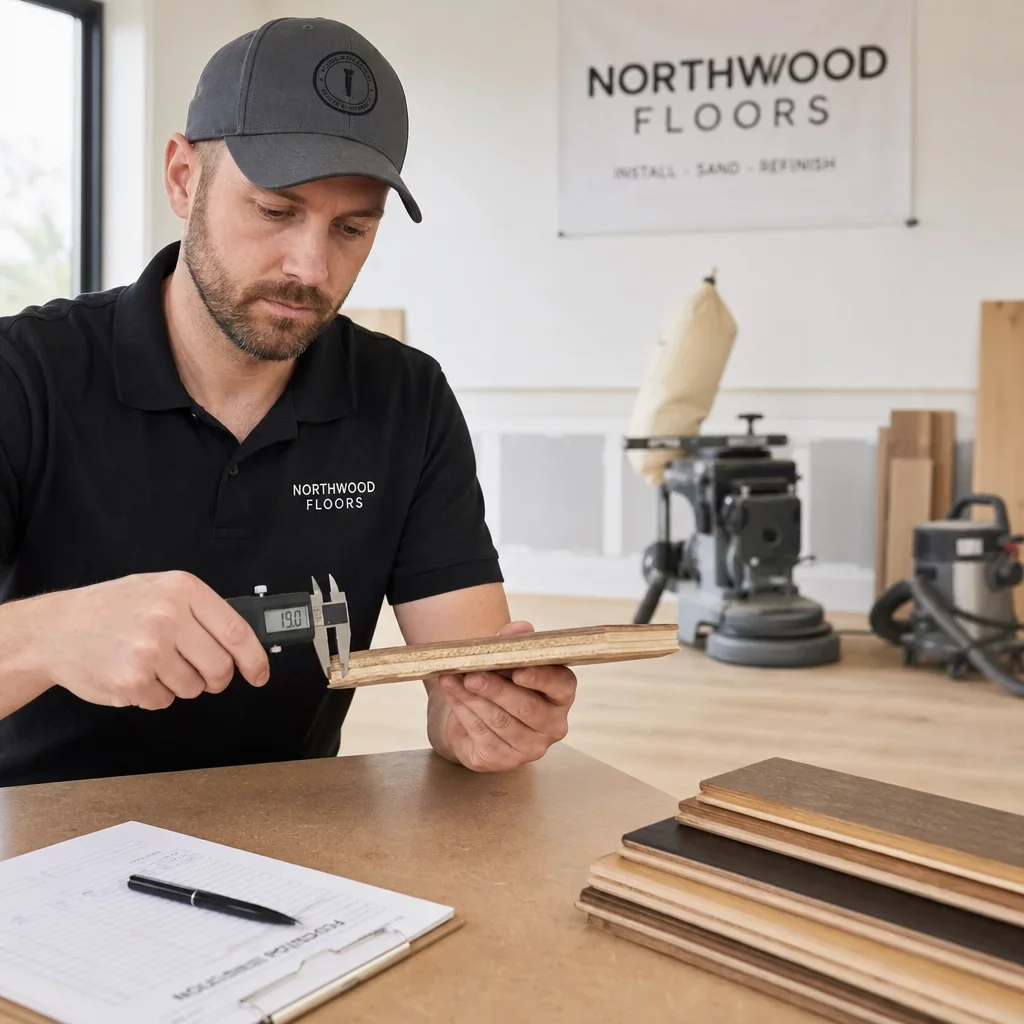
Some engineered hardwood can be refinished, but not all of it can be sanded safely. The deciding factor is usually the wear layer thickness, plus the floor's current condition, any prior repairs, and the refinisher's inspection. That is the honest answer to can engineered hardwood be refinished.
A practical market rule is that very thin wear layers may allow no sanding at all, while thicker wear layers may allow limited refinishing. A broad guide of 0 to 2 refinishings is reasonable for engineered floors depending on wear layer and condition. That is not a promise for every product, and no one should guarantee a sanding count without seeing the board spec and the floor itself.
Solid hardwood usually allows more resets over time. Many 3/4 inch solid hardwood floors can often be refinished about 4 to 6 times over their life, depending on species, prior sanding depth, and board condition. If your priority is maximum long-term renewability, solid still has the edge.
For buyers comparing veneer thickness, under 2 mm is usually a shorter-horizon choice, while thicker wear layers are better for long-term ownership and resale-minded projects. The more you care about future sanding, the more engineered hardwood wear layer thickness matters.
The main negatives of engineered wood flooring are limited refinishing compared with solid wood, wide quality differences between products, and lower tolerance for standing water than many buyers assume. It can also scratch or dent because the surface is still real wood, not a magic coating.
Low-end engineered boards can look fine on day one but offer less long-term value if the wear layer is thin and the construction is light. That is one reason cheap product-to-product comparisons can be misleading. The floor that costs less upfront may give you fewer options later.
Some floating floors also sound or feel different underfoot than a nailed solid wood floor. That does not make them bad. It just means underlayment choice, subfloor prep, and installation method affect comfort and acoustics more than buyers expect.
The pros are real wood appearance, better humidity stability than solid hardwood, good compatibility with concrete and some below-grade applications, and a price entry point that can be lower than solid. The cons are less refinishing flexibility, possible seam sensitivity to moisture, and quality variation across brands and constructions.
For many homes, the right conclusion is simple: engineered works best when you want real wood with fewer site restrictions, while solid works best when you want the longest possible refinishing life and a traditional all-wood build.
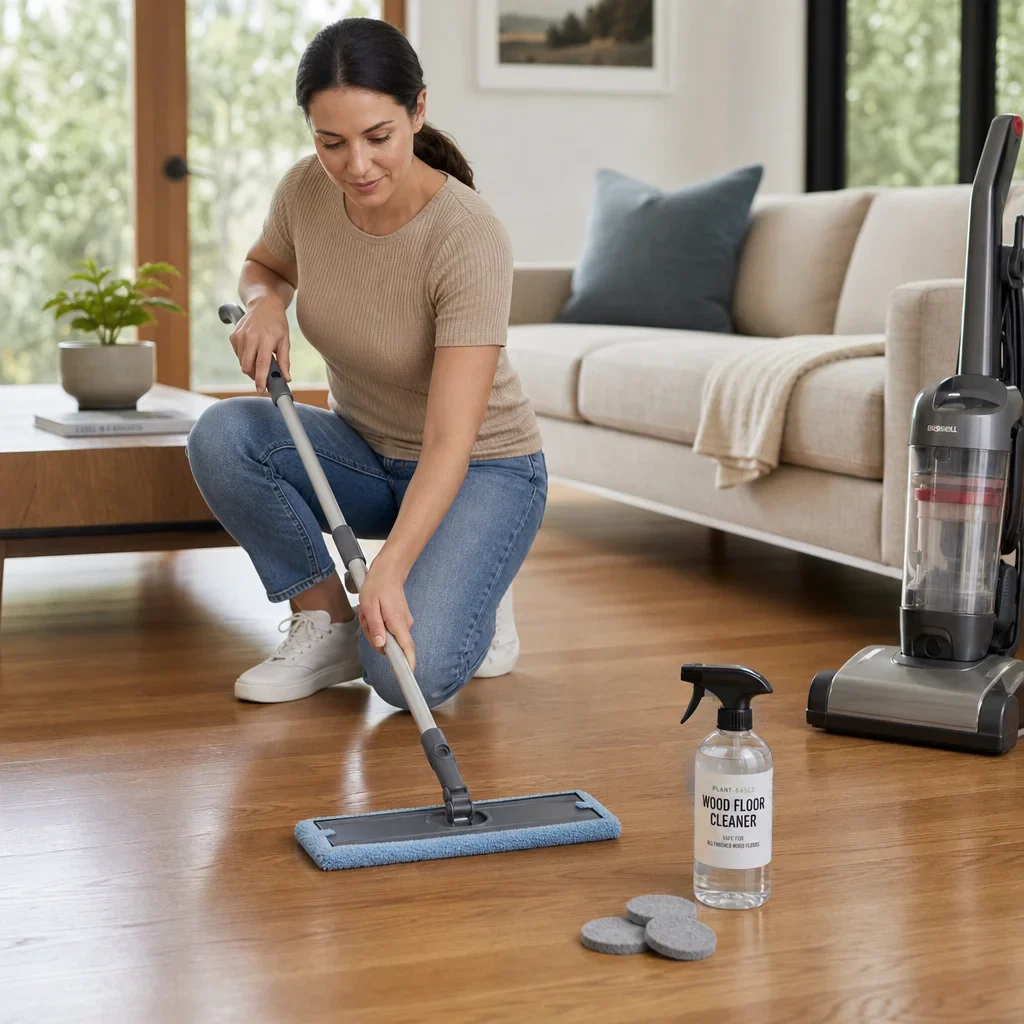
You can mop an engineered floor if the manufacturer allows it, but the mop should be damp, not wet, and a microfiber head is the safest default. Too much water is what causes trouble. Steam mops, soaking-wet pads, abrasive scrubbers, and harsh chemicals can shorten the life of the finish.
Dawn dish soap is not a default wood-floor cleaner. Can you use Dawn dish soap on engineered hardwood? I would not make that your standard method unless the manufacturer specifically approves a similar cleaner. Dish soap can leave residue, change the sheen, or create a film that attracts dirt. Approved wood-floor cleaners are the safer route.
Daily care is simple: vacuum or sweep grit, wipe spills fast, and use mats at exterior doors. Weekly care is usually dry cleaning plus a light approved damp clean as needed. Seasonal care means watching indoor humidity and checking felt pads, chair glides, and pet areas before damage builds up.
A short maintenance checklist helps engineered hardwood durability:
Engineered hardwood is worth it when you want real wood appearance and feel, but need more stability than solid in a condo, basement-adjacent level, or concrete-based home. Laminate usually offers strong scratch resistance for the money, vinyl usually handles water better, and tile usually wins in wet-room durability. None of those materials feels exactly like real wood.
For comfort, engineered hardwood is generally warmer and easier underfoot than tile, which matters for some people with joint pain or arthritis. Underlayment and subfloor assembly also affect comfort. A hard, cold floor can be durable and still be the wrong daily experience for the room.
For a healthy home, the safer framework is to look for low-emission materials, finishes, and adhesives rather than chasing category myths. Real wood can be a good option, but the total installation system matters. Adhesives, coatings, and maintenance products all play a role.
The flooring to avoid is usually the floor that does not match the room. Wood in a persistently wet bathroom, cheap laminate in a flood-prone entry, or glossy dark planks in a pet-heavy hallway are all mismatch problems, not just product problems.
Engineered hardwood is often more budget-friendly than solid hardwood on material price, and CanFloor lists engineered wood from $2.99 per square foot and solid hardwood from $3.99 per square foot. Those are starting prices and product pricing, not a universal installed cost. The final number depends on grade, plank size, finish, subfloor prep, trim work, and installation method.
Resale value is not a simple engineered-versus-solid scoreboard. Solid hardwood may carry stronger prestige in some buyer segments, but high-quality engineered wood is widely accepted and can support resale well when it looks appropriate for the home, is properly installed, and suits the level of the property.
High-end homes use both engineered and solid hardwood. The deciding factor is usually not status alone. It is whether the project needs wide planks, stable performance over concrete, custom finish control, or the maximum lifetime sanding capacity of solid wood.
Choose engineered hardwood if you have a condo, a concrete subfloor, a basement-adjacent level, variable humidity, or you want real wood without the full cost and site limits of solid. Choose solid hardwood if you expect to own the home for decades and want the greatest refinishing runway.
The best durable engineered hardwood is the one whose construction matches your room and traffic, not the one with the loudest marketing. Start with the wear layer thickness, then check the core, species, finish, installation method, room approval, cleaning rules, and warranty exclusions.
Use this shortlist before you buy:
Match the floor to the home type. Pet homes benefit from practical colours, stronger finishes, and runner protection. Busy families need grit control and lower-maintenance sheens. Basements need slab testing and room-appropriate construction. Rentals need durability and easy touch-up expectations. Resale-focused renovations usually benefit from classic tones and a wear layer that leaves future options open.
Red flags are easy to spot once you know them: vague waterproof claims, no wear-layer disclosure, no below-grade guidance, no approved-cleaner instructions, and no clear answer about concrete installation.
Yes, many are, especially when the finish is built for traffic and the room is kept free of grit and standing moisture. Many engineered floors fall into a roughly 20 to 40 year lifespan range with normal care.
A reasonable buyer range is about 20 to 40 years for many products, with quality, traffic, pets, and moisture exposure making the biggest difference.
Some can, some cannot. Wear layer thickness and floor condition decide that, not the word engineered by itself.
A broad rule is 0 to 2 times for engineered hardwood, depending on wear layer and condition. Always verify the product spec first.
Yes, they can. Finish quality and wood species matter more than the category label.
It can if it sits long enough to penetrate seams or a damaged finish. Quick cleanup matters.
Yes, if the manufacturer allows it and the mop is damp rather than wet.
Usually yes, because engineered boards are generally more stable around moisture and are commonly used over concrete and below grade when site conditions are properly tested.
No. Some products may offer better spill resistance, but engineered wood should not be treated as a waterproof floor unless a manufacturer makes a very specific, verified claim.
Solid can carry more traditional prestige, but good engineered wood is a strong resale-friendly choice when it suits the home and is installed well.
Both engineered and solid hardwood show up in higher-end homes. The project goals, subfloor, plank format, and long-term ownership plan usually decide which one makes more sense.
Natural-looking tones, lighter browns, warm neutrals, and less glossy finishes are the safer direction than extreme grey or very dark high-shine looks. Trend matters less than choosing a colour that hides wear and suits the home.
If you are comparing samples, bring home the engineered and solid versions side by side. Seeing the finish, plank construction, and colour in your own light usually makes the decision easier than reading one more spec sheet.