
For a quicker response, please send all inquiries
via info@canfloor.com or
text to
416-735-0075.
| Monday - Friday | 10:00 am - 7:00 pm |
| Saturday & Sunday | 10:30 am - 4:00 pm |
Most buyers comparing bamboo flooring vs engineered hardwood are asking the wrong first question. The better question is not which category sounds better, but which specific product fits your room, moisture exposure, traffic level, and budget.
The short answer is simple. Neither floor is universally better. Engineered hardwood is usually the safer mainstream choice for a real-wood look, broader style selection, and rooms with moderate humidity swings. High-quality strand-woven bamboo can make sense when hardness, a distinctive look, and a sustainability-focused material story matter most. Low-grade versions of either can disappoint. Bathrooms and repeatedly wet spaces usually call for vinyl instead of either wood-based option.
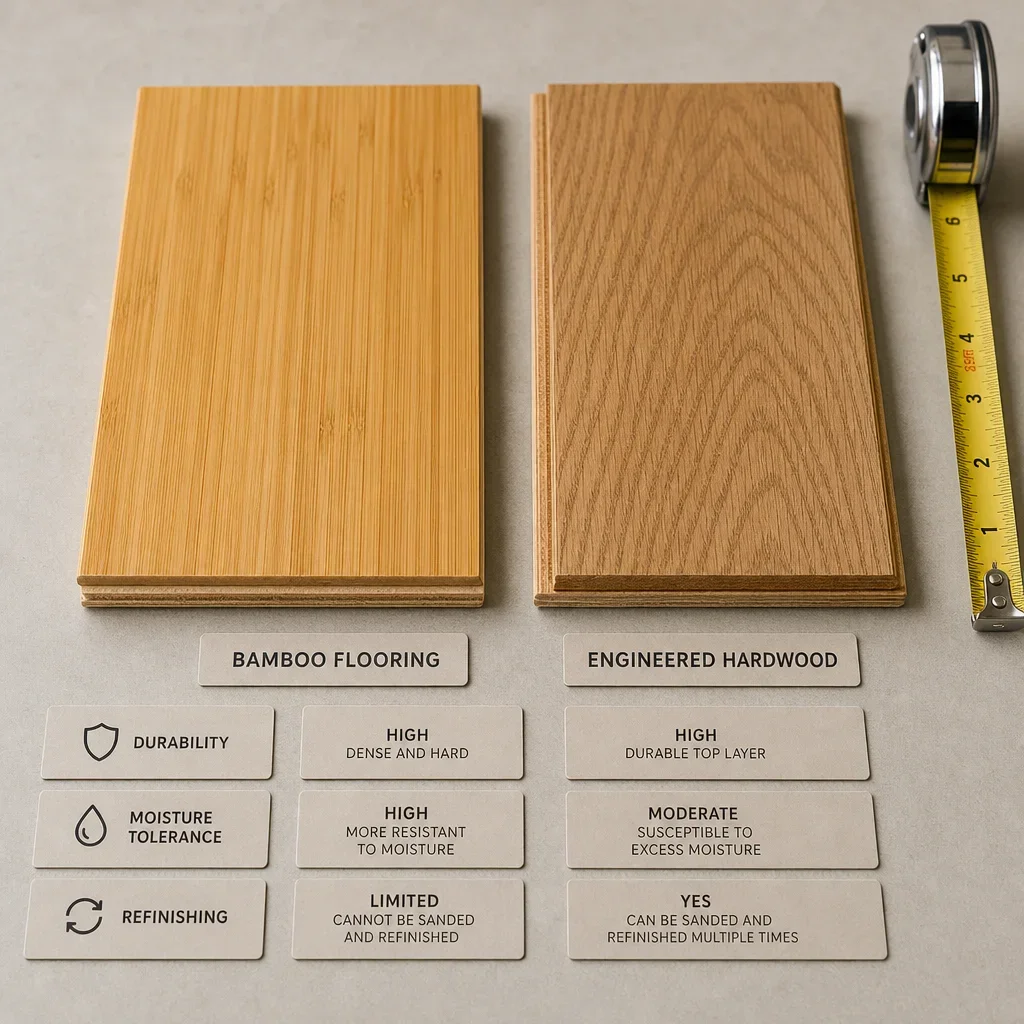
| Feature | Bamboo Flooring | Engineered Hardwood Flooring |
|---|---|---|
| What it is | A grass-based material processed into planks | Real hardwood veneer over a layered core |
| Main types | Solid bamboo, engineered bamboo, strand-woven bamboo | Veneer/wear layer over plywood or similar layered core |
| Material-only price | About $1.50-$12 per sq. ft. | About $4-$12 per sq. ft. |
| Look | More linear, contemporary grain | Traditional real-wood species visuals |
| Moisture tolerance | Product-specific, but not waterproof | Usually more dimensionally stable than solid wood, but not waterproof |
| Durability | Strand-woven bamboo can be very hard, but quality varies | Depends on species, finish, core, and wear layer |
| Refinishing | Some products limited; construction matters | Possible on some products; wear layer decides |
| DIY friendliness | Some click options are DIY-friendlier | Some floating and click options are DIY-friendlier |
| Radiant heat | Product-specific approval required | Product-specific approval required |
| Best for | Buyers who like bamboo's look and choose a well-made product | Buyers wanting a classic high-end appearance and wider selection |
| Watch-outs | VOCs, grading inconsistency, fading, delamination risk on low-grade material | Thin wear layers, vague specs, water damage risk, premium pricing |
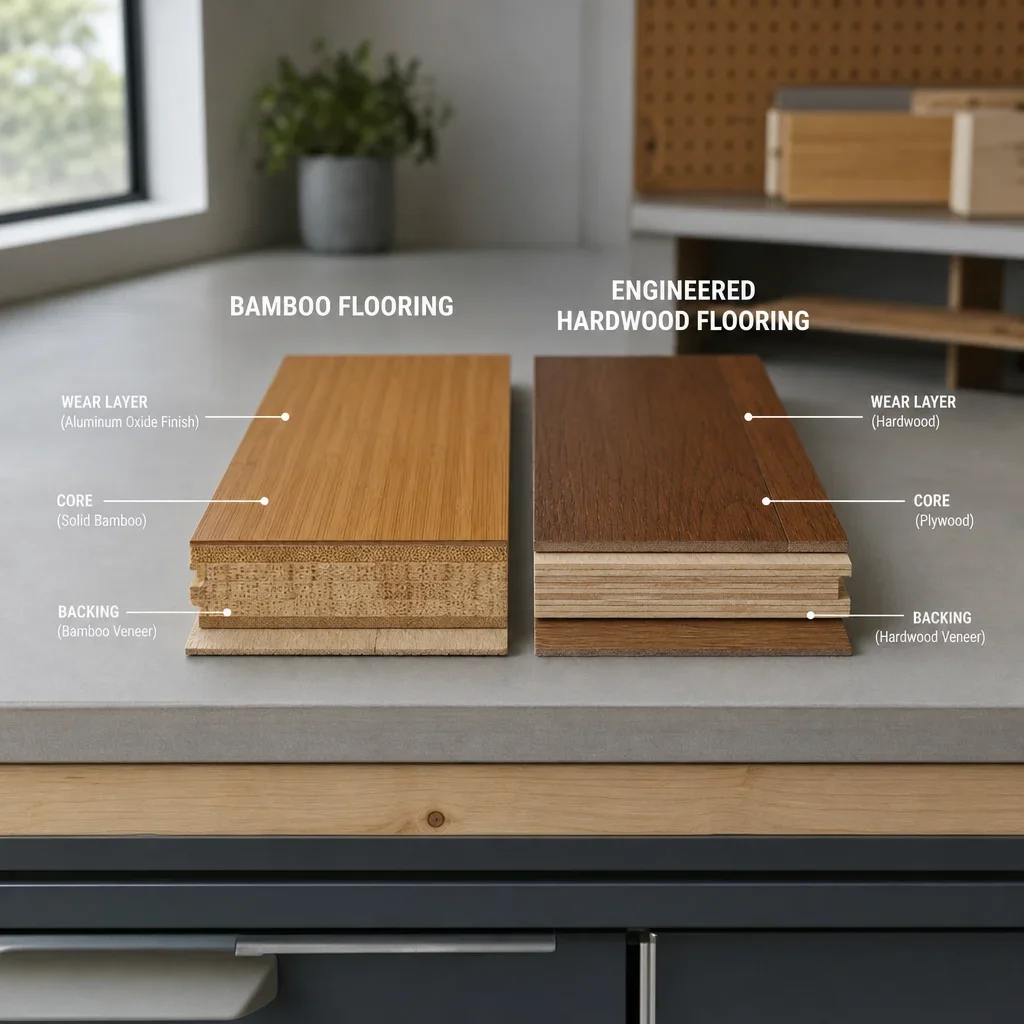
Bamboo and engineered hardwood are built differently, and that difference drives how they look, wear, and react to the room. Bamboo is made from a fast-growing grass that is cut, processed, and formed into planks, while engineered hardwood flooring uses a real hardwood top layer over a layered core .
Engineered hardwood construction is straightforward once you see it cut open. The top is a real wood veneer, often oak, maple, hickory, or walnut, and below that sits a stable core made from layered wood products such as plywood or similar construction . That layered build is why engineered wood usually handles humidity swings better than solid hardwood.
Bamboo is not one thing. Solid bamboo uses compressed bamboo material through the plank, strand-woven bamboo uses shredded bamboo fibres compressed with binders into a denser board, and engineered bamboo puts a bamboo surface over a layered core . Engineered bamboo is different from engineered hardwood because the face material is bamboo, not oak or another hardwood species.
Bamboo's main strengths are hardness in the right formats, a distinct visual style, and broad price coverage. Strand-woven bamboo is the strongest bamboo category in general terms, some lines come in click-lock formats, and entry-level bamboo can be priced lower than many engineered wood options .
Bamboo's weak points show up when quality is inconsistent. Lower-grade products can have uneven milling, colour variation, finish problems, adhesive emissions, fading in strong sun, or delamination if the manufacturing is poor . That is the downside of bamboo flooring most buyers miss. The category can look great, but it is less forgiving of weak quality control.
Engineered hardwood's biggest advantage is authenticity at the surface. You are walking on real hardwood, you get a wider range of species and stain looks, and better-made products usually feel more high-end in resale-focused spaces .
Engineered hardwood's weak points are tied to the wear layer and core. A thin veneer limits refinishing, a weak core can affect stability, and standing water can still damage the floor even though the category is more stable than solid wood .
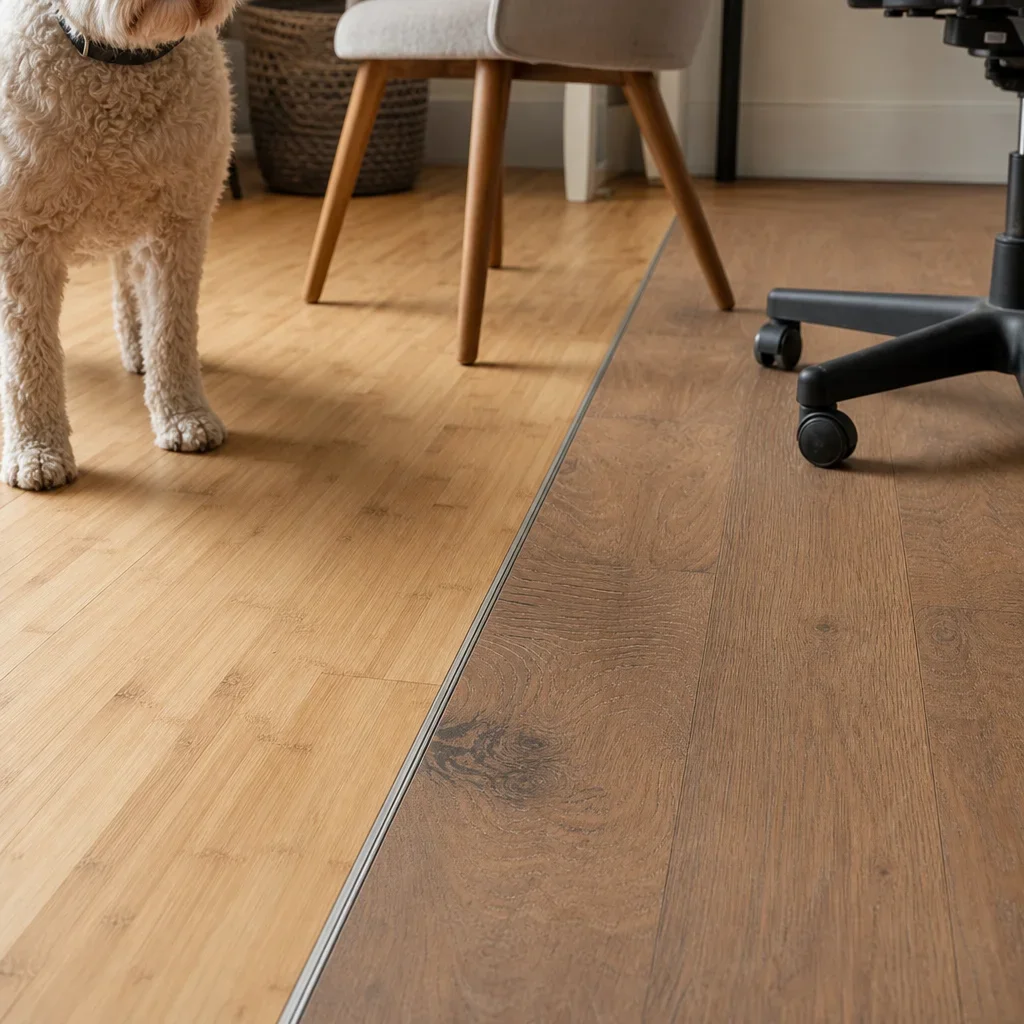
Durability is not the same as hardness. A hard floor can still scratch, fade, chip at the edges, or fail at the joints if the product is badly made .
Strand-woven bamboo is usually the bamboo format buyers look at for maximum toughness. It is denser than standard solid bamboo and is often chosen for pets, kids, and high-traffic areas, but the finish quality still matters because surface scratches happen in the finish before they happen in the core .
Engineered hardwood performance depends more on the species and finish than people expect. An engineered oak floor with a strong factory finish may hold up better in daily life than a cheaper bamboo plank with weak coating and inconsistent milling . I tell buyers to compare the finish system, edge quality, and warranty language, not just the category name.
For pets, kids, rentals, and light commercial spaces, the safest answer is product-specific. Well-made strand-woven bamboo can suit heavy traffic. Better engineered hardwood can also do very well in hallways, living areas, and offices. Cheap versions of both get marked up fastest by grit, chair legs, and rolling furniture .
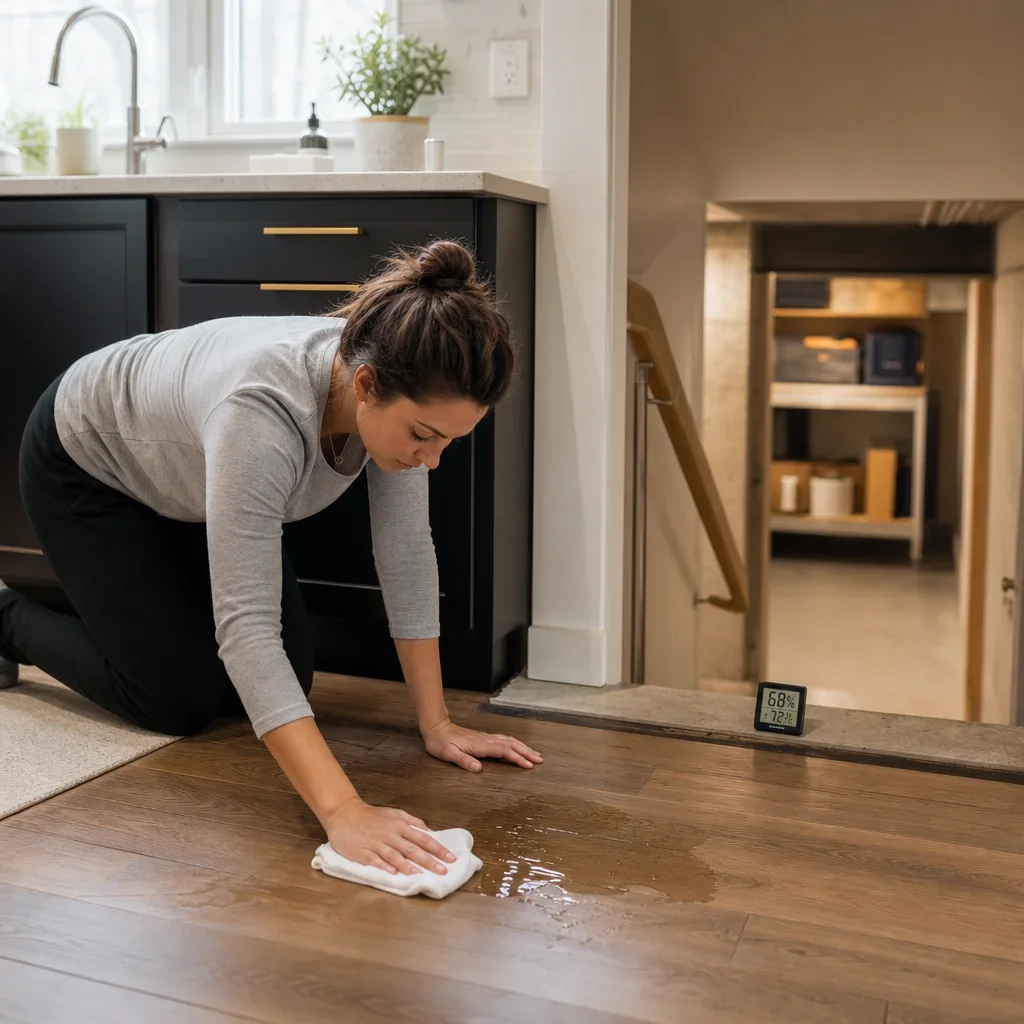
Neither bamboo nor engineered hardwood should be treated as waterproof. That is the first rule to keep in mind for kitchens, basements, and any room where standing water is realistic .
Engineered hardwood usually handles normal indoor humidity swings better than solid wood because of its layered core. That does not make it safe for repeated wetting. Spills still need quick cleanup, and flooded areas can still cup, stain, or swell .
Some engineered hardwood products can be installed below grade, including certain basement applications, but that depends on the exact product construction and the manufacturer's instructions . Below-grade approval is never automatic across the whole category.
Bamboo can work in kitchens only if the room is well-managed and spills are wiped up fast. Full bathrooms and laundry rooms are still poor candidates for both bamboo and engineered hardwood unless a specific manufacturer approves the product and the buyer accepts the risk .
Room by room, the practical split is clear. Bedrooms, living rooms, offices, and many condo spaces suit engineered hardwood well. Hallways and active family areas can suit either a strong engineered hardwood or a high-quality strand-woven bamboo. Basements need careful product selection. Bathrooms usually point buyers toward vinyl instead .
Engineered hardwood usually reads as more high-end because the face is a real hardwood species. If you want the classic look of oak, maple, walnut, or hickory, engineered hardwood gives you that directly .
Bamboo has its own look, and it is not trying to imitate every hardwood species. The grain is usually more linear and contemporary, which some buyers love and others never warm up to . If you want a traditional wood floor look, bamboo may feel less familiar.
High-end appearance depends on more than the label. Wider planks, better milling, lower-sheen finishes, cleaner bevels, and skilled installation shape the final look as much as the material category itself .
For 2026-style buying trends, the safe takeaway is broad, not hype-driven. Matte finishes, natural tones, and wider plank visuals remain popular because they hide dust better and fit both modern and transitional interiors .
Material cost is where the biggest price comparison starts. Bamboo flooring vs engineered hardwood price ranges are broad: bamboo is often about $1.50-$12 per sq. ft., while engineered hardwood is often about $4-$12 per sq. ft. for material only .
The floor itself is only part of the invoice. Total cost also depends on subfloor prep, underlayment, transitions, trim, stairs, waste factor, floor leveling, and whether the install is floating, glue-down, or nail-down .
Cheaper bamboo is not always better value. If a low-cost plank has weak finish quality, inconsistent grading, or locking issues, the floor can cost more over time through repairs, callbacks, or earlier replacement .
Engineered hardwood may cost more up front, but it can return value through better appearance retention and, on some products, the possibility of refinishing later . That is why bamboo flooring vs hardwood cost is not just a price-tag comparison. Long-term performance matters.
For Toronto and GTA projects, local quotes matter more than online averages. Labour conditions, condo rules, delivery access, and subfloor condition can shift total project cost materially, so compare the full supply-and-install scope, not just the plank price .
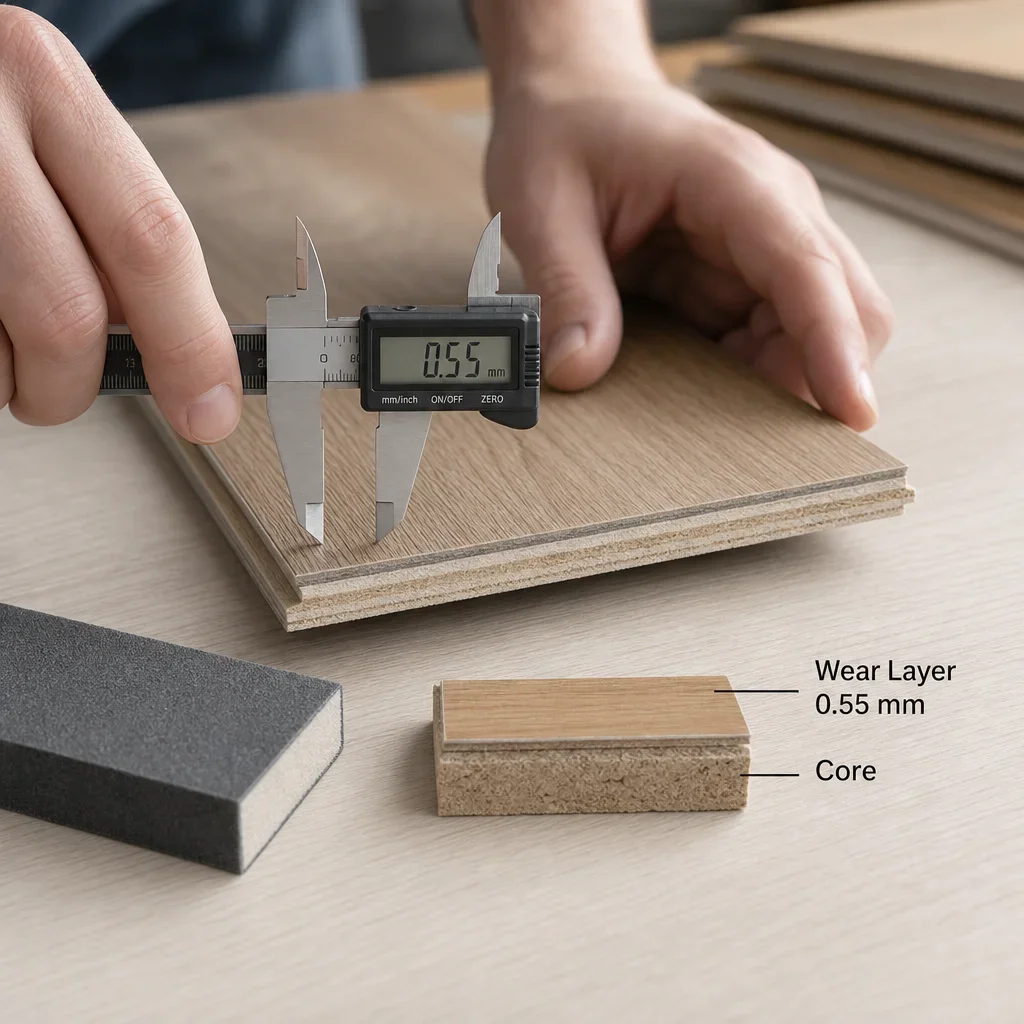
Refinishing depends on construction, not marketing language. Some engineered hardwood products can be sanded and refinished, while others cannot because the wear layer is too thin .
The wear layer is the real wood thickness above the core. A thicker wear layer generally gives more room for future sanding, and a thin veneer gives less or none . Buyers should ask for the actual wear-layer spec before assuming anything.
Bamboo refinishing is also product-specific. Solid bamboo, strand-woven bamboo, and engineered bamboo do not all behave the same way, and finish type, plank thickness, and surface construction all matter .
For families, rentals, and high-traffic homes, refinishing potential can change long-term value. A floor that cannot be renewed later may still be the right choice, but that trade-off should be clear before you buy .
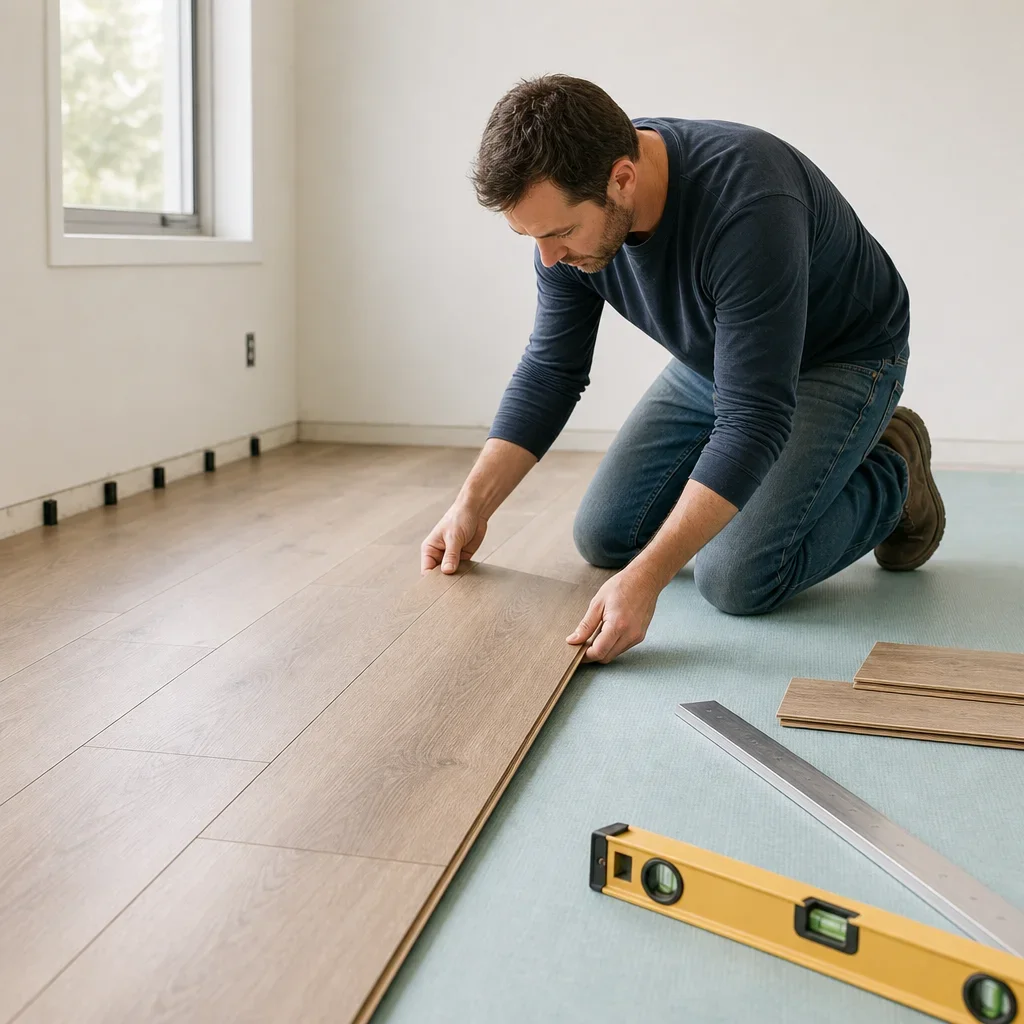
Some versions of both floors are DIY-friendlier than others. Click-lock and floating floor formats are usually simpler for capable DIYers than glue-down or nail-down installations .
Subfloor flatness and moisture testing matter more than the category label. A plank that installs easily on paper can still fail if the subfloor is uneven, damp, or poorly prepared .
Condo and basement projects need extra attention because sound control and moisture management affect performance. Underlayment choice, slab conditions, and building rules can all influence what installation method makes sense .
Acclimation and expansion gaps are part of the basic install plan for both bamboo and engineered hardwood, but the exact requirements are manufacturer-specific . We tell buyers to follow the product instructions, not a generic internet shortcut.
Daily care is simple if you keep water under control. Dry dusting, vacuuming with a hard-floor setting, and quick spill cleanup are the basics for both bamboo and engineered hardwood .
A wet Swiffer or any over-wet cleaning method is not a good default for bamboo floors. Use only a barely damp method and follow the manufacturer-approved cleaner guidance instead of saturating the surface .
The same caution applies to engineered hardwood. Water left on the surface or worked into joints can damage edges, dull the finish, and affect plank stability over time .
Steam mops are also a bad idea unless the manufacturer explicitly approves them. Heat and moisture together create risk for both bamboo and engineered wood floors .
Felt pads, walk-off mats, trimmed pet nails, and quick grit removal do more for floor life than fancy cleaning products. Most wear starts with sand and dirt acting like sandpaper under shoes and chair legs .
The healthiest flooring is the one with low emissions, appropriate finishes, and a realistic maintenance plan for your home. Health is not decided by bamboo versus wood alone .
Both bamboo and engineered hardwood can be good indoor-air choices when the product uses low-VOC finishes and well-documented adhesives. Both can also be poor choices if the emissions data is vague or missing .
The certifications worth asking about include FloorScore, CARB Phase 2 compliance where applicable to composite wood components, and FSC when you want sourcing information . Those labels do different jobs. FloorScore speaks to indoor air emissions, CARB Phase 2 relates to formaldehyde limits in relevant composite wood products, and FSC addresses responsible forestry or sourcing standards .
If your top priority is the cheapest non-toxic flooring, the answer is not one category every time. You need to compare the actual certification documents, surface finish, and adhesive system on the specific product being quoted .
Bamboo's sustainability case starts with renewability, but it does not end there. Bamboo is a fast-growing grass, which gives it a strong material story on paper .
That does not automatically make every bamboo floor the greener choice. Manufacturing energy, adhesive chemistry, shipping distance, finish system, lifespan, and replacement frequency all affect the real environmental picture .
Engineered hardwood can also be a reasonable sustainability choice when the wood is responsibly sourced and the floor lasts well. A longer-lasting product with better appearance retention can reduce replacement waste over time .
For buyers comparing renewable materials honestly, ask for source transparency and third-party documentation rather than relying on broad green claims printed on a box .
The best room choice depends on moisture risk first, traffic second, and style third. That order saves people from expensive mismatches .
| Room | Best Choice | Acceptable With Caution | Usually Avoid |
|---|---|---|---|
| Basement | Approved engineered hardwood product or vinyl | Engineered bamboo if manufacturer-approved | Solid bamboo without below-grade approval |
| Kitchen | Better engineered hardwood or vinyl | High-quality bamboo with fast spill cleanup | Any product treated like waterproof flooring |
| Full bathroom | Vinyl | Manufacturer-approved product only, with risk accepted | Standard bamboo and standard engineered hardwood |
| Bedroom | Engineered hardwood or bamboo | Either category in good quality | Poorly made bargain products |
| Hallway | Durable engineered hardwood or strand-woven bamboo | Any quality floor with good mats and maintenance | Soft, low-grade finishes |
| Home office | Engineered hardwood | Bamboo with chair protection | Weak finishes under rolling chairs |
| Condo living area | Engineered hardwood | Bamboo if sound and install specs fit the building | Anything installed without checking building requirements |
| Rental property | Mid-grade engineered hardwood, laminate, or vinyl | Strand-woven bamboo in the right setting | Premium products mismatched to tenant wear |
| Light commercial | Commercial-rated product only | Strand-woven bamboo or engineered wood with suitable finish | Residential-grade planks used beyond their spec |
Choose strand-woven bamboo when hardness and a modern bamboo look are your top priorities. It makes the most sense in active households if the product quality is documented and the room is not repeatedly wet .
Choose solid bamboo only when you understand its limits and the room is stable. It is less forgiving than many buyers expect and is not the category I would call the safe mainstream pick .
Choose engineered bamboo when you want bamboo's surface look with a layered construction that may offer better stability than solid bamboo. It still needs the same careful review of core, adhesive quality, and room suitability .
Choose engineered hardwood when you want the broadest style selection, classic real-wood visuals, and a category with more familiar options for condos, living areas, bedrooms, and many basement-adjacent projects .
A simple decision tree helps. If your room has real moisture risk, compare vinyl first. If your goal is traditional wood appearance, start with engineered hardwood. If your goal is hardness plus a bamboo look, compare high-quality strand-woven bamboo. If refinishing matters, ask for wear-layer or construction details before narrowing the list .
Quality is easier to judge when you ask for the right specs. Buyers should check wear layer, core type, finish system, locking profile, plank straightness, and written installation requirements before comparing colours .
For engineered hardwood, the key checks are species, veneer thickness, core stability, finish quality, and whether the product is approved for below-grade or radiant-heat use if your project needs that .
For bamboo, the key checks are grading consistency, edge milling, finish evenness, colour consistency, delamination risk, and brand transparency around adhesives and emissions .
Certification paperwork matters when health and sustainability are priorities. Ask to see FloorScore, CARB Phase 2, FSC, or other relevant documentation rather than relying on verbal claims .
Warranty language also needs a close read. A long warranty sounds reassuring, but exclusions around moisture, subfloor prep, humidity, and site conditions can matter more than the number of years on the first page .
The floor to avoid is the one that does not match the room. A cheap plank in a wet basement or full bathroom is a bigger mistake than choosing bamboo instead of engineered hardwood .
Low-quality bamboo with unclear sourcing, missing emissions information, or inconsistent milling is worth avoiding. Those are the products that create the category's bad reputation .
Engineered hardwood with a very thin wear layer, vague core specs, or unclear installation instructions is also worth skipping. If the product details are hard to get before purchase, that is usually a warning sign .
No. Bamboo is not automatically better, and engineered hardwood is not automatically better. Engineered hardwood is usually the safer all-around choice for a classic wood look and broader style range, while high-quality strand-woven bamboo can be compelling when hardness and bamboo's visual style are the goal .
The biggest downside is inconsistency. Lower-grade bamboo can have VOC concerns, uneven colour, fading, poor milling, or delamination problems that buyers do not see until after installation .
Strand-woven bamboo can be harder, but engineered hardwood can still be the better long-term performer if the species, wear layer, and finish are stronger overall. Hardness alone does not decide durability .
It can be, but it is usually seen as more contemporary than traditional high-end. Engineered hardwood tends to win on classic premium appearance because the visible surface is a real hardwood species .
Some products can. Basement use depends on the specific construction and the manufacturer's below-grade approval, not the category name alone .
Kitchens are possible with caution and fast spill cleanup. Full bathrooms are usually not recommended for standard bamboo products unless a manufacturer specifically approves the floor and the buyer accepts the risk .
Sometimes. Refinishing depends on wear layer, thickness, construction, and finish type. Never assume refinishing is possible without checking the product spec .
A heavily wet cleaning method is not a good idea. Use a barely damp mop and manufacturer-approved cleaner instead, and keep water from sitting on the surface .
Engineered bamboo flooring uses a bamboo surface layer over a layered core. It is different from solid bamboo and also different from engineered hardwood, which uses a hardwood veneer instead of bamboo .
Look for FloorScore for indoor air emissions, ask about CARB Phase 2 where relevant to composite wood content, and look for FSC when sourcing transparency matters to you .
If you want the safest mainstream answer, engineered hardwood usually wins. It gives you real-wood visuals, broader design choice, and a more familiar fit for bedrooms, living rooms, condos, offices, and many lower-level applications when the product is approved.
If you want a tougher, more distinctive floor and you are willing to scrutinize the product carefully, strand-woven bamboo can be a smart option. The key is quality control, not the bamboo label by itself.
If your room has real moisture risk, compare vinyl before either one. That advice saves more buyers money than any trend forecast.
If you are narrowing samples for a Toronto or GTA project, bring your room photos, subfloor details, and lifestyle priorities into the showroom. It is much easier to compare engineered hardwood, bamboo alternatives, low-VOC options, and installation methods when the room conditions are clear.