
For a quicker response, please send all inquiries
via info@canfloor.com or
text to
416-735-0075.
| Monday - Friday | 10:00 am - 7:00 pm |
| Saturday & Sunday | 10:30 am - 4:00 pm |
A lot of buyers frame bamboo vs hardwood floor as if one has to win. It usually does not. The better choice depends on moisture risk, the look you want, whether refinishing matters, and how long you expect the floor to stay in the home.
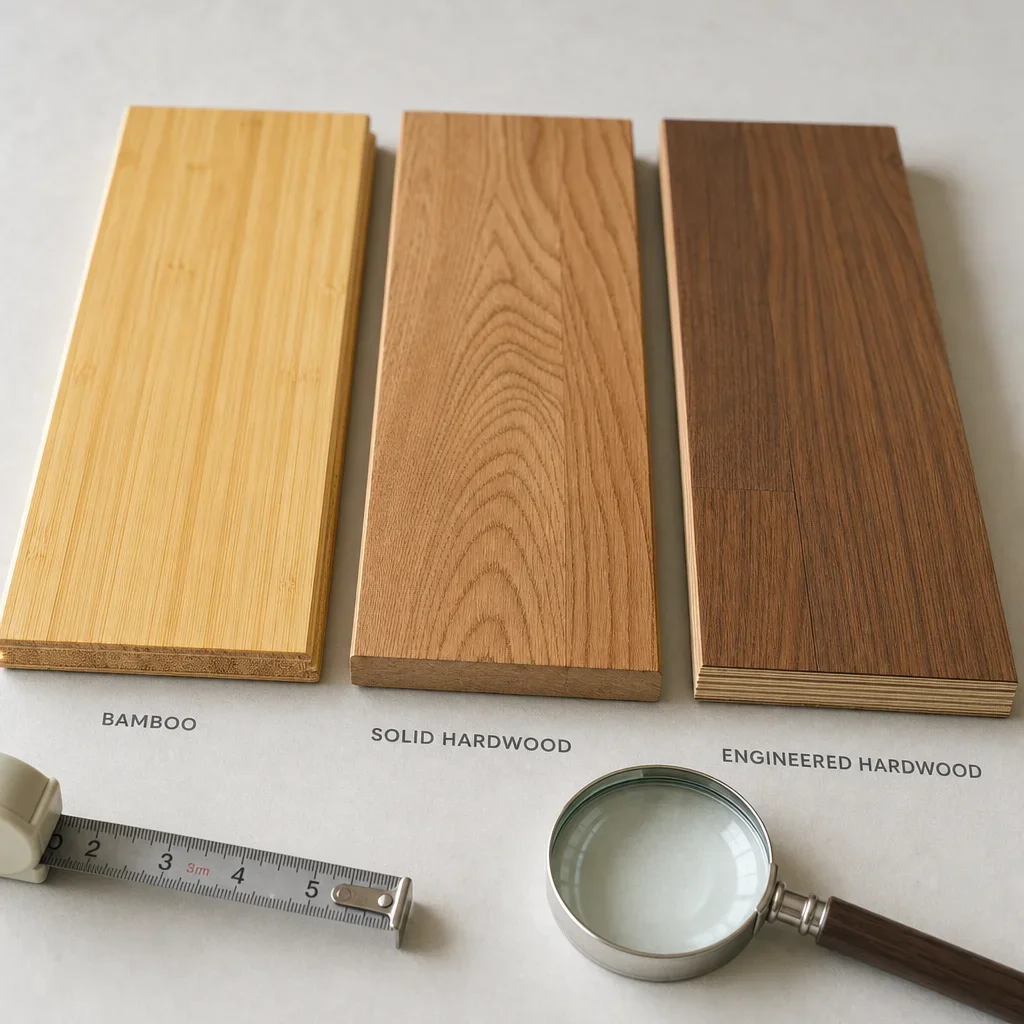
Neither material is universally better. Hardwood usually wins on resale, design range, and refinishing potential, while better-quality bamboo can make sense for buyers who want a modern look, a lower entry price, or a harder surface in some strand-woven lines. Engineered hardwood also belongs in this comparison, because most shoppers are not really choosing between bamboo and solid hardwood alone.
| Category | Bamboo | Solid hardwood | Engineered hardwood |
|---|---|---|---|
| Material type | Grass-based flooring material, manufactured into boards | Real wood sawn from hardwood species | Real wood wear layer over a layered core |
| Typical material cost | Often about $2–$6 per sq. ft. | Often about $4–$8 per sq. ft., with premium species above $10 per sq. ft. | Often overlaps mid-range to premium pricing, depending on wear layer and species |
| Installation cost | Roughly $2–$12 per sq. ft. depending on method and prep | Roughly $2–$12 per sq. ft. depending on method and prep | Roughly $2–$12 per sq. ft. depending on method and prep |
| Moisture tolerance | Better than some solid hardwoods in certain constructions, but not waterproof | Least forgiving around standing water | Often more dimensionally stable than solid hardwood, but still product-specific |
| Refinishing | Sometimes possible, but depends on construction and top layer | Usually best for refinishing, especially solid plank | Sometimes refinishable, depending on wear layer thickness |
| Design variety | More limited species and grain variation | Widest range of species, grades, textures, and stains | Wide range, though still tied to the species on top |
| Resale perception | Mixed, depends on buyer and quality | Strong traditional resale appeal | Strong resale appeal when quality is good |
| Best fit | Budget-conscious, modern style, some DIY-friendly formats | Long-term value, classic look, refinishable floors | Main floors, condos, over concrete, homes with humidity swings |
The quick winner by scenario is simple. Hardwood usually wins for classic appearance and resale. Engineered hardwood usually wins where concrete subfloors or seasonal humidity are part of the job. Better bamboo can work for style-forward projects and some busy households, but quality variation is wider, so buying carefully matters more.
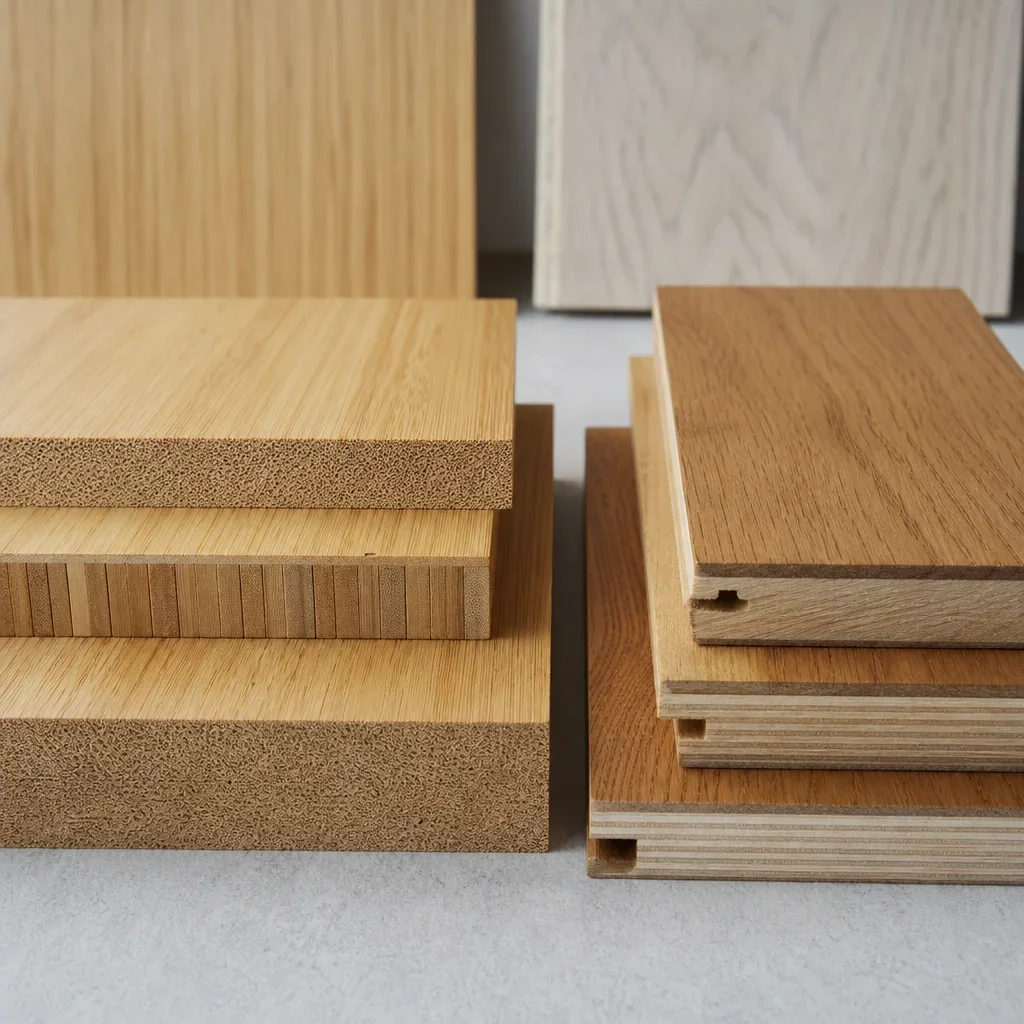
Bamboo flooring is not hardwood in the botanical sense. Bamboo is a grass, while hardwood flooring comes from deciduous tree species such as oak, maple, hickory, or walnut.
That said, buyers shop both as hard-surface floors with a wood look. The real difference is how they are made and how they behave. Hardwood boards come from tree species with natural grain, natural hardness, and species-specific character. Bamboo is processed into flooring strips, layers, or strands, so its performance depends heavily on manufacturing quality, density, adhesives, and finish system.
Solid hardwood is a single piece of wood from top to bottom. Engineered hardwood uses a real-wood top layer over a plywood or high-density core. Solid bamboo is made mainly from bamboo material through the full thickness, while engineered bamboo uses a bamboo wear layer over a layered core. Horizontal bamboo shows broader bamboo nodes, vertical bamboo looks more linear, and strand woven bamboo flooring compresses shredded strands with resin under high pressure for a denser board.
Bamboo’s main strengths are price, a cleaner contemporary look, and potentially strong dent resistance in strand-woven formats. Some lines also come in click systems that can simplify installation over the right subfloor. Its main weakness is inconsistency. One bamboo floor can perform well for years, while another can disappoint because of resin quality, milling, moisture sensitivity, or limited refinishing options.
Hardwood’s main strengths are proven longevity, broader design options, and stronger premium perception. Solid hardwood also gives you the best chance of refinishing later. Its tradeoffs are a higher upfront cost, more sensitivity to standing water, and species-by-species differences in scratch and dent resistance.
If you are weighing bamboo flooring pros and cons against hardwood, the honest answer is that bamboo is not automatically a budget substitute and not automatically a premium upgrade. Better bamboo can look high end, but it usually does not carry the same traditional status as quality oak, maple, or walnut flooring in resale conversations.
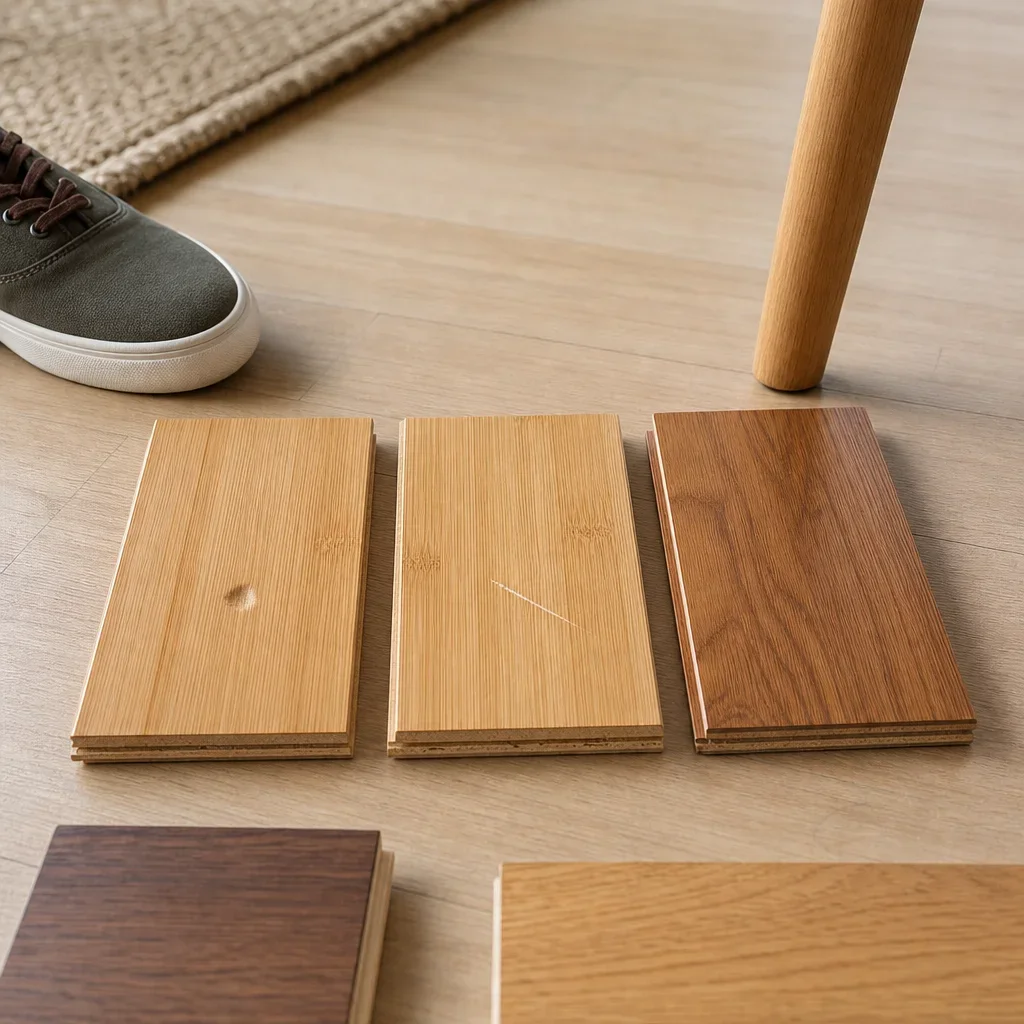
Durability is not one thing. Scratch resistance, dent resistance, finish wear, and moisture failure are separate issues, and buyers mix them together all the time. A harder floor may resist dents better, but it can still scratch if the finish is weak or if grit gets dragged across it.
Janka hardness is useful for comparing dent resistance, but it does not tell the whole story. Red oak is around 1,220 on the Janka scale, and hard maple is around 1,450. Natural bamboo is often cited around 1,300–1,400, while carbonized bamboo is often lower, around 1,000–1,100. Those figures are broad references, not a buying decision on their own, because manufacturing quality still matters.
Strand-woven bamboo is usually the toughest bamboo format and is often sold as harder than common oak. That can make it attractive for pets, kids, rolling chairs, and high-traffic rooms. I would still compare the finish warranty, the plank construction, and the reputation of the brand before assuming it will outperform hardwood in the real world.
For busy homes, the practical ranking is this: high-quality strand-woven bamboo and harder hardwood species both beat softer woods on dents, but a durable finish and proper maintenance matter just as much. Felt pads, entry mats, and quick grit removal do more for day-to-day wear than marketing words on the box.
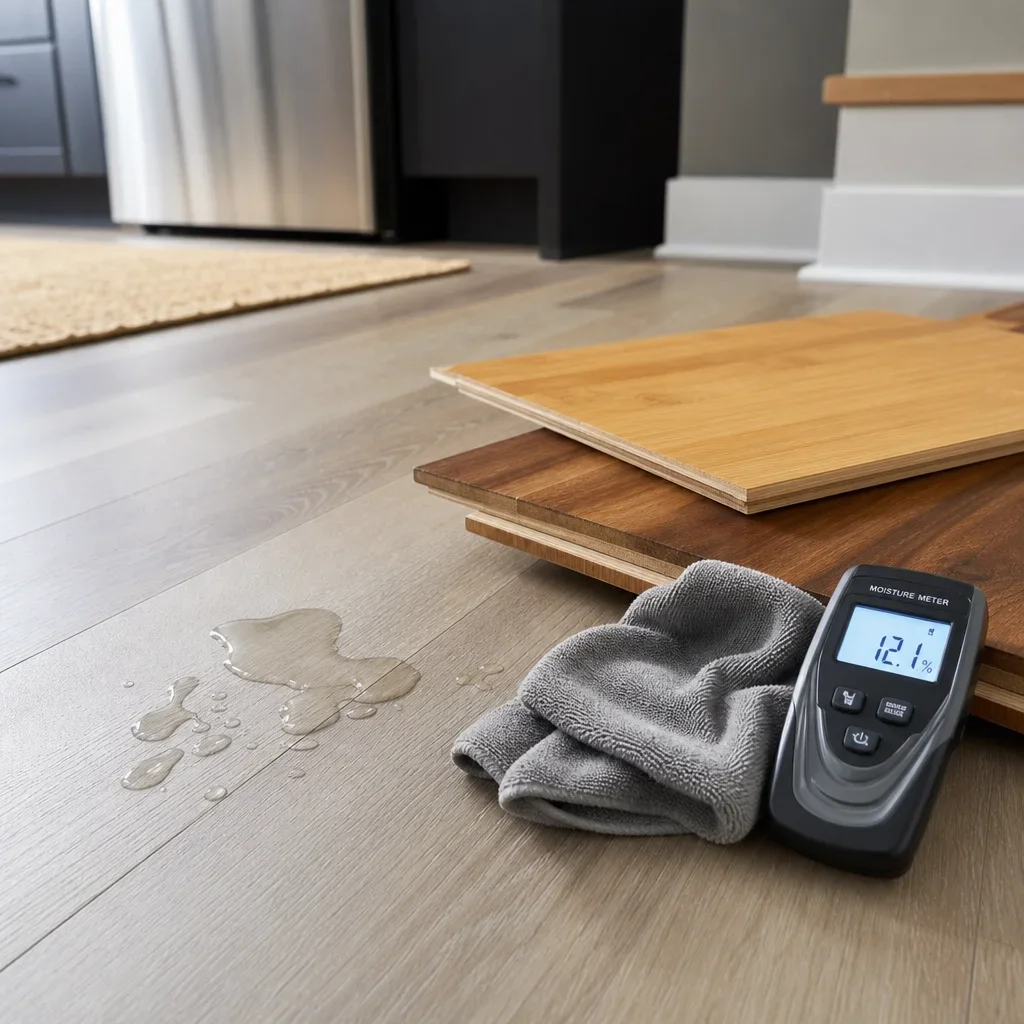
Neither traditional bamboo nor traditional hardwood should be treated as waterproof. Both can swell, stain, cup, or fail when standing water gets into seams or the core.
The better moisture performer is usually the better-made engineered product, not the category name alone. Engineered hardwood often handles seasonal movement better than solid hardwood because of its layered construction. Some engineered bamboo products are also more stable than solid options. That still does not make them suitable for every wet area.
Kitchens are possible for both materials if spills are cleaned promptly and the product is approved for the space. Bathrooms are where I would be cautious with both, because repeated water exposure and trapped moisture are the real problem. For basements, solid hardwood is usually the weakest fit, while engineered products over concrete can work if the manufacturer approves the application and the slab passes moisture testing.
If the room is truly wet-prone, vinyl is usually the safer answer than either bamboo or hardwood. That is the same advice we give in the showroom when buyers want a wood look in basements, entry areas, or homes with recurring moisture issues. CanFloor also carries vinyl starting from $1.99 per sq. ft. if you need a more practical alternative.
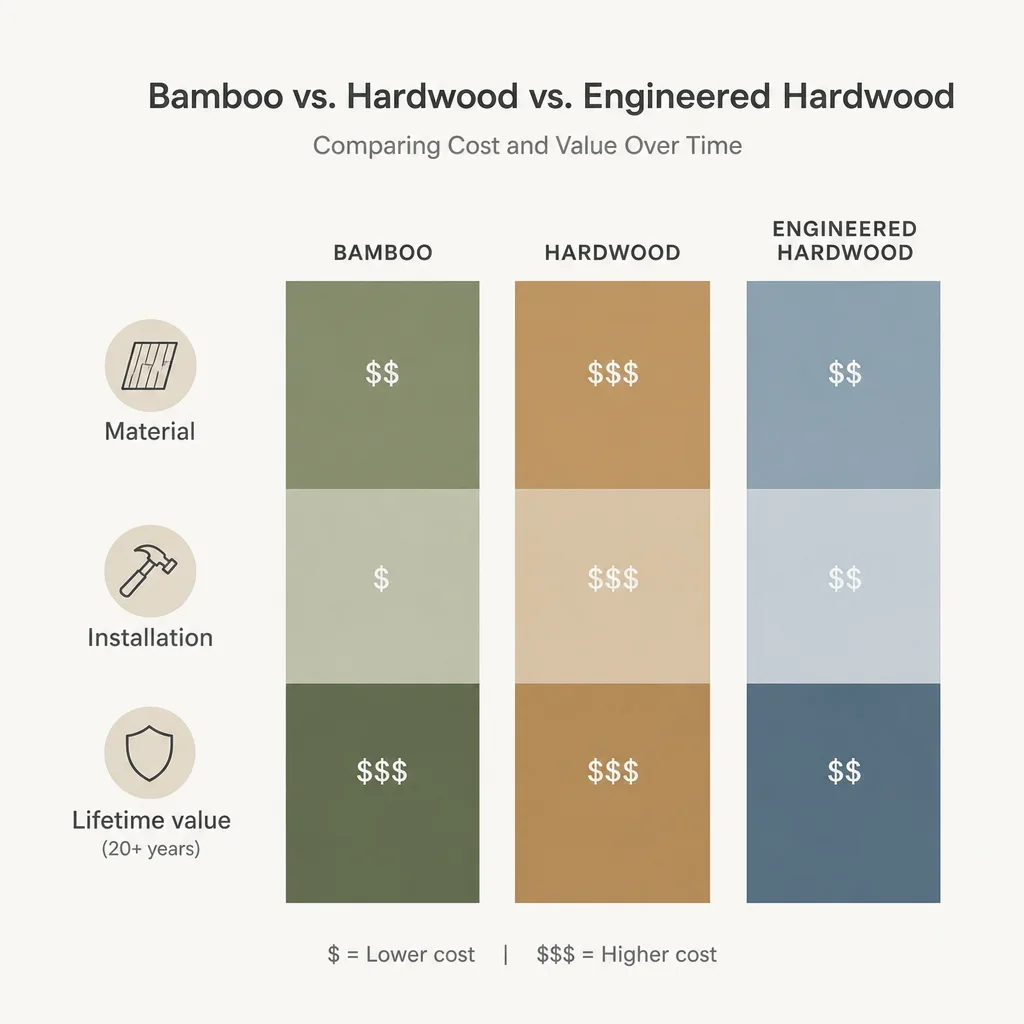
The biggest difference in bamboo vs hardwood floor cost is usually the entry point, not the final invoice. Material price is only one part of the job. Installation, floor prep, transitions, trims, stairs, and waste can move the total far more than buyers expect.
For broad market pricing, bamboo often lands around $2–$6 per sq. ft. for material, standard hardwood often starts around $4–$8 per sq. ft., and premium hardwoods can run above $10 per sq. ft. Those are broad Canadian market ranges, not live quotes, and your actual project cost depends on grade, width, finish, species, origin, and what the subfloor needs.
Installation commonly adds about $2–$12 per sq. ft. depending on whether the floor is floated, glued, or nailed, and depending on levelling, moisture control, board layout, and stairs. Stairs are a separate scope on almost every project, and they can push labour materially higher.
A simple cost table makes bamboo vs hardwood floor cost per square foot easier to compare:
| Cost area | Bamboo | Hardwood | Notes |
|---|---|---|---|
| Material, entry tier | About $2–$4 per sq. ft. | About $4–$6 per sq. ft. | Quality varies heavily at the low end |
| Material, better tier | About $4–$6 per sq. ft. | About $6–$10+ per sq. ft. | Species, width, and finish drive hardwood pricing |
| Installation | About $2–$12 per sq. ft. | About $2–$12 per sq. ft. | Prep, method, and stairs matter most |
| Long-term cost | Can rise if quality is poor or refinishing is limited | Can balance out through lifespan and refinishing potential | Cheapest upfront is not always cheapest to own |
For local context, CanFloor lists hardwood from $3.99 per sq. ft., engineered wood from $2.99, laminate from $1.69, and vinyl from $1.99. That is useful for comparison shopping, but current product selection and pricing should always be confirmed before you decide.
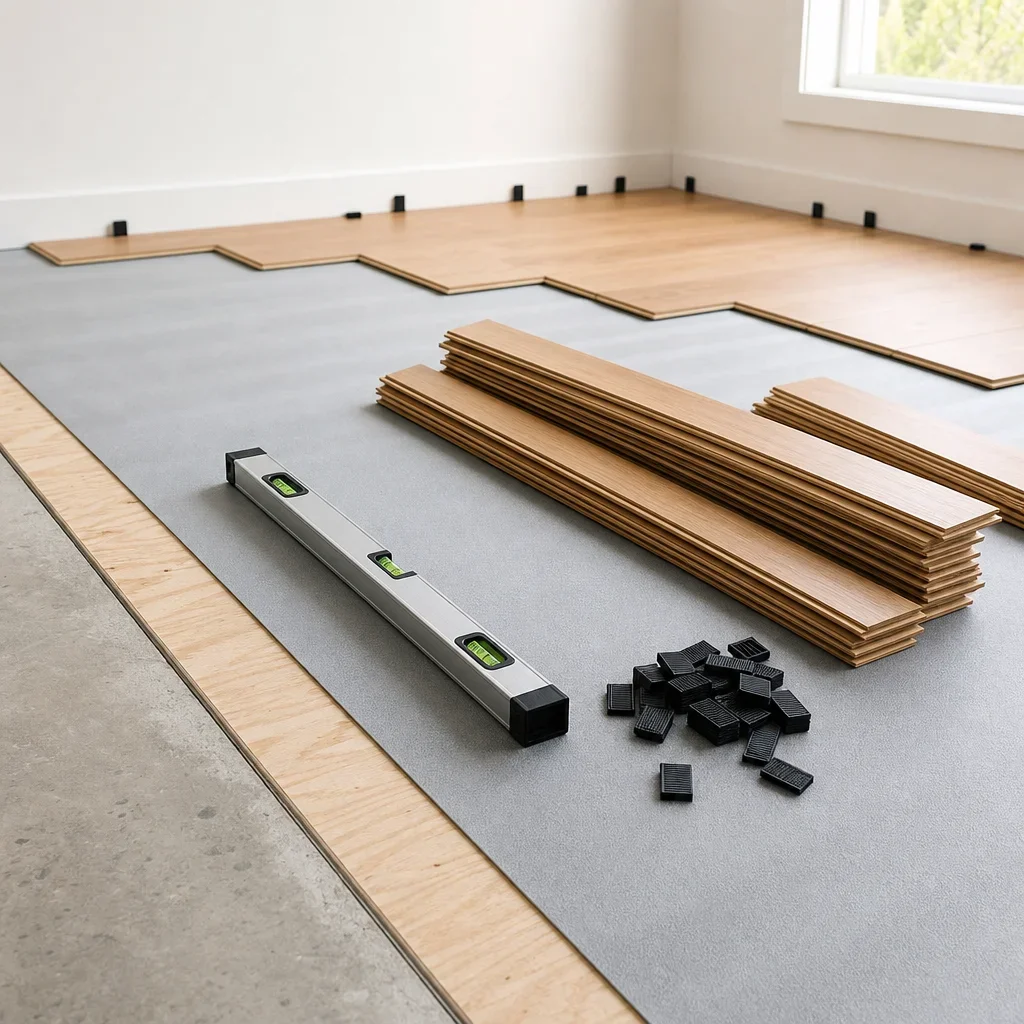
The easiest floor to install is usually an engineered or click-format product over a suitable, flat subfloor. Solid hardwood is typically more demanding because nail-down installation, acclimation, site humidity, and wood movement all matter more.
Bamboo and hardwood can both come in floating, click-lock, glue-down, or tongue-and-groove formats, but the method must match the product and the subfloor. Over concrete, engineered products are usually the more realistic path. Over wood subfloors, both engineered and solid options may be possible depending on the product instructions.
Subfloor prep decides whether the installation lasts. Flatness, slab moisture, underlayment choice, transitions, and room conditions all affect squeaks, movement, gaps, and finish performance. That is why “easy DIY” should not be the only filter when comparing engineered bamboo vs engineered hardwood. The wrong underlayment or a damp slab can ruin either one.
Stairs are their own category. They usually require nosings, custom cuts, and more labour than open-floor areas. That affects both cost and product choice, especially if you want the stair finish to match the field flooring closely.
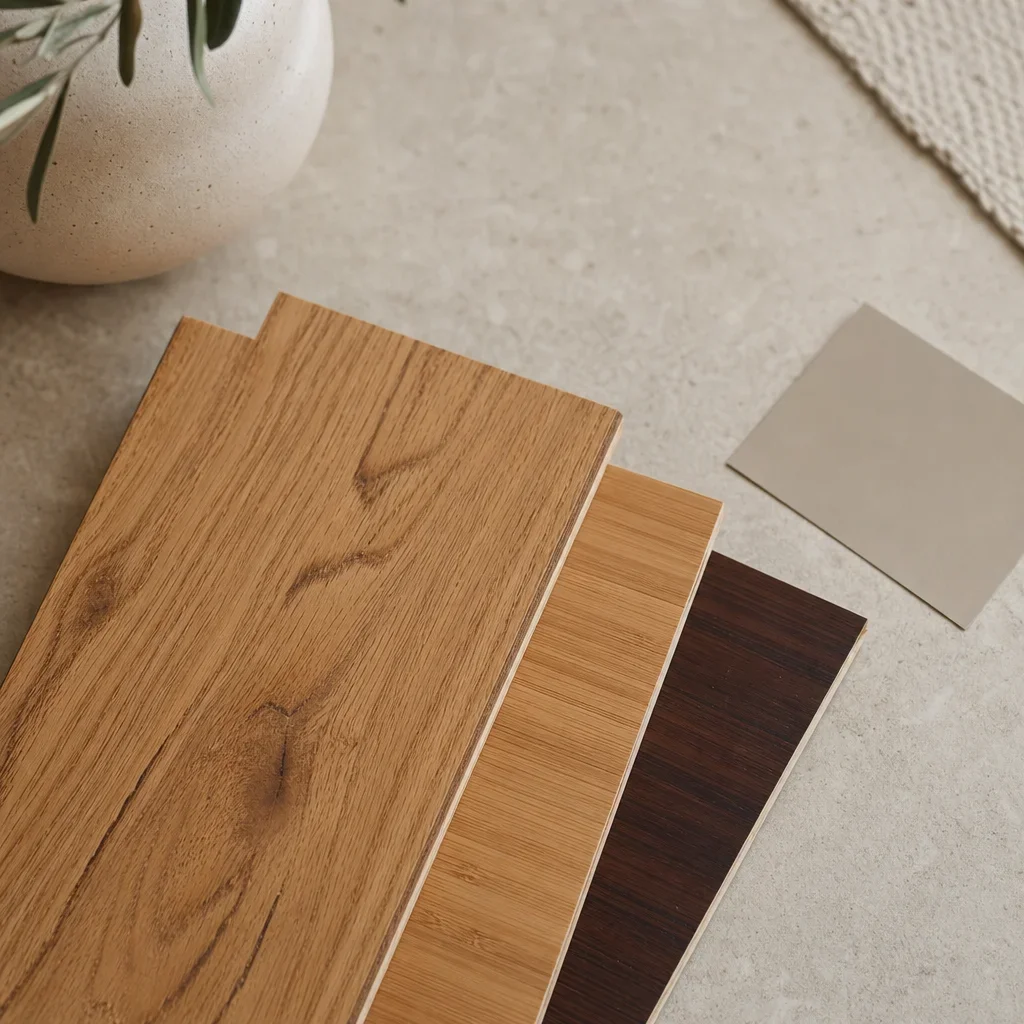
Hardwood gives you more visual options. You get more species, more natural grain variation, more stain colours, more plank widths, and more surface textures. That makes it easier to match traditional homes, high-end renovations, or custom design schemes.
Bamboo has a more specific visual identity. Horizontal bamboo tends to show stronger node patterning, vertical bamboo looks cleaner and more linear, and strand-woven products often look more uniform. That can suit contemporary spaces well, but it also means solid hardwood vs bamboo flooring is partly a design decision, not just a performance one.
If you want the most natural character, hardwood usually wins. If you want a cleaner, more controlled look, bamboo can be appealing. Carbonized bamboo deepens the colour but may reduce hardness compared with natural bamboo, so visual preference and durability do not always point in the same direction.
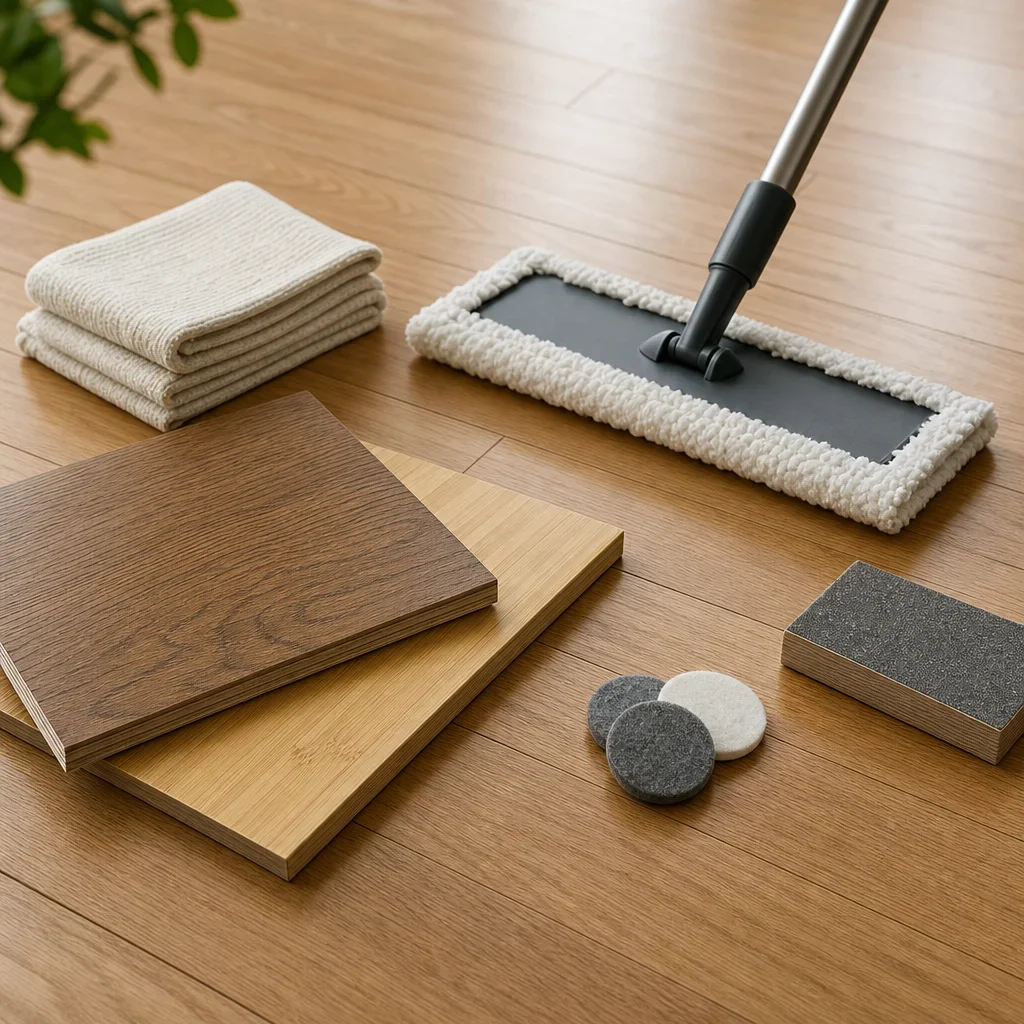
Solid hardwood is usually the safest choice if refinishing matters to you. Many solid hardwood floors can be sanded and refinished multiple times over their life, while engineered hardwood may allow limited refinishing depending on wear layer thickness. Bamboo is less predictable because refinishing depends on the construction, thickness, and density of the specific product.
Routine maintenance is similar across both categories. Dry dusting, prompt spill cleanup, felt pads, entry mats, and manufacturer-approved cleaners are the basics. Excess water is a bad idea on both materials, and steam cleaning is often discouraged by manufacturers.
For lifespan, quality matters more than category labels. Better bamboo floors are often said to last about 20–25 years, with some lasting longer in the right conditions, while quality hardwood floors can last for decades and sometimes much longer when maintained and refinished. I would not buy on a single lifespan claim, because board quality, site conditions, and maintenance habits make a huge difference.
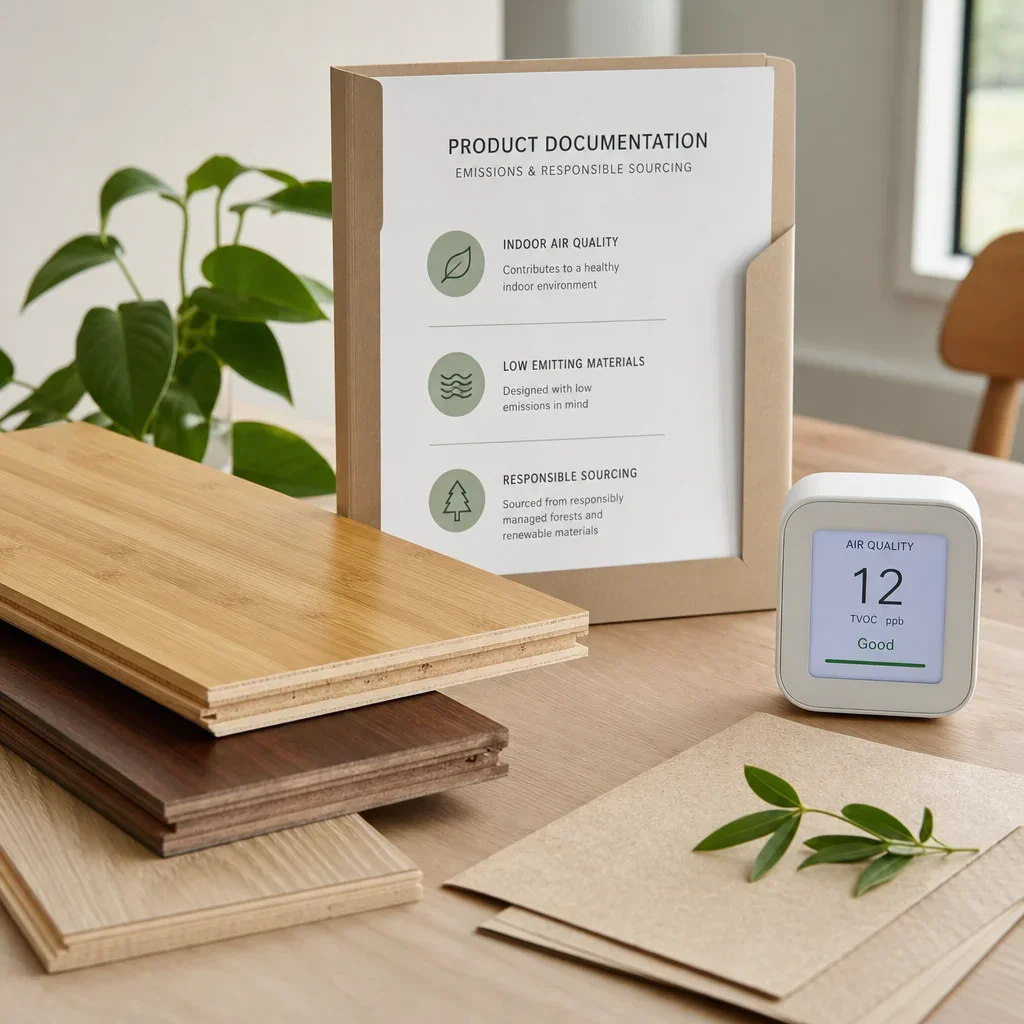
Bamboo is often marketed as the greener option because it is a fast-growing grass, but growth rate alone does not settle the sustainability question. Manufacturing energy, shipping distance, forest practices, adhesive chemistry, and product lifespan all matter.
The healthiest flooring choice is usually a well-made hard-surface product with low emissions and clear documentation. That applies to bamboo, hardwood, vinyl, and laminate alike. What you want to see are transparent specs, reputable manufacturing, and third-party emissions language where available, not vague “green” claims.
FloorScore is a third-party indoor air quality certification for hard-surface flooring and adhesives, and CARB Phase 2 refers to California formaldehyde emission limits for certain composite wood products. Neither label means “zero VOC” or “perfectly safe for everyone,” but both are useful signals when you are comparing products with unknown adhesives or finishes.
A responsibly sourced hardwood floor can be a better environmental choice than a poorly made imported bamboo floor, and the reverse can also be true. If air quality matters in your home, I would ask for emissions information, finish details, and installation adhesive specs before buying.
The best way to judge bamboo quality is to ignore the warranty headline and inspect the construction. You want to know whether it is horizontal, vertical, strand-woven, solid, or engineered, what the core is made of, what finish system is used, and whether emissions information is available.
For strand woven bamboo flooring, ask about density, finish durability, locking system quality, and whether the product can be refinished. For engineered bamboo, ask how thick the top layer is and what sits underneath it. Those details tell you more than a long residential warranty by itself.
The main red flags are vague waterproof claims, missing installation instructions, no moisture guidance, no emissions documentation, and no clear answer on repair or refinishing. A product that hides basic technical information is harder to trust, no matter how good the sample looks.
When comparing engineered bamboo vs engineered hardwood, use the same checklist for both. Look at top-layer thickness, core stability, finish quality, board milling, installation approval over concrete, and what the manufacturer says about humidity control.
The fastest way to decide is to match the floor to the room and the household, not to the trend. Here is the practical winner matrix.
| Scenario | Best choice | Why |
|---|---|---|
| Best for resale | Hardwood or engineered hardwood | Stronger traditional buyer recognition |
| Best for basements | Usually vinyl first; engineered hardwood second if approved | Better moisture tolerance than solid hardwood |
| Best for humid homes | Engineered hardwood or selected engineered bamboo | Layered construction can improve stability |
| Best for pets and kids | Strand-woven bamboo or harder hardwood species | Better dent resistance than softer woods |
| Best for budget DIY | Click-format bamboo, laminate, or vinyl | Floating systems can reduce labour complexity |
| Best for luxury look | Hardwood | More species and richer natural variation |
| Best for eco-minded buyers | Product-specific, not category-wide | Sourcing and adhesives matter more than labels |
| Best for wet-prone rooms | Vinyl | Bamboo and hardwood both dislike standing water |
If your short list is really bamboo vs hardwood floor vs laminate, laminate belongs in the conversation for one reason: value. Laminate is usually cheaper than either bamboo or hardwood and can be a smart fit for rentals, light-budget renovations, and low-risk DIY installs, but it does not bring the same refinishability or premium resale perception as real wood surfaces.
Hardwood is usually better for resale, natural appearance, and refinishing. Bamboo can be a good fit when you want a modern look, lower upfront material cost, or a hard surface in certain strand-woven products.
The biggest downside is inconsistent quality. Performance depends heavily on manufacturing, adhesives, finish quality, and construction, so lower-grade bamboo can be less stable, harder to refinish, and less trusted in resale.
It can look upscale in better lines, but it usually does not carry the same premium perception as quality hardwood.
No in botanical terms. Bamboo is a grass, not a hardwood tree species, even though it is sold as a wood-look hard-surface floor.
It depends on the product. Strand-woven bamboo can be harder than common hardwoods like red oak, while some carbonized bamboo can be softer than harder wood species.
It is bamboo flooring made by compressing shredded bamboo strands with resin under high pressure to create a denser board. It is generally the strongest-performing bamboo construction.
A decent bamboo floor is often said to last about 20–25 years, and longer is possible with better quality and good maintenance.
Sometimes, but not always. Refinishing depends on whether the bamboo is solid or engineered and on how thick the usable top layer is. Solid hardwood is still the more reliable refinishing choice.
Neither should be treated as waterproof. Some engineered versions of both can handle humidity and seasonal movement better than solid products, but standing water is still a problem.
Some engineered bamboo products may be approved for basements, but that depends on the product, slab moisture, and installation method. Solid hardwood is usually a weaker basement choice.
A low-emission hard-surface floor with clear documentation is usually the safest direction. Look for transparent specs, reputable manufacturing, and certifications such as FloorScore where available.
Bamboo often runs about $2–$6 per sq. ft. for material, while hardwood often starts around $4–$8 per sq. ft., with premium species above $10 per sq. ft. Installation for either commonly adds about $2–$12 per sq. ft. depending on prep and method.
Choose bamboo if you like its cleaner look, you find a well-documented quality product, and the project is price-sensitive. Choose solid hardwood if long-term value, refinishing, and classic appearance matter most. Choose engineered hardwood if you want real wood with better flexibility for condos, concrete, or homes with seasonal humidity swings.
If you are comparing materials for a Toronto or GTA project, bring the room type, subfloor, and budget into the decision first. Then compare the actual product construction. If you want, you can visit the North York showroom to compare hardwood, engineered hardwood, vinyl, and laminate side by side and match the floor to the space before ordering.