
Wide plank flooring in small spaces usually works better than people expect. The myth is that wide boards always make a room feel smaller. In practice, fewer seams can make a small room read calmer and cleaner, but the result depends on width, board length, colour variation, finish, and the room itself.
Yes, wide plank flooring can look very good in a small room when the look is controlled. Fewer board seams create a quieter visual field, which often helps a bedroom, condo, office, or compact living area feel less chopped up. That is why the best wide plank flooring in small spaces is usually moderate in width, moderate in length, and restrained in colour variation rather than extra rustic or extra oversized.
Wide plank flooring in small spaces stops working when too many bold features stack up together. Very dark stain, heavy knots, strong contrast, extra long boards, and extra wide plank flooring in small spaces can start to overpower the room. A compact hallway with busy grain and glossy finish usually feels tighter than the same room with a cleaner matte floor.
Engineered construction is often the safer choice for Toronto and GTA interiors where condo HVAC, winter dryness, and summer humidity shifts can affect wood movement. Engineered wide plank flooring is built in layers, while solid hardwood is one piece of wood, and width matters more as boards get wider because expansion and contraction become more visible across the face of the board.
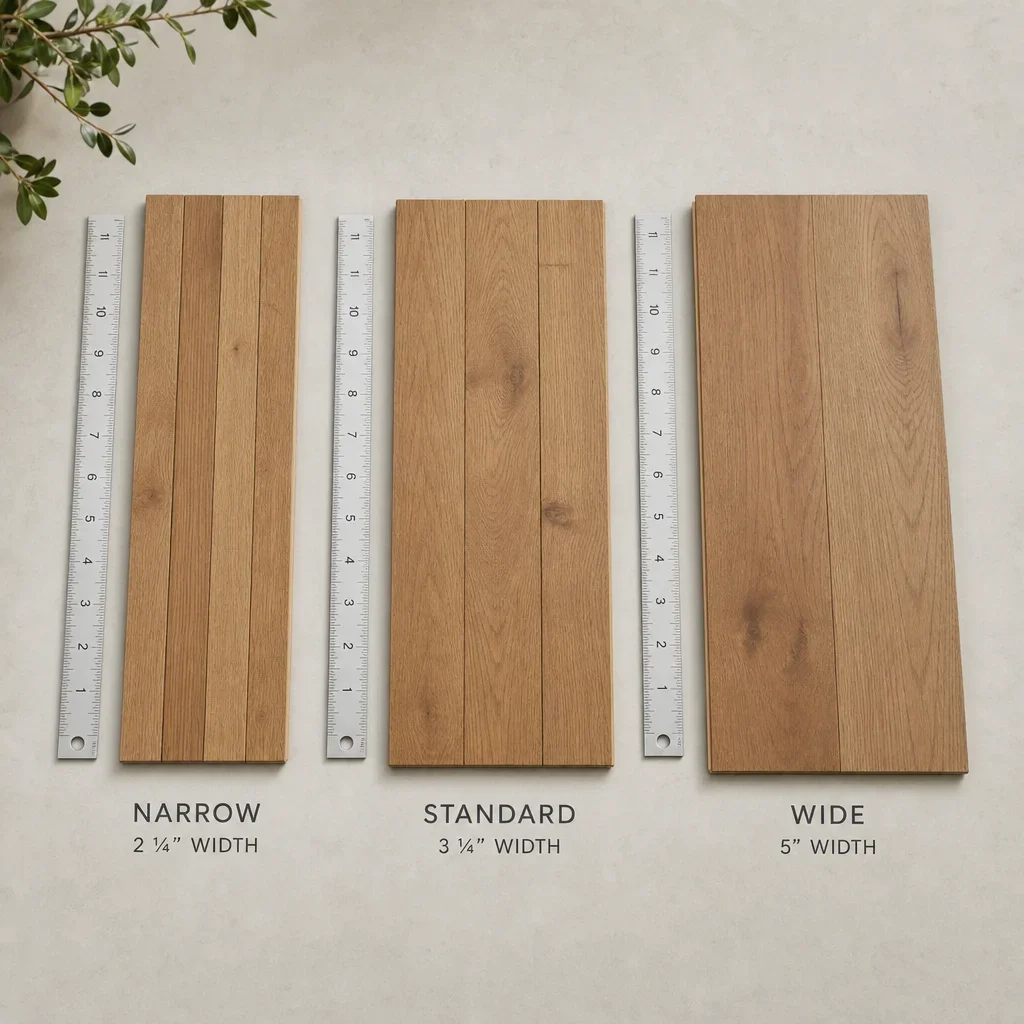
There is no single universal cut-off for what is considered wide plank flooring, so the practical approach is to use common market ranges. Narrow plank flooring is often about 2 1/4 inches to 4 1/4 inches wide, standard sits around 4 inches to 5 inches, wide plank is commonly about 5 inches to 8 inches, and extra-wide is often 7 inches or 9 inches and up depending on the brand.
Board length matters almost as much as width in a small room. A 5-inch floor with balanced random lengths can feel easier in a compact room than a 7-inch board supplied mostly in very long lengths, because long boards amplify the wide-plank effect and can make a tiny room feel visually dominated.
The label also changes a bit by category. Wide plank hardwood flooring and engineered wide plank flooring usually refer to true wood boards, while vinyl and laminate lines may use similar width language for the look rather than the same structural behaviour. That is why wide plank vs narrow plank flooring should be judged by both width and product type, not width alone.
| Category | Common width range |
|---|---|
| Narrow plank | 2 1/4 in to 4 1/4 in |
| Standard plank | about 4 in to 5 in |
| Wide plank | about 5 in to 8 in |
| Extra-wide plank | often 7 in+ or 9 in+ depending on manufacturer |
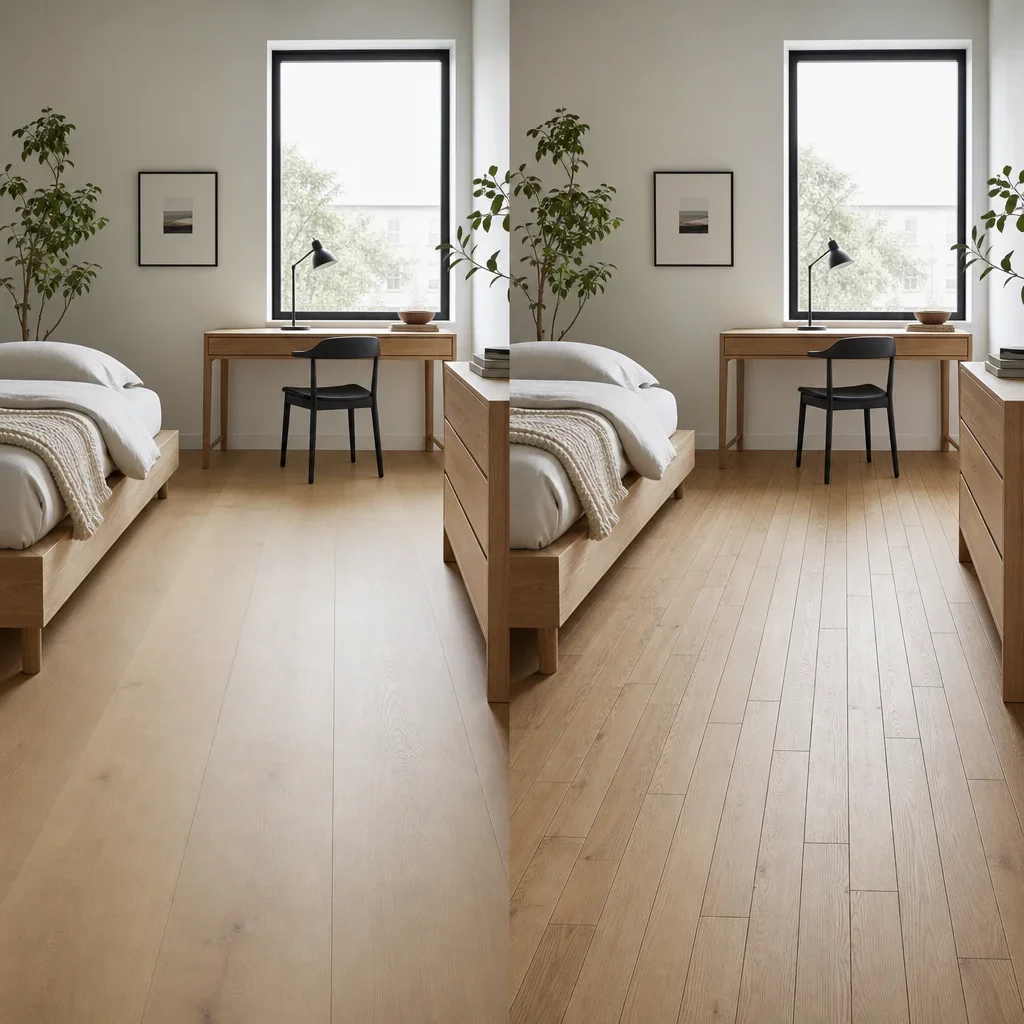
Wide plank vs narrow plank flooring comes down to visual calm versus visual flexibility. Wide planks show fewer seams, feel more modern, and usually create a cleaner surface; narrow plank hardwood flooring shows more lines, feels more traditional, and can be more forgiving in rooms with many angles, doors, and short wall spans.
A small condo or apartment usually benefits from visual simplicity. Wide plank condo flooring can help because the whole unit is often visible at once, and fewer seams can make connected rooms feel less fragmented. Narrow planks can still be the better choice when the layout is chopped up, heavily furnished, or strongly traditional.
Installation tolerance and room shape also matter. Narrow plank flooring often handles visual transitions more gently in hallways, closets, and segmented floor plans, while wide planks ask for a flatter subfloor and more care with layout because wider boards can make unevenness and alignment issues easier to notice.
| Factor | Wide plank | Narrow plank |
|---|---|---|
| Visual feel | Calmer, cleaner, more open | Busier, more detailed, more segmented |
| Seam count | Fewer visible seams | More visible seams |
| Style cue | More modern or minimal | More traditional or classic |
| Tiny condo fit | Strong when the look is simple | Strong when layout is chopped up |
| Heavily furnished room | Can work, but can disappear under clutter | Often more forgiving visually |
| Subfloor sensitivity | Higher visual sensitivity | Slightly more forgiving visually |
| Material positioning | Often positioned higher in wood lines | Often broader range of options |
| Best when | You want a calm, current look | You want flexibility and lower visual risk |
Wide plank flooring does not automatically make room look smaller. In many small rooms, fewer seams help the eye travel farther across the floor, which can make the space feel more continuous and less busy.
Wide planks make a room look smaller only when the whole visual package gets too heavy. Dark colour, high gloss, strong grain movement, heavy character marks, and oversized lengths can pull attention down to the floor and shrink the sense of openness. That is why wide plank flooring look good in a small room more often when the floor is lighter or medium toned, lower sheen, and less rustic.
The calmer look comes from reduced visual texture. Narrow plank flooring creates more seams and more pattern repetition, so the floor reads as a stronger surface feature. Wide planks usually create a calmer look than narrow planks, while narrow planks usually create more texture and more movement.
Myth versus reality is simple here. The myth is that all wide planks make a small room feel cramped. The reality is that extra-wide boards with dramatic character can do that, but moderate wide planks with controlled colour and finish often do the opposite.
Wide plank is the smart choice when the room is bright, simple, and not visually crowded. If you have good daylight, a clean furniture plan, moderate ceiling height, and a modern or minimal style, wide plank flooring for small room layouts usually works very well.
Narrow plank is the safer choice when the room is tight, dark, chopped up, or heavily furnished. Multiple doors, short wall spans, bulky furniture, strong traditional trim, and lots of visual clutter all push the room toward narrow plank flooring because it carries less risk of looking oversized.
Condos, guest rooms, and home offices often sit in the middle. A moderate wide plank, often in the 5-inch to 7-inch range, is commonly the sweet spot for many smaller rooms because it gives the wider-board look without pushing into extra-wide territory.
Hallways need more caution than bedrooms. A corridor can look elegant with wide boards, but when the hallway is very tight, full of doorways, or broken by many transitions, narrow plank hardwood flooring can feel more proportional.
Use this plain-language matrix:
| Room condition | Wide plank | Narrow plank |
|---|---|---|
| Bright room with open sightlines | Better fit | Good |
| Dark room with heavy furniture | Possible, but selective | Better fit |
| Small modern condo | Better fit | Good |
| Traditional home with many transitions | Good | Better fit |
| Tiny hallway | Case by case | Better fit |
| Small office or bedroom | Better fit if low variation | Good |
Choose narrow instead if three or more of these apply: the room is dark, the layout is chopped up, the furniture is dense, the style is strongly traditional, or the floor colour you want is dark and rustic.
For many small bedrooms and offices, about 5 inches to 7 inches is a practical place to start. That width usually gives the wide-plank look without making the floor feel oversized, especially when the grain is clean and the board lengths are balanced.
Hallways usually benefit from proportion more than trend. If the corridor is narrow and interrupted by several doorways, moderate widths or even narrow plank flooring can look more natural than extra wide plank flooring in small spaces.
Condos usually reward restraint. Wide plank condo flooring can look excellent, but extra-wide boards in compact units are more case-by-case because small spaces are seen all at once and every bold design choice gets amplified. Engineered construction is often the more practical path here because building conditions can vary from one season to the next.
Small open-concept areas can carry wider boards better than closed-off small rooms. A connected kitchen, dining, and living area often benefits from fewer seams and consistent direction, while a tiny boxed-in den may look better with moderate widths rather than the biggest board available.
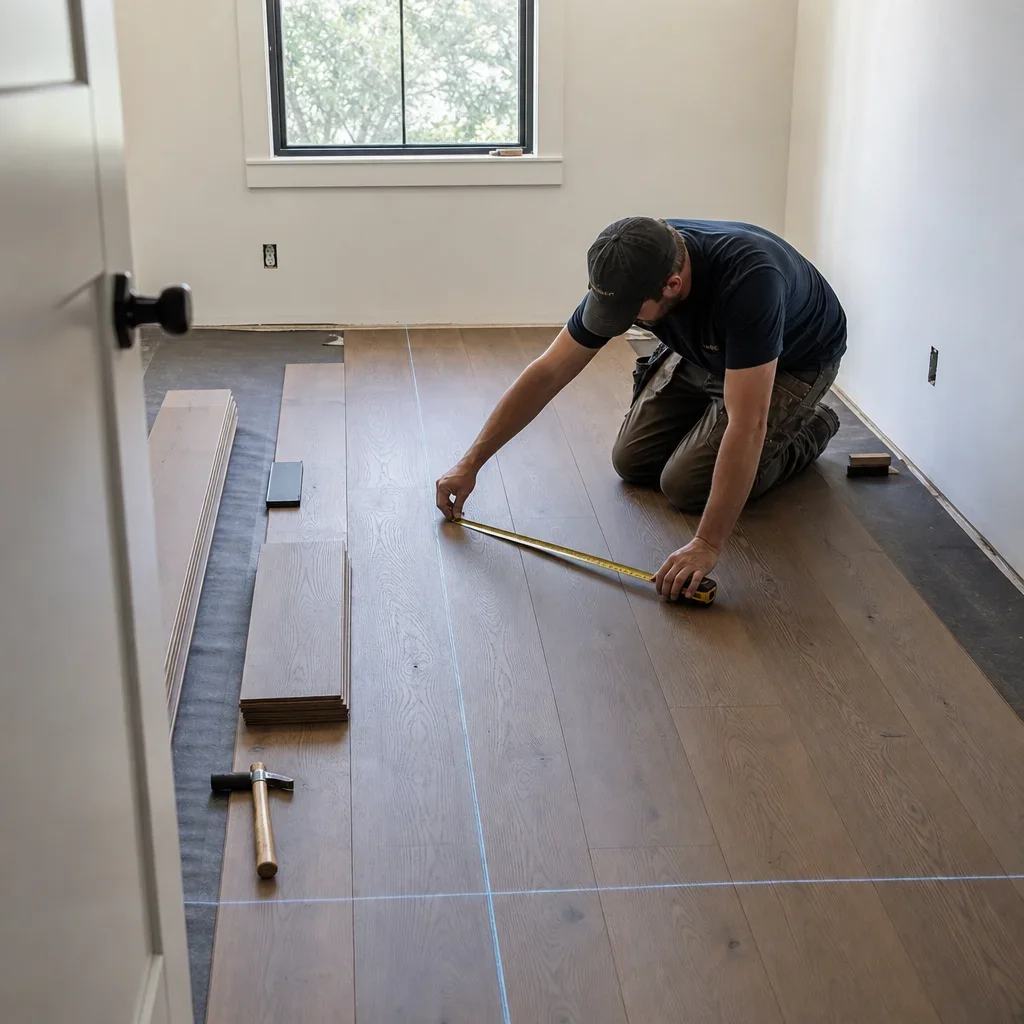
The layout that usually looks best is the one that supports the room's longest sightline. Running boards parallel to the longest wall or the main visual path often makes a small room feel smoother and longer, although subfloor conditions and product rules can override that.
Entry view matters in compact rooms. If you see most of the floor the moment you enter, keeping planks aligned with that first view often helps the space feel less broken up. In condos and apartments, continuity across connected areas matters even more because living, dining, and hall space may all read together.
Consistency through adjoining rooms usually helps a small home feel larger. Frequent direction changes, extra transitions, and stop-start layout lines can make compact interiors feel fragmented, so one clean direction is often visually stronger where installation conditions allow it.
Installer guidance still comes first on technical limits. Product type, subfloor, joist direction, underlayment system, and building conditions can all affect how a floor should be laid, so this is general guidance rather than a product-specific installation instruction.
Lighter and medium natural tones usually make a small room feel more open than very dark floors. That is not a hard law, but it is a reliable visual tendency because dark floors absorb more light and make dust, contrast, and furniture outlines stand out more clearly.
Low-sheen and matte finishes usually look calmer than glossy finishes. They also tend to hide dust, footprints, and fine surface marks better in daily use, which matters in small rooms where the floor is always in view.
Clean visuals beat busy visuals in compact spaces. Strong knots, dramatic grain contrast, saw marks, and heavy rustic character can be beautiful, but they add visual texture, and that extra texture can make a small room feel busier whether you choose wide plank hardwood flooring or narrow boards.
Board length changes scale perception. Extremely long boards can look dramatic, but they can also feel oversized in very small rooms, while mixed or random lengths often soften the effect and make the installation feel more proportional.
White oak and similar cleaner visual styles remain popular because they balance warmth with restraint. Natural tones, moderate variation, and matte finishes tend to age better visually than very trendy stains or highly reflective finishes.
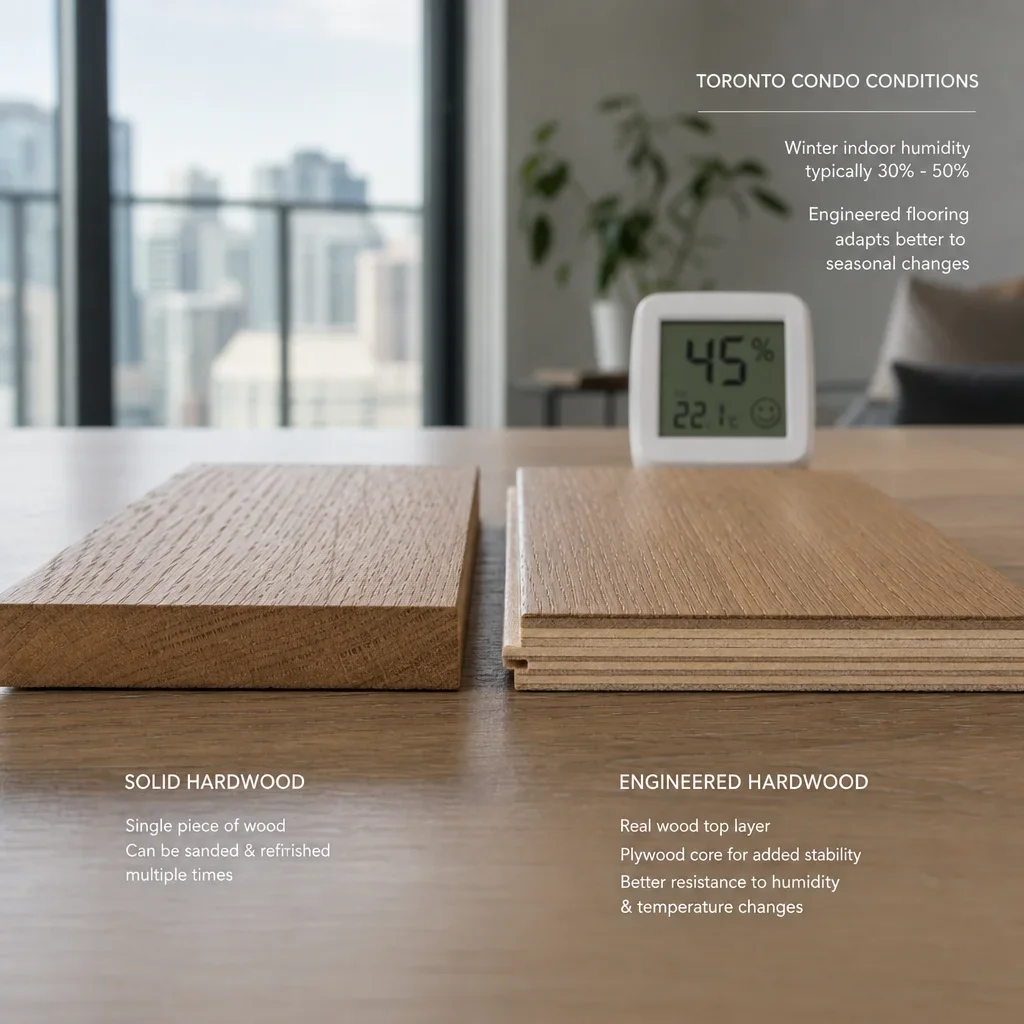
Engineered is often the more practical recommendation for small Toronto spaces when you want a wider board. Engineered wide plank flooring uses a layered construction that is generally more dimensionally stable than solid hardwood, which matters in homes and condos that see winter dryness, summer humidity, and HVAC swings.
Width increases movement risk in solid wood. As boards get wider, expansion, contraction, gapping, and cupping can become more noticeable, so the question is not just wide plank vs narrow plank flooring but also wide solid versus wide engineered.
Solid hardwood can still be a good choice in the right house conditions. Stable indoor humidity, suitable width, proper acclimation, and correct installation all matter, but solid wide plank should not be treated as the automatic default for every GTA home.
Many wood-floor manufacturers recommend maintaining indoor relative humidity around 35% to 55% for better performance, though the exact acceptable range depends on the product and manufacturer. That is one reason engineered products are often favoured in condos and variable environments.
The main disadvantages of wide plank flooring are visual overwhelm risk, higher positioning in some wood lines, and tighter installation demands. A very small or crowded room can make an oversized plank look out of scale, especially if the floor is dark or heavily rustic.
Wider boards make subfloor quality matter more. Flatness, acclimation, moisture conditions, and installation quality become more critical because wider boards can show movement and unevenness more clearly than narrow plank flooring.
Repairs can also stand out more on simpler floors. If one wide board needs replacement, colour and grain mismatch may be more noticeable because each board covers more visual area, especially in low-variation modern floors.
That does not make wide plank a bad choice. It just means the selection has to be matched carefully to room size, product construction, and the level of visual risk you are comfortable with.
Wide plank can work well in busy homes, but width does not determine durability. Species, wear layer, finish, texture, and product category matter more than whether the board is narrow or wide.
Lower-gloss and lightly textured finishes usually perform better visually with pets and kids. They tend to show scratches, paw prints, and everyday dust less clearly than very smooth high-gloss surfaces.
Engineered wide plank flooring is often a balanced option for active homes that still want a real wood look. Vinyl flooring can be the better fit in water-prone or very hard-wearing small spaces like entry zones, compact kitchens, rentals, or basement rooms because the performance priorities there are different from a formal bedroom or office.
The safest buying sequence is category first, width second. Decide whether you need natural wood, engineered stability, or vinyl practicality before deciding how bold the plank width should be.
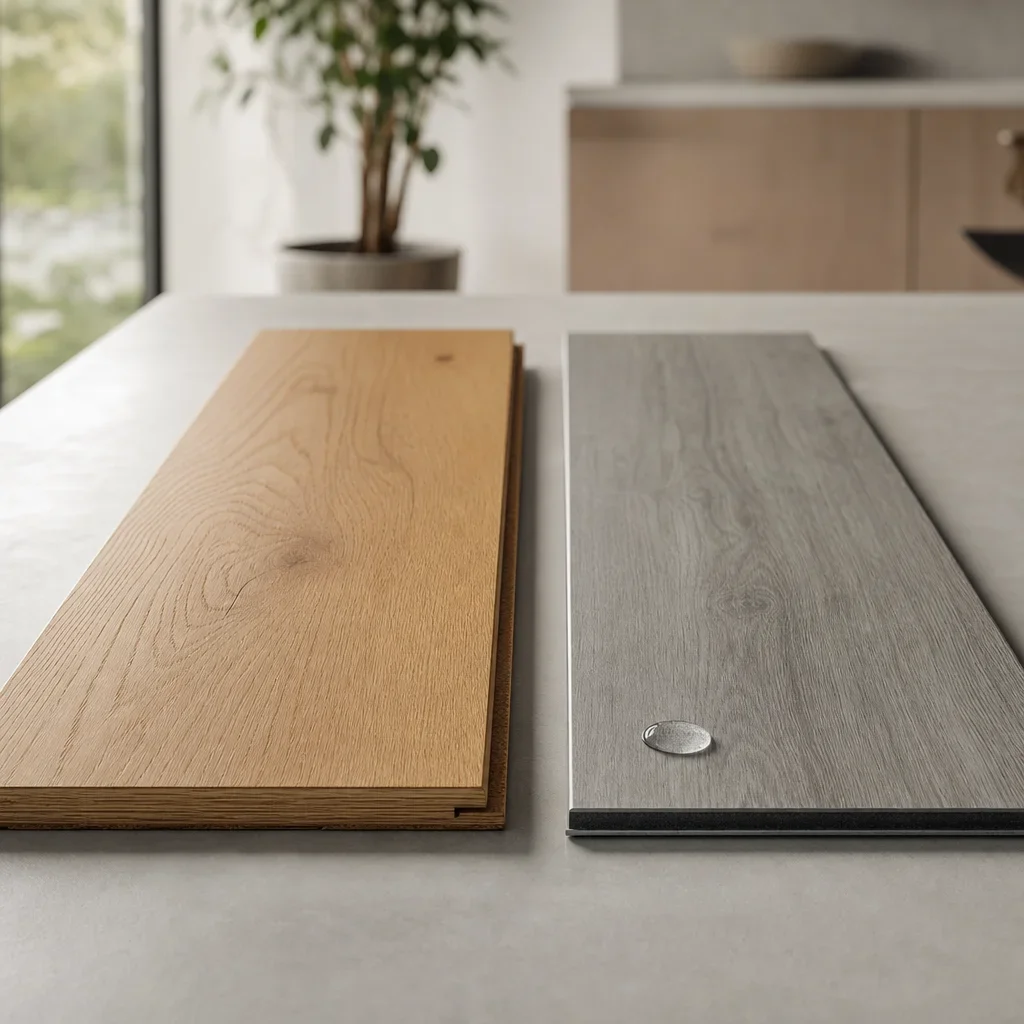
Wide plank hardwood flooring delivers the most natural wood feel, but wide plank vinyl can be the more practical choice in moisture-prone rooms. The visual effect of fewer seams exists in both, yet the underfoot feel, water tolerance, and installation systems are different.
Engineered wood usually sits in the middle. It gives you a real wood surface with better dimensional stability than solid in many variable indoor environments, which is why it is often considered first for condos, bedrooms, and compact living areas.
Vinyl flooring makes sense when maintenance tolerance and moisture protection matter more than wood authenticity. That can be a smart choice for small kitchens, basement rooms, rental suites, and entry-heavy spaces where spills and wear are part of normal use.
At CanFloor, current starting prices are hardwood from $3.99 per square foot, engineered wood from $2.99, laminate from $1.69, and vinyl from $1.99. Those are category starting points, not like-for-like wide-versus-narrow comparisons, because grade, thickness, finish, and installation scope change the real project cost.
The full budget is always higher than the sticker price of the floor. Material is only one part of the project, and you also need to account for underlayment where applicable, trims, transitions, delivery, labour, subfloor prep, stairs if any, and waste from cuts and layout.
Small rooms can carry a surprisingly high installation cost per square foot. Detail work does not shrink in proportion to room size, so a compact room with closets, doorways, radiator cuts, or multiple transitions can be less price-efficient than a simple larger room.
Wide boards can change both waste and labour. Room shape, board length, layout direction, and the number of interruptions all affect how much cutting is needed, and those practical factors often matter more to the final price than width alone.
Use this budgeting checklist before you compare quotes:
If you are comparing categories at CanFloor, current starting prices are hardwood from $3.99 per square foot, engineered from $2.99, laminate from $1.69, and vinyl from $1.99. That helps with first-pass budgeting, but the actual quote depends on the room layout, product selected, and installation conditions.
Wide plank flooring is established, not a short-term fad. It has been a mainstream look for years, and the safer long-term version is a balanced width in a natural tone rather than the most oversized or most dramatic board in the showroom.
The trendy part is usually not the width alone. Extreme width, extreme colour, very heavy rustic character, or ultra-specific fashion stains are what date a floor faster, while moderate widths and natural finishes stay easier to live with over time.
What flooring is on trend in 2026 will still likely include clean wood looks, natural tones, and matte finishes because those are broad design directions rather than one-season ideas. The practical takeaway is simple: choose the width that suits the room, not the width that looks boldest on a sample rack.
Narrow plank flooring is the better choice when the room has more visual constraints than visual openness. It is a strong option for very small chopped-up spaces, dark rooms, highly traditional interiors, and layouts with many short walls, cabinets, or thresholds.
Choose narrow plank hardwood flooring instead when:
Narrow does not mean dated. It simply means the floor becomes a finer-textured background instead of a bigger visual statement.
A full board tells you much more than a sample chip. Width, grain, sheen, and length are hard to judge from a tiny hand sample, so always look at a larger piece before you decide between wide plank flooring for small room use and narrower alternatives.
Test the sample in the actual room at different times of day. Morning light, evening light, lamps, wall colour, and nearby cabinetry can all change how the floor reads, especially with matte finishes and natural wood variation.
Map the room with furniture in place. A floor that looks perfect in an empty showroom can feel very different once a bed, desk, sectional, island stools, or hallway runners are part of the space.
Ask practical questions before you order. Available board lengths, grade variation, finish sheen, installation method, and subfloor requirements all matter more than online debates, including wide plank flooring in small spaces Reddit threads, because performance depends on the actual product and the actual room.
If you are stuck between widths, compare full-size samples side by side in person. CanFloor's North York showroom can show hardwood, engineered, vinyl, and custom finish options together, which is useful when you are choosing for a condo, bedroom, hallway, or office.
Yes, it often does. The look is strongest when the floor has moderate width, controlled colour variation, and a low-sheen finish.
Not by default. It can make a room feel smaller only when width is combined with dark colour, strong rustic character, glossy finish, or oversized board length.
A common market definition is about 5 inches to 8 inches wide, while extra-wide often starts around 7 inches or 9 inches and up depending on the manufacturer.
The main drawbacks are potential visual overwhelm in very small rooms, higher positioning in some wood products, and greater sensitivity to subfloor and humidity conditions.
They often are more practical because engineered construction is generally more dimensionally stable than solid wood in variable indoor conditions.
A moderate wide plank, often around 5 inches to 7 inches, is a common starting point for many of these rooms. It is a guideline, not a hard rule.
Yes, but proportion matters. Very tight hallways with many doors and transitions may suit moderate widths or narrow planks better.
Sometimes. Extra-wide boards are more case-by-case in compact rooms because they can dominate the space if the colour, length, or grain is too bold.
No. It is a well-established look. The risk is not wide plank itself but choosing an extreme version that does not suit the room.
Choose narrow when the room is dark, segmented, traditional, threshold-heavy, or when you want the safest visual fit with the least chance of the floor feeling oversized.
The shortest takeaway is this: wide plank flooring in small spaces is usually a smart choice when the room is simple and the floor is restrained. If you are deciding between wide and narrow, compare full-size samples in the actual room before you order.