
For a quicker response, please send all inquiries
via info@canfloor.com or
text to
416-735-0075.
| Monday - Friday | 10:00 am - 7:00 pm |
| Saturday & Sunday | 10:30 am - 4:00 pm |
Most buyers use the acacia wood Janka rating as a shortcut for durability. That helps, but it is only half the story. Acacia is a hard hardwood used for flooring, yet the exact acacia hardness rating can change because “acacia” is a trade name used for more than one species, so you need the exact product, not just the species label.
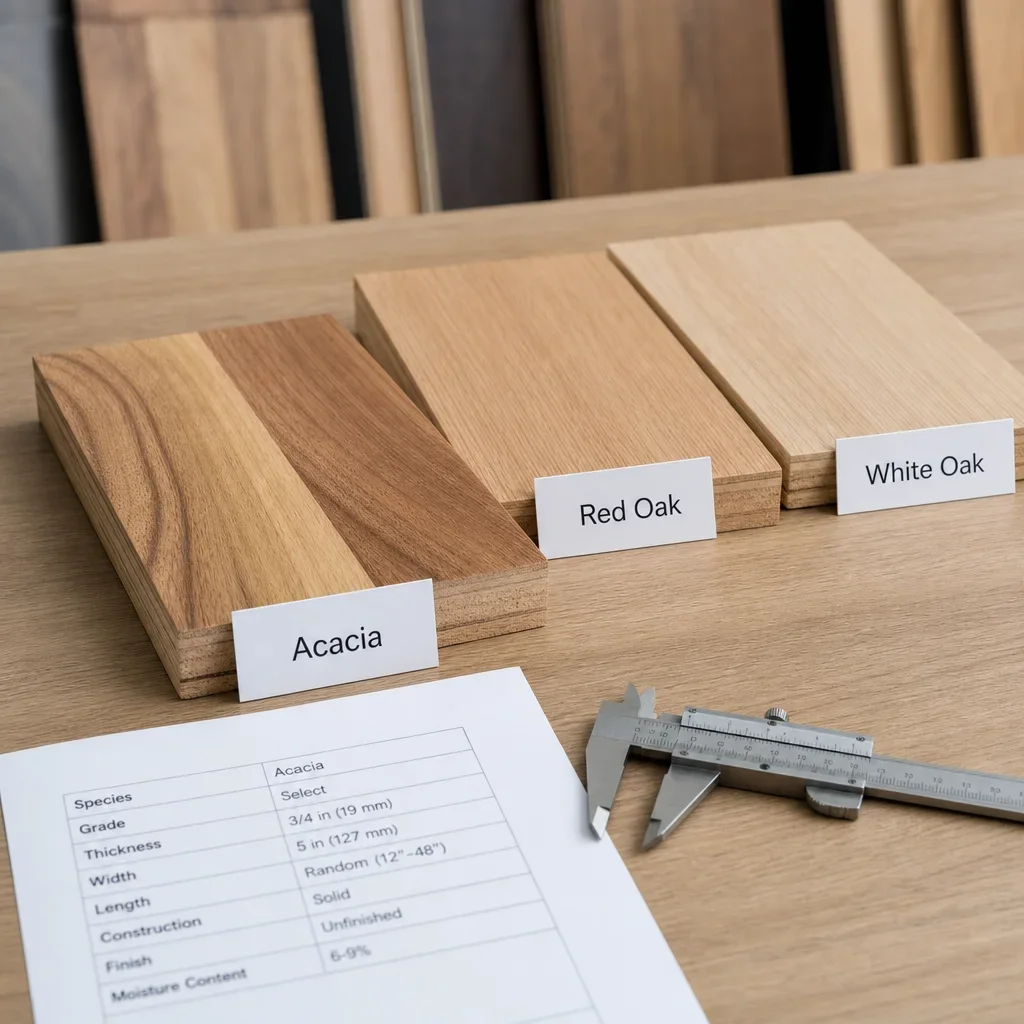
Acacia wood flooring is generally considered hard and dent-resistant, but there is no single universal acacia wood Janka rating because multiple species are sold as acacia and published values vary by species and source. That is why a product sample and specification sheet matter more than the word acacia on its own.
The safest way to read an acacia janka rating is to treat it as species-specific, then compare it with known North American benchmarks like red oak and white oak. Red oak is commonly listed at 1,290 lbf and white oak at 1,360 lbf on the Janka hardness scale. If the acacia product you are considering tests above those benchmarks, it is harder in dent resistance terms.
Hardness is useful, but it does not tell you everything about a floor. Finish build, sheen level, texture, board construction, installation quality, and colour variation all change how the floor looks and wears over time.
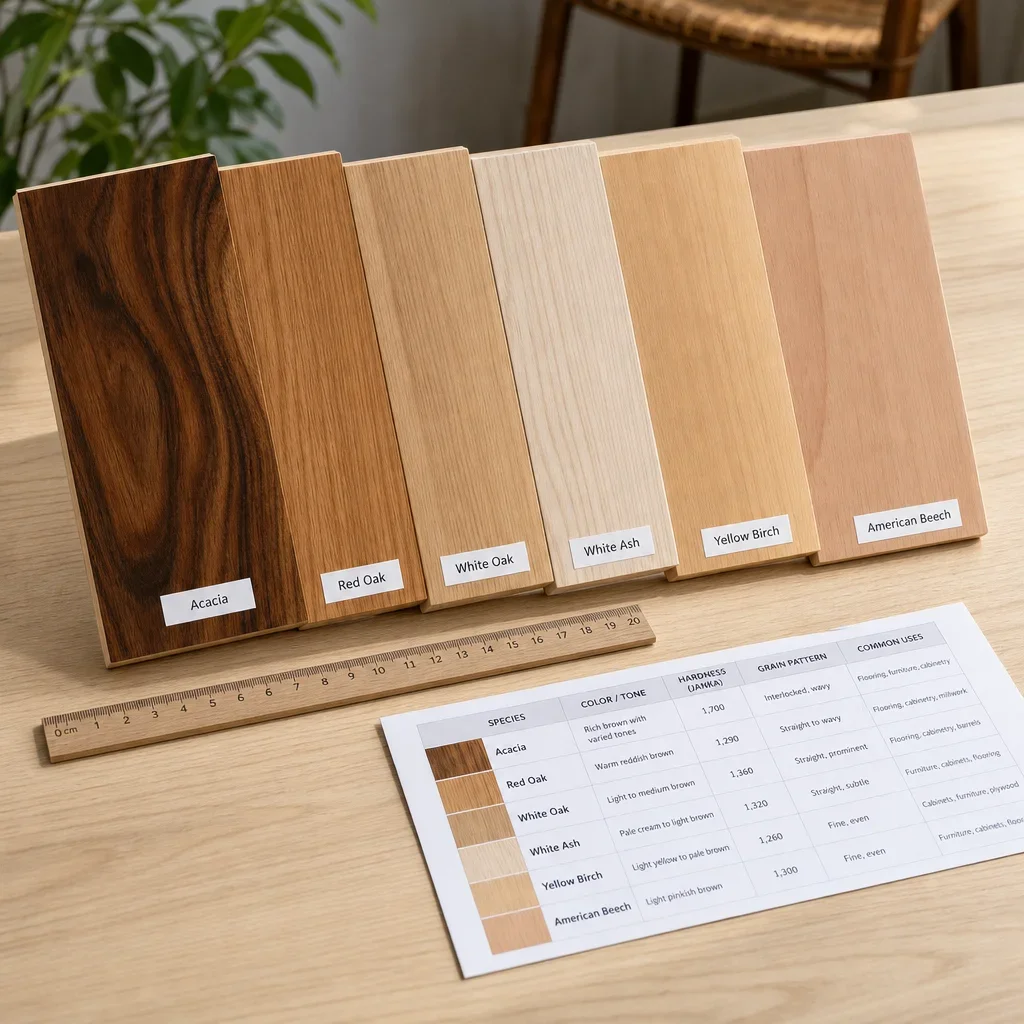
The clearest way to compare species is to put them against red oak, which is the North American baseline at 1,290 lbf. In the market, “American oak” is often used loosely, so it helps to separate red oak and white oak rather than treating them as one number.
| Species / trade name | Typical Janka rating (lbf) | Relative to red oak | Flooring note |
|---|---|---|---|
| Acacia | Varies by species and product | Often comparable to or harder than oak | Verify the exact species and spec sheet before comparing |
| Red oak | 1,290 | Baseline | Balanced hardness and one of the most common reference points |
| White oak | 1,360 | Harder than red oak | Similar benchmark with a different grain and colour profile |
| White ash | 1,320 | Slightly harder than red oak | Strong hardness with an open, active grain |
| Yellow birch | 1,260 | Slightly softer than red oak | Close to oak, but usually a bit lower on dent resistance |
| American beech | 1,300 | About the same as red oak | Fine, even grain and a very similar hardness range |
| Black walnut | 1,010 | Softer than red oak | Rich look, but easier to dent than oak |
| Hard maple / sugar maple | 1,450 | Harder than red oak | Good benchmark for dense, durable flooring |
| Hickory / pecan | 1,820 | Much harder than red oak | One of the hardest common North American flooring species |
This table answers most side-by-side questions better than a generic wood hardness chart because it keeps the comparison in one unit system. Lbf is the standard figure most flooring buyers will see in product literature and species charts.
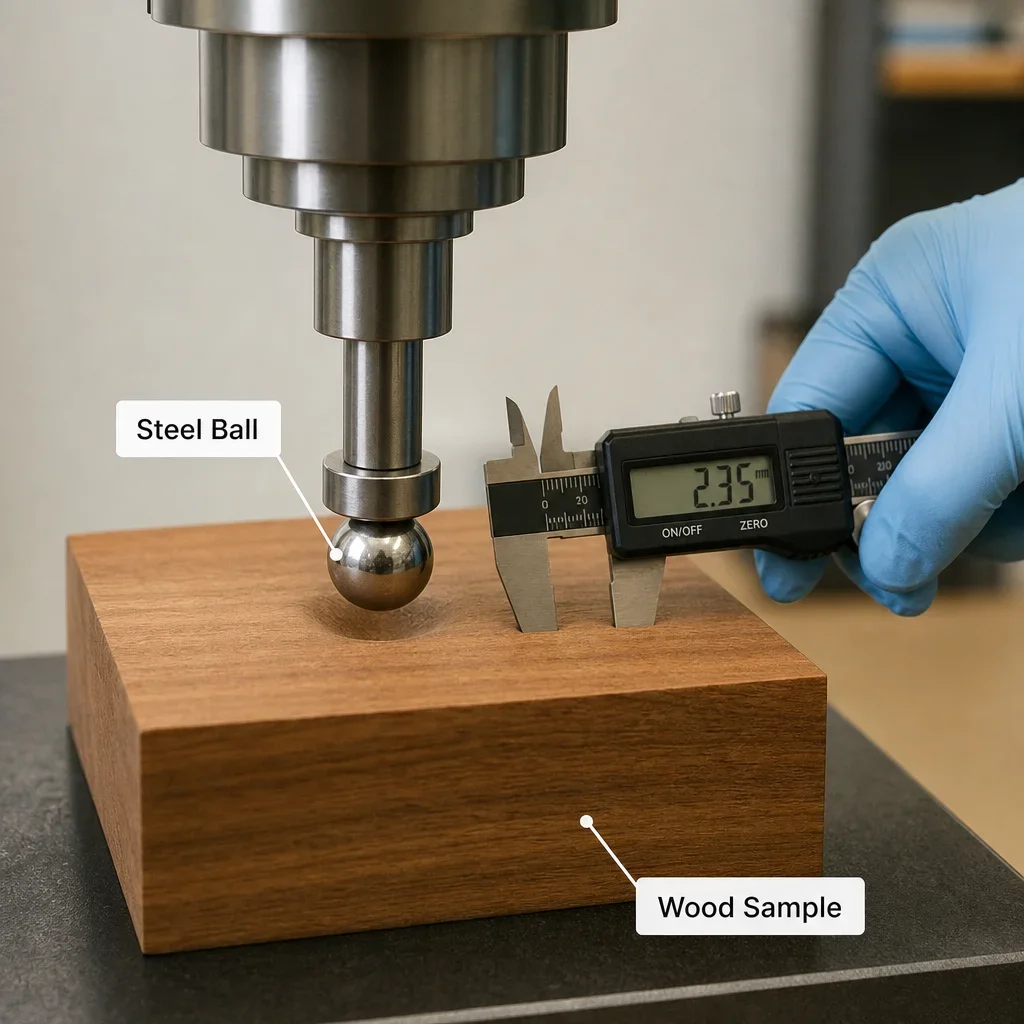
The Janka hardness test measures how much force it takes to embed a steel ball into wood to half the ball’s diameter. The steel ball used in the standard test is 0.444 inches in diameter. Higher numbers mean better resistance to denting from concentrated force.
That means Janka is mainly a dent-resistance test, not a complete wear test. It does not directly measure finish scratching, water resistance, dimensional stability, UV fading, or how a floor will look after years of traffic.
The easiest way to read the Janka hardness scale is to use red oak as your baseline. If a species is close to 1,290 lbf, it is in the familiar oak range. If it is well above that, like hickory, it should resist dents better under similar conditions.
Different websites list different numbers because they are not always testing the same species, moisture condition, or naming standard. Trade names can hide major botanical differences, and acacia is one of the best examples of that problem.
The acacia wood hardness rating varies more than buyers expect because “acacia” can refer to several species sold into the same flooring category. One manufacturer may list one acacia hardwood Janka rating, while another may be selling a different species under the same retail label.
Oak naming creates a similar issue, though usually to a lesser degree. “American oak” may mean red oak, white oak, or a marketing label that does not separate them clearly, even though red oak at 1,290 lbf and white oak at 1,360 lbf are not identical.
This does not make Janka useless. It means buyers should verify the exact species, the product construction, and the manufacturer’s published spec before making a flooring decision.
Acacia is often harder than oak, but the verdict depends on the exact acacia species because there is no single acacia number. If the product’s published rating is above red oak at 1,290 lbf or white oak at 1,360 lbf, then that acacia is harder in Janka terms.
Acacia is not automatically harder than maple. Hard maple is commonly listed at 1,450 lbf, so some acacia products may exceed it and others may not. That is why I tell buyers to compare the spec sheet, not the species name alone.
Acacia is usually harder than walnut when you compare it with black walnut at 1,010 lbf. In practical flooring terms, walnut gives you a richer, darker look, while acacia usually gives you more dent resistance.
Birch is usually a little softer than oak when the comparison is yellow birch at 1,260 lbf versus red oak at 1,290 lbf and white oak at 1,360 lbf. That does not make birch a poor floor. It just means it sits slightly lower on the hardness scale.
Ash is slightly harder than red oak when the comparison is white ash at 1,320 lbf versus red oak at 1,290 lbf, but it is still close enough that grain style and finish often matter more than the small difference.
Beech is very close to red oak in hardness when the comparison is American beech at 1,300 lbf and red oak at 1,290 lbf. For many buyers, that makes beech a visual and design choice more than a pure hardness choice.
Harder does not always mean better because flooring performance is more than a dent number. A very hard floor can still show finish scratches, seasonal movement, or visible wear if the sheen is high and the colour is dark.
Lower-gloss finishes usually show everyday wear less than high-gloss finishes, and textured or wire-brushed surfaces can hide traffic marks better than a very smooth, reflective surface. That is why the same species can look very different after a few years in two different homes.
Engineered construction adds another layer to the decision. The top wear layer species still controls the surface hardness you feel and see, while the core construction affects stability, installation options, and how the floor handles changes in humidity.
For high-traffic areas, I would look at hardness, finish, texture, and board quality together instead of chasing the highest number on the wood hardness chart. The wrong finish on the right species can still leave you disappointed.
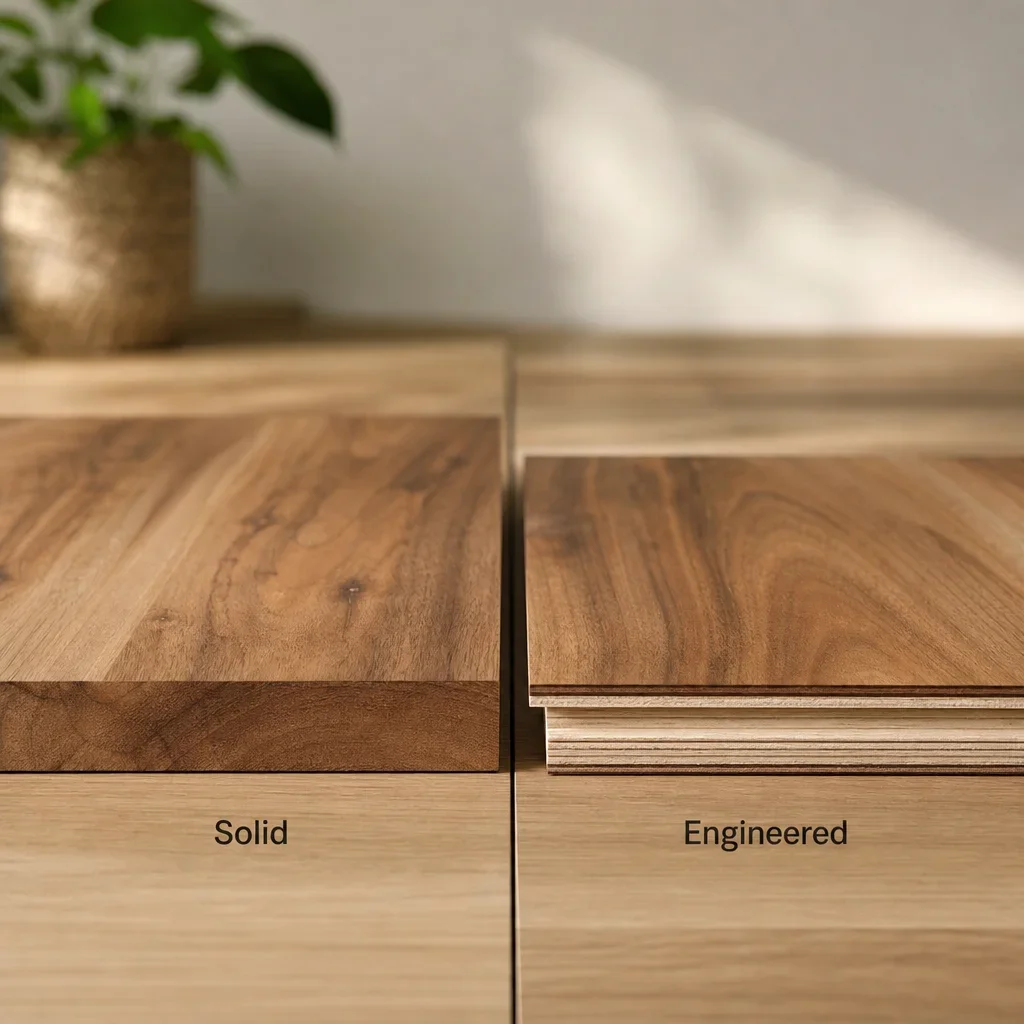
Janka is a wood-species property, so an engineered board with an acacia wear layer can still deliver acacia surface hardness. The core does not change the Janka rating of the face veneer itself.
What solid and engineered change is stability and installation suitability. Engineered wood flooring is often the better fit over concrete, in condos, or in areas where humidity swings make solid wood more demanding.
Solid wood flooring still has its place, especially where future sanding flexibility matters. But if you are comparing solid and engineered, do not confuse construction type with species hardness. They answer different questions.
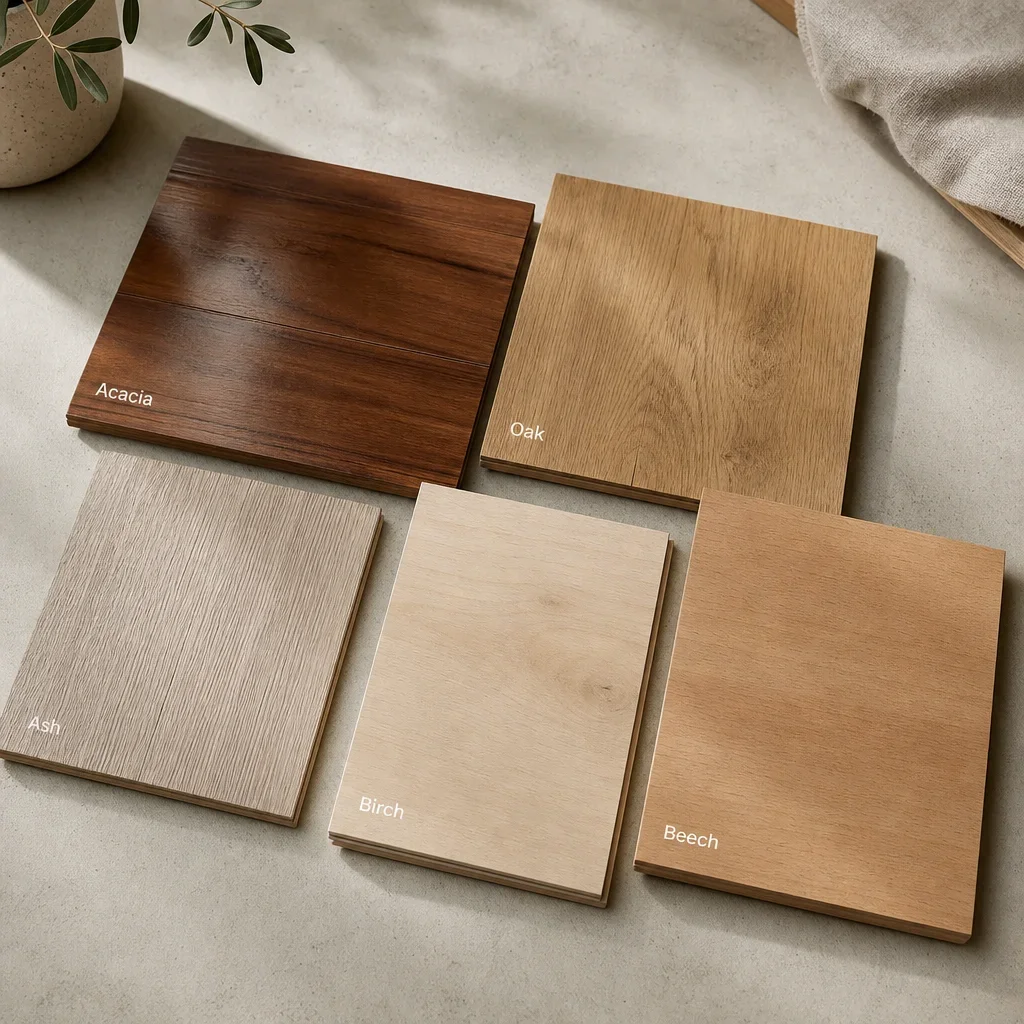
The biggest advantage of acacia is hardness, but its biggest drawback is variation. Many acacia floors have strong colour movement and active grain, which some buyers love and others find too busy.
Another downside of acacia wood flooring is that hardness does not stop visible finish scratching. If the floor is dark, glossy, or smooth, pet nails and grit can still show on the finish even when the wood underneath is dense.
Birch gives you a cleaner and more uniform look than acacia, but its birch hardness rating is usually a little lower than oak. Yellow birch at 1,260 lbf sits close to red oak, yet it can show dents a bit sooner under the same impact.
Beech offers even texture and a hardness level close to oak, but it is not as common in some flooring collections. Its beech hardness rating of 1,300 lbf places it near red oak, so the buying decision is often about look and product availability.
Ash is a good middle ground for buyers who want visible grain and solid hardness. White ash at 1,320 lbf is slightly above red oak, though local product selection can be narrower than standard oak lines.
Oak remains the benchmark because it is balanced. Red oak at 1,290 lbf and white oak at 1,360 lbf give buyers a familiar hardness range, broad style options, and a look that works in both traditional and modern homes.
| Species | Main pros | Main cons |
|---|---|---|
| Acacia | Hard, dramatic character, strong dent resistance potential | Colour variation, inconsistent naming, finish scratches still visible |
| Oak | Balanced hardness, broad selection, easy benchmark | Less distinctive than exotic-looking species for some buyers |
| Ash | Good hardness, open grain, lively appearance | Fewer product options in some lines |
| Birch | Clean look, close to oak on hardness | Slightly softer than oak, can show wear depending on finish |
| Beech | Fine grain, oak-like hardness | Less common in many flooring showrooms |
The best wood depends on where you are using it because hardness is only one filter. Flooring and stairs need a balance of dent resistance, stability, visual forgiveness, and finish options.
| Use case | Best-fit species from this group | Why |
|---|---|---|
| Main-floor hardwood | Oak, acacia, ash | Strong flooring balance of hardness and visual appeal |
| Busy family home | White oak, ash, selected acacia | Good hardness with practical finish flexibility |
| Stairs and treads | Oak, ash, selected acacia | Durable surfaces where finish and installation matter as much as species |
| Furniture | Oak, walnut, beech, birch | Broader style and machining choices |
| Tool handles | Ash, hickory | Known for toughness in impact-use applications |
| Countertops | Oak or maple in interior applications | Stable, familiar finishing choices when properly sealed |
| Outdoor use | Verify exact species and treatment first | Trade names alone are not enough for exterior claims |
For flooring buyers, the matrix really narrows to this: acacia if you want character and hardness, oak if you want balance and broad design choice, ash if you want grain with a slight hardness edge, and birch or beech if you prefer a cleaner look.
Janka relates more to dents than scratches. A harder species resists crushing better, but surface scratches usually happen in the finish layer first, not deep in the wood fibre.
Grain and colour affect visible wear as much as hardness does. Floors with natural movement, varied tones, or textured surfaces usually hide dust, small scratches, and day-to-day traffic better than very dark, uniform, glossy boards.
Finish choice is one of the most practical levers a buyer controls. Matte, low-sheen, wire-brushed, and hand-scraped looks are generally more forgiving in busy homes than polished smooth finishes. That matters just as much on oak as it does on acacia.
This is where seeing full boards helps. A number on a chart cannot show you how much character the floor has, how the stain sits in the grain, or whether a custom surface and gloss level will make the floor easier to live with.
The right species starts with your household, not the chart. Pets, kids, traffic level, subfloor type, condo rules, humidity swings, and your tolerance for natural variation all matter before you compare the acacia wood flooring Janka rating with oak or ash.
Choose acacia when you want a harder, character-heavy floor and you are comfortable with stronger colour and grain variation. Choose oak when you want a safer middle ground that balances hardness, selection, and design flexibility.
Choose engineered wood flooring when your installation conditions call for more stability, especially over concrete or in condos. Choose solid wood flooring when the site conditions suit it and long-term refinishing flexibility is a priority.
There is no single universal answer because acacia is sold under multiple species names and published values vary by source and product. The right answer is the exact manufacturer specification for the floor you are considering.
Often yes, but not always. If the specific acacia product tests above red oak at 1,290 lbf or white oak at 1,360 lbf, then it is harder than oak in Janka terms.
“American oak” is not one precise Janka number. Red oak is commonly listed at 1,290 lbf and white oak at 1,360 lbf, so buyers should confirm which one a seller means.
White ash is commonly listed at 1,320 lbf on the Janka hardness scale.
White ash is slightly harder than red oak at 1,320 lbf versus 1,290 lbf, but the difference is modest in practical flooring use.
Yellow birch is commonly listed at 1,260 lbf. That puts the birch Janka rating close to red oak, but usually a little lower.
Birch is close, but yellow birch at 1,260 lbf is slightly below red oak at 1,290 lbf and further below white oak at 1,360 lbf.
American beech is commonly listed at 1,300 lbf. That puts beech very close to red oak in hardness.
Beech is roughly comparable to red oak because American beech is 1,300 lbf and red oak is 1,290 lbf. White oak is a bit higher at 1,360 lbf.
It mainly measures dent resistance, not finish scratching. Surface scratches are influenced heavily by the coating, sheen, texture, dirt load, and household use.
They vary because acacia is a trade label used for different species, and published tests may come from different sources or naming conventions. That is why the exact product spec matters more than a generic acacia listing.
If the wear layer is acacia, the surface hardness can still reflect acacia’s Janka characteristics. The difference is that engineered construction changes stability and installation suitability, not the species property of the face layer.
The useful takeaway is simple: compare the species, the finish, and the exact product sheet together. If you are choosing between acacia, oak, ash, birch, or beech, start with the hardness chart, then look at the board in person before you decide.