
The better floor is not the one with the louder sales pitch. In hardwood floors prefinished vs site finished, prefinished usually wins on speed, mess, and move-in convenience, while site-finished usually wins on seamless appearance, stain control, and matching older floors.
Prefinished is usually the smarter choice for occupied homes because the boards arrive with the finish already cured at the factory, so there is no sanding, staining, or coating stage inside your house. Site-finished is usually the better choice when you want a flatter, more continuous look or need to match an existing floor with custom stain and sheen adjustments.
Neither option is universally better because the real tradeoff is convenience versus customization. If you care most about faster installation, less dust, and quicker use, prefinished floors vs unfinished usually come out ahead; if you care most about a monolithic look, custom colour work, or future blending with older wood, site finishing earns its extra labour.
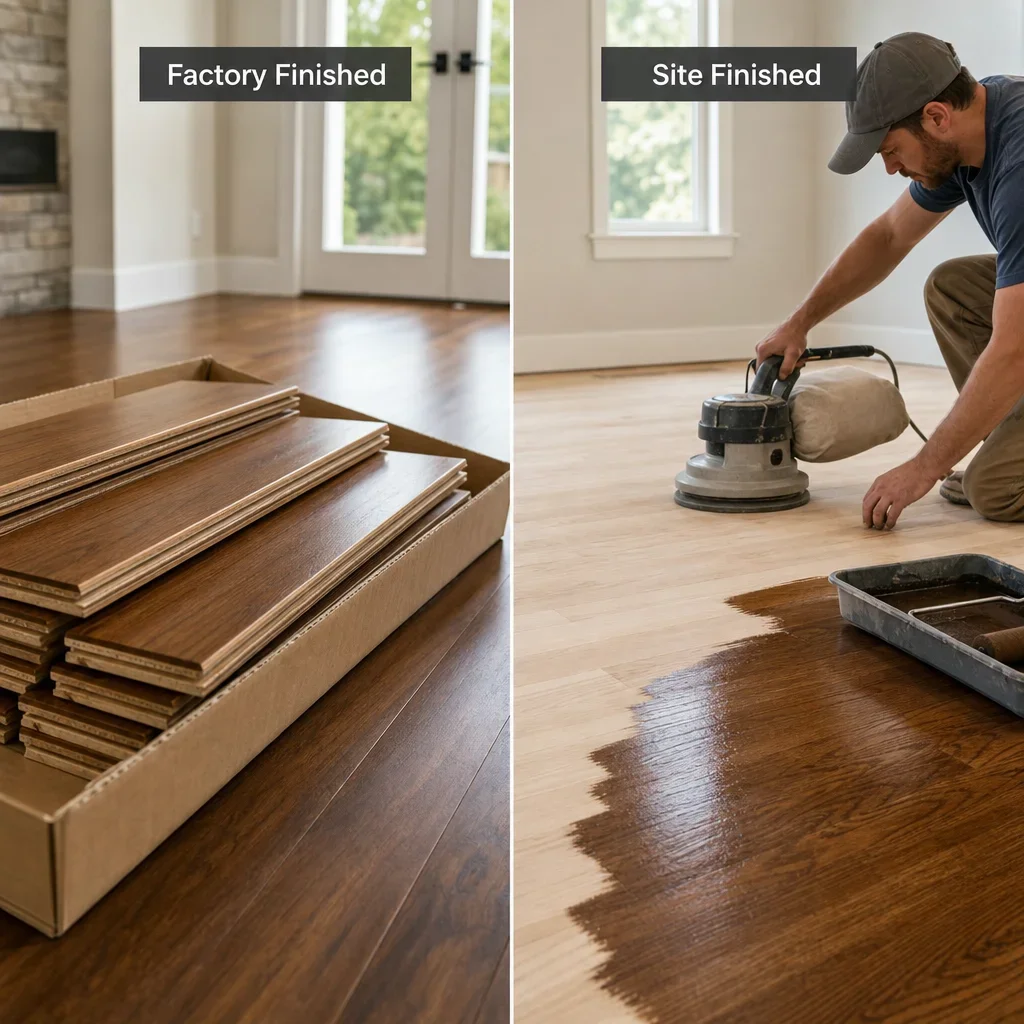
Prefinished hardwood flooring means the planks are stained and coated at the factory before they reach the job site. They are installed as finished boards, which is why people also call them finished hardwood instead of raw or unfinished wood.
Site-finished hardwood means the boards arrive unfinished, get installed first, then are sanded, stained if desired, and coated inside the home. That is the core difference between prefinished hardwood flooring vs finished on site: the wood can be real hardwood in both cases, but the finishing happens in a different place and at a different stage.
Finished hardwood vs unfinished is really a timing and process question, not a quality category by itself. The difference between unfinished and prefinished wood flooring is where the topcoat is applied, how the seams look after installation, and how much customization you get before the project is done.
| Feature | Prefinished hardwood | Site-finished hardwood |
|---|---|---|
| Finish applied | At the factory | In the home after install |
| Installation process | Install, trim, clean up | Install, sand, stain if chosen, coat, dry, cure |
| Walk-on readiness | Usually sooner because there is no on-site curing step | Delayed by drying and cure time of the finish |
| Dust and odour | Much less because there is no sanding stage | More dust and odour, even with containment |
| Appearance | Board definition is usually more visible | Surface usually looks flatter and more continuous |
| Edge profile | Many products have micro-bevels or bevels | Typically sanded flatter at the seams |
| Stain and sheen choice | Limited to factory options | Wide on-site customization |
| Matching existing floors | Harder to fine-tune exactly | Easier to blend stain and sheen on site |
| Durability | Often uses tough factory-cured coatings | Depends heavily on finish choice and finisher skill |
| Repairs | Single-board replacement is common for isolated damage | Spot repairs may still be visible; full-area refinishing blends better |
| Future refinishing | Often possible, but bevels and factory coatings can add work | Usually more straightforward to sand flat later |
| Best fit | Occupied homes, condos, rentals, tight timelines | Custom homes, additions, historic matching, bespoke layouts |
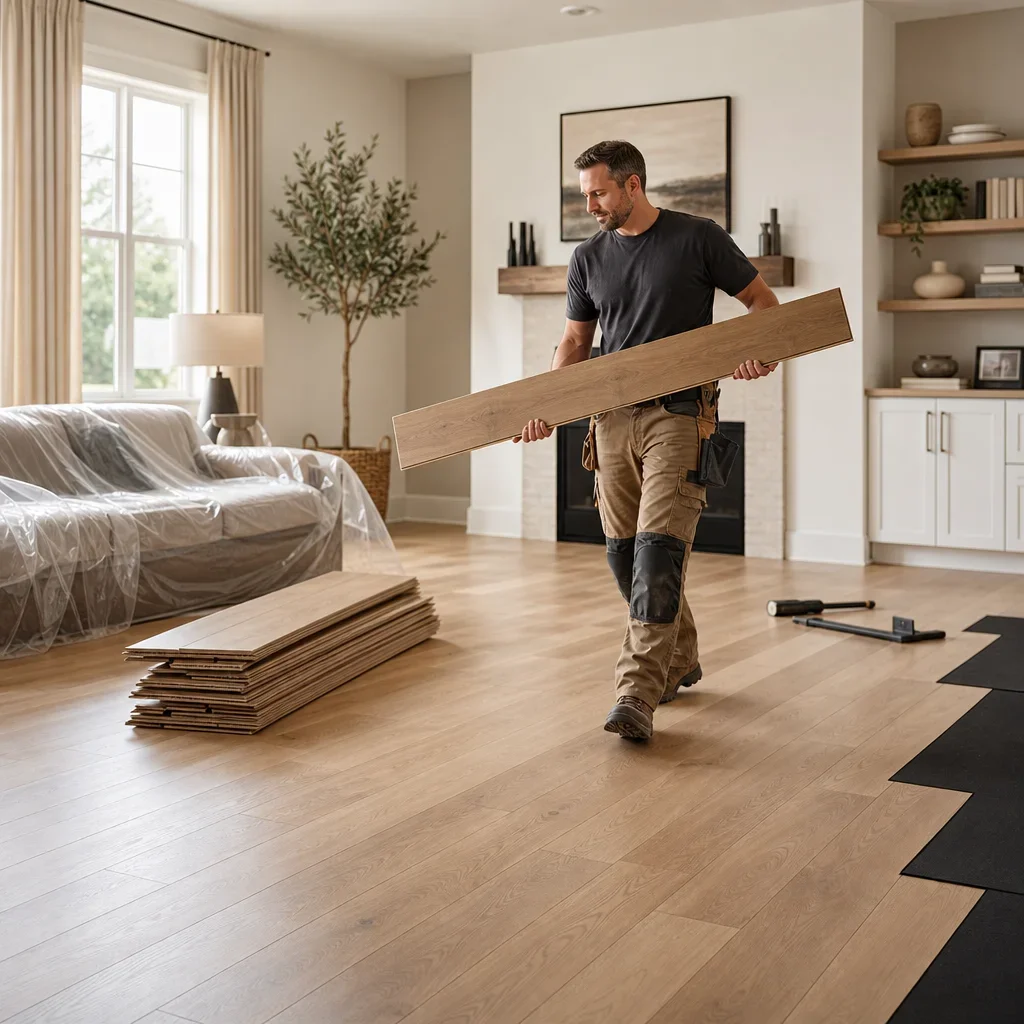
Prefinished hardwood is usually the easiest path when you want real wood with less disruption. The biggest benefits of prefinished hardwood floors are faster installation, less job-site dust, less smell, and a quicker return to normal use because the finish is already cured before the boards arrive.
Prefinished floors also work well in condos, family homes, and rental turnovers where schedule matters. A floor crew can focus on subfloor prep, installation, trims, and cleanup instead of adding several finishing steps that keep rooms out of service longer.
The main drawback is appearance preference, not structural quality. Many prefinished hardwood floors have a micro-bevel, which lightly outlines each plank and creates more visible seams than a sanded-flat site-finished floor.
The second drawback is limited customization after purchase. If you want a very specific stain, sheen, or blend to match older oak in the next room, prefinished flooring vs unfinished hardwood gives you fewer ways to tune the final look on site.
The third drawback is repair strategy. Minor scratches can sometimes be touched up, but a badly damaged prefinished board is often handled by replacing that board, and exact matching can get harder if the line is discontinued or the surrounding floor has faded from sunlight.
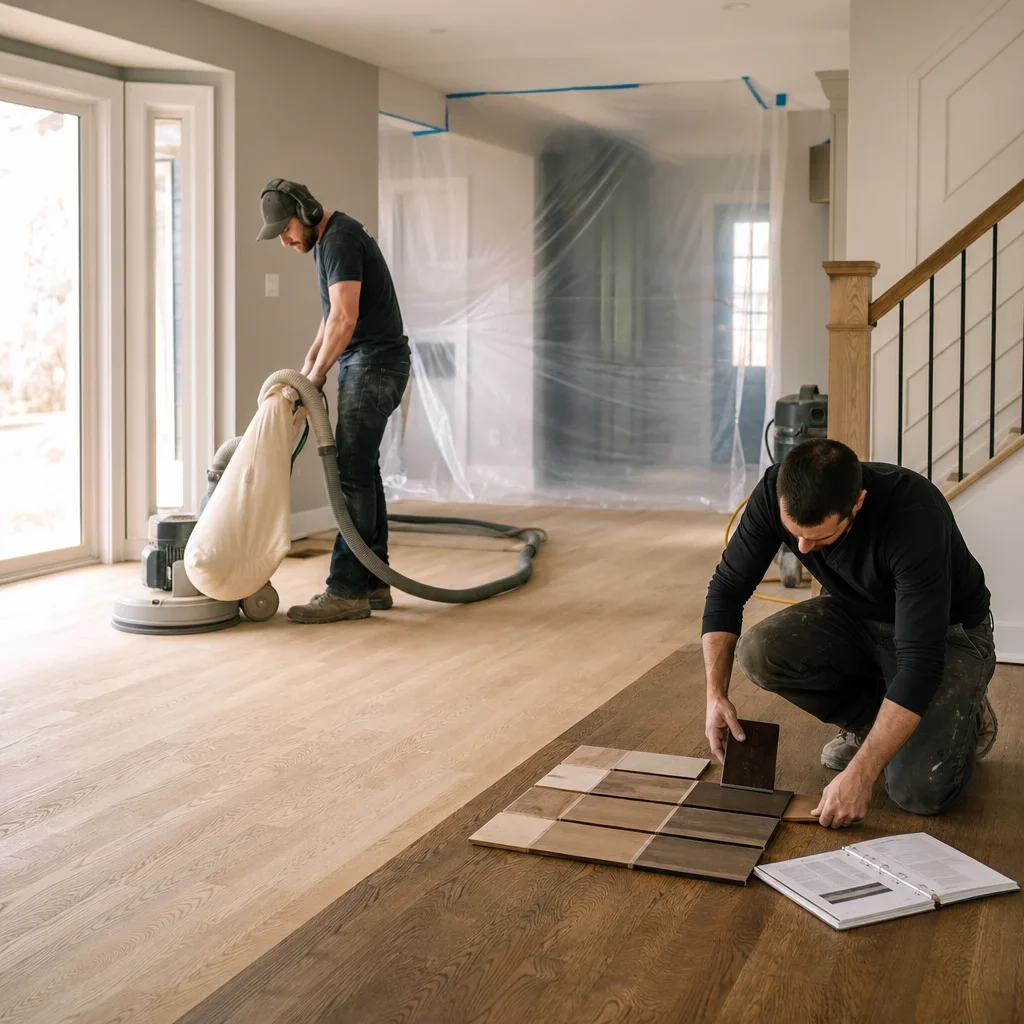
Site-finished hardwood is usually the better answer when appearance and customization matter more than speed. Finished or unfinished hardwood floor decisions often come down to this point alone: site finishing gives you control over stain colour, gloss level, and the final seamless effect after sanding.
A site-finished floor is also stronger visually in older homes or additions where you are trying to blend new boards into existing wood. The finisher can adjust stain and sheen on site, which is why matching an older floor is usually easier with unfinished hardwood flooring.
This option also suits custom layouts better. Herringbone, borders, inlays, medallions, and bespoke plank combinations often make more sense when the whole surface will be sanded and finished together after installation.
The downside is disruption. Site-finished projects take more steps, create more cleanup, and expose the home to sanding dust and finish odour, even when the crew uses dust containment and careful staging.
The other downside is labour dependence. A factory finish is applied under controlled conditions, while a site-finished floor depends heavily on the skill of the installer and finisher, the sequence of coats, the sanding quality, and how the home environment behaves during drying and cure.
The raw material price is only part of the bill, so the cheaper box does not always create the cheaper project. In the cost of prefinished hardwood flooring vs unfinished, unfinished wood can be lower on material in some cases, but total installed cost often rises once sanding, staining, finishing, drying time, extra protection, and cleanup are added.
What you should compare is the full stack of costs. That includes flooring, underlayment where required, delivery, subfloor prep, installation labour, trims, transitions, stairs, sanding, stain, finish coats, cleanup, and the practical cost of having rooms out of service longer.
The hidden costs are where buyers get surprised. Floor leveling, door trimming, baseboard touch-ups, furniture moving, temporary relocation, elevator bookings in condos, and extra labour around stairs can move the project total more than the difference between finished vs unfinished wood itself.
If you are pricing a 1,000 square foot project, use a quote framework instead of a generic internet total. Measure the rooms, list the species and plank width, note whether you need stair work, and separate supply from labour so you can compare prefinished hardwood vs sand and finish on equal terms.
CanFloor lists solid hardwood supply from $3.99 per square foot , but your actual project cost depends on the product, grade, width, installation pattern, subfloor condition, and whether the job includes stairs or custom finishing.
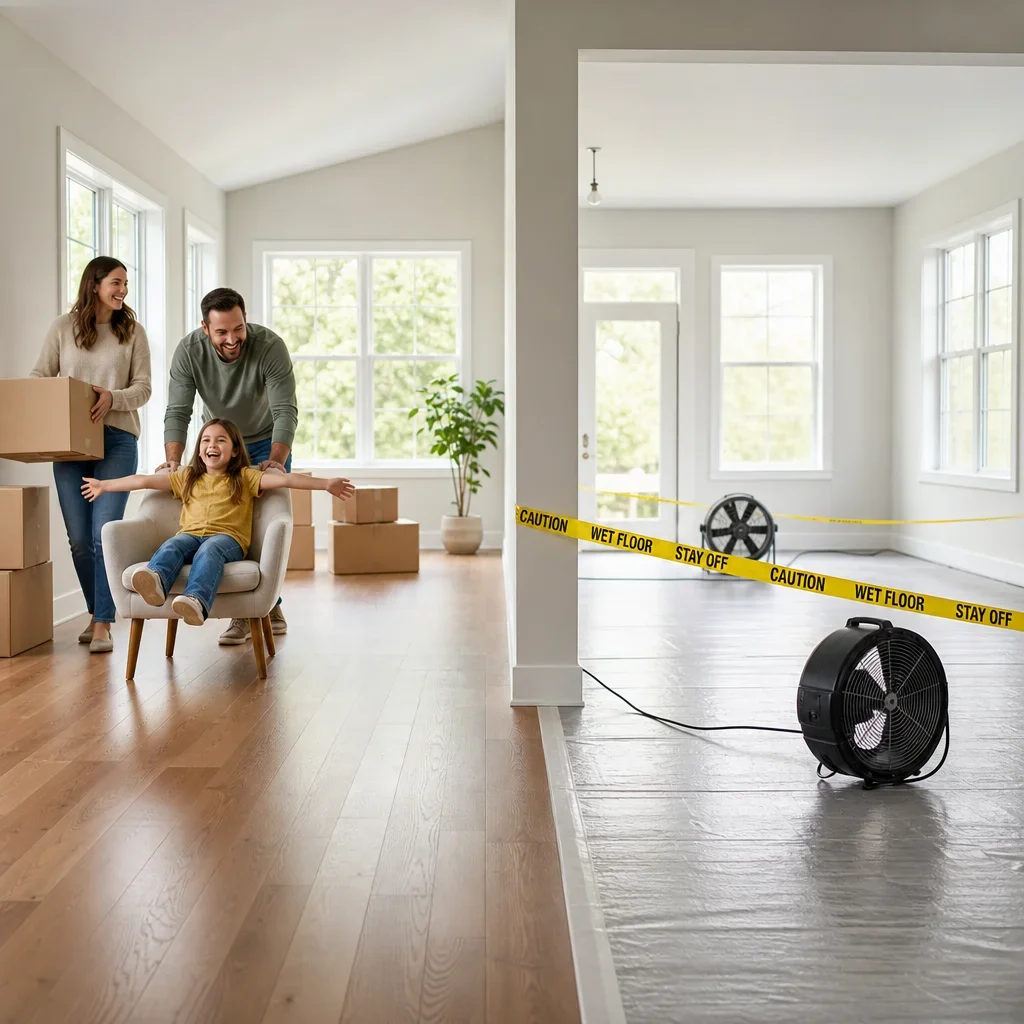
Prefinished hardwood is usually faster to live with because the job ends after installation and cleanup rather than after a curing schedule. The usual sequence is delivery, acclimation planning where applicable, subfloor prep, installation, trims, and cleanup, with no on-site sanding or coating stage.
Site-finished hardwood adds several more steps after the boards are down. The floor is installed, sanded flat, stained if a custom colour is chosen, coated with one or more finish layers, then left to dry and cure before normal use and furniture return.
This is why prefinished hardwood creates less dust and odour than site-finished flooring. The sanding stage is the main source of job-site dust, and the on-site finish chemistry is the main source of smell, so removing those steps reduces disruption in occupied homes.
You can usually walk on prefinished floors sooner because there is no wet finish to protect after the install is complete. By contrast, site-finished floors need drying and cure time that depends on the finish system, the number of coats, and site conditions, so the exact timing should come from the installer and product instructions.
This timing difference matters more in condos, homes with children, houses with pets, and renovation phases with fixed move-in dates. If you need a floor that gets you back to normal quickly, prefinished hardwood flooring vs finished on site usually favours the factory-finished option.
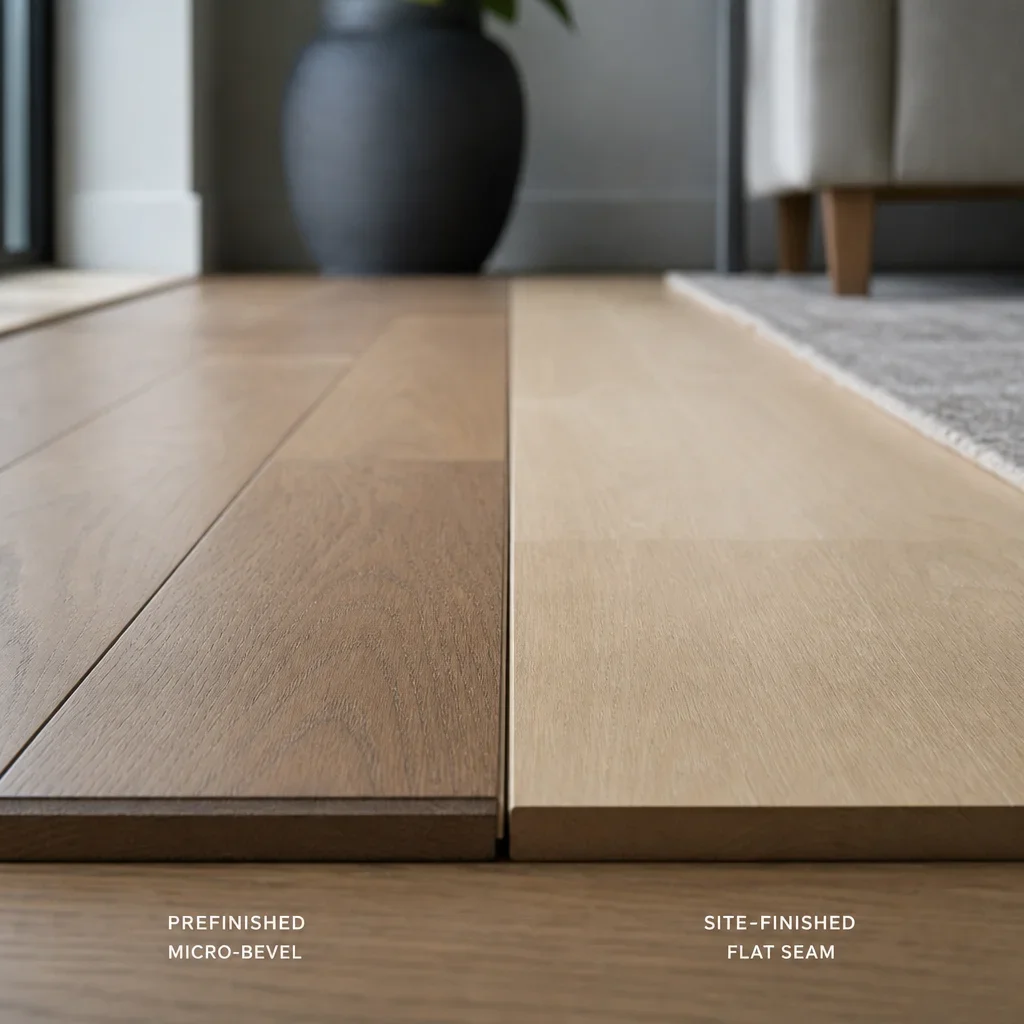
The biggest visual difference is usually at the seams. Many prefinished products use beveled or micro-beveled edges, which means each board has a slight angled edge that helps define the plank lines after installation.
Site-finished floors are usually sanded flat after the boards are installed, so the seams read as a more continuous surface. That flatter look is why some buyers say finished vs unfinished hardwood floor debates really come down to whether you want visible plank definition or a smoother, almost monolithic field of wood.
Bevels are not automatically a flaw. Some homeowners actually prefer the more defined plank look, especially with wider boards, hand-scraped styles, wire-brushed textures, or lower-sheen finishes that make the floor feel more architectural.
Bevels can hold a bit more dust than a sanded-flat surface, but cleaning difficulty depends more on household habits and the depth of the edge profile than on the word prefinished alone. A light micro-bevel usually behaves differently from a deeper bevel, so this is worth seeing in person before you choose.
Factory finishes are often marketed as tougher because they are cured under controlled conditions and may use UV-cured urethane systems or aluminum-oxide-enhanced coatings. That is a real advantage in consistency, but it does not make prefinished hardwood scratch-proof or universally better in every home.
Site-applied finishes usually fall into categories such as water-based polyurethane, oil-based polyurethane, or hardwax oil. Each behaves differently in colour, odour, sheen, touch-up strategy, and cure time, so the best finish for hardwood floors depends on the look you want and how you maintain the space.
Real-life durability depends on more than the finish label. Species hardness, traffic level, grit at the door, chair movement, pet nails, moisture discipline, and sheen level all affect how the floor wears over time.
Low-sheen and textured floors usually hide small scratches and swirl marks better than high-gloss smooth floors. That is often the more useful buying insight than asking whether prefinished hardwood flooring is better in the abstract.
A hardwood floor lasts based more on construction, wood thickness, traffic, moisture control, and maintenance than on whether it was factory-finished or site-finished on day one. Solid hardwood is commonly 3/4 inch thick , and that thickness is one reason it can usually be refinished multiple times over its life.
Many prefinished solid hardwood floors can be sanded and refinished later, so the answer to can you refinish prefinished hardwood floors is often yes. The catch is that factory coatings can be harder to sand through, and bevel profiles may need more sanding to flatten if you want a fully uniform surface.
Engineered hardwood is different because refinishing depends on the thickness of the real wood wear layer, not just the top colour. Some engineered floors can be refinished, some only lightly, and some are poor candidates, which is why buyers comparing solid and engineered hardwood should ask for the wear-layer specification before assuming future sanding is available.
There is also a difference between recoating and full refinishing. A buff-and-coat or recoat refreshes the existing top surface without sanding down to bare wood, while a full sand-and-refinish removes material and rebuilds the finish system from scratch.
If you choose prefinished, keep extra boxes for future repairs. Stored matching boards can make isolated damage much easier to handle years later, especially if the original colour or size is discontinued.
Prefinished floors are usually easier to repair one board at a time, but harder to blend invisibly across old and new material. If damage is isolated, a board swap may solve it cleanly; if damage is broad, you may be looking at a larger refinishing conversation instead.
Site-finished wood is usually better for matching an older floor because stain and sheen can be adjusted after the new boards are down. That flexibility matters when the existing floor has ambered, faded in sunlight, or changed tone with age and cleaning products.
This is also where discontinued products become a real issue. The same species and width can still look different across production runs, and sun exposure can shift colour enough that a perfect board-for-board match is unrealistic without site finishing or full-room refinishing.
For scratches, touch-up kits may help; for water spots, the finish layer may need repair; for cupping, the moisture source matters more than the surface coating; and for broken boards, replacement is often the cleanest fix. The correct repair path depends on whether the issue is cosmetic, structural, or moisture-related.
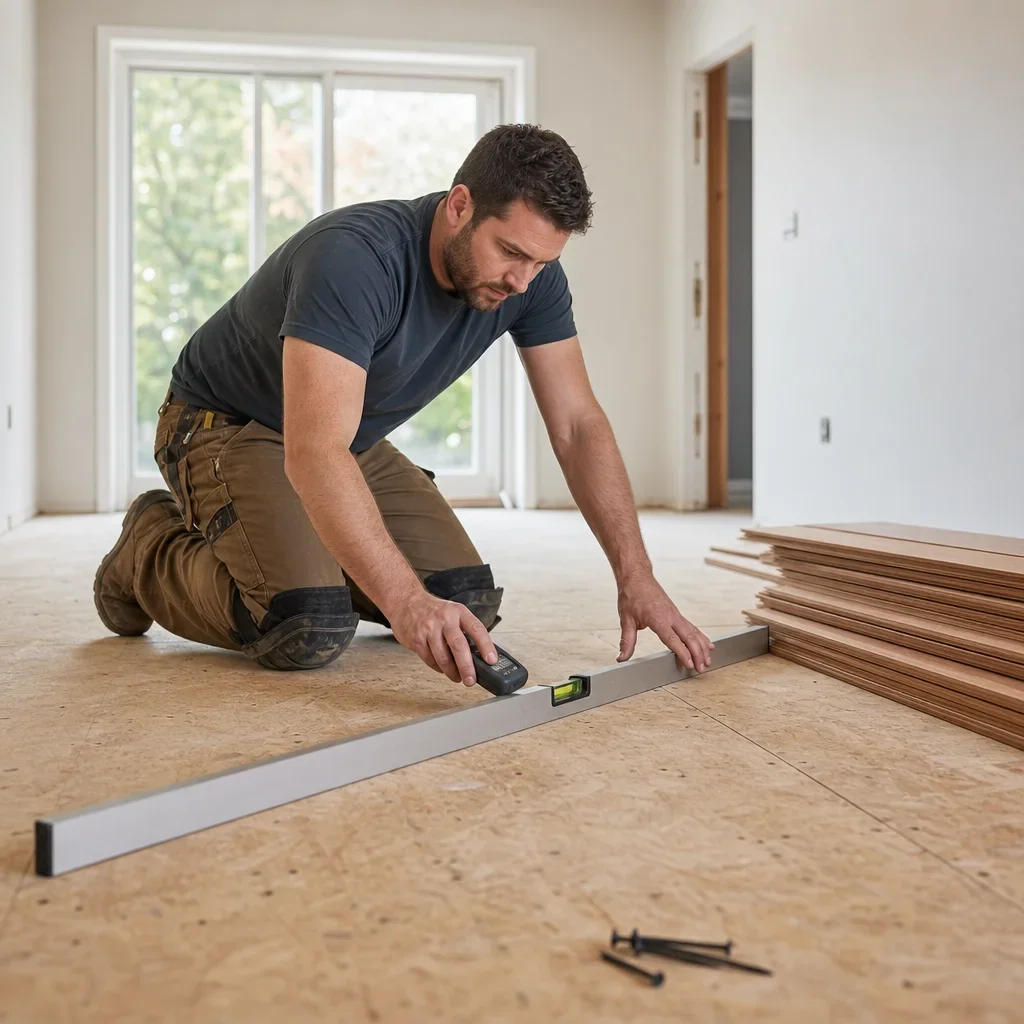
Subfloor prep affects the finished look more than most buyers expect, regardless of which hardwood route they choose. Both options need a dry, sound, and sufficiently flat base, along with a plan for transitions, stairs, trim details, and door clearances.
Prefinished boards can telegraph subfloor irregularities more clearly because they are not sanded flat after installation. Small height changes between boards may show more readily, which makes prep especially important when buyers are comparing hardwood prefinished vs site finished for a renovation over older framing.
Site-finished floors can look flatter at the surface because the sanding stage blends minor height differences across boards. That helps the appearance, but it does not eliminate the need for proper leveling, fastening, and moisture checks underneath.
This is one reason showroom samples and online photos only tell part of the story. A good estimate should look at the existing floor system, not just the species and colour you like.
For an occupied remodel, prefinished is usually the safer choice because it reduces dust, smell, and downtime inside the home. If the kitchen, hallway, or main living area has to come back into service quickly, that convenience is hard to ignore.
For a new build or major renovation where the house is already under construction, site-finished hardwood often makes more sense. The extra finishing steps are easier to stage when the home is not fully occupied and the goal is a more seamless custom result.
For matching existing hardwood, unfinished wood is usually the better route. That is where custom stain adjustment, sheen control, and room-to-room blending give site finishing a clear edge.
For homes with kids and dogs, neither option is scratch-proof, and dog nails can mark wood if they are not kept trimmed. The more realistic comparison is this: prefinished may offer a durable factory coating, while a lower-sheen site finish may hide wear better and can be easier to refresh later depending on the system.
For kitchens, neither option makes hardwood waterproof. The better practice is prompt cleanup, good mat placement, finish selection, and moisture discipline around sinks, dishwashers, and exterior doors.
For rentals, prefinished often wins because faster turnover and simpler board replacement matter more than custom stain freedom. That can make the total project easier to schedule between tenants.
For herringbone, borders, inlays, medallions, and bespoke layouts, site-finished wood is often preferred because the whole design can be unified after installation. That gives the final floor a more intentional, custom-built look.
For basements or below-grade areas, solid hardwood is usually not the first recommendation. Buyers comparing rooms below grade should also look at engineered hardwood or vinyl instead of forcing a solid wood product into a moisture-risk space.
The best buying checklist focuses on how the floor will behave in your home, not just how it looks in a sample. Ask what the finish chemistry is, what sheen levels are available, whether the product has a micro-bevel or square edge, and how isolated damage is usually repaired.
Ask whether the floor is solid or engineered and, if engineered, what the wear layer is. That single construction detail affects room suitability, long-term refinishing options, and how you should compare one product against another.
Ask what prep the subfloor needs before installation starts. Flatness, transitions, stair details, furniture moving, and door clearances can change labour and schedule more than buyers expect.
Ask when you can walk on the floor, when furniture can return, and what cleaning products are safe in the first weeks. Those practical questions matter just as much as colour and species.
Ask whether you should order extra material for future repairs. Keeping attic stock is one of the simplest ways to protect yourself against discontinued colours, lot changes, or board damage later on.
If you are trying to match older flooring, bring a loose sample or clear photos in natural light. Species, board width, stain tone, gloss level, and age-related colour change all matter when comparing finished wood vs unfinished wood for a blend-in project.
Prefinished is usually better for faster, cleaner renovations, while unfinished is usually better for seamless visuals and custom stain matching. The right choice depends on budget, schedule, appearance goals, and whether you are matching older floors.
They are better for convenience, less dust, and faster use after installation. They are not automatically better for custom colour work, seamless appearance, or exact blending with existing wood.
It means raw boards are installed first, then sanded and coated inside the home. The finish is applied on site rather than at the factory.
Unfinished wood can look cheaper at the material stage, but site finishing adds labour, finishing products, drying time, and more disruption. Total project cost must be compared as supply plus install plus finishing, not by board price alone.
Many solid prefinished floors can be sanded and refinished. Engineered floors vary by wear-layer thickness, and bevels or tough factory coatings can make the work more involved.
Lifespan depends on wood thickness, species, traffic, moisture control, and maintenance. A well-kept hardwood floor can last for decades, and construction details matter more than the word prefinished by itself.
They arrive with a factory-applied finish, so they do not need an extra sealing step right after installation in normal circumstances. Follow the product care instructions rather than adding coatings on your own.
A finished floor has a visible protective surface that sheds small spills briefly and feels sealed. Unfinished or worn-through wood looks drier, absorbs moisture faster, and may show raw grain with little surface protection.
Neither is pet-proof. Lower sheen helps hide wear, textured surfaces can disguise marks, and regular nail trimming matters more than marketing claims about scratch resistance.
Site-finished hardwood is usually better because stain and sheen can be adjusted after installation. That extra control is hard to match with a fixed factory colour.
If you are still deciding between a finished vs unfinished hardwood floor, the fastest way to get clarity is to compare samples in person and look closely at bevels, sheen, plank width, and colour variation. At CanFloor, homeowners and contractors can view prefinished and unfinished options side by side at 2687 Steeles Ave. West, North York, Ontario and bring room photos, measurements, or an existing wood sample for a more accurate comparison.