
The best hardwood floor species is rarely the hardest one. The right choice balances dent resistance, grain, colour movement, sunlight, subfloor conditions, and budget, and in Canadian homes that usually puts White Oak, Hickory, Maple, Red Oak, and Walnut at the top of the list.
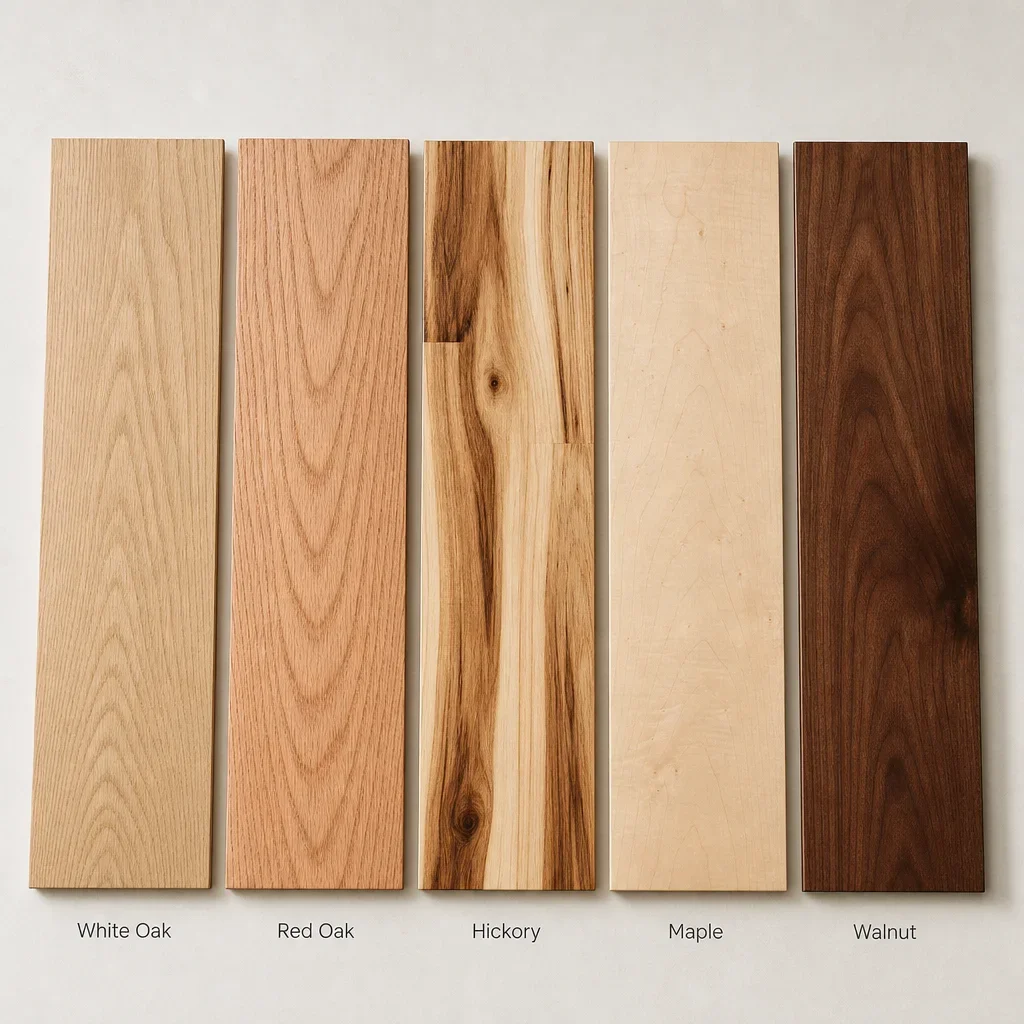
White Oak is the best overall pick because it balances durability, stain flexibility, and broad design appeal better than most species. It works in modern, traditional, and transitional homes, and it is one of the easiest species to pair with matte finishes, natural tones, and wider planks.
Hickory is the best choice for active homes because it is among the harder domestic options and hides family wear well when you choose a lower-sheen finish. Its tradeoff is visual movement, since strong colour and grain variation can look too busy in minimalist spaces.
Maple is one of the best wood species for flooring when you want a cleaner, more contemporary look. It offers solid durability, but its smoother, lighter appearance can make small scratches stand out differently than they would on a more textured oak floor.
Red Oak is the best value pick for many homes because it gives you a classic hardwood look with warm undertones and strong availability. It is usually easier on the budget than premium White Oak looks or character-heavy Hickory selections, though actual pricing depends on the product line and finish.
Walnut is the design-first option because it delivers a richer, more elegant look than most domestic species. It is softer than Oak, Maple, and Hickory, so it fits better in lower-traffic rooms or homes that accept visible wear as part of the floor's character.
Engineered White Oak is often the smartest choice for Canadian condos and concrete subfloors because engineered construction handles more site conditions than solid hardwood. Seasonal humidity swings, radiant heat, and slab installations can matter just as much as species.

The best wood species for hardwood flooring depends first on what you want the floor to do every day. If you care most about durability, start with Hickory, Maple, or White Oak; if you care most about design flexibility, start with White Oak or Red Oak; if you care most about luxury appearance, start with Walnut.
Hardness is only one part of performance because scratches show in the finish, not just in the wood. Grain pattern, sheen level, texture, and colour contrast decide whether daily wear looks obvious or disappears into the floor.
A simple comparison table beats guessing when you are narrowing hardwood flooring types of wood. Here is the practical shortlist most buyers should compare first.
| Species | Durability | Grain / Character | Stain Flexibility | Price Tier | Sunlight Forgiveness | Best Fit | Pet-Friendly Look | Engineered Availability |
|---|---|---|---|---|---|---|---|---|
| White Oak | High | Subtle to moderate | High | Mid to upper-mid | Good | Modern, classic, wide planks | Good with matte finish | Common |
| Red Oak | Medium-high | More visible grain | High | Mid | Good | Traditional, value-driven homes | Good with satin finish | Common |
| Hickory | High | Strong variation | Medium | Mid to upper-mid | Good in medium tones | Busy family homes | Very good in textured finishes | Common |
| Maple | High | Smooth and clean | Medium-low | Mid to upper-mid | Fair to good | Contemporary spaces | Fair to good | Common |
| Walnut | Medium-low | Rich and elegant | Low to medium | High | Fair | Formal rooms, luxury interiors | Lower for active homes | Available in many lines |
| Ash | Medium-high | Open grain, lively | Medium | Mid | Good | Casual and natural interiors | Good | Varies by supplier |
| Cherry | Lower | Fine, warm character | Low | Mid to high | More colour change | Low-traffic spaces | Lower | Less common |
The fastest decision matrix is to match the species to one priority instead of chasing a perfect floor. Choose White Oak for versatility, Hickory for toughness, Maple for a calm modern look, Walnut for luxury, and Red Oak for dependable value.
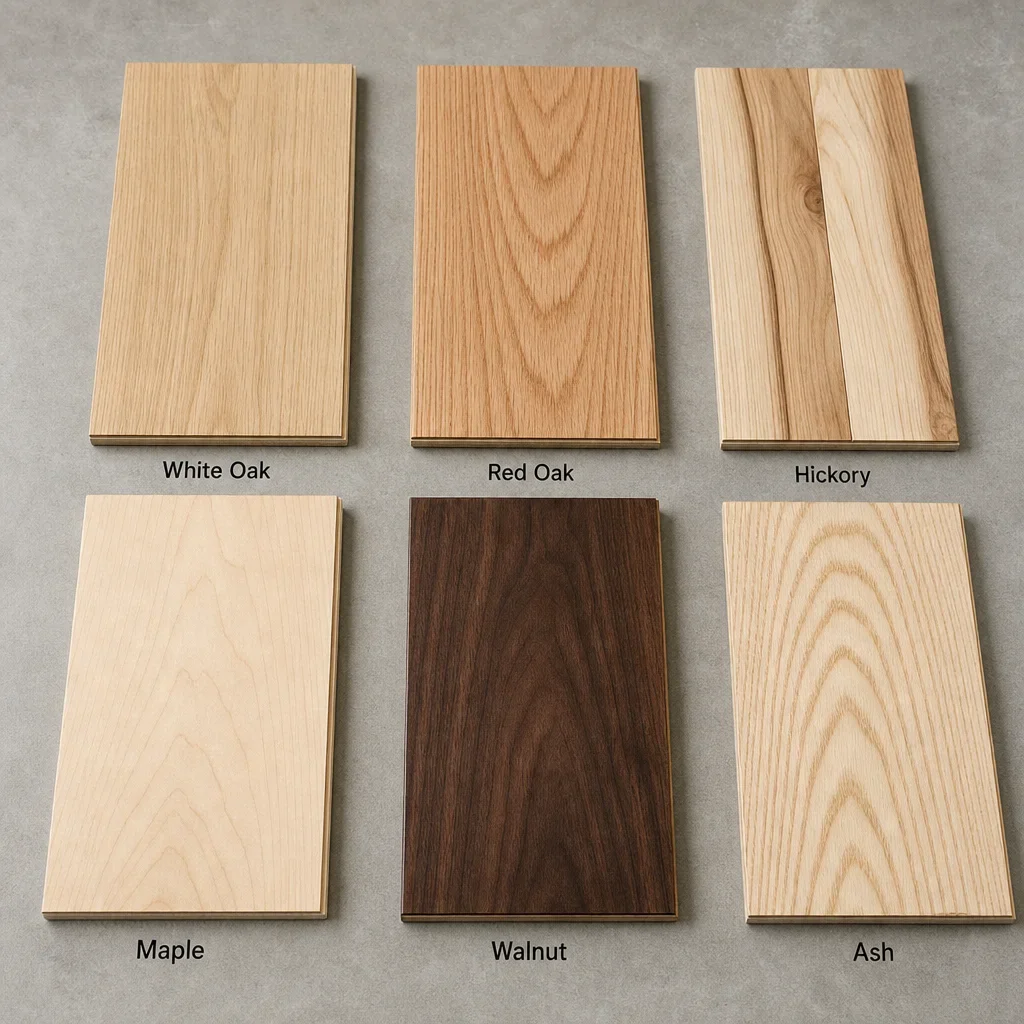
White Oak hardwood flooring is the safest recommendation for most buyers because it does many jobs well without major compromises. It takes stain well, suits light natural palettes and darker custom finishes, and usually looks good in both clean-grade and character-grade visuals.
Red Oak is still one of the smartest traditional choices because its grain is familiar, warm, and easy to live with. It tends to suit classic Toronto houses especially well, and it can be a practical way to get real hardwood without paying for trend-driven White Oak visuals.
Hickory hardwood flooring is one of the best options for households that expect real wear. It offers strong dent resistance and a rugged look, but the same colour variation that helps hide traffic can feel too rustic if you want a quieter floor pattern.
Maple is one of the best wood species for hardwood flooring when you want a brighter, smoother surface. It reads cleaner than Oak, but some stained Maple products can be trickier because Oak generally accepts a broader range of stain looks more predictably.
Walnut gives you one of the most attractive premium looks in wood flooring types and prices conversations because buyers usually accept higher cost for its colour and elegance. The tradeoff is softness, which means dents and wear are easier to create in high-traffic homes.
Ash can be a good alternative when you want visible grain without Hickory's stronger colour shifts. It sits between calm and character-heavy looks, though availability depends more on the supplier and current product lines.
Cherry works better as a niche design choice than a universal recommendation because it is softer and changes colour more noticeably over time. It suits quieter rooms and more traditional interiors better than rough family spaces.
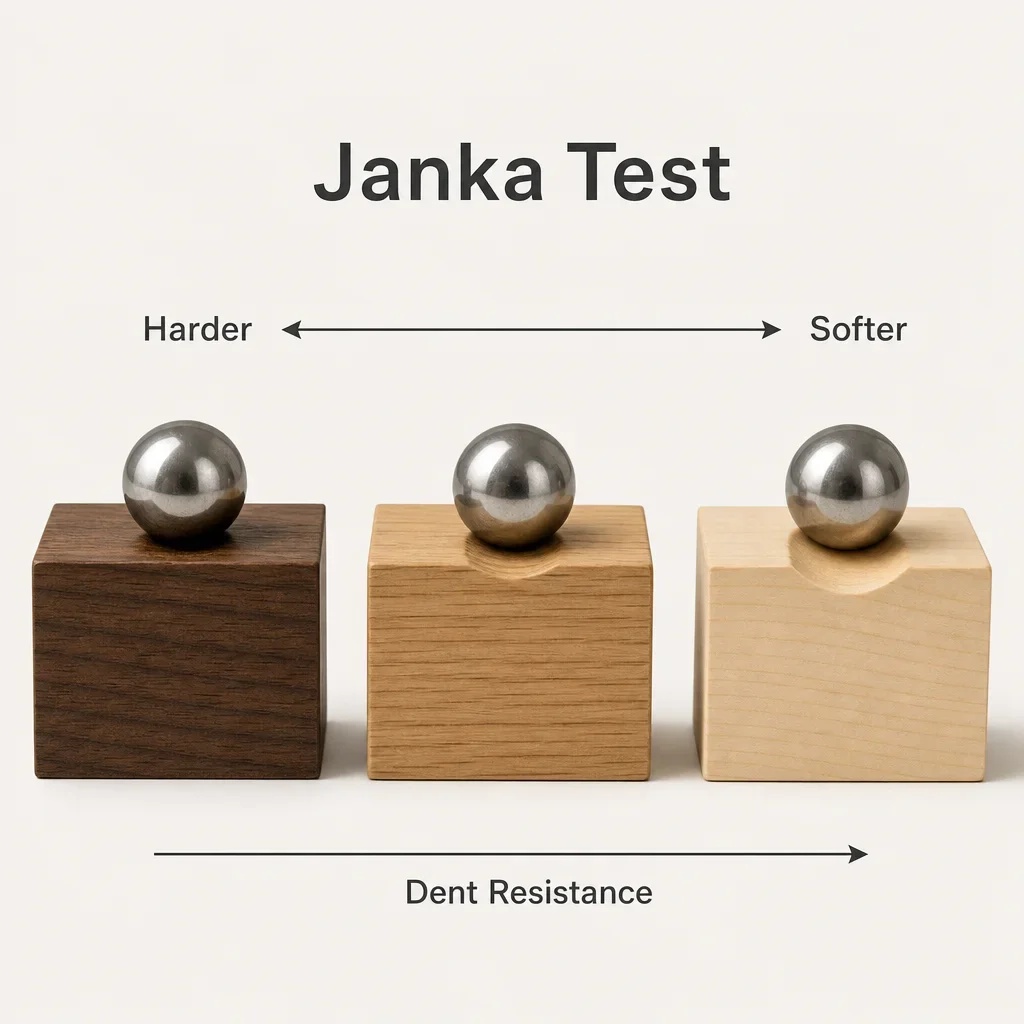
Janka hardness is a dent-resistance test, not a full performance score for hardwood floors. It tells you how much force it takes to embed a steel ball into the wood, so it helps compare species for denting, but it does not predict scratch visibility, water tolerance, finish durability, or dimensional stability.
A harder species is not automatically the best hardwood floor species for dogs or kids because the finish still takes the daily abuse first. A glossy hard floor can show pet nails faster than a matte floor in a slightly softer species with more grain and colour movement.
Surface texture changes real-life performance more than many buyers expect because wire-brushed, hand-scraped, and lower-sheen floors break up reflected light. That makes small scratches and dust less obvious than they are on a smooth, dark, glossy board.
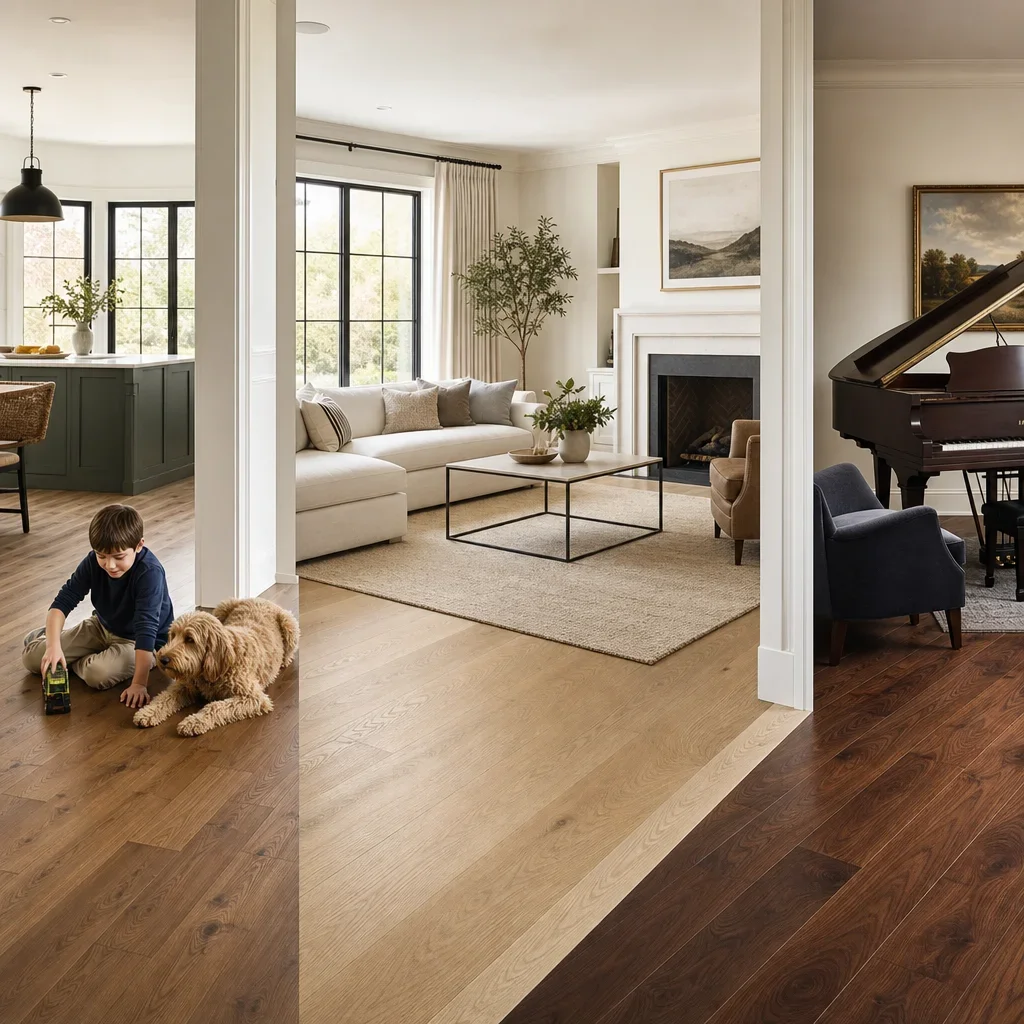
White Oak is the best overall species because it balances durability, style range, and resale-friendly colour better than most alternatives. Its one drawback is that premium White Oak looks can cost more than entry-level Red Oak products.
Hickory is the best species for pets and kids when you also choose a matte or satin finish. Its drawback is visual busyness, so it does not suit every design style.
Hickory or White Oak usually make the strongest picks for high-traffic homes because both hold up well and pair well with wear-hiding textures. White Oak is more flexible in appearance, while Hickory leans more rustic.
Red Oak is often the best value because it gives you proven hardwood performance without forcing a premium look budget. Value depends on grade, width, finish, and whether you are buying solid or engineered, so compare the whole product, not the species name alone.
Walnut is the best choice for formal or luxury rooms where appearance leads the decision. Its downside is softer performance in busy households, which means you need to accept patina and wear.
Maple is one of the best choices for modern interiors because its grain is smoother and more uniform. Its downside is that a very clean, light look can make surface marks easier to notice in direct light.
White Oak in medium natural tones is one of the best species for sunny rooms because it ages gracefully and suits lower-sheen finishes. Very dark stains, very red tones, and high-gloss finishes usually show sun-related change more aggressively.
Engineered White Oak is one of the best hardwood floor species in Canada when the home has concrete subfloors, condo conditions, or radiant heat. The species still matters, but the construction often decides whether the floor is practical.
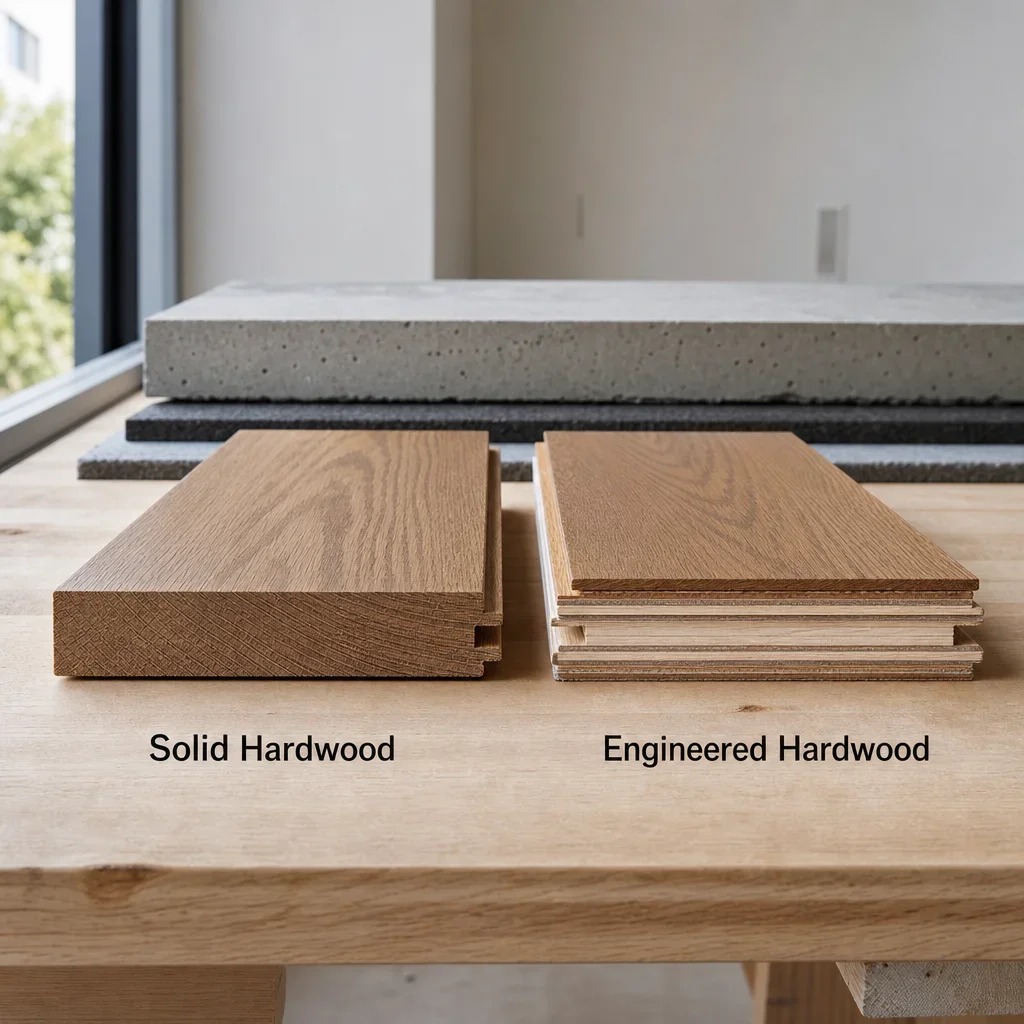
Solid hardwood is a single piece of wood, while engineered hardwood uses a real wood top layer over a layered core. That core makes engineered boards more practical for concrete slabs, condos, and some radiant heat applications.
Solid hardwood is usually the better fit when you want maximum traditional authenticity and the best refinishing potential over time. It needs the right site conditions, though, because wood movement is more demanding when humidity swings are large.
Engineered hardwood is usually the smarter fit for basements, condos, and main floors over concrete because it handles more installation conditions. Product specs still matter, so radiant heat, slab use, and refinishing depend on the exact board, not the category alone.
Engineered hardwood and LVP solve different problems, so one is not universally better. Engineered gives you real wood appearance and, in some products, future refinishing potential, while LVP usually offers better water tolerance and lower upkeep.
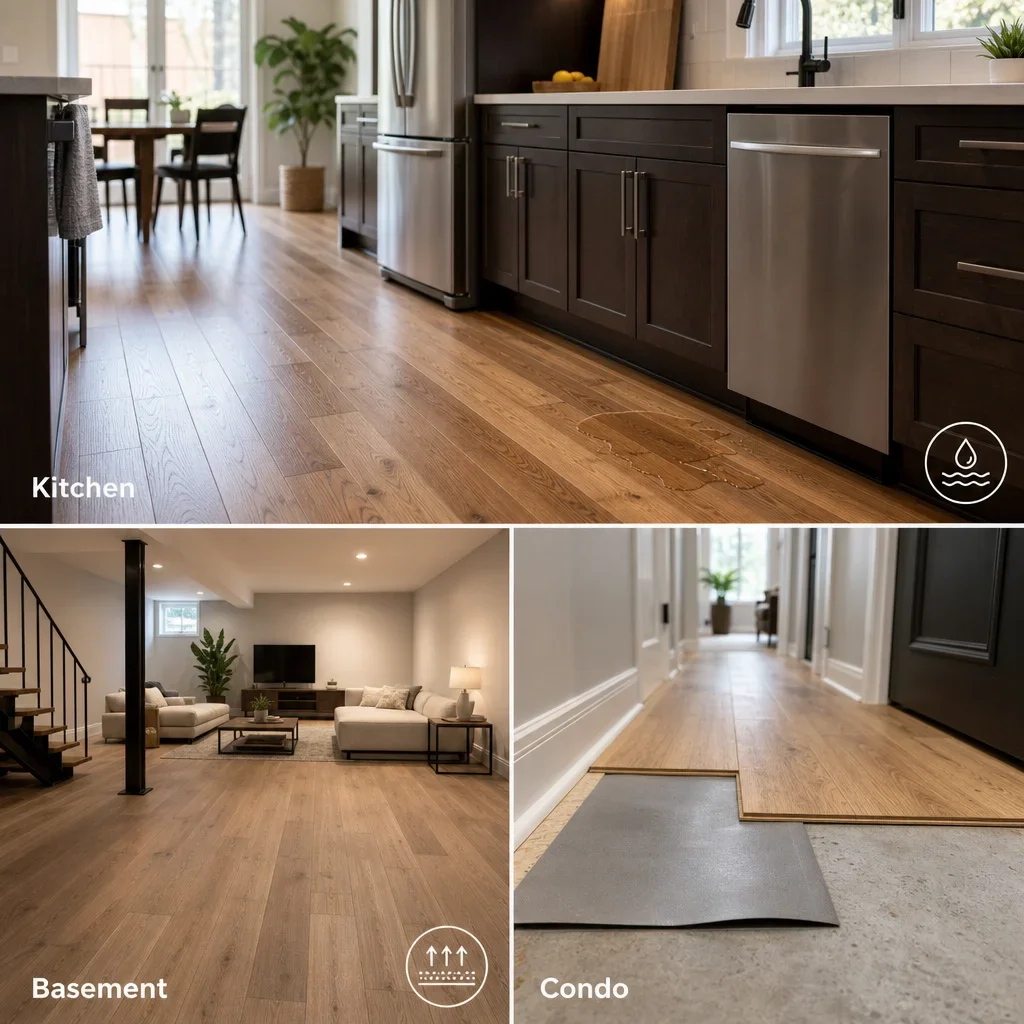
Kitchens can work with hardwood when spills are cleaned quickly and the layout is not constantly wet. Engineered hardwood is often the safer route than solid if the subfloor or room conditions are less forgiving.
Basements usually point buyers toward engineered hardwood because below-grade spaces carry more moisture risk than main floors. Even the best wood species for flooring in Canada can fail if the environment and subfloor are wrong.
Bathrooms and laundry rooms are higher-risk spaces for wood because standing water, repeated humidity spikes, and appliance leaks can damage the floor. If you want a wood look there, it is safer to compare non-wood options rather than force hardwood into the wrong room.
Condos often require extra attention to concrete subfloors and building rules before species even enters the conversation. In GTA projects, installation method, underlayment, and sound-control requirements can matter as much as whether you choose Oak or Hickory.
Acclimation and moisture testing matter in Canadian homes because winter air gets dry and summer air gets humid. Good installation starts with site conditions, not just the board you like in the showroom.
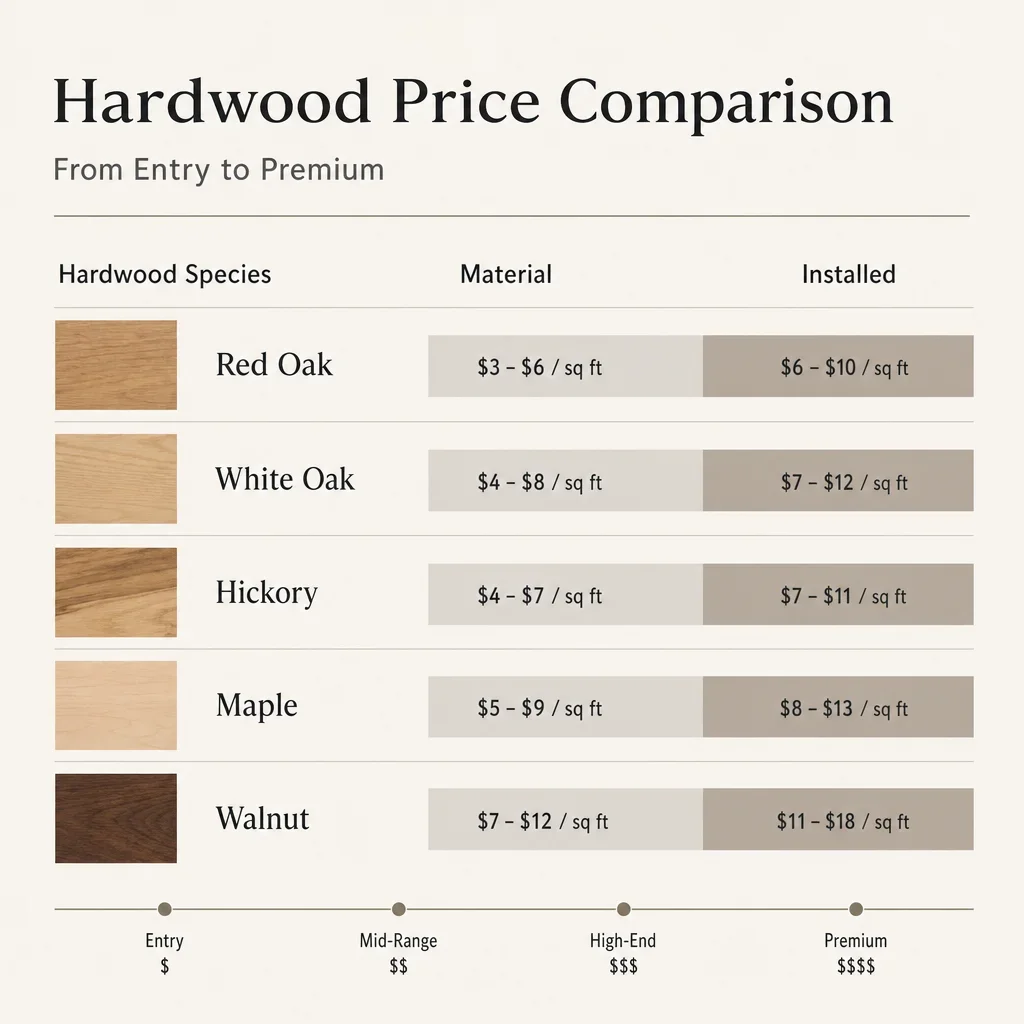
Hardwood pricing makes more sense in tiers than in fake precision because species is only one cost driver. Grade, plank width, board length, finish, custom colour, stairs, subfloor prep, and installation method can all move the project total.
At CanFloor, solid hardwood starts from $3.99 per sq.ft. That should be treated as an entry point for selected products, not as the starting price for every species, grade, or finish.
Material-only hardwood often lands in roughly the $4 to $15 per sq.ft. range while installed projects can run about $6 to $25 per sq.ft. depending on the wood, site prep, stairs, and labour scope. Your actual cost depends on the product and the installation conditions.
Here is the honest way to compare wood flooring types and prices by species.
| Species / Tier | Typical Material Position | What Pushes Cost Up |
|---|---|---|
| Red Oak | Entry to mid | Cleaner grades, wider planks, custom stains |
| White Oak | Mid to premium | Rift/quarter visuals, wide planks, custom finishes |
| Hickory | Mid to premium | Character-heavy visuals, long boards, textured finishes |
| Maple | Mid to premium | Premium grades, specialty stains, wider boards |
| Walnut | Premium | Clear grades, longer lengths, darker refined visuals |
Toronto and GTA pricing can move quickly when a project includes condo logistics, floor leveling, stair work, or custom finish matching. That is why side-by-side product quotes are more useful than judging species by material cost alone.
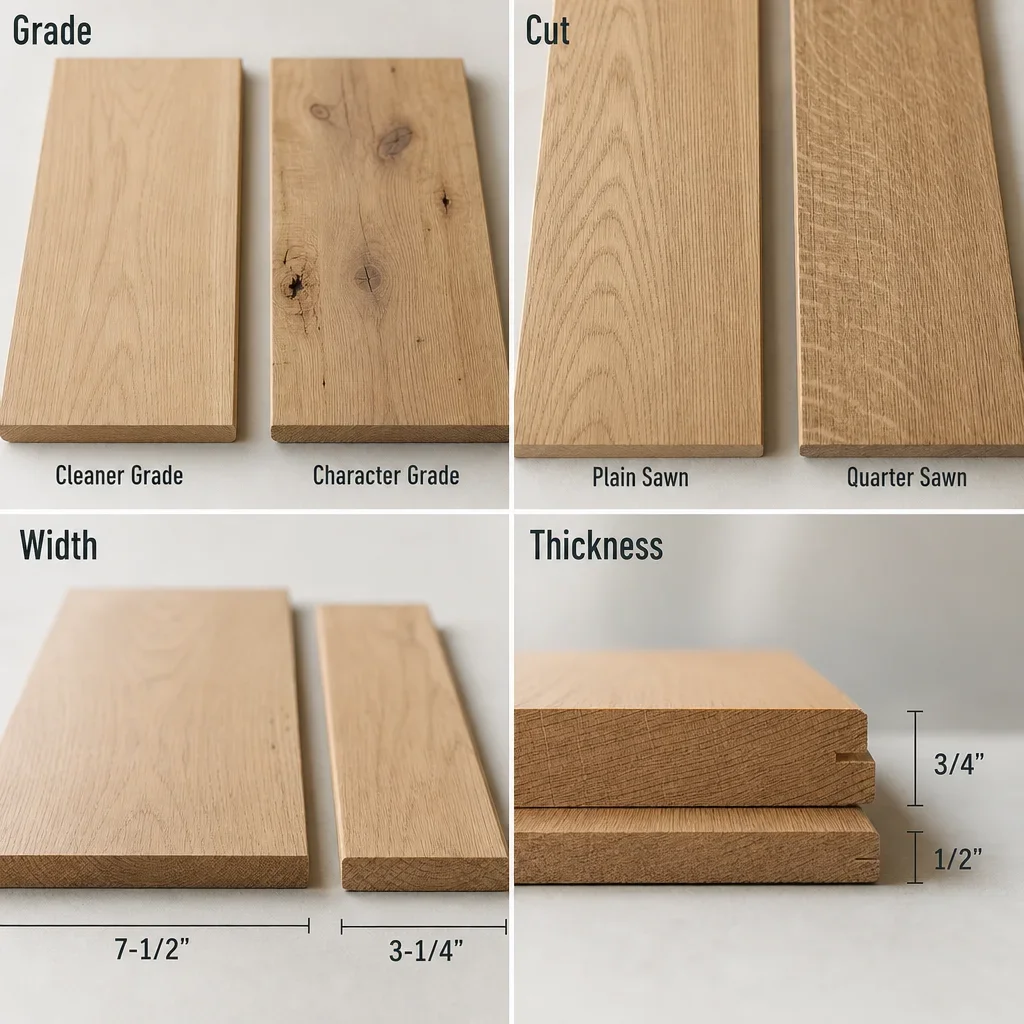
The best grade of wood flooring depends on the look you want, not on a universal quality ladder. Cleaner grades give you a more uniform appearance, while character grades show more knots, mineral streaks, and colour variation.
#1 grade hardwood flooring usually refers to a cleaner, more consistent visual rather than a floor that performs better in every house. A family home can get better long-term satisfaction from a character-grade floor if that variation helps hide daily wear.
Cut matters most when you want a certain grain look because plain-sawn boards show more cathedral pattern, while rift- and quarter-sawn White Oak create straighter, calmer visuals. Those cuts can also appeal to buyers who want a more tailored, contemporary floor.
What thickness hardwood floor is best depends on the product category and where it is going. Thickness affects feel and installation options, but it is not a shortcut for quality, especially in engineered products where core design and top layer matter more than one number on a spec sheet.
Wider planks look premium because they show more uninterrupted grain and suit open layouts well. They also demand the right construction and installation conditions, which is one reason engineered White Oak is so common in wide-board looks.
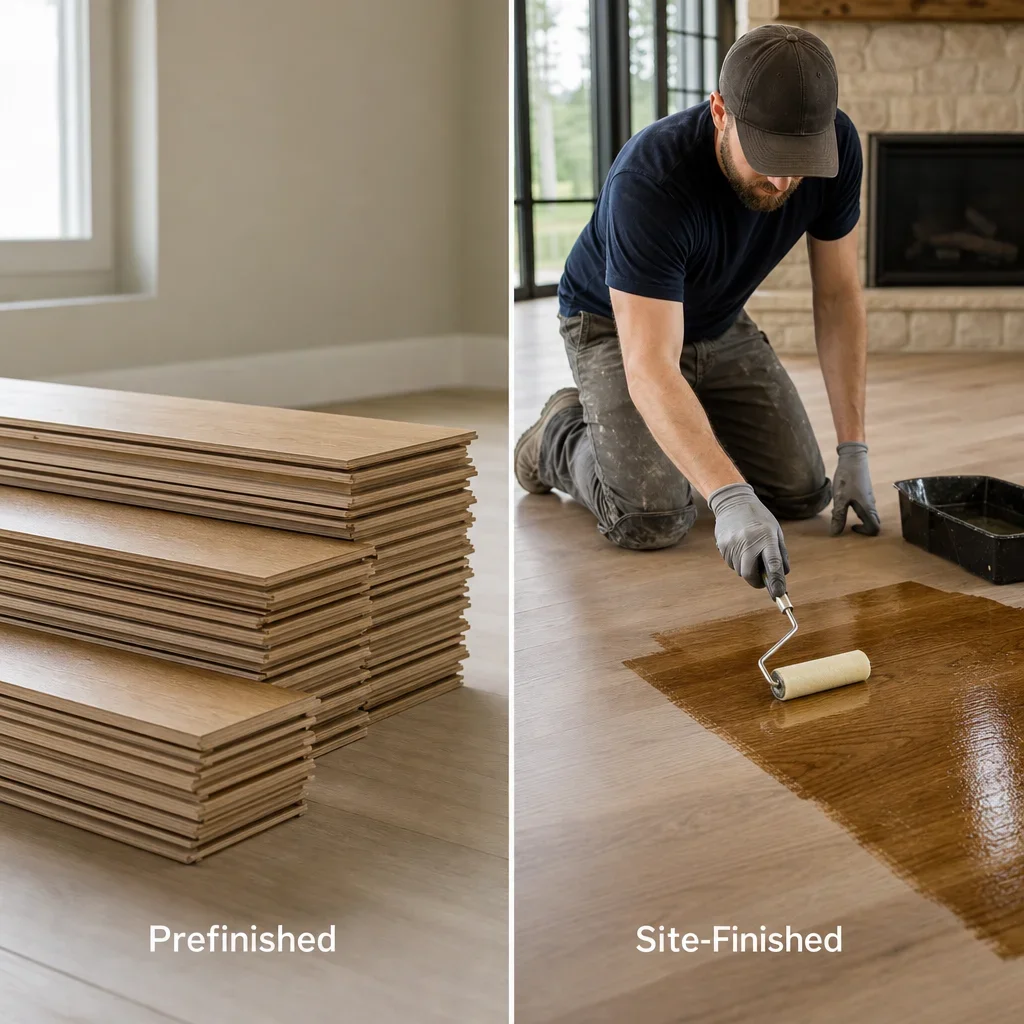
Prefinished hardwood gives you factory-controlled consistency and a faster installation path because the boards arrive finished. Site-finished hardwood gives you more control over colour, sheen, and a more seamless look across the floor.
Oak species are usually the easiest place to start when stain flexibility matters because White Oak and Red Oak accept a wide range of looks well. Maple can be excellent, but buyers should confirm the exact finish result on a sample because not every species takes every stain style the same way.
Matte and satin finishes are usually better for low-maintenance homes because they hide dust, paw marks, and light scratches better than high gloss. This matters just as much as species when you are choosing the best hardwood floors for dogs.
Texture can improve both appearance and day-to-day livability because wire-brushed and distressed surfaces help break up wear patterns. They are also useful when you want Hickory or Oak to feel more relaxed and forgiving.
Custom-made colours, surface treatments, and gloss levels can make one species look completely different from another standard showroom sample. That is why sampling the same species in different finishes often changes the decision.
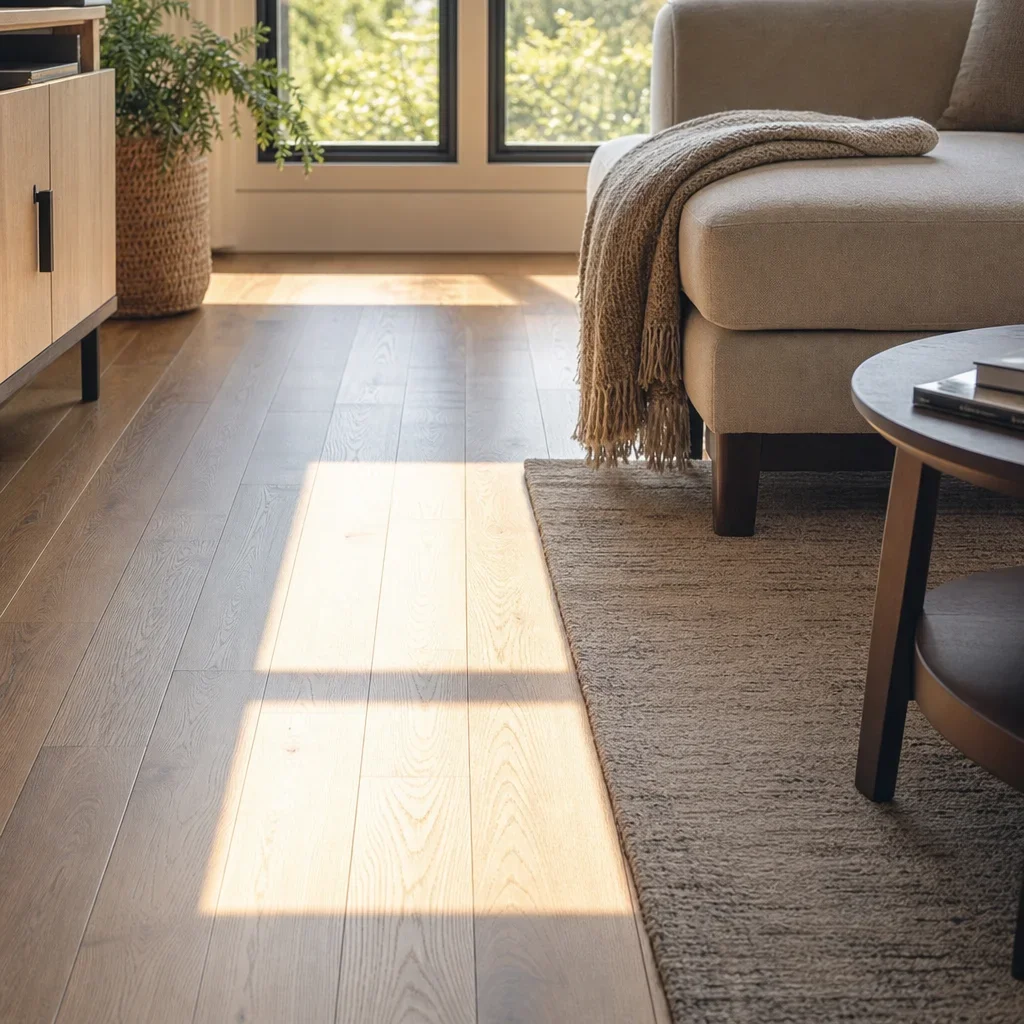
Sunlight changes wood and stain colour over time, so a floor in a bright room will not look exactly the same years later. Rugs and furniture can leave protected areas lighter or darker than exposed sections, depending on the species and finish.
Mid-tone natural Oak looks tend to age more gently than very dark, very red, or highly contrasted floors in sunny rooms. That is one reason natural White Oak palettes stay popular for both trend and resale reasons.
UV-protective finishes and window coverings help slow colour change, but they do not stop it completely. The practical fix is to choose a species and colour that still looks good with natural ageing.
The floor colour that never goes out of style is usually a natural-to-medium neutral wood tone with low sheen. It is more forgiving than extreme dark espresso looks or highly yellowed finishes, and it fits more interior updates over time.
Hard-surface floors are often preferred over wall-to-wall carpet by buyers focused on dust control because they are easier to clean thoroughly. That does not make one floor universally healthiest, and medical advice should come from a healthcare professional, not a flooring page.
Hardwood and engineered wood can be good options for people concerned about indoor air when the products use low-VOC finishes and appropriate adhesives. The key questions are what is in the finish, what adhesive is used, and how easily the surface can be kept dust-free.
The best flooring for people with asthma is not a universal product category because sensitivity is personal. From a practical housekeeping standpoint, a smooth floor that is easy to vacuum and damp-clean is usually easier to maintain than one that traps more dust.
Low-VOC claims should be verified product by product because emissions standards apply to specific lines, not to all hardwood in general. Ask for the exact finish or product information instead of assuming every board in a category performs the same way.
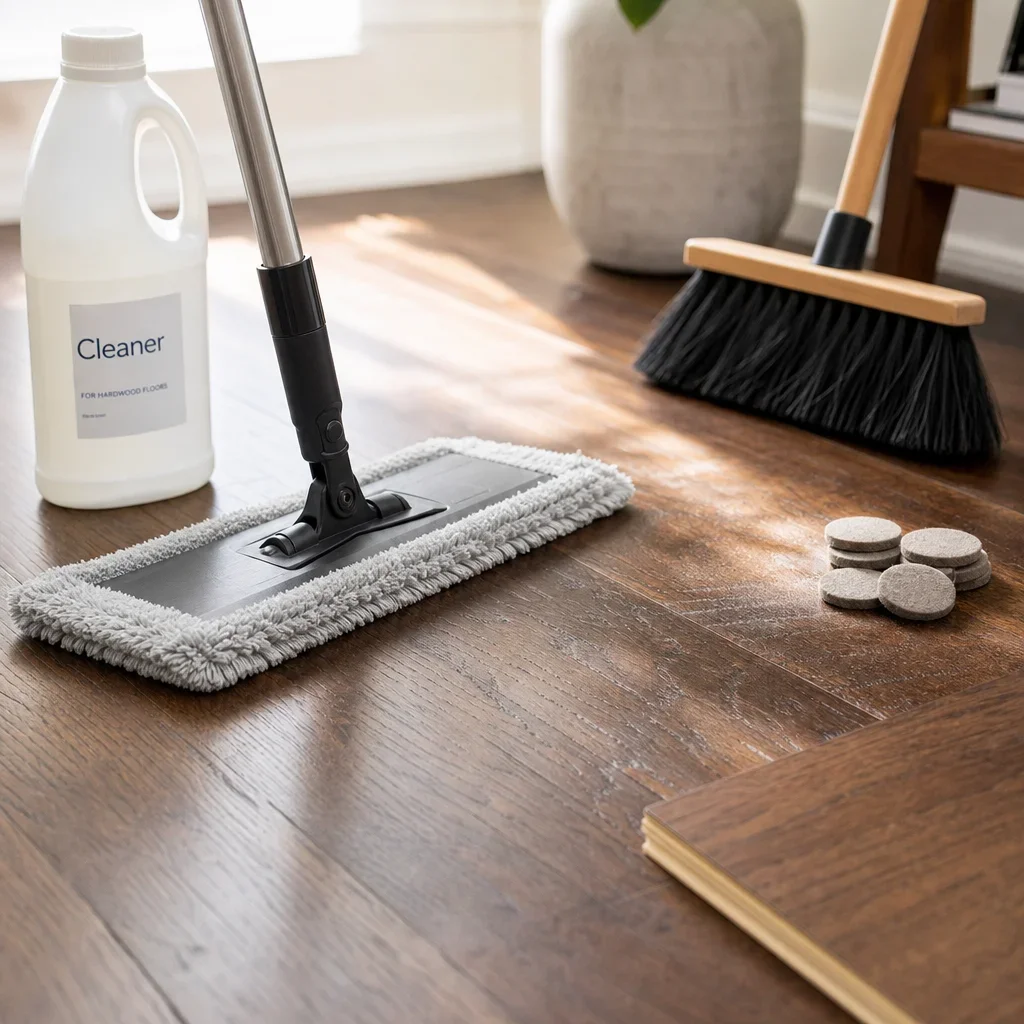
The best wood floor cleaner is the one approved for your finish because harsh DIY solutions can damage coatings or leave residue. Dry dust removal, a damp-not-wet mop, felt pads, entry mats, and humidity control are the core care steps for every species.
Dark, smooth floors show dust and scratches faster because contrast and reflected light make wear more visible. Medium tones, open grain, and textured finishes are easier to live with in busy homes.
Softer species like Walnut show dents sooner than tougher species like Hickory or White Oak when the same impact happens. That does not make Walnut a bad floor; it means you are buying beauty first and accepting more visible patina.
Many solid hardwood floors can be refinished, while engineered hardwood can sometimes be refinished depending on the wear layer and manufacturer guidance. Buyers should confirm refinishing ability on the exact product instead of assuming all engineered floors qualify.
The newest trend in hardwood floors is still natural-looking wood, not heavily artificial colour. Lighter and mid-tone Oak visuals, matte finishes, and wider planks continue to lead because they feel current without looking temporary.
The newest trend in flooring matters less than room fit because trend-led choices age badly when they fight the home's light, traffic, or architecture. White Oak often wins here because it can look current and timeless at the same time.
High-end homes still use real wood because buyers value natural variation, warmth, and authenticity. LVP can be practical in some rooms, but premium homes usually reserve real hardwood for the spaces where material quality is meant to be seen and felt.
Choosing by hardness alone is a costly mistake because Janka does not tell you how visible scratches, dust, or sun fading will be. A slightly softer species with the right finish can outperform a harder species in real daily life.
Ignoring room moisture is a bigger mistake than choosing the wrong species because even the best wood species for flooring can fail in the wrong environment. Basements, bathrooms, and laundry rooms should be judged by site conditions first.
Very dark glossy floors are a common regret in sunny, active homes because they show dust, paw marks, and scratches fast. If you want lower maintenance, move toward medium tones and lower sheen.
Assuming all engineered hardwood can be refinished leads buyers into the wrong product. Refinishing depends on the individual board's construction and the manufacturer's guidance.
Confusing grade with quality leads to mismatched expectations because clean grade and character grade serve different looks. Character is not a defect if the design goal is warmth, movement, and a more natural surface.
Skipping subfloor and site evaluation is one of the biggest avoidable errors in GTA condos and concrete homes. In those spaces, engineered construction is often the smarter choice than solid hardwood regardless of how much you love a species sample.
The right buying sequence is simple because it starts with the room, not the species. First identify moisture exposure, subfloor type, and traffic level; then choose solid or engineered; then shortlist two or three species; then compare finish, grade, and width in your actual lighting.
Samples should be judged in the home's real light because showroom lighting can flatten undertones and grain. A species that looks perfect under store lights can read warmer, cooler, busier, or darker once it is in place.
Photos, rough dimensions, and subfloor details make selection advice much more accurate because they connect species choice to installation reality. This is also where stairs, custom colour matching, and finish adjustments start to matter.
If you want to compare White Oak hardwood flooring, Hickory hardwood flooring, solid hardwood, and engineered options side by side, do it with full boards and finish samples rather than a small chip. CanFloor supplies and installs, offers custom colours, surface and gloss options, and can help buyers compare species in person at the North York showroom.
White Oak is the best overall choice for most homes because it balances durability, grain, stain flexibility, and broad design appeal. Hickory is better if pure toughness matters more than visual calm.
The top five for most buyers are White Oak, Hickory, Maple, Red Oak, and Walnut. They cover the widest range of durability, style, and budget priorities.
Hickory and White Oak are strong choices, especially in matte or satin finishes with some texture. Finish and colour usually matter as much as species for hiding pet wear.
White Oak is better for versatility and design range, while Hickory is better for rugged durability and active households. The right answer depends on whether you value a calmer look or a tougher, more varied look.
Among common domestic choices, Hickory is one of the most durable for dent resistance. Durability in the home still depends on finish, sheen, maintenance, and room conditions.
Solid hardwood is one piece of wood, while engineered hardwood has a real wood top layer over a layered core. Engineered is often the better option for concrete, condos, and some radiant heat situations.
Kitchens can work with the right habits and product, while basements usually favour engineered hardwood because moisture risk is higher. Bathrooms and laundry rooms are generally poor fits for wood.
The best grade depends on the look you want. Clean grades suit uniform interiors, while character grades suit natural, rustic, or wear-friendly interiors.
There is no single best thickness because suitability depends on solid versus engineered construction and the installation conditions. Thickness alone does not tell you if the floor is high quality.
Some engineered hardwood can be refinished, but not all of it. You need the exact product specs and manufacturer guidance before assuming that option exists.
A smooth hard-surface floor that is easy to clean is often preferred for dust control, but no flooring page should make medical claims. Ask about low-VOC finishes and keep the surface easy to maintain.
Natural to medium neutral wood tones with low sheen stay appealing the longest. They work across more design updates than very dark, very glossy, or strongly tinted colours.
Bring home samples before you commit. The best hardwood floor species on paper still needs to work with your light, your subfloor, and how you actually live.