
The biggest mistake buyers make is treating every wood-look floor as the same product. The advantages and disadvantages of hardwood flooring only make sense once you separate solid hardwood, engineered wood, laminate, vinyl, and tile by how they handle water, wear, and real life.
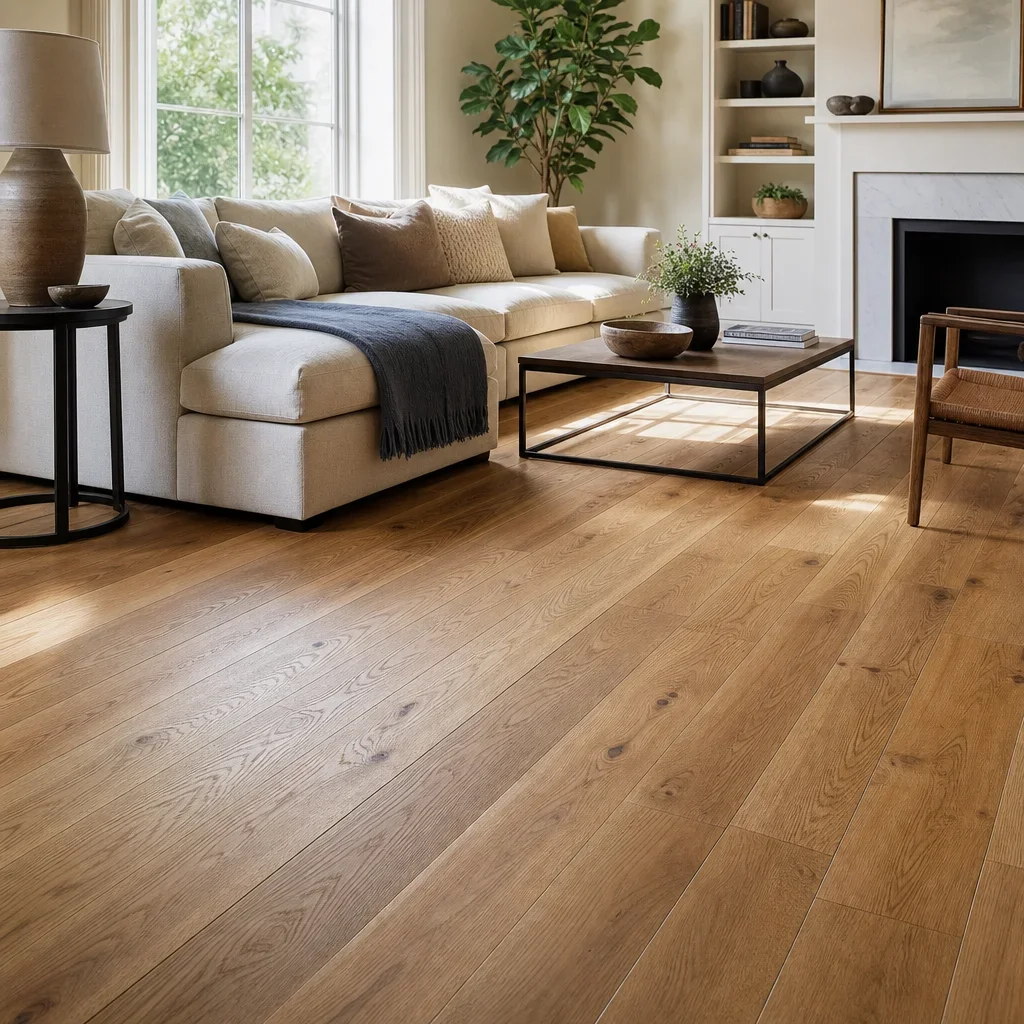
Hardwood flooring is a premium, repairable, long-term floor that suits dry living spaces best, but it is not the right answer for every room or budget.
| Quick view | Best fit | Use with caution | Usually avoid |
|---|---|---|---|
| Hardwood flooring | Living rooms, bedrooms, dining rooms, main floors | Kitchens, hallways, some condos, some entry transitions | Full bathrooms, laundry rooms, frequently wet areas, some basements |
Hardwood works best when you want a natural material, expect to stay in the home for years, and can manage spills and indoor humidity. That is why many resale-minded renovations use it in main living areas.
Hardwood is a weaker fit when waterproof performance comes first, the room sees standing water, or the project is heavily budget-driven. If you need waterproof first, vinyl plank or tile is usually the safer direction.
The short version is simple: the advantages and disadvantages of wood flooring are real on both sides. You get warmth, character, and repair potential, but you also accept higher material sensitivity than vinyl, tile, or some laminate products.
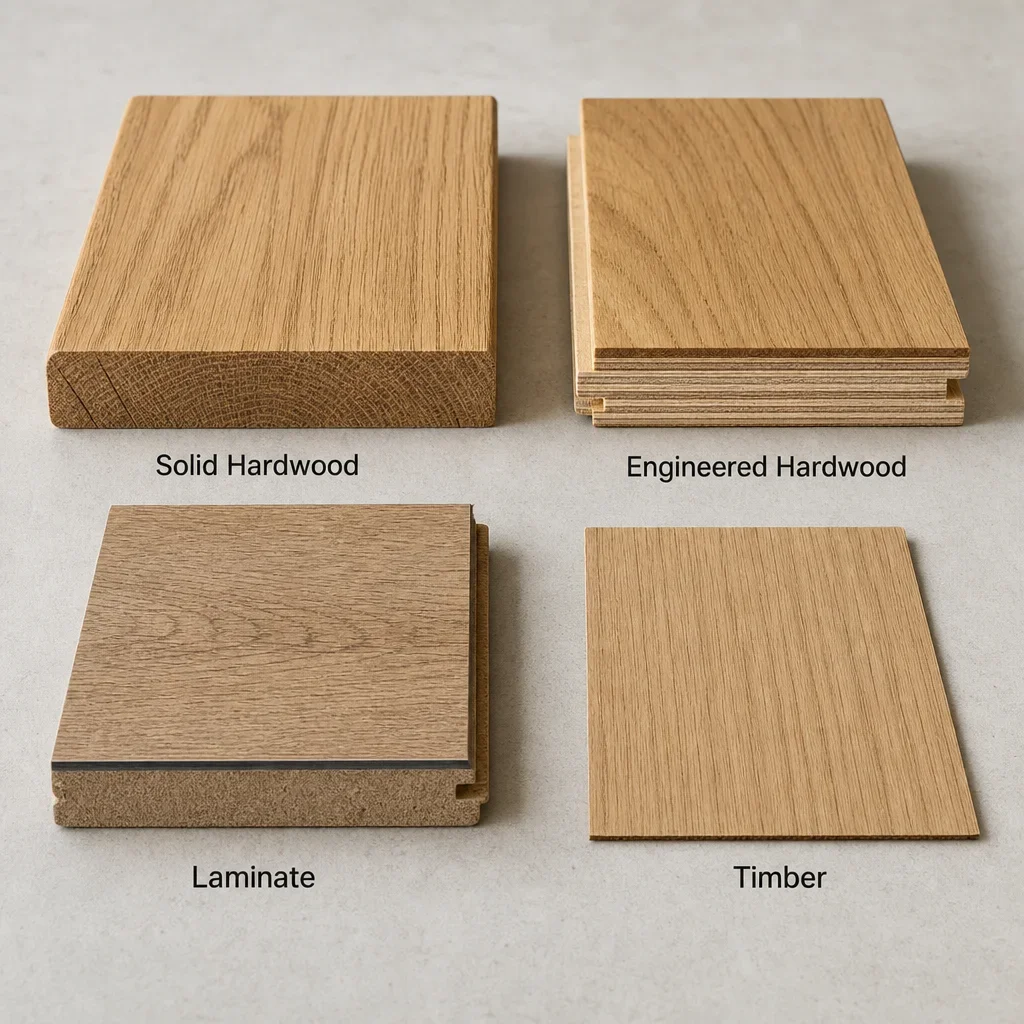
Solid hardwood means each board is made from one piece of real wood, and that construction is what gives it strong refinishing potential and a more moisture-sensitive profile.
Engineered hardwood flooring is also real wood, but it uses a real wood top layer over a layered core, which usually makes it more dimensionally stable than solid wood when humidity changes.
Laminate flooring is not real wood on top in the same way, because it uses a printed wood-look surface over a fiberboard core. That matters because laminate cannot be refinished like solid hardwood.
Timber flooring is often just another search term for wood flooring, especially in phrases like advantages and disadvantages of timber flooring, but shoppers should still check the actual product construction before buying.
This terminology matters because construction changes four practical things: moisture behaviour, installation method, refinishing potential, and cost position. Those differences matter more than the label on the sample board.
The main advantages of hardwood are natural appearance, long service life in the right setting, and the ability to repair or refinish many products instead of replacing the whole floor.
Real hardwood flooring has visual variation that printed surfaces do not fully copy, so buyers who want grain, texture, and natural character usually notice the difference right away.
Solid hardwood can last for decades and, in some homes, much longer when site conditions, installation, and maintenance are handled properly.
Some engineered hardwood floors also offer a long lifespan, often around 20–30+ years depending on the wear layer, traffic, and moisture exposure.
Hardwood can be a practical choice for style flexibility because species, stain, plank width, texture, and gloss all change the final look. Custom-made colours, surface treatments, and gloss levels can make a floor fit the house better instead of forcing the house to fit the floor.
A hard-surface wood floor also traps less dust in the surface pile than carpet does, which is one reason allergy-sensitive households often prefer it. That is a housekeeping benefit, not a medical claim.
Hardwood may also help resale presentation because many buyers see wood floors as a premium finish, especially in living rooms, dining rooms, and bedrooms. That does not guarantee a value increase, and the result still depends on overall home condition and buyer expectations.
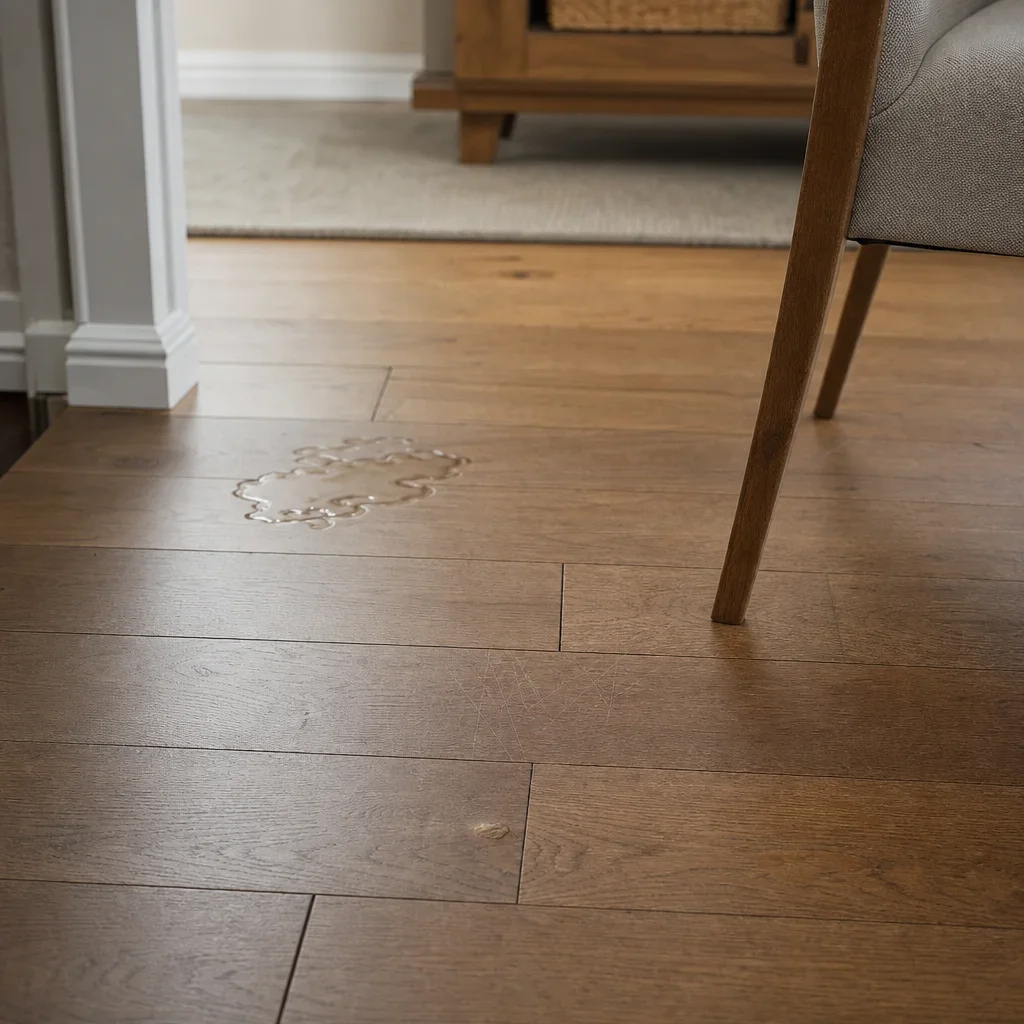
The main disadvantages of hardwood floors are higher upfront cost, lower moisture tolerance, and a surface that can scratch, dent, gap, or cup if the home conditions are poor.
Wood flooring usually costs more upfront than laminate and some vinyl options because both the material and the installation are less forgiving. That is one reason budget renovations often compare wood against laminate before deciding.
Hardwood is also more sensitive to standing water and seasonal humidity swings than tile or fully waterproof vinyl. That sensitivity is the main reason full bathrooms and laundry rooms are usually poor candidates.
Wood can scratch from grit, pet nails, dragged furniture, and dropped objects, and darker glossy finishes often show that wear faster than lower-gloss or textured surfaces.
Hardwood can also move with the seasons. The visible problems include gaps, cupping, crowning, and edge lift when the product, subfloor, or room conditions are not suitable.
Refinishing is a long-term advantage, but it is also a future cost and a disruption. A floor being repairable does not mean it is maintenance-free.
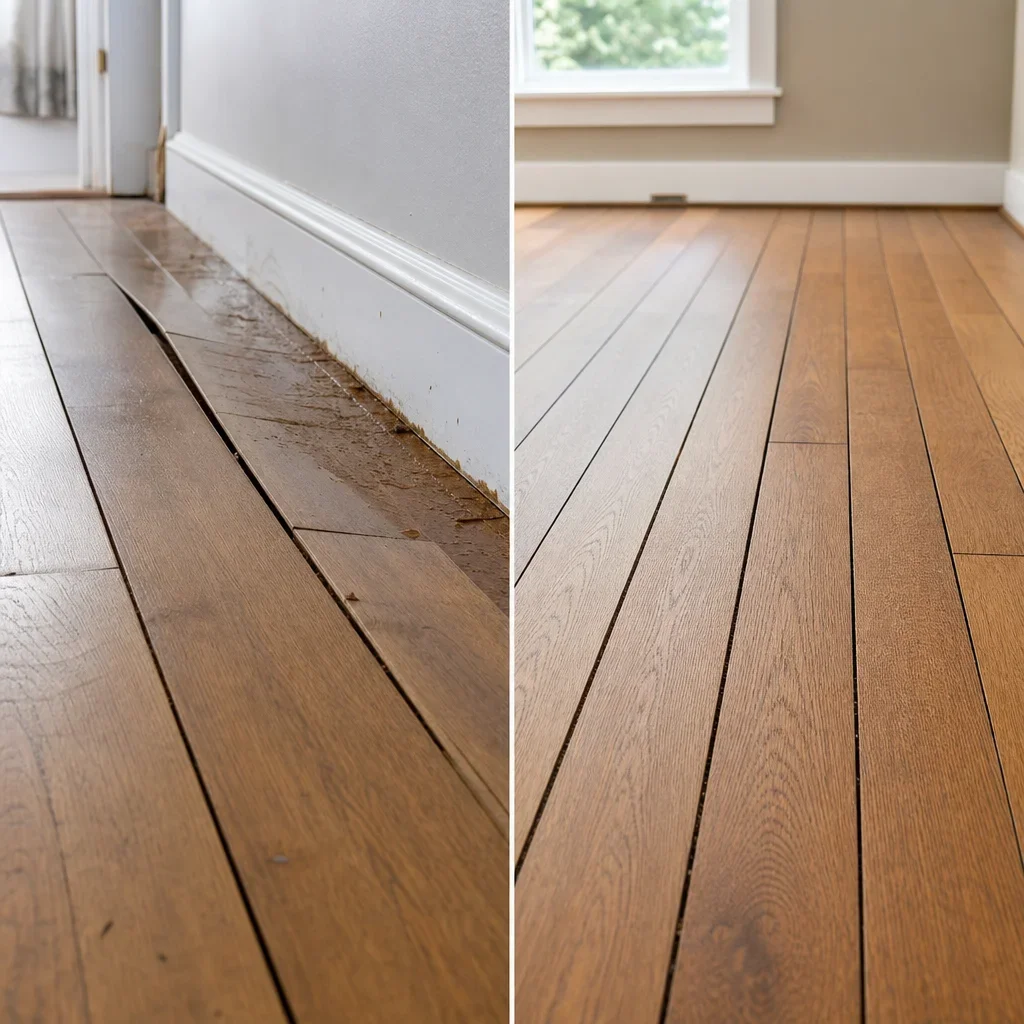
The main disadvantage of wooden flooring is that it reacts to moisture and humidity changes instead of ignoring them.
When wood takes on excess moisture, boards can swell, cup, or stain. When indoor air gets too dry, boards can shrink and leave gaps between planks.
A common indoor target for hardwood is about 35% to 55% relative humidity. That range helps reduce seasonal movement, but product-specific instructions still matter.
Spills should be wiped up immediately, especially around seams, edges, and transitions, because water that sits can damage both the finish and the core beneath it.
Engineered wood usually handles fluctuations better than solid hardwood because its layered core is built for more stability, but engineered wood is still not waterproof.
This is why wood flooring is not recommended for some areas. Full bathrooms, frequently wet entry points, below-grade spaces with moisture risk, and homes without steady humidity control need extra caution or a different material.
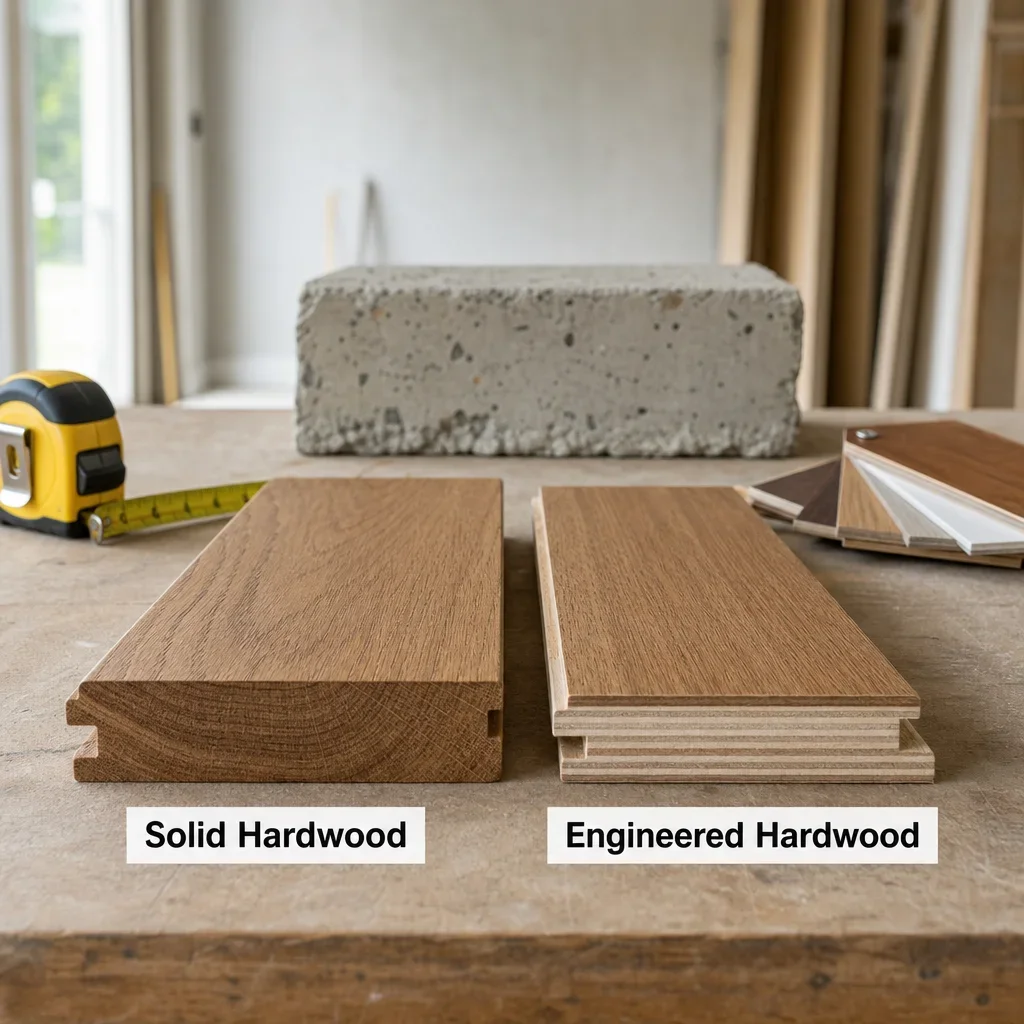
Solid hardwood fits best in dry, above-grade rooms where long-term refinishing potential matters, while engineered hardwood fits better where you need more installation flexibility or better stability.
Solid hardwood uses one piece of wood through the full thickness, which is why it can usually be refinished more times than engineered products. Some solid floors are commonly refinished about 4–6 times, depending on thickness and prior sanding.
Engineered hardwood uses a real wood wear layer over a layered core, which helps on concrete subfloors, in condos, and in homes with moderate humidity swings. Some engineered floors can be refinished 0–3 times, depending on the wear layer thickness.
The biggest disadvantages of engineered wood flooring are product quality variation, limited refinishing on thinner wear layers, and the fact that it still does not tolerate standing water like vinyl or tile.
The biggest strength in the pros and cons of engineered wood flooring is balance. You get a real-wood surface with easier installation options in more homes, but you give up some of the long-term sanding flexibility solid hardwood is known for.
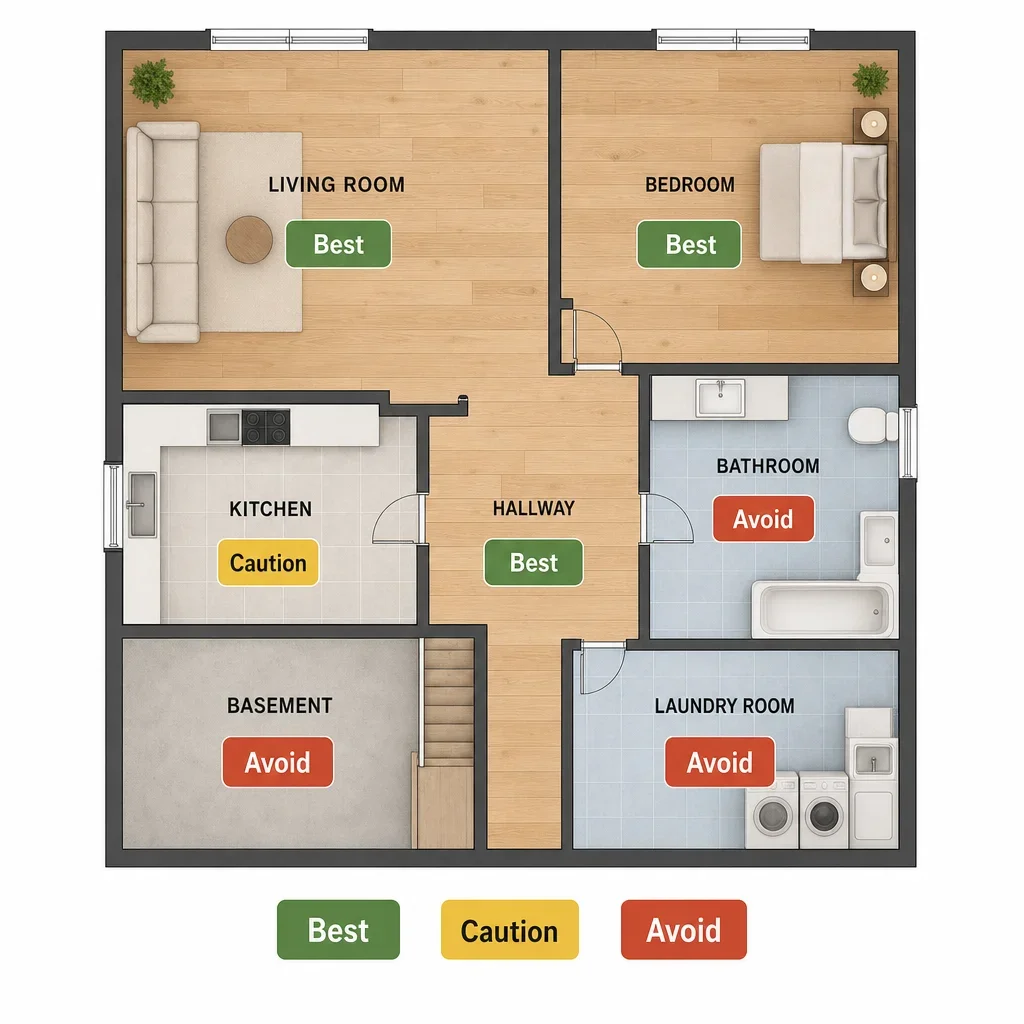
Room suitability is where good flooring decisions get made, because the best product in one room can be the wrong product in another.
| Room | Suitability for hardwood | Better alternative when needed |
|---|---|---|
| Living room | Best choice | Engineered if over concrete |
| Dining room | Best choice | Engineered if subfloor requires it |
| Bedroom | Best choice | Carpet if softness matters more |
| Hallway | Acceptable with caution | Vinyl if heavy grit and moisture |
| Entryway | Acceptable with caution | Tile or vinyl for wet boots |
| Kitchen | Acceptable with caution | Vinyl or tile for easier spill tolerance |
| Powder room | Acceptable with caution | Vinyl or tile |
| Full bathroom | Usually avoid | Tile or waterproof vinyl |
| Laundry room | Usually avoid | Tile or waterproof vinyl |
| Basement | Case by case | Vinyl, tile, or some engineered systems |
| Stairs | Works well with proper finish and install | Carpet runner for noise control |
| Condo unit | Often engineered is better | Depends on building acoustic rules |
Living rooms, bedrooms, and dining rooms are usually the strongest hardwood candidates because they stay drier and show off the material well.
Kitchens can work with the right product and disciplined cleanup, but they carry more risk than dry rooms because spills, chair movement, and dropped items are routine there.
Full bathrooms and laundry rooms are poor choices for hardwood because repeated water exposure is not an occasional accident there. It is part of the room’s normal use.
Basements need extra caution because concrete slabs can carry moisture even when the surface looks dry. That is why product suitability depends on site conditions and manufacturer instructions, not just design preference.
Stairs need careful product and finish planning because appearance, slip resistance, and detail work matter more there. Professional stairs installation also affects the finished look and long-term durability.
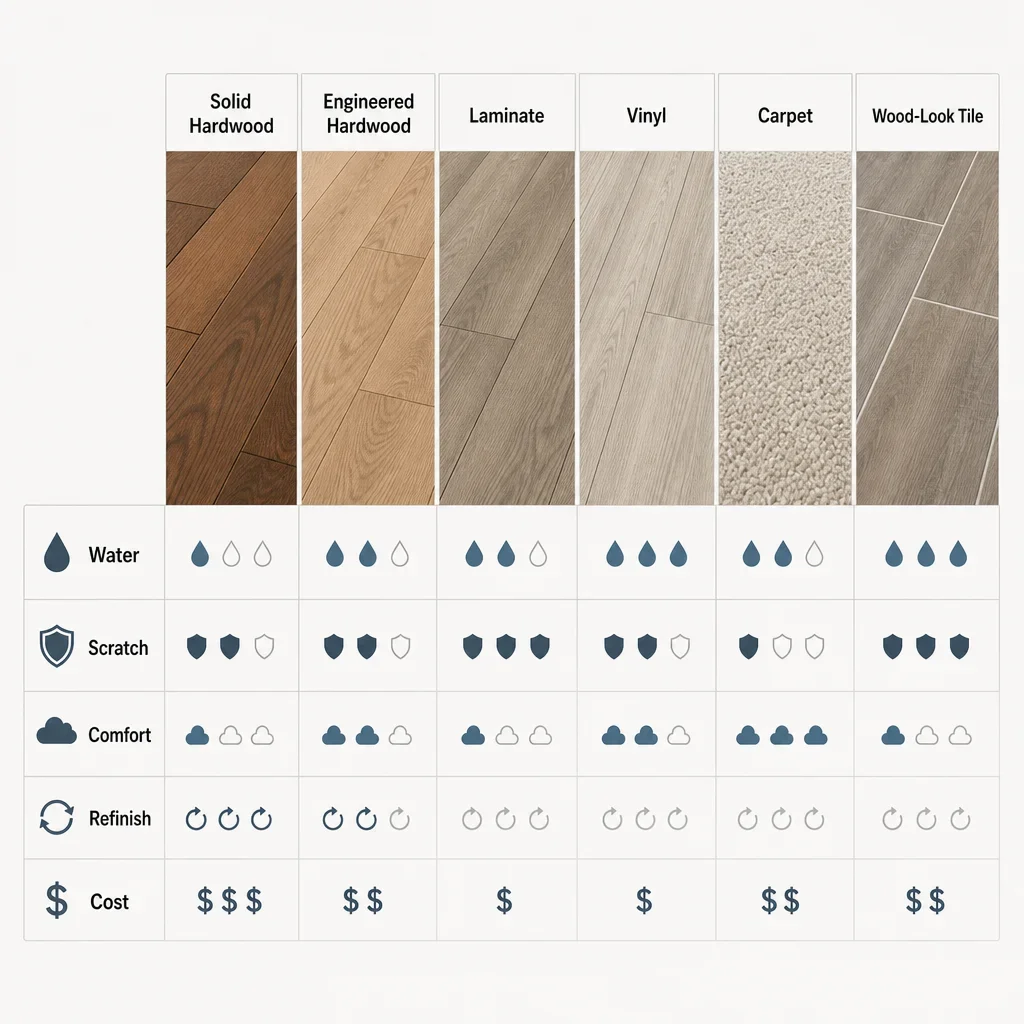
The right comparison is not which floor is “best,” but which floor matches your room, budget, and maintenance tolerance better.
| Flooring type | Natural look | Water resistance | Scratch resistance | Comfort | Refinishable | Budget position |
|---|---|---|---|---|---|---|
| Solid hardwood | Excellent | Low | Moderate | Good | Yes | Higher |
| Engineered hardwood | Excellent | Low to moderate | Moderate | Good | Sometimes | Mid to higher |
| Laminate flooring | Good | Moderate | Good | Moderate | No | Lower |
| Vinyl/LVP | Good | High to waterproof by product | Good | Moderate to good | No | Lower to mid |
| Carpet | Low for wood look | Low | Moderate | Excellent | No | Varies |
| Wood-look tile | Good | High | Excellent | Harder underfoot | No | Mid |
If price is the main driver, laminate starts from $1.69 per sq. ft. and vinyl starts from $1.99 per sq. ft. at CanFloor. Those categories often make sense for rentals, quick updates, and rooms where replacement cost matters more than refinishing potential.
If you want real wood for less than many solid options, engineered wood starts from $2.99 per sq. ft., while solid hardwood starts from $3.99 per sq. ft. at CanFloor. Those are useful starting points, but the final cost still depends on species, grade, plank size, finish, and installation scope.
The pros and cons of laminate flooring come down to value and limits. Laminate can resist everyday wear well and costs less, but it does not deliver the same natural wood character or refinishing path.
Vinyl is often the safer pick for bathrooms, some basements, and busy family spaces because water tolerance is its core advantage over hardwood.
The pros and cons of carpet flooring are almost the reverse of wood. Carpet offers softness, warmth, and sound control, but it traps more dust in the pile and wears very differently in high-traffic areas.
The main advantages of wooden flooring over tiles are warmth underfoot, a less rigid feel, and a more natural visual character. Tile wins when water exposure and easy wet cleanup matter more than softness.
Hardwood is worth the cost when you are buying for long-term use in suitable rooms, not when you need the cheapest short-term surface for a wet area.
Upfront cost is only one part of the decision because lower-cost floors can still become expensive if they need earlier replacement after damage or style fatigue.
Hardwood’s value case is strongest when you care about repairability, refinish options, and the look of a natural material over many years. That is different from a rental, a basement rec room, or a quick resale refresh.
It is safer to think about buyer appeal than guaranteed return. Hardwood may support a stronger presentation in the right home, but no honest seller should treat it as a fixed ROI calculation.
A simple rule helps: hardwood usually makes the most sense for dry, visible living areas and longer ownership horizons, while laminate, vinyl, or tile often make more sense for strict budgets and higher-moisture zones.
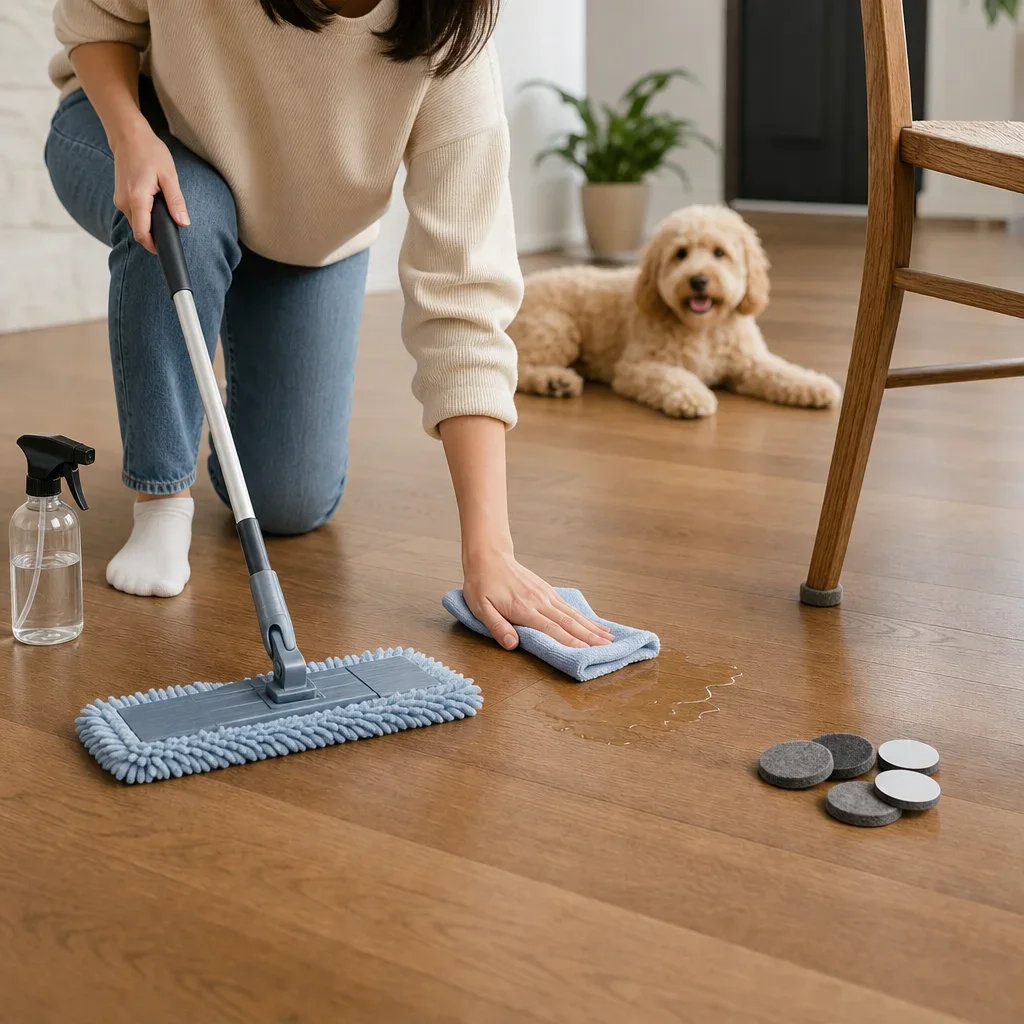
Hardwood is easy to maintain day to day if you keep grit off the floor, clean with the right product, and avoid excess water.
A basic maintenance checklist looks like this:
Hardwood flooring does scratch, but not every floor scratches the same way. Species hardness, finish type, colour tone, surface texture, sheen level, and household habits all affect what you actually see.
Lower-gloss and textured finishes usually hide daily wear better than very dark, smooth, high-gloss floors. That is often a smarter choice for homes with pets or kids.
A practical humidity target for wood floors is about 35% to 55% RH. Consistent indoor conditions help reduce gaps, shrinkage, and seasonal movement.
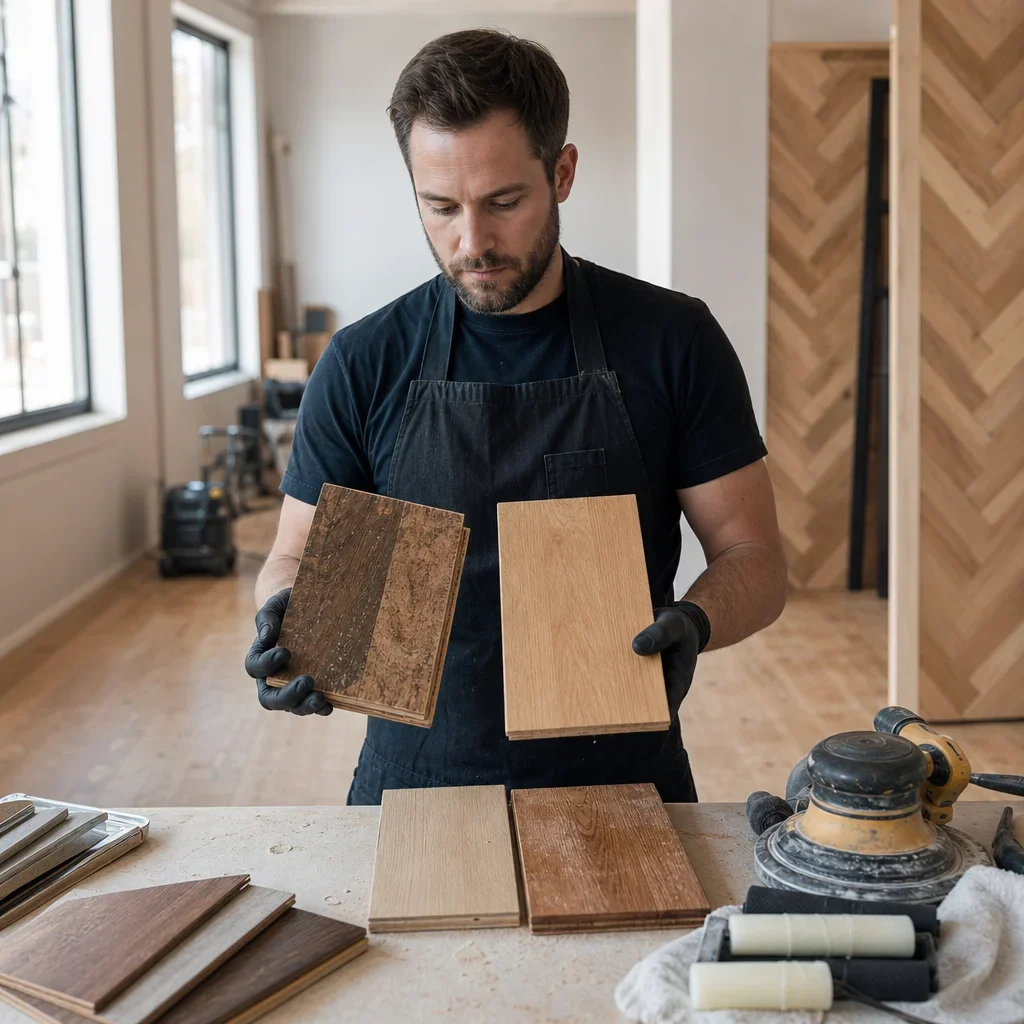
Solid hardwood can last for decades and sometimes far longer, while engineered hardwood often lasts around 20–30 years or more depending on wear layer, traffic, and care.
Refinishing does not happen on a fixed calendar because wear patterns differ by room, finish, sunlight, pets, and household habits.
A common planning range for refinishing solid hardwood is about every 7–10 years in actively used homes, though some floors go longer and some need attention sooner.
Not all engineered floors can be refinished the same way. Some can take a light sanding or limited refinish, while thinner wear-layer products may not offer much sanding margin at all.
Localized repairs can sometimes solve a problem before a full refinish is necessary, which is one reason real wood still appeals to long-term owners.
Lifestyle matters as much as product category because the same hardwood floor can feel perfect in one home and frustrating in another.
For pets, hardwood works best when you choose scratch-hiding finishes, keep nails trimmed, and accept that some wear will happen. Very active pet homes may still be happier with vinyl in the highest-risk areas.
For kids and busy families, engineered wood, laminate, or vinyl often beat solid hardwood in pure practicality because spills, toys, and high traffic are part of the daily pattern.
For allergy-sensitive homes, hard-surface flooring can be easier to keep free of surface dust than carpet because there is no fibre pile holding debris. That still depends on cleaning habits and the rest of the home environment.
For rentals and short-term flips, laminate flooring or vinyl can be the better value choice because the lower starting cost reduces exposure if the floor takes abuse or needs replacement sooner.
For resale-focused sellers, wood in the main living areas can strengthen presentation when the product and installation quality are consistent across the space.
For DIY projects, floating engineered or click products are usually more approachable than traditional nail-down solid hardwood, though subfloor prep still decides whether the result feels solid.
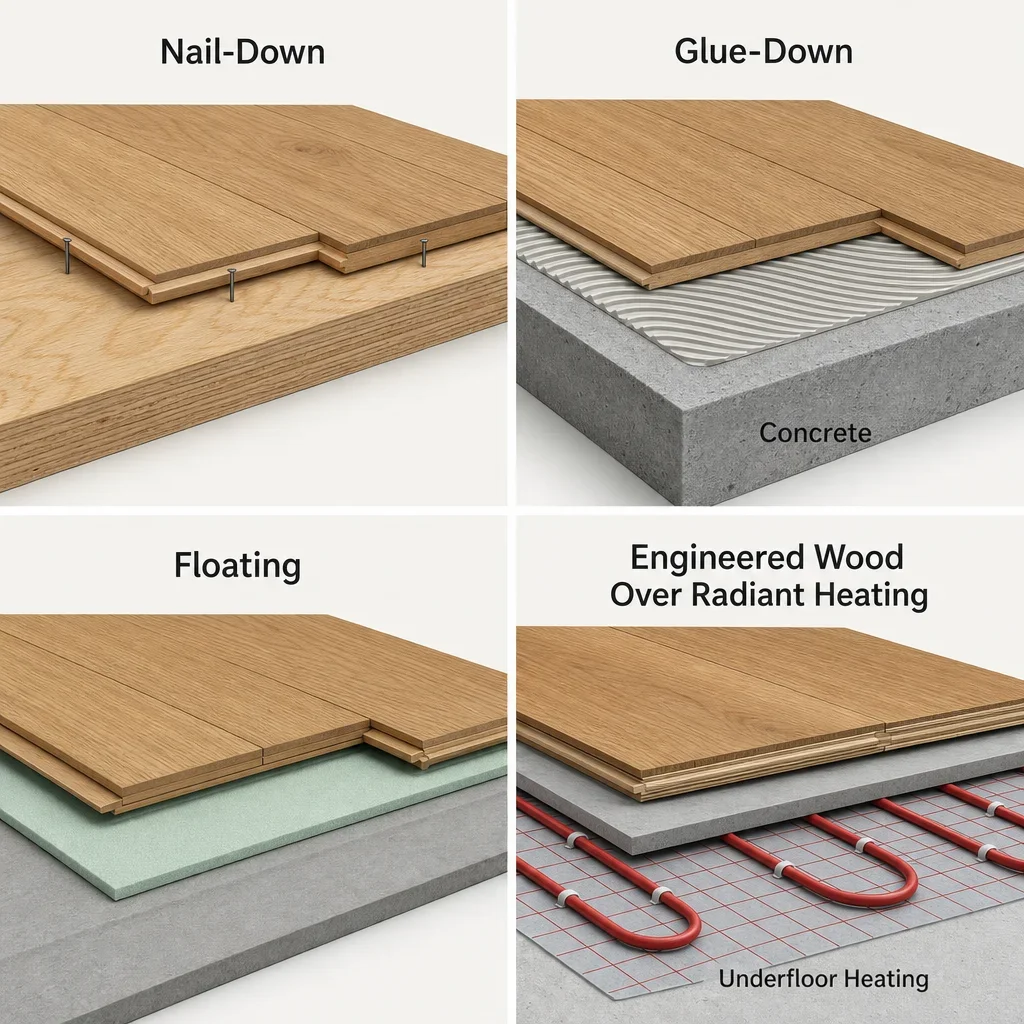
The best installation method depends on the product construction, subfloor type, room location, and the manufacturer’s instructions.
Nail-down installation is commonly used for solid hardwood over wood subfloors because it gives a stable traditional assembly.
Glue-down installation is often used for engineered wood over concrete or where the product is designed for a fixed direct-bond method.
Floating installation is common with some engineered and laminate products, especially when the locking system and underlay are designed for it.
Hardwood can go over concrete in some cases, but engineered products are usually the more practical choice there because solid hardwood is less forgiving over slab conditions.
Moisture testing matters on concrete because the slab can look dry while still carrying enough moisture to damage the floor or adhesive over time.
Underfloor heating can work with some engineered wood products when the manufacturer approves it, but buyers should never assume all wood floors are compatible with radiant systems.
Performance is not decided by material category alone because species, finish, width, texture, and gloss change how the floor behaves and how wear shows.
Harder species generally resist dents better than softer species, though finish and daily grit still affect what you see on the surface.
Matte and lower-gloss finishes usually show fewer scratches, footprints, and dust marks than high-gloss finishes. That is one of the most practical buying decisions people overlook.
Textured and wire-brushed surfaces can hide everyday wear better than very smooth polished boards, which makes them useful in busy family homes.
Wider planks can look beautiful, but they may need stricter environmental control and better product selection because wider boards can show movement more clearly.
This is where hardwood flooring types pros and cons become practical instead of theoretical. The right colour, texture, and sheen can make the same room easier or harder to live with.
The healthiest flooring conversation should start with documentation, not broad claims.
Real wood appeals to buyers who want natural materials, but finishes, adhesives, and manufacturing methods still affect what goes into the home.
For indoor air quality, buyers should ask what finish system is used, whether adhesives are required, and what product documentation is available for emissions or material content.
Engineered wood products vary by manufacturer, so no honest guide should treat every product the same on VOC or formaldehyde concerns without paperwork to support it.
Sustainability claims also need proof. Ask where the material comes from and what documentation the supplier can actually provide, rather than relying on vague eco language.
A short checklist will narrow the field faster than reading another generic pros-and-cons page.
Choose solid hardwood if the room is dry, above grade, you plan to stay long term, and refinishing potential matters.
Choose engineered hardwood flooring if you want real wood, need more subfloor flexibility, or are working over concrete or in rooms with moderate humidity variation.
Choose vinyl or tile if the room faces regular water, wet boots, heavy spill risk, or below-grade moisture concerns.
Choose laminate flooring if budget matters most and the room is not a wet zone.
Choose carpet when softness, warmth, and sound reduction matter more than wood appearance.
Shortlist two or three options, compare full samples in the actual room light, and match the product to the subfloor and moisture conditions before you buy. If you want to compare hardwood, engineered, laminate, and vinyl in person, CanFloor’s North York showroom also helps with supply, installation, custom finishes, stairs, and financing options.
The main disadvantage is moisture sensitivity. Wood reacts to humidity swings and standing water, which can lead to gaps, cupping, swelling, or finish damage.
Five practical drawbacks are higher upfront cost, moisture sensitivity, scratching, denting, and seasonal movement. Those issues do not make wood a bad floor. They just make it room-dependent.
The pros are natural appearance, long life in dry rooms, repairability, refinish potential, and broad style appeal. The cons are cost, moisture limits, visible wear, and stricter care than waterproof floors.
In most buying guides, timber flooring means wood flooring. The disadvantages are the same basic ones: water sensitivity, scratching, movement, and higher material cost than many alternatives.
Laminate is better for lower upfront cost and often for scratch-focused value, while timber is better for natural material appeal and repair potential. Better depends on the room and how long you want the floor to last.
Kitchens can work with caution, good cleanup habits, and the right product. Full bathrooms are usually a poor fit because repeated water exposure is part of normal use.
Solid hardwood is one piece of wood through the board. Engineered hardwood uses a real wood top layer over a layered core, which usually improves dimensional stability and installation flexibility.
It can scratch, yes. Visibility depends on species, finish, colour, sheen, texture, pets, grit, and household habits.
A common planning range is about every 7–10 years for solid hardwood in active homes, but actual timing depends on wear, finish condition, and owner expectations.
A solid timber floor can last for decades and sometimes much longer. Engineered wood often lasts around 20–30 years or more, depending on wear layer and conditions.
It can be helpful for cleaning because the surface does not have carpet pile holding dust. That is a practical housekeeping point, not a medical treatment claim.
Sometimes, yes, but engineered wood is usually the better option over concrete. Moisture testing and product approval matter before installation.
Hardwood can sound louder than carpet because it is a hard surface. Slipperiness depends on finish, socks, stairs design, and whether the surface is glossy or textured.
A common target is about 35% to 55% relative humidity. Always check the product’s own instructions as well.
Hardwood is not the best floor for every room. It is one of the best-looking and longest-living floors for the right room.