
For a quicker response, please send all inquiries
via info@canfloor.com or
text to
416-735-0075.
| Monday - Friday | 10:00 am - 7:00 pm |
| Saturday & Sunday | 10:30 am - 4:00 pm |
Are tiles cheaper than floorboards? Sometimes yes, sometimes no. The honest answer depends on whether you mean material price, installed price, or lifetime cost, and whether you are comparing ceramic tile, porcelain, solid hardwood, engineered wood, or wood look tile.
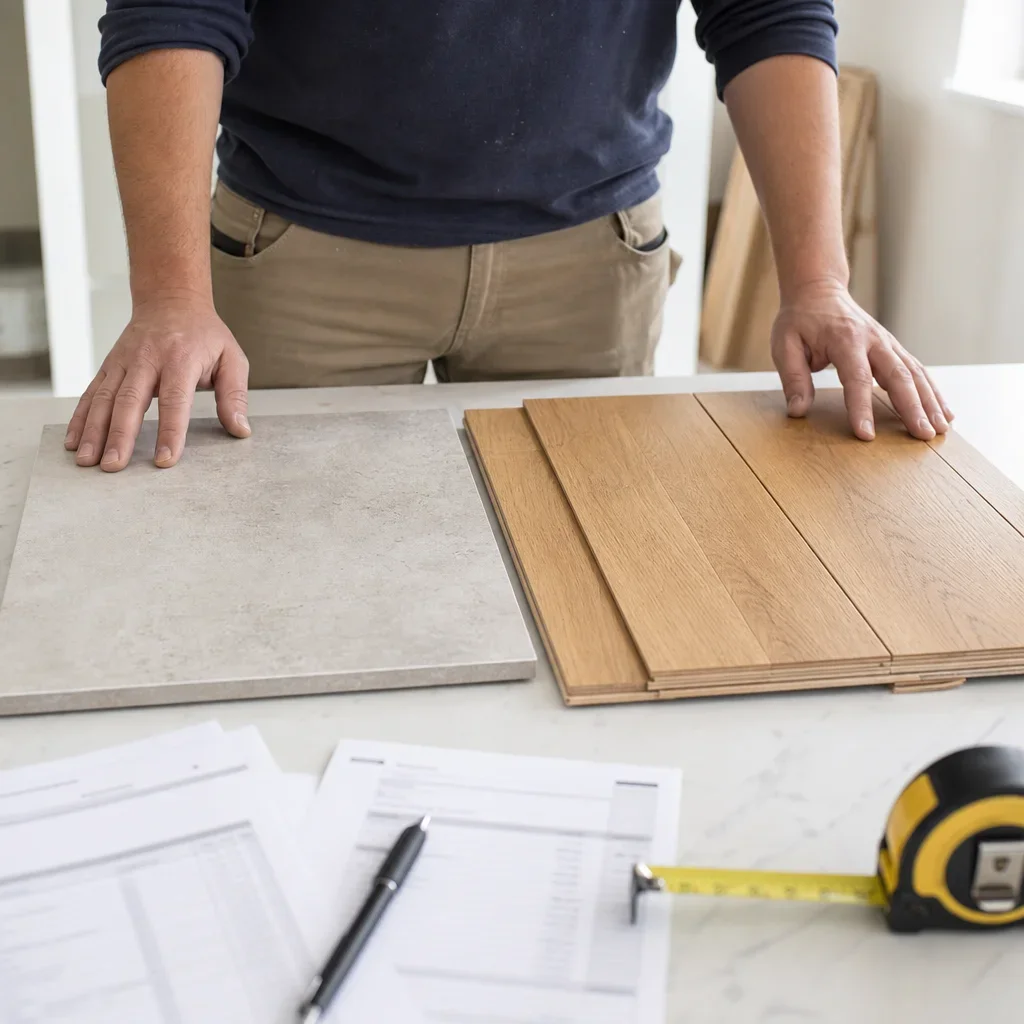
Tiles can be cheaper or more expensive than floorboards depending on the product and the scope of work. Entry-level ceramic tile can cost less than many hardwood options, while premium porcelain or large-format wood look porcelain tile can cost as much as or more than some engineered or solid wood floors; CanFloor lists hardwood from $3.99 per sq.ft. and engineered wood from $2.99 per sq.ft..
Installed cost is where the answer usually flips. Tile projects often need mortar, grout, spacers, cutting, leveling, and sometimes waterproofing, while wood projects may need underlayment, acclimation, trimming, and transitions; waste typically runs about 5% to 15% depending on layout complexity.
Lifetime cost can favour tile in wet or high-wear rooms and favour wood in dry living areas where comfort and resale matter more. Tile usually wins for water resistance and scratch resistance, while hardwood or engineered wood usually wins for warmth, acoustics, and classic buyer appeal.
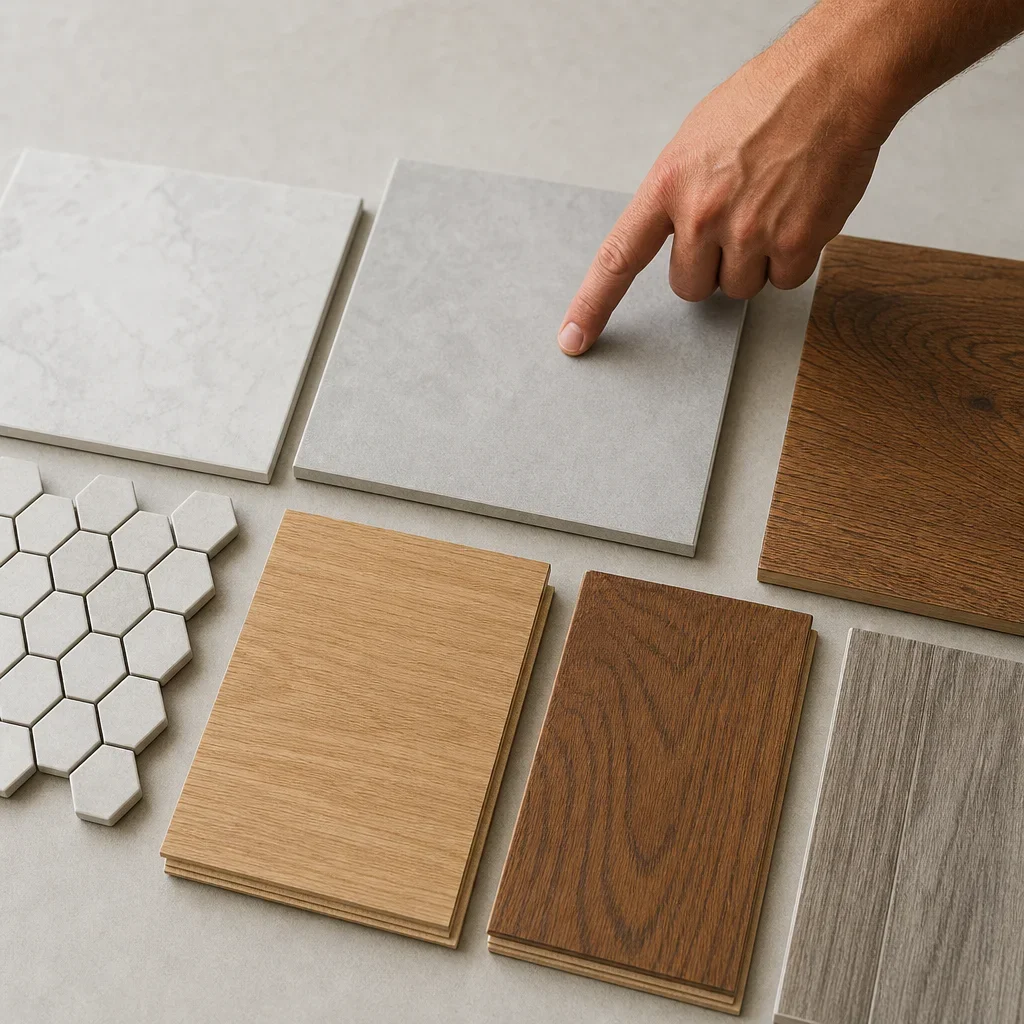
| Factor | Ceramic/Porcelain Tile | Solid Hardwood | Engineered Hardwood | Wood-Look Tile |
|---|---|---|---|---|
| Upfront material cost | Wide range from budget to premium | Usually mid to premium | Starts lower than many solid wood options, can reach premium | Wide range from budget to premium |
| Installation complexity | Higher if leveling, waterproofing, or complex cuts are needed | Varies by nail-down or glue-down method | Varies by float, glue, or nail method | Similar to tile |
| Water resistance | Strong, especially porcelain | Poor in wet areas | Better dimensional stability than solid, still not waterproof | Strong, especially porcelain |
| Scratch resistance | Strong | Moderate, depends on species and finish | Moderate, depends on wear layer and finish | Strong |
| Comfort underfoot | Harder and colder | Warmer and more forgiving | Warmer than tile | Harder and colder |
| Sound | More echo in open rooms | Quieter than tile | Quieter with good underlayment | More echo than wood |
| Repairability | Single cracked pieces can be hard to match later | Boards can sometimes be replaced and refinished | Repair depends on product and wear layer | Same issue as tile |
| Lifespan | Decades with proper installation | Often 50 to 100+ years | Often 20 to 50 years | Decades, sometimes 50+ years |
| Best rooms | Bathrooms, laundry, entryways | Living rooms, bedrooms, main dry areas | Main living areas, some lower-risk kitchens | Wet areas where you want a wood look |
| Resale appeal | Strong in wet zones | Broad appeal in main living spaces | Strong if quality is good | Mixed by buyer taste |
Floorboards vs tiles is not one single comparison because each category has sub-types. Ceramic tile vs wood flooring is a different decision from porcelain vs engineered wood, and wood look tile belongs in the tile-performance category even though it tries to mimic planks.
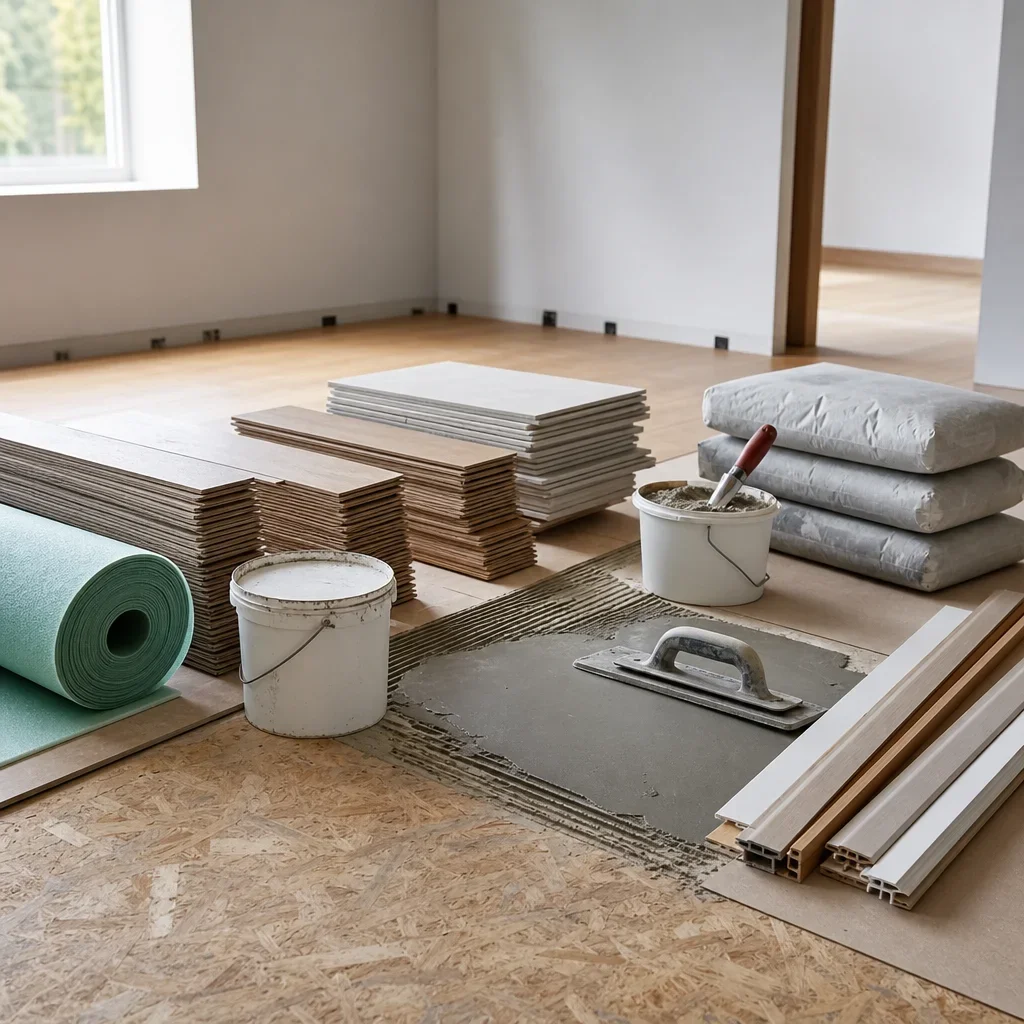
The real project cost comes from more than the surface material. A proper quote should separate material, labour, subfloor prep, demolition and disposal, underlayment, mortar or adhesive, grout, trim and transitions, stair work, furniture moving, and waste.
Labour can move the total more than the material itself. Large-format tile, diagonal layouts, heated floors, crack-isolation membranes, and floor flattening all add steps, while wider hardwood planks, site finishing, glue-down installs, and stair nosings can push wood costs higher.
Cheaper material does not guarantee a cheaper job. A budget tile on an uneven subfloor can end up costing more installed than a mid-range engineered floor that goes down cleanly over a sound surface.
Ceramic tile is usually the lower-cost entry point on the tile side, while porcelain tends to cost more because it is denser and better suited to heavy wear and moisture. That is why ceramic tile vs hardwood flooring and hardwood floor vs porcelain tile are two different cost conversations.
Engineered hardwood can start below many solid hardwood options, but premium engineered products can rival or exceed entry solid wood. At CanFloor, engineered wood starts from $2.99 per sq.ft. and solid hardwood starts from $3.99 per sq.ft..
Wood look tile spans a broad range because print quality, tile size, rectified edges, and brand all affect price. Hardwood vs wood look tile is rarely decided by category alone; finish realism and installed complexity matter just as much.
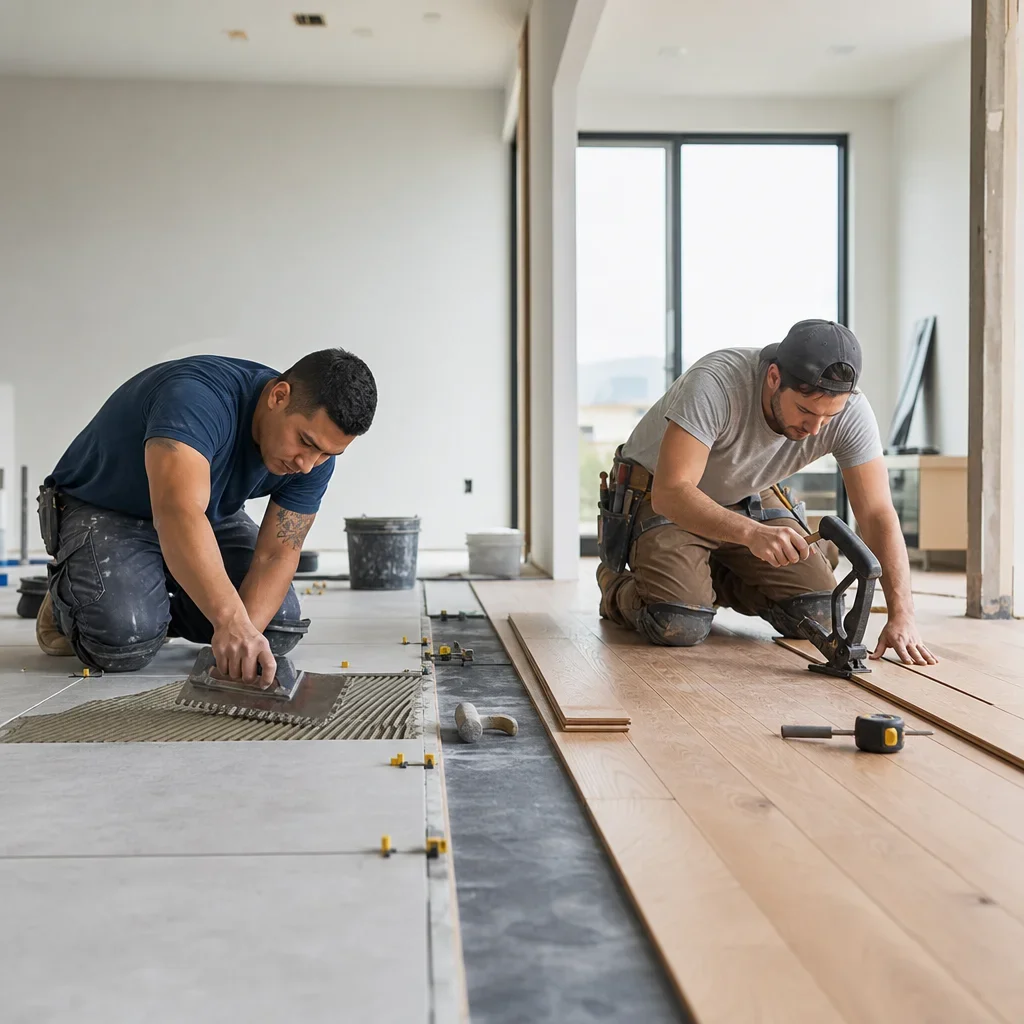
Installation is often the deciding factor when people compare the cost of tile floor vs hardwood. Tile work usually involves setting, spacing, cutting, grouting, curing time, and cleanup, while hardwood installation changes with nail-down, glue-down, floating systems, and whether the floor is prefinished or site-finished.
Subfloor condition can make tile meaningfully more expensive. Tile needs a flatter, more stable base than many other floors, and extra work can include leveling compounds, waterproofing in wet zones, or uncoupling membranes to reduce crack transfer.
Open layouts, tight corners, islands, and stairs increase labour for both materials. Stairs are a separate line item on many quotes because each tread, riser, and nosing is measured and finished individually, not priced like an open floor area.
Replacing tile with floorboards can also trigger hidden work. Height transitions, old adhesive removal, cracked substrates, and door undercuts all add time before the new floor even starts.
Lifetime value depends on how the room is used. Tile can reduce replacement risk in wet or pet-heavy areas, while wood can age more gracefully in dry rooms because individual boards may be repairable and some hardwood floors can be refinished.
Solid hardwood often lasts 50 to 100+ years and can be refinished multiple times, while engineered hardwood often lasts about 20 to 50 years depending on the product and wear layer. I tell buyers not to lump all engineered floors together, because a thin wear layer and a thicker wear layer do not have the same long-term options.
Porcelain and ceramic tile can also last for decades, sometimes 50+ years, but matching a cracked tile years later can be harder than swapping a damaged board from stored overage.
Maintenance is different, not necessarily heavier. Tile usually needs grout cleaning and occasional grout repair, while wood needs humidity control, felt pads, and finish care to avoid scratches, cupping, or gaps.
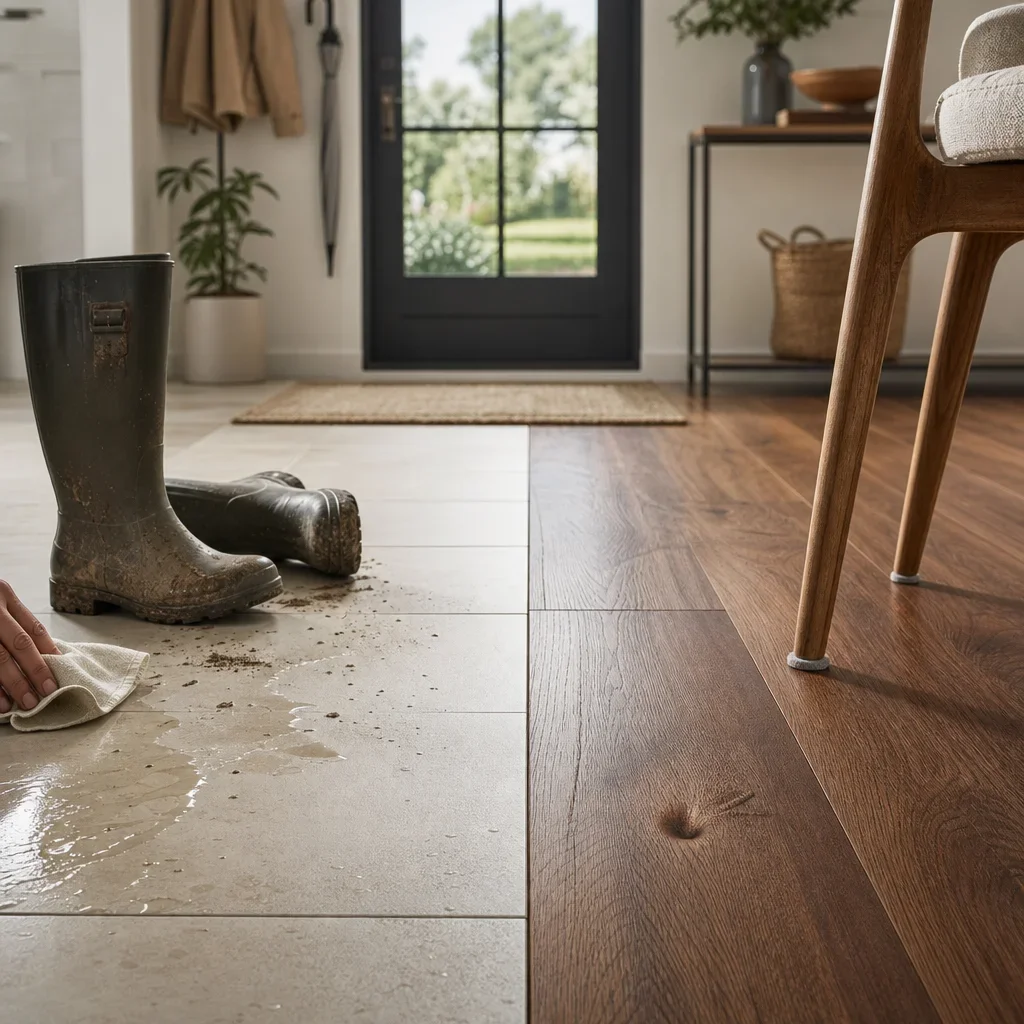
Tile usually wins on water resistance and scratch resistance, especially porcelain. Hardwood vs ceramic tile and hardwood vs porcelain tile become practical durability questions in mudrooms, kitchens, and pet-heavy homes because spilled water and entry grit punish wood faster than tile.
Wood usually handles impact in a different way. A dropped pan may chip a tile, while the same drop may dent wood instead, and some homeowners prefer a dented board to a cracked tile because board repair can be simpler.
Grout joints are one of tile's tradeoffs. They can trap dirt, discolour over time, and become the first area that makes the floor look tired even when the tile itself is still sound.
In busy homes with dogs, toy cars, winter salt, and rolling chairs, the best answer depends on which wear you fear more. Tile resists claw scratches and wet boots better, while wood is quieter, warmer, and usually easier on feet and joints.
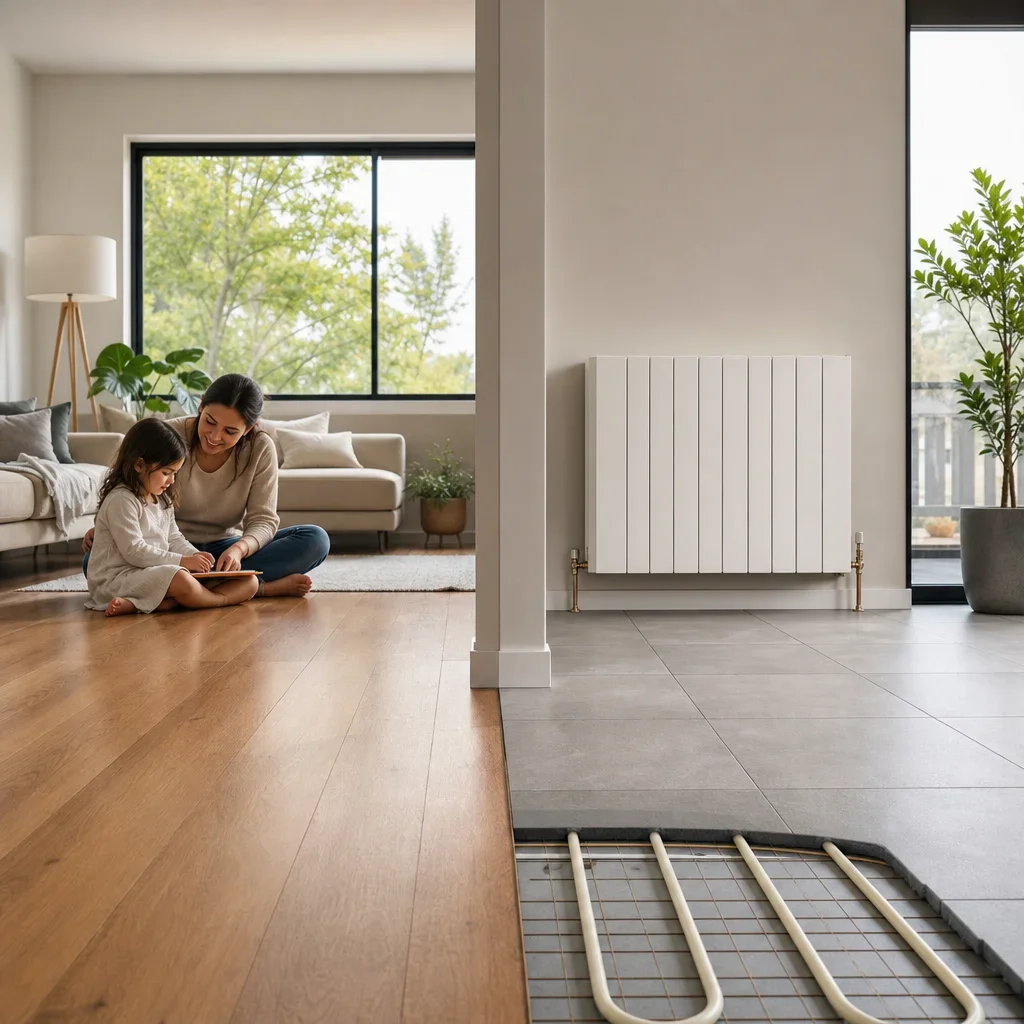
Wood feels warmer and more forgiving underfoot than tile. That matters in bedrooms, living rooms, and kitchens where people stand for long stretches or where kids spend time on the floor.
Tile is harder and usually colder unless paired with radiant heat. That does not make tile wrong, but it does change day-to-day comfort and can feel less forgiving for some people who are sensitive to hard surfaces; personal comfort and health concerns should be discussed with a qualified professional rather than guessed from flooring photos.
Acoustics are another real difference between wooden floor and tiles. Tile tends to reflect sound and create more echo in open-concept homes, while wood is usually quieter underfoot, and engineered systems with good underlayment can soften footfall noise further.
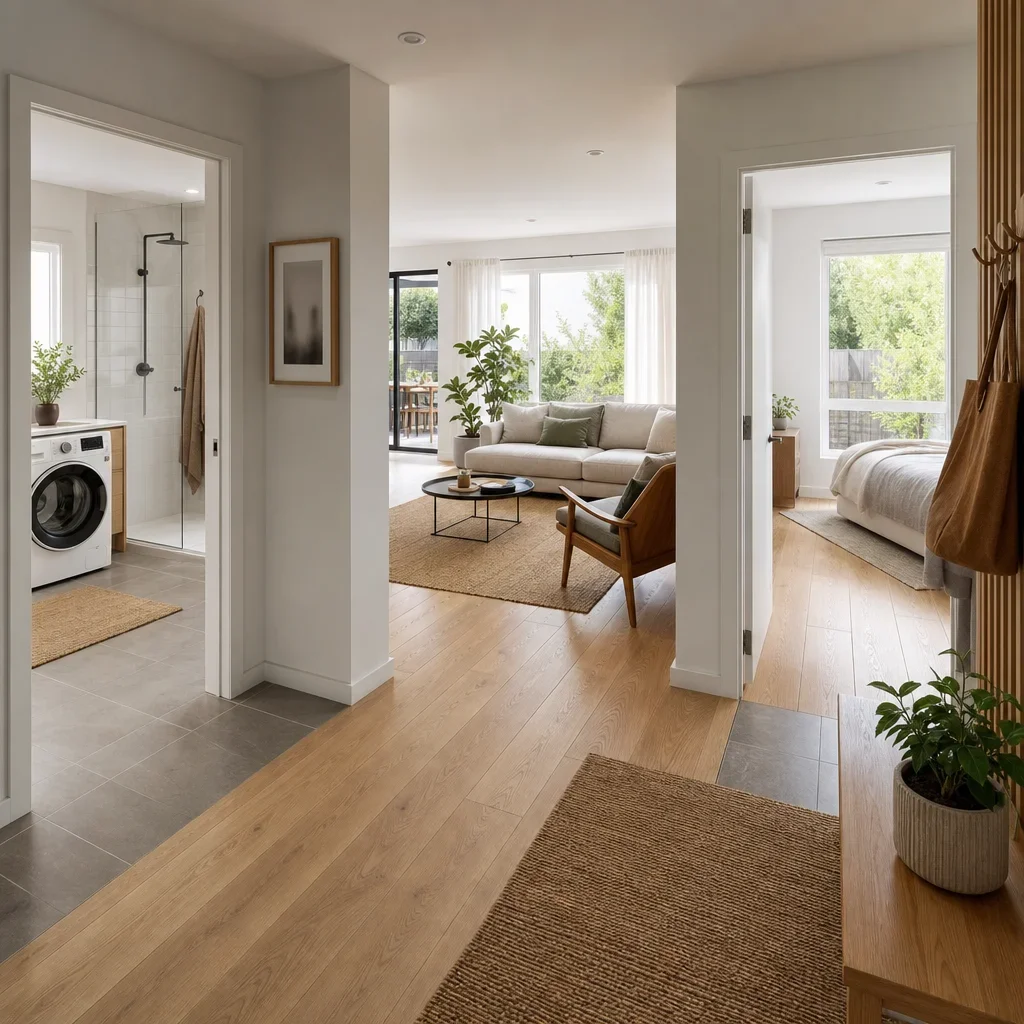
Tile is usually the safer choice for bathrooms, laundry rooms, and wet entryways. Water exposure is predictable in those spaces, and ceramic or porcelain handles splashes and tracked-in moisture better than solid hardwood.
Kitchens sit in the middle. Tile vs hardwood in kitchen projects comes down to whether you value spill resistance more than comfort, because tile handles water and dropped food well, while wood is easier to stand on during long meal prep.
Solid hardwood is usually a poor fit below grade or in persistently damp spaces. Basements need extra moisture caution, and engineered wood is typically the more stable wood option when a lower-level space is dry enough and the product is approved for that use.
Living rooms and bedrooms are where wood usually pulls ahead. Warmth, quieter acoustics, and broad resale appeal are why many buyers still prefer hardwood or engineered wood in the main dry areas of a home.
Entryways and mudrooms favour tile when winter boots, grit, and salt are daily realities. In the GTA, that practical detail matters more than showroom appearance.
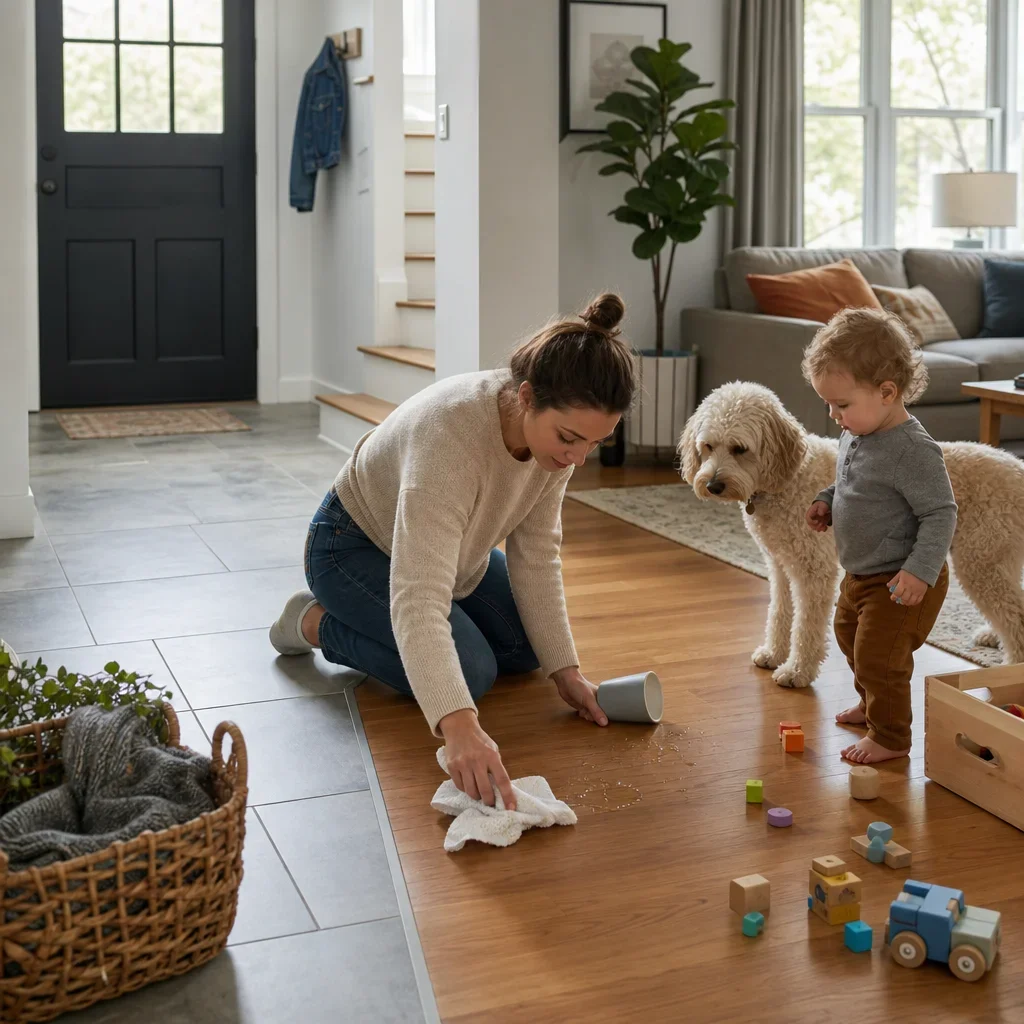
For large dogs, tile usually wins on scratch resistance, but wood can be easier on joints and much quieter when pets run across the house. That is why hardwood vs wood tile is often a lifestyle question, not a simple durability contest.
For young kids, wood is warmer and softer for crawling, sitting, and play. Tile is easier to wipe after wet boots, arts-and-crafts messes, and snack spills, especially near back doors and kitchens.
For busy family homes, the best split is often mixed flooring by zone. Tile works well at the entrance, bathroom, and laundry, while wood works better where the family gathers, relaxes, and wants a less echoey room.
Hardwood usually has broader buyer appeal in main living areas. That does not mean tile adds no value, but it does mean wood tends to feel more timeless to more buyers in living rooms, bedrooms, and formal spaces.
Tile performs well for resale in the right places. Attractive, durable tile in bathrooms, laundry rooms, and entryways is usually seen as practical, not as a downgrade.
Full-home wood look porcelain tile is more divisive. Some buyers like the durability, but others still read grout lines, cooler acoustics, and hard underfoot feel as compromises compared with real wood.
Continuity matters as much as material. Flooring that suits the room, matches the home's style, and avoids abrupt transitions usually helps value more than forcing one material everywhere.
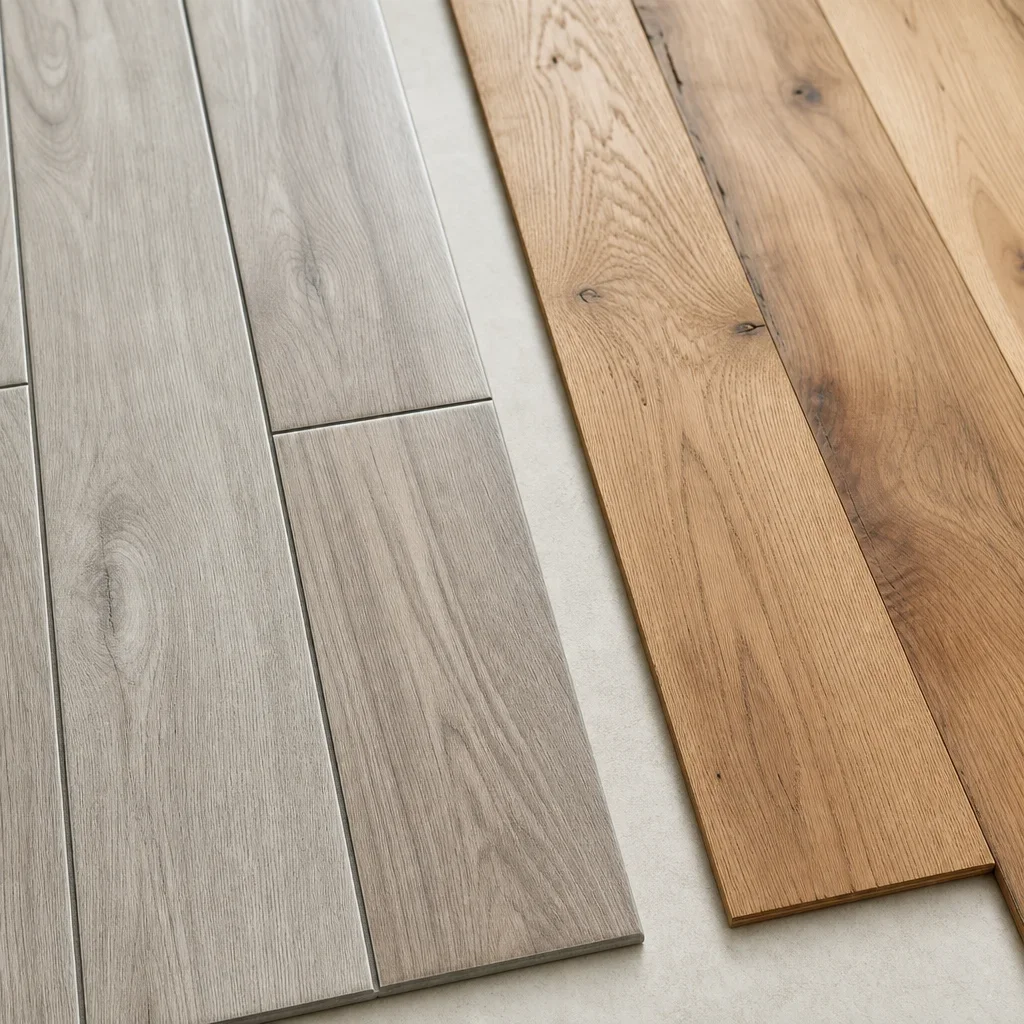
Wood look tile is tile made to imitate wood planks in colour, grain, and size. Performance-wise it behaves like tile, not hardwood, so it offers strong water resistance and scratch resistance but still feels harder, cooler, and louder than real wood.
Wood look tile can be cheaper than hardwood in some material tiers, but not always once installation is included. Large-format timber look tiles can require careful layout and more cutting, which raises labour even when the material itself looks budget-friendly.
Hardwood vs wood look tile is also a design decision. Better versions use more print variation, more realistic matte finishes, and grout colours that do not shout, while lower-end versions can look repetitive or artificial.
Wood look porcelain tile is usually a smart fit for bathrooms, laundry rooms, basements, and some kitchens where you want a wood aesthetic with tile performance. Living rooms and bedrooms are still where many buyers prefer the feel and acoustics of real wood.
Wood look tile is not automatically tacky, outdated, or a bad idea for resale. The result depends on format, print realism, grout choice, room placement, and whether the floor suits the rest of the home.
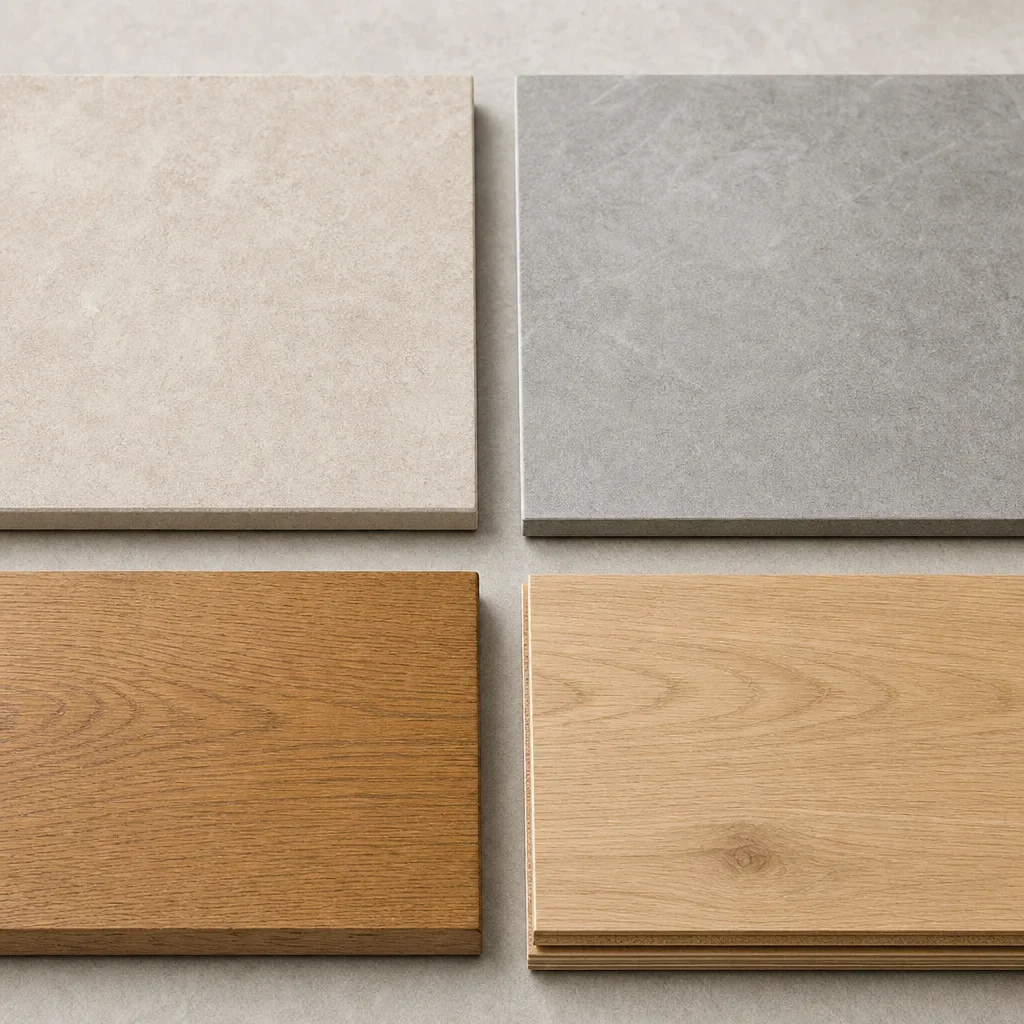
Ceramic and porcelain are not the same product. Porcelain is usually denser and more water-resistant than ceramic, which is one reason porcelain often sits higher on the price ladder.
Solid and engineered hardwood are also different products. Solid hardwood is one piece of wood and usually offers the most refinish potential, while engineered wood uses a real-wood top layer over a layered core for better dimensional stability.
A simple buying shortcut helps here. Choose ceramic when budget matters and the use is appropriate, porcelain when moisture and wear are bigger concerns, solid hardwood when you want a classic long-term wood floor in dry areas, and engineered wood when you want real wood with more stability and often a lower starting price.
Tile's biggest strengths are water resistance, scratch resistance, and suitability for wet or dirty zones. Its main drawbacks are hardness, colder feel, more echo, grout maintenance, and more involved repairs if a matching tile is no longer available.
Hardwood's biggest strengths are warmth, quieter acoustics, classic appearance, and strong appeal in living spaces. Its main drawbacks are sensitivity to moisture, visible scratches and dents, and the need for better humidity control.
Engineered wood sits between the two. It gives you a real wood surface and a more stable structure than solid hardwood, but it still is not the same as waterproof tile and its refinish options depend on the wear layer.
Yes, mixing tile and wood is often the most practical plan. Tile belongs naturally in entryways, bathrooms, and laundry rooms, while wood suits living rooms, hallways, and bedrooms.
The best transitions happen where the room function changes. Doorways, hall breaks, mudroom edges, and kitchen boundaries usually make more sense than forcing a mid-room material switch.
Colour coordination matters more than exact matching. Try to align undertones and overall warmth instead of hunting for a tile that copies every grain line in the wood beside it.
Height planning matters before installation starts. Different materials build up to different finished heights, so transition strips, underlayment choices, and subfloor prep should be planned before products are ordered.
Avoid deciding on material-only price. The cheapest plank or tile in the showroom can still become the more expensive project once prep, trim, demolition, and labour are added.
Avoid solid hardwood in rooms with routine moisture exposure. Bathrooms, laundry rooms, and damp basements punish wood faster, and that risk is expensive to ignore.
Avoid glossy, slippery tile in busy wet entries if safety is a concern. Surface finish matters just as much as colour when boots, water, and kids are part of the daily traffic pattern.
Avoid trend-only looks that may age quickly. Extremely grey wood visuals, overly rustic prints, or unrealistic wood tile patterns can date faster than simpler, more natural finishes.
Avoid poor subfloor prep under any material. A beautiful finish layer cannot compensate for movement, unevenness, or moisture issues below it.
Choose tile if moisture, wet boots, pet mess, and scratch resistance are at the top of your list. That usually points to bathrooms, laundry rooms, mudrooms, and some kitchens.
Choose hardwood if comfort, warmth, acoustics, and broad resale appeal matter most. That usually points to living rooms, bedrooms, and main dry spaces.
Choose engineered wood if you want real wood with a lower starting point than many solid hardwoods and more dimensional stability. At CanFloor, engineered wood starts from $2.99 per sq.ft..
Choose wood look tile if you want a plank aesthetic in a room where real wood would be a risk. Bathrooms, basements, laundry rooms, and some pet-heavy kitchens are common examples.
For a condo, quieter underfoot finishes and continuity often matter more than maximum water resistance. For a family house, mixed materials by zone usually work best. For a rental, durability and maintenance simplicity may matter more than refinishing potential. For a custom kitchen, comfort and spill exposure should be weighed together, not separately.
If you want a clean way to compare products in person, visiting a showroom helps because texture, sound, gloss, and print realism do not come across well online. CanFloor's North York showroom carries hardwood and engineered options, custom finishes, installation, stairs, and financing through Affirm.
Sometimes, but not consistently. Entry ceramic can cost less than many wood floors, while premium porcelain or complex tile labour can push the total above engineered or even some solid hardwood options.
Either one can be cheaper depending on prep and layout. Tile labour rises quickly when leveling, waterproofing, or heavy cutting is needed, while hardwood costs rise with glue-down installs, site finishing, and stair work.
Not always. Porcelain can be cheaper than premium hardwood, but premium porcelain and large-format wood look porcelain can cost as much as or more than some wood floors.
Ceramic is better for wet rooms and easier cleanup. Hardwood is usually better for comfort, acoustics, and classic appeal in dry living spaces.
Sometimes on material, not always on the full install. Wood look tile still installs like tile, so labour and prep can erase a material-price advantage.
It can work, but it is not automatically the best resale or comfort choice. Many buyers still prefer real wood in bedrooms and living areas, even if they like wood-look tile in wet zones.
In main living spaces, hardwood usually has broader appeal. Tile still adds value in the right rooms, especially bathrooms, laundry rooms, and entryways.
Tile is better for spills and wear. Hardwood is better for underfoot comfort, so the right answer depends on how you use the kitchen.
Tile is usually the safer and more practical choice. Routine moisture makes real wood a risk in most bathrooms.
Yes, but the cost depends on demolition, substrate condition, finished height, and transitions. Removing old tile often reveals prep work that changes the quote.
Sometimes, but only if the existing tile is sound, flat, and the new floor system allows it. Height changes, door clearance, and substrate stability must be checked first.
Tile is better for scratch resistance and muddy traffic. Wood is better for warmth, quieter footsteps, and softer day-to-day living.
Hardwood can scratch, dent, and react to moisture and humidity. It also needs more care in wet zones and near entryways.
Tile can feel hard, cold, and louder in open spaces. Grout needs attention, and cracked tiles can be difficult to match later.
The lowest sticker price is rarely the whole answer. Compare the full installed cost, the room's moisture risk, and how the floor will feel after five years of real use, not just after five minutes in a showroom.