
For a quicker response, please send all inquiries
via info@canfloor.com or
text to
416-735-0075.
| Monday - Friday | 10:00 am - 7:00 pm |
| Saturday & Sunday | 10:30 am - 4:00 pm |
The first mistake buyers make is treating the cheapest square-foot price as the real project cost. This guide on 100 sq ft hardwood floor cost starts with installed ranges, then shows what changes the final number in Canada and Toronto.
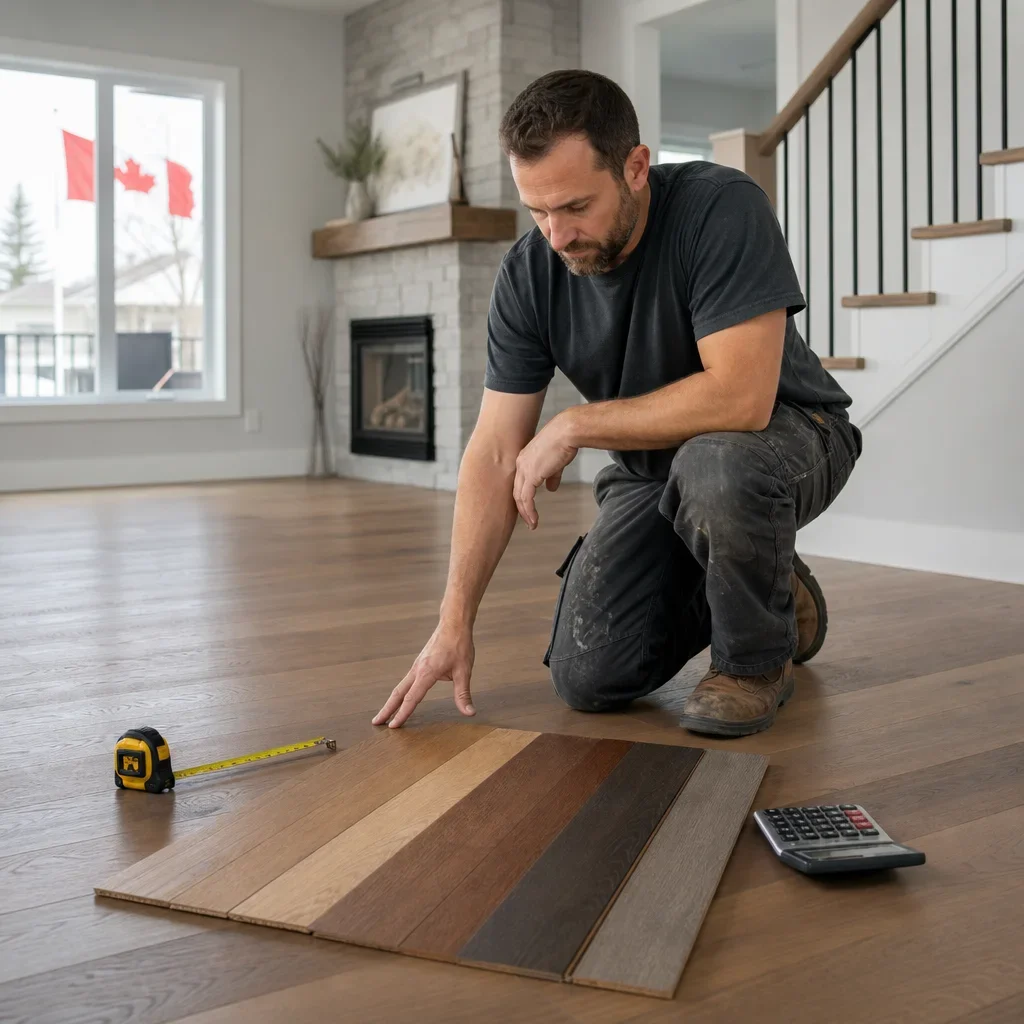
Installed hardwood flooring in Canada commonly lands around $7 to $25+ per sq. ft. when you combine product and labour, with budget-friendly prefinished options at the low end and premium species, wide planks, site finishing, stairs, or complex layouts pushing the high end. That total usually breaks into about $3.99 to $15+ per sq. ft. for materials and about $3 to $10+ per sq. ft. for labour, before unusual prep or extras.
The material side starts with what you buy, not just how much. CanFloor lists solid hardwood from $3.99 per sq. ft. as a product starting point, while custom colour, grade, plank width, gloss level, and species can move the price higher. A supply-only number is not the same as an installed number.
Labour changes with method and site conditions. Nail-down solid hardwood, glue-down work, floor flattening, baseboard removal, occupied homes, and stair work all cost more time than a clean rectangular room with easy access. In Toronto and the GTA, condo bookings, elevator access, parking, and disposal logistics can also push costs upward.
Small jobs usually cost more per square foot than large jobs. A 100 sq. ft. bedroom still needs delivery, cutting setup, transitions, and cleanup, so the effective cost per foot is often higher than a 1,500 or 2,000 sq. ft. whole-home install.
All numbers in this guide are planning estimates, not fixed quotes. Final pricing depends on site measurement, product selection, waste allowance, subfloor condition, moisture readings, and whether the quote is supply only, install only, or full supply-and-install.
This is the fastest way to budget hardwood flooring cost per square foot installed. The table separates material, labour, and total installed ranges so you can compare quotes properly.
| Cost type | Typical range per sq. ft. |
|---|---|
| Material only | $3.99 to $15+ |
| Labour only | $3 to $10+ |
| Total installed | $7 to $25+ |
Budget solid hardwood usually sits at the lower end of the table. Better grades, wider boards, premium species, custom finishes, and more difficult installs move the number up.
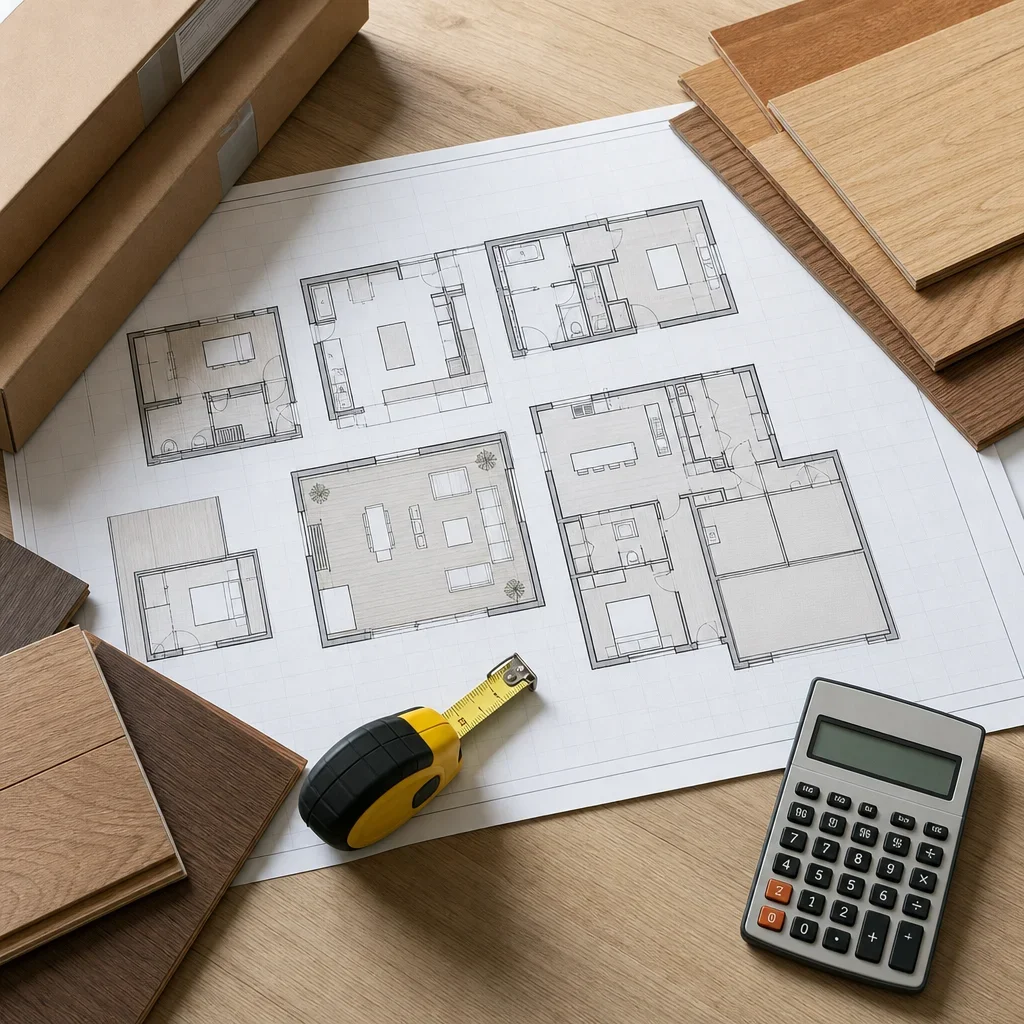
A size-based estimate is just the per-foot range multiplied by area, then adjusted for waste and extras. The table below uses the same planning ranges as above and does not include unusual subfloor repair, stair packages, furniture moving, or major removal work.
| Area | Material only | Labour only | Total installed |
|---|---|---|---|
| 100 sq. ft. | $399 to $1,500+ | $300 to $1,000+ | $700 to $2,500+ |
| 144 sq. ft. | $575 to $2,160+ | $432 to $1,440+ | $1,008 to $3,600+ |
| 200 sq. ft. | $798 to $3,000+ | $600 to $2,000+ | $1,400 to $5,000+ |
| 400 sq. ft. | $1,596 to $6,000+ | $1,200 to $4,000+ | $2,800 to $10,000+ |
| 500 sq. ft. | $1,995 to $7,500+ | $1,500 to $5,000+ | $3,500 to $12,500+ |
| 1000 sq. ft. | $3,990 to $15,000+ | $3,000 to $10,000+ | $7,000 to $25,000+ |
| 1500 sq. ft. | $5,985 to $22,500+ | $4,500 to $15,000+ | $10,500 to $37,500+ |
| 1600 sq. ft. | $6,384 to $24,000+ | $4,800 to $16,000+ | $11,200 to $40,000+ |
| 1700 sq. ft. | $6,783 to $25,500+ | $5,100 to $17,000+ | $11,900 to $42,500+ |
| 2000 sq. ft. | $7,980 to $30,000+ | $6,000 to $20,000+ | $14,000 to $50,000+ |
| 2500 sq. ft. | $9,975 to $37,500+ | $7,500 to $25,000+ | $17,500 to $62,500+ |
The cost of hardwood floors for 1600 sq ft, cost of hardwood floors 1700 square feet, and cost of hardwood floors 2500 sq ft usually lands toward the lower half of these ranges only when the layout is simple and the floor prep is light. Waste, trim packages, stairs, and product upgrades can change the result quickly.
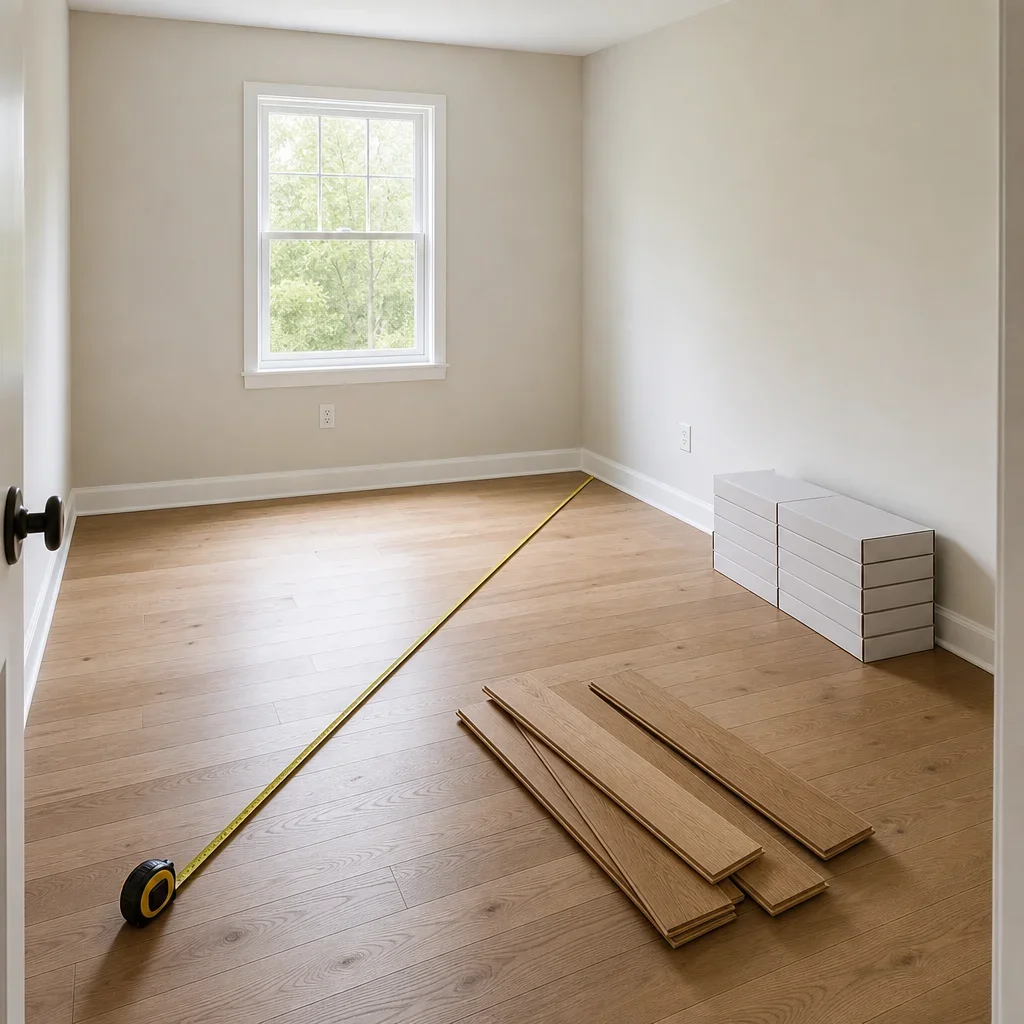
A 12x12 room has 144 sq. ft. of floor area. Using the planning ranges above, a straightforward install prices around $1,008 to $3,600+ installed before special prep, with material-only at $575 to $2,160+ and labour-only at $432 to $1,440+.
You usually should not buy exactly 144 sq. ft. of flooring. Straight-lay rooms normally need about 5% to 10% extra for cuts, end matching, and defects, while irregular rooms and patterned layouts can need about 10% to 15%+. That means a 12x12 room often requires roughly 151 to 159 sq. ft. of product for a simple layout.
A low-range version of that room might use entry-level prefinished solid hardwood with a clean subfloor and no trim replacement. A premium version might use wider boards, upgraded vents and transitions, baseboard work, and more colour matching.
A 200 sq. ft. area usually budgets around $1,400 to $5,000+ installed using the same planning range. Material-only runs $798 to $3,000+, while labour-only runs $600 to $2,000+.
That number rises when the 200 sq. ft. is chopped into multiple small spaces. Hallways, closets, angled walls, and door thresholds create more cuts and slower installation than one open room.
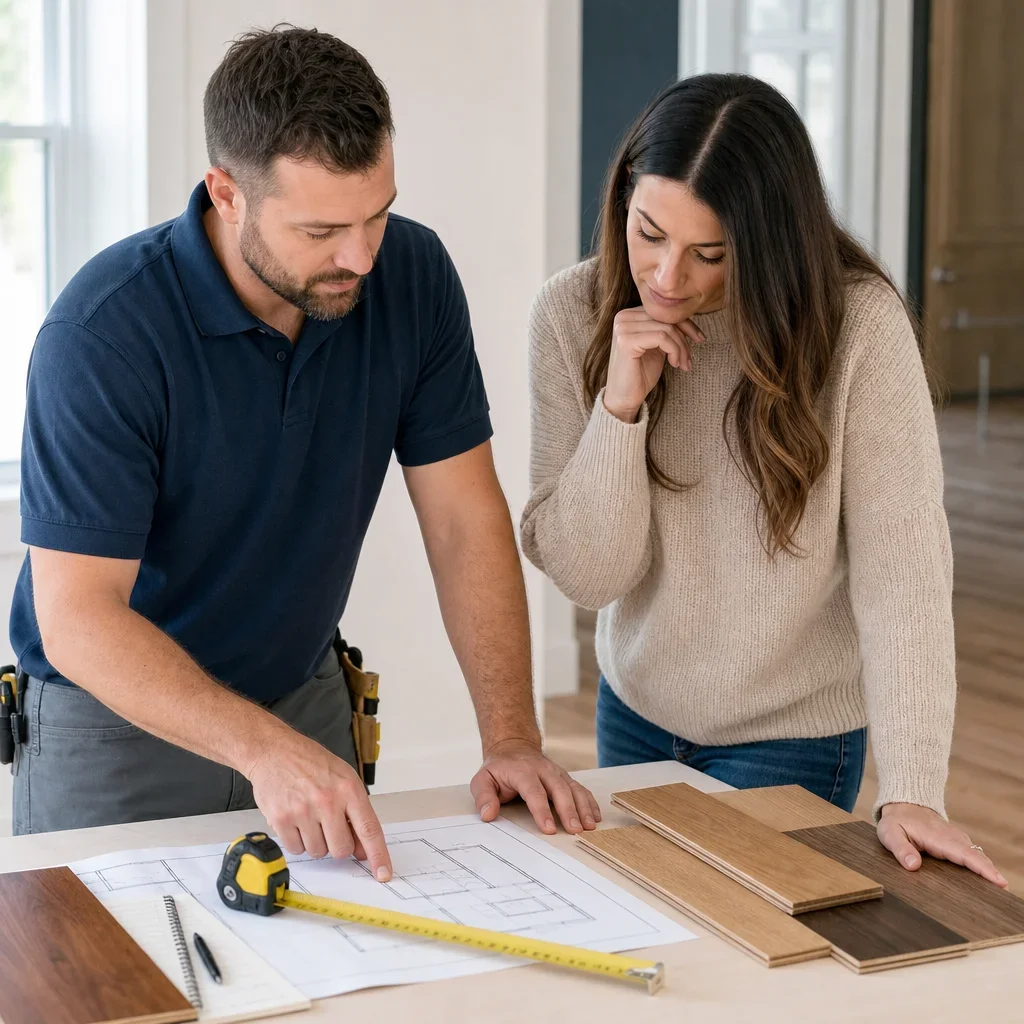
The basic formula is simple: floor area × waste factor × material cost per sq. ft. + labour + extras = project estimate. That gives you a realistic planning number before you request a measured quote.
Rectangular rooms are measured by length times width. Irregular areas should be broken into smaller rectangles, measured separately, then added together before waste is applied.
Waste is not optional. A straightforward layout usually needs 5% to 10% extra, irregular rooms usually need 10% to 15%, and herringbone, chevron, or other patterned installs can need 15%+ because off-cuts are harder to reuse.
A 12x12 room example looks like this: 144 sq. ft. × 1.08 waste = 155.5 sq. ft., which rounds up to the box coverage you actually need. If the product price were at the entry point of $3.99 per sq. ft., the material planning number alone would start around $620.45 before labour, trim, and other supplies.
A 1700 sq. ft. main-floor example looks like this: 1700 sq. ft. × 1.08 waste = 1836 sq. ft. of material coverage for a simple layout. At the same $3.99 per sq. ft. product starting point, material would start around $7,325.64 before labour and extras.
Boxes should be calculated only after you choose the product. Coverage per box varies by line, so box count is a product detail, not a universal rule.
The biggest price drivers are product grade, board format, installation complexity, and site conditions. Species, plank width, finish type, sheen, board length mix, stain colour, and whether the floor is prefinished or unfinished all affect both product cost and install time.
Wider planks and cleaner grades usually cost more because the raw material standard is higher and the visual match matters more. Character-grade looks can be more budget-friendly, while select-grade products are typically priced higher for more uniform appearance.
The room itself changes labour. Open rectangles are faster, while islands, closets, angled walls, floor vents, stair noses, and multiple transitions slow the job and raise waste.
The jobsite also matters. Occupied homes, furniture moving, elevator bookings, tight parking, and disposal logistics are all common reasons a Toronto project costs more than the same square footage in an easier-access setting.

A good hardwood quote should separate supply, installation, and extras so you can compare apples to apples. Flooring, underlayment or moisture barrier where needed, adhesive or fasteners, trims, reducers, thresholds, vents, and stair nosings should be clearly listed.
Labour should also be defined clearly. Delivery, layout, installation, floor prep assumptions, cleanup, and disposal should be shown as included or excluded rather than buried in a lump sum.
The cleanest quote checklist includes measured square footage, waste allowance, product name, board size, finish, prep assumptions, removal scope, trim scope, stair scope, and whether the quote is supply only, install only, or both.
If one quote looks far cheaper, check what is missing first. I tell buyers to compare prep, trims, transitions, and disposal before they compare the headline number.
The hidden costs of wood flooring usually sit in prep and finishing details, not the boards themselves. Removal and disposal of old flooring, subfloor leveling, patching, squeak repairs, moisture mitigation, transition strips, vent matching, baseboard work, and stair finishing are common add-ons.
Furniture moving and access charges can be real costs too. Condo bookings, elevator timing, parking, and carrying material through long corridors can all affect labour in Toronto buildings.
Unfinished hardwood can add another layer of cost and disruption. Sanding, staining, coating, and curing extend the timeline and create more dust, more site protection, and more downtime than most prefinished products.
Post-install costs matter as well. Felt pads, proper floor cleaner, humidity control, and occasional touch-up materials are small compared with the install, but they should still be part of a realistic budget.
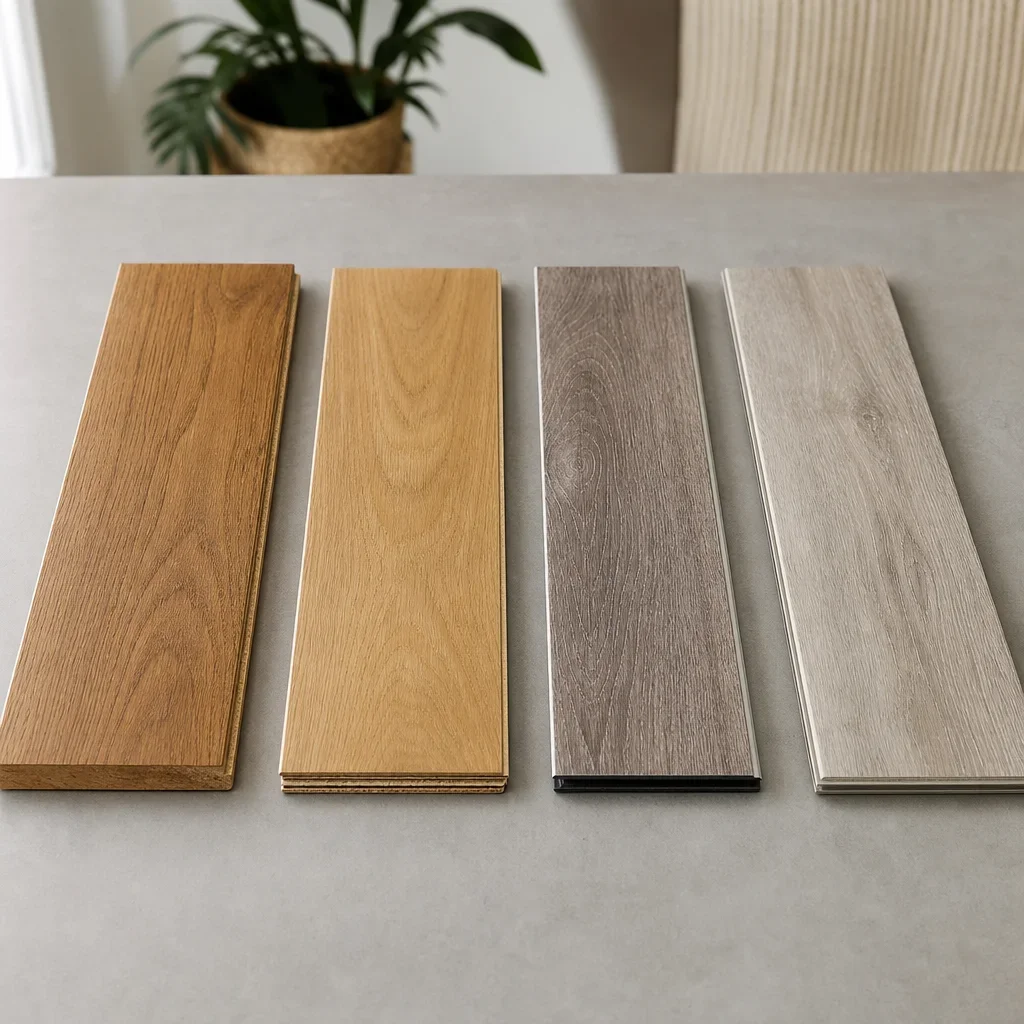
The best value depends on the room, the moisture level, and how long you plan to keep the floor. Solid hardwood gives the most traditional feel and can usually be refinished more times, while engineered hardwood often makes more sense where humidity swings or subfloor conditions make solid wood less practical.
Laminate and vinyl usually cost less upfront than hardwood. CanFloor lists engineered wood from $2.99 per sq. ft., laminate from $1.69 per sq. ft., and vinyl from $1.99 per sq. ft., which shows why buyers comparing hardwood vs laminate cost or hardwood vs vinyl plank cost often see a meaningful gap on material price alone.
Basements and moisture-prone spaces usually favour engineered or vinyl over solid hardwood. Not every room should get solid wood, and I would not treat a basement as a default solid-hardwood space without careful moisture review.
Here is the practical comparison buyers usually need:
| Flooring type | Typical material starting point | Refinishing potential | Moisture tolerance | Best fit |
|---|---|---|---|---|
| Solid hardwood | From $3.99/sq. ft. | High | Lower | Main floors, bedrooms, living areas |
| Engineered hardwood | From $2.99/sq. ft. | Varies by wear layer | Better than solid | Condos, main floors, some lower levels |
| Laminate | From $1.69/sq. ft. | None | Moderate | Budget-conscious dry areas |
| Vinyl plank | From $1.99/sq. ft. | None | High | Basements, entryways, moisture-prone spaces |
If your goal is the lowest upfront bill, laminate or vinyl usually wins. If your goal is long-term wood feel and resale appeal in dry living spaces, hardwood or engineered wood usually makes more sense.
Oak is usually the budget benchmark buyers compare everything against. Maple, hickory, walnut, and specialty looks can price higher depending on grade, cut, width, and finish options.
Grade affects both look and price. Select-grade boards aim for a cleaner, more uniform appearance, while character-grade products allow more natural variation, knots, and colour movement.
Prefinished hardwood usually reduces on-site disruption because the coating is already on the board. Unfinished hardwood can offer more custom colour control, but it adds sanding, finishing, cure time, and jobsite mess.
Plank style changes more than appearance. Wide planks, matte custom finishes, low-gloss sheens, herringbone, and chevron layouts can all push the price up because they affect waste, labour speed, and matching requirements.
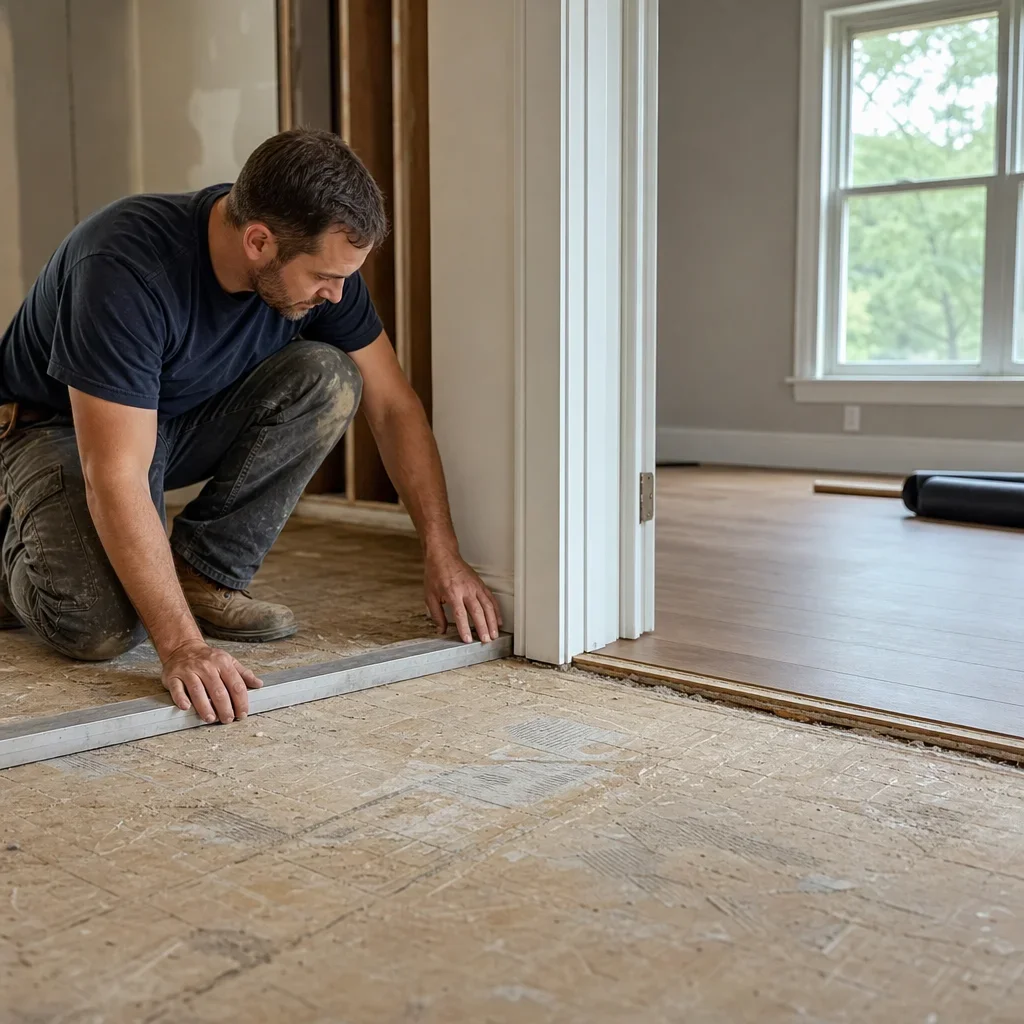
A simple room is cheaper to floor than a complicated one. Open rectangles are efficient, while rooms with many corners, closets, built-ins, angled walls, and frequent height transitions create more cuts and more labour.
Stairs should be budgeted separately from flat floor area. Stair treads, risers, nosings, and finishing details are more labour-intensive than open floor runs, which is why a house with stairs can price very differently from a same-sized bungalow.
Subfloor condition can swing the total meaningfully. Flatness, squeaks, patching needs, moisture readings, and height transitions all need to be checked before the final product and method are confirmed.
Kitchens, entryways, and below-grade spaces need room-specific thinking. Where moisture exposure is higher, engineered wood or vinyl is often the better value choice than solid hardwood.
DIY can save labour, but it can also create expensive waste and rework. Solid hardwood is less forgiving than many click products, and mistakes in layout, fastening, subfloor prep, or moisture control can lead to squeaks, gaps, lippage, or early failure.
Professional installation usually makes more sense for nail-down solid hardwood, glue-down work, stairs, and larger whole-home jobs. DIY is more realistic for some click-lock engineered or laminate products in simpler rooms.
The safest ways to save money are usually scope decisions, not gamble decisions. Choose a simpler layout, reduce stair scope, compare full-scope quotes, and consider whether engineered hardwood gives you a better balance than premium solid in every room.
Stable indoor temperature and humidity matter more than a specific month. Canadian heating season can dry indoor air, while summer humidity can swell wood, so site readiness matters more than chasing a season.
Solid hardwood is especially sensitive to indoor conditions. Following product and installer guidance on acclimation, moisture, and site preparation is more important than trying to pick one perfect time of year.
If the home is still under renovation, schedule flooring after messy trades and after the space can be kept reasonably stable. That protects the boards and reduces touch-up work later.
Toronto-area hardwood pricing is shaped as much by logistics as by product. Labour access, parking, condo restrictions, elevator use, disposal routes, and occupied-home conditions can all affect the final number even when the flooring choice stays the same.
For buyers checking 100 sq ft hardwood floor cost Toronto or the cost of hardwood floors for 1600 sq ft Ontario, the right comparison is not just the per-foot price. The better comparison is full scope: product, waste, prep, trims, transitions, and any access constraints.
CanFloor’s showroom is at 2687 Steeles Ave. West, North York, Ontario and the company supplies and installs across Toronto and the GTA, including stairs and custom-made colours, surface options, and gloss levels. Manufacturer-direct sourcing is one reason some buyers see better product value than they find through a middle layer.
The safest budget is layered, not optimistic. Start with flooring, add labour, then add prep, trims, vents, transitions, stairs, and a contingency of about 5% to 15% for renovation unknowns.
Financing can help when the right floor is a better long-term choice than the cheapest floor. CanFloor offers Affirm financing, which can be useful for eligible purchases when you want to spread out the cost.
A more accurate estimate starts with better inputs. Bring room measurements, photos, or a floor plan to the showroom, or request a quote with the product type, area, and any known site issues so the estimate reflects the real job.
A practical planning range is about $7 to $25+ per sq. ft. installed, depending on product choice, labour, layout, and site conditions.
Material-only pricing starts around $3.99 per sq. ft. for solid hardwood at CanFloor, while premium hardwood products can run much higher.
Installed hardwood flooring commonly lands around $7 to $25+ per sq. ft. when material and labour are combined.
A 100 sq. ft. project is roughly $700 to $2,500+ installed, with small jobs sometimes carrying a higher effective per-foot cost.
A 12x12 room is 144 sq. ft. and usually budgets around $1,008 to $3,600+ installed, plus any special prep or trim work.
For 200 sq. ft., plan around $1,400 to $5,000+ installed using a broad Canada planning range.
A 1000 sq. ft. project usually budgets around $7,000 to $25,000+ installed before unusual extras.
For 1500 sq. ft., a useful planning range is $10,500 to $37,500+ installed.
The cost of hardwood floors for 1600 sq ft is roughly $11,200 to $40,000+ installed, depending on product and job conditions.
The cost of hardwood floors for 1700 square feet is roughly $11,900 to $42,500+ installed as a planning estimate.
For 2500 sq. ft., budgeting around $17,500 to $62,500+ installed is a reasonable starting point.
The common hidden costs are removal, disposal, subfloor prep, moisture work, trims, vents, transitions, baseboard work, stair finishing, furniture moving, and access-related labour.
Engineered hardwood often starts lower on material price. At CanFloor, engineered wood starts from $2.99 per sq. ft., while solid hardwood starts from $3.99 per sq. ft., though premium engineered and premium solid can overlap.
Laminate is usually cheaper upfront. CanFloor lists laminate from $1.69 per sq. ft., which is below its solid hardwood starting price.
Carpet is usually cheaper upfront in many projects, while hardwood usually costs more but can offer a longer-lasting premium finish in the right rooms.
Wood floor lifespan depends heavily on product type, wear layer, moisture control, maintenance, and whether the floor can be refinished. Solid hardwood usually offers the longest service life when properly maintained.
The best time is when indoor temperature and humidity are stable and the site is ready, not simply one season on the calendar.
Want a more accurate estimate than an online range can give? Bring your measurements to the North York showroom at 2687 Steeles Ave. West or request a quote with room photos and a floor plan.