
The biggest advantages of engineered hardwood flooring have less to do with hype and more to do with construction. If you want real wood with better stability over concrete, in condos, or in homes with seasonal humidity swings, engineered hardwood can be the smarter pick than solid wood.
This guide covers the real benefits of engineered hardwood flooring, the trade-offs, and where it fits best. Pricing, wear, refinishing, moisture tolerance, and indoor-air questions all depend on the product itself, so use this as general buying information and confirm the exact specs before you buy.
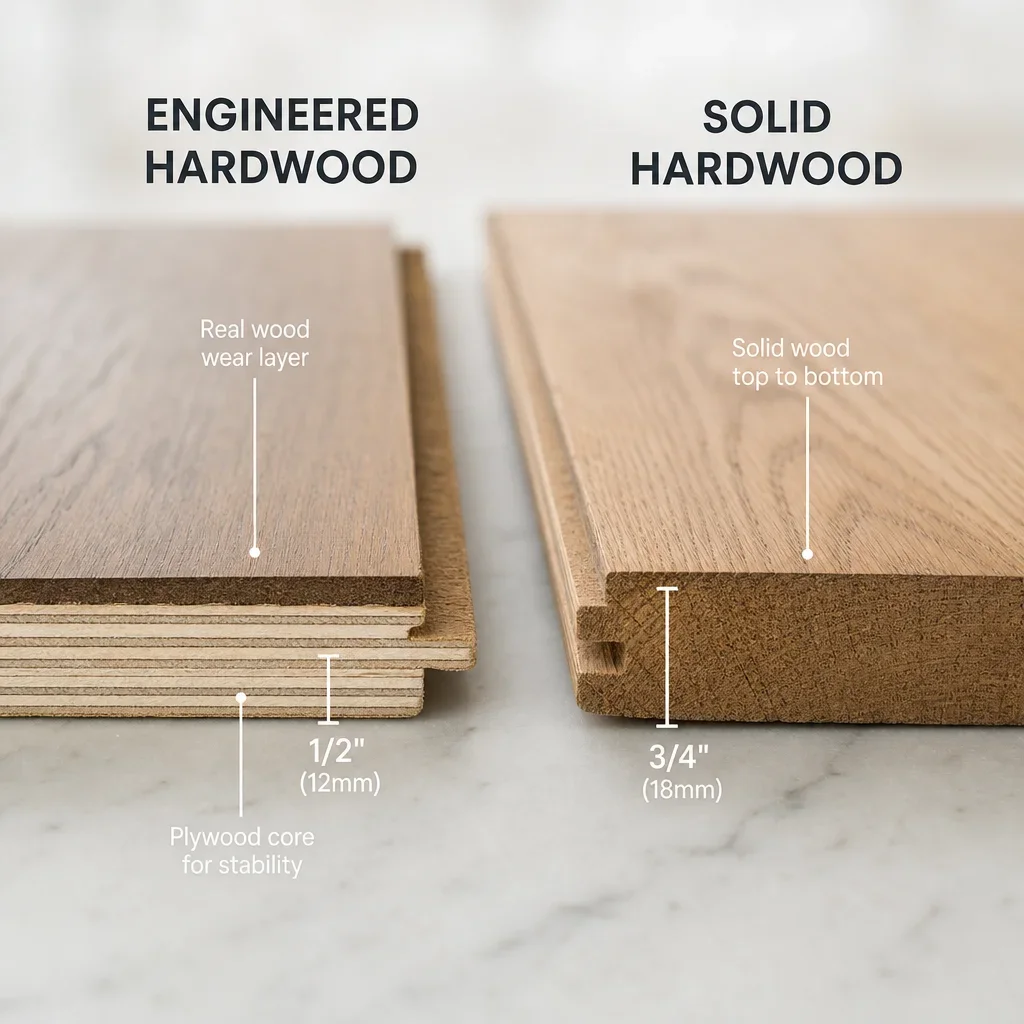
Engineered hardwood is real wood on top, not a printed photo layer. It uses a hardwood wear layer over a layered core, and flooring-grade planks commonly have about 3 to 10 layers overall with total thickness often around 3/8 inch to 9/16 inch , while many solid hardwood floors are about 3/4 inch thick .
Engineered hardwood is not the same as MDF, particle board, laminate, or vinyl plank. MDF means medium-density fibreboard, laminate uses a photographic image layer instead of real wood, and vinyl plank is a synthetic product rather than wood.
Engineered wood vs MDF is a common point of confusion, but they are different materials with different jobs. Some engineered flooring uses plywood-style cores, some use high-density fibre cores, and that does not make the product the same as basic MDF furniture board.
Engineered wood vs plywood also needs a plain-English distinction. Plywood can be part of the core construction in engineered hardwood flooring, but plywood by itself is not a finished wood floor with a hardwood wear layer and factory finish.
Structural terms like LVL, LSL, and CLT usually refer to engineered lumber used in building construction, not finish flooring. That matters because the layered construction in engineered flooring is what creates the main performance benefit: better dimensional stability than a single piece of solid wood.
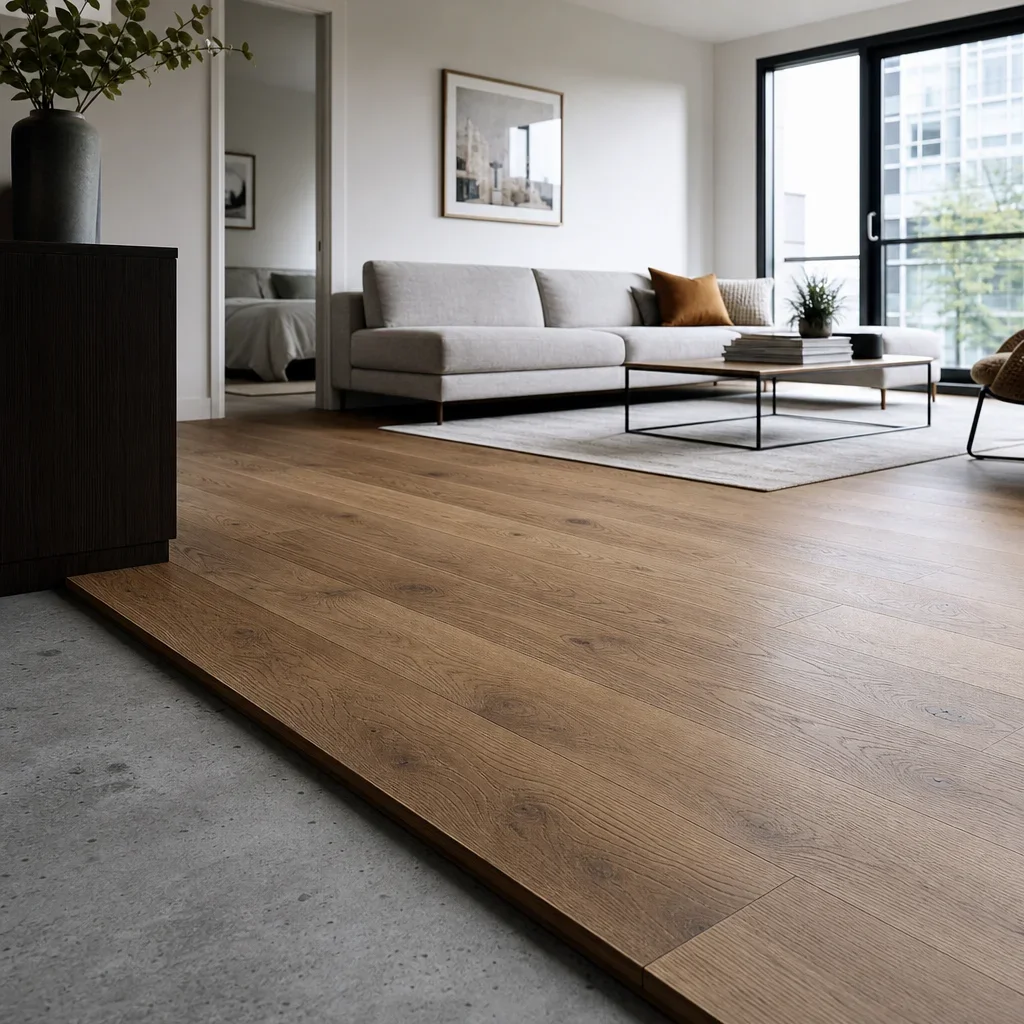
The main advantage of engineered hardwood flooring is better stability in changing indoor conditions. The layered construction helps reduce expansion and contraction compared with solid hardwood, which is why engineered hardwood advantages show up most clearly in condos, slab homes, basements, and wider-plank designs.
Another of the strongest benefits of engineered wood flooring is installation flexibility. Many products can be floated, glued down, stapled, or nailed depending on the plank spec and subfloor, which opens up more options than solid hardwood in many homes.
Real-wood appearance is one of the biggest engineered wood benefits for buyers who do not want a printed surface. Because the top layer is hardwood, engineered floors can look very close to solid hardwood once installed, especially in better-grade products with quality species, finishes, and milling.
Cost is another reason buyers compare the advantages of engineered hardwood with solid wood. Engineered products often sit below solid hardwood on price, but the cost of engineered hardwood vs hardwood still depends on species, plank size, finish, core construction, and whether you are comparing material only or supply and install.
Prefinished options can also shorten the job. Factory-finished floors reduce on-site sanding, finishing fumes, and downtime, which matters in occupied homes, condos, and renovation projects with tight schedules.
Wider and longer plank looks are often easier to achieve in engineered construction. That gives buyers more design freedom without taking on as much movement risk as they might with very wide solid planks.
Engineered hardwood advantages and disadvantages are easiest to understand side by side. The main pros are stability, real wood appearance, flexible installation, broad style choice, and often better value than solid hardwood.
The main cons are just as important. Disadvantages of engineered wood flooring include limited refinishing compared with solid wood, no true waterproof performance in standard wood products, scratch and dent risk like other real wood floors, and major quality differences between entry-level and premium lines.
Poor subfloor prep causes a large share of the complaints people blame on the category. Hollow sound, movement, edge issues, and uneven feel usually come back to flatness, moisture testing, installation method, or low-end construction rather than the words engineered hardwood alone.
Pros
Cons
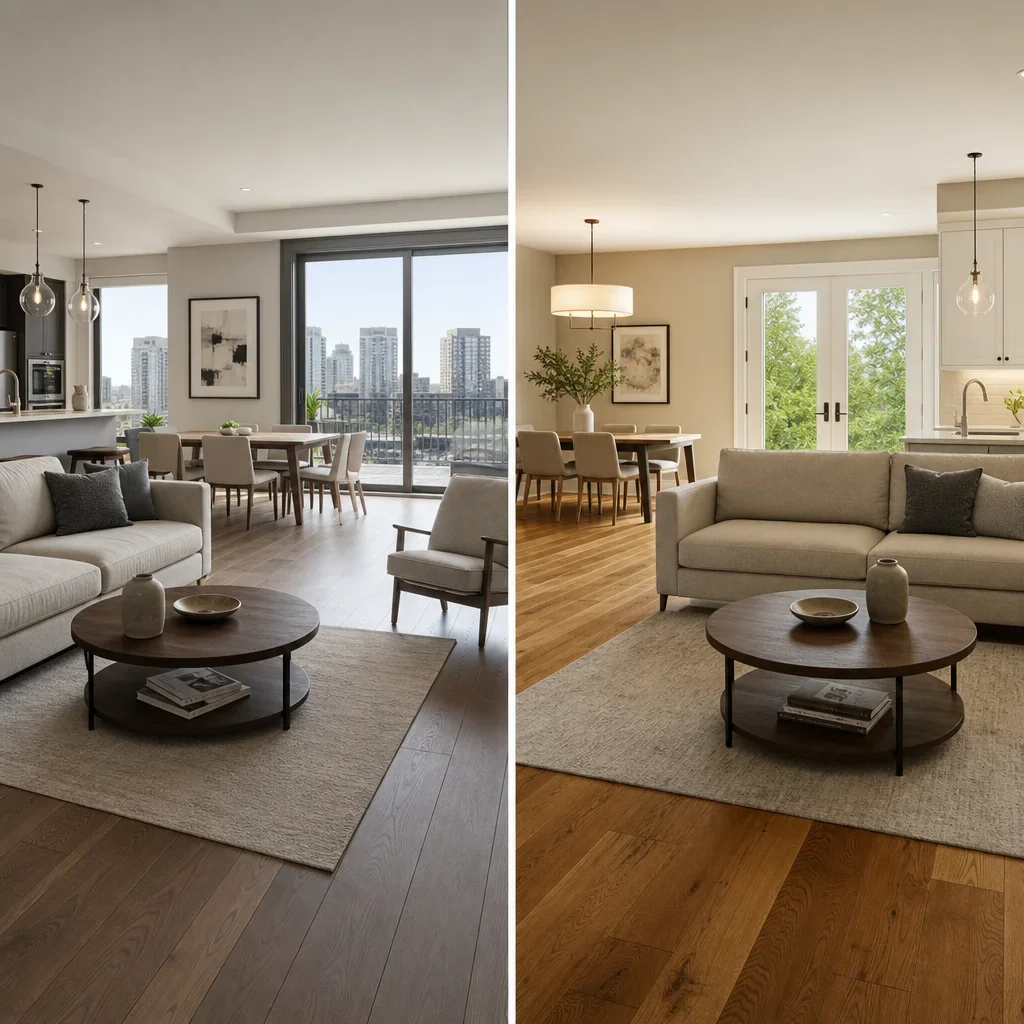
Neither is universally better. Solid hardwood is usually stronger on long-term refinishing potential, while engineered hardwood is usually stronger on dimensional stability and installation flexibility.
Solid hardwood is a single piece of wood from top to bottom. That construction is why it can often be sanded and refinished more times over the decades, but it is also why it tends to react more to humidity swings.
Engineered hardwood uses a real wood top layer over a layered core. That is why many buyers see engineered hardwood advantages in condos, basements, over concrete, and in homes where HVAC conditions change through the year.
The cost of engineered hardwood vs hardwood is often lower on the engineered side, but not always. Premium engineered floors can be priced like, or above, some solid hardwood lines when you choose wider planks, thicker wear layers, premium species, or designer finishes.
| Engineered Hardwood | ||
|---|---|---|
| Real wood wear layer over layered core | Appearance | Real wood surface |
| Better in humidity swings | Refinishing | Usually greater long-term refinishing potential |
| Float, glue, staple, or nail depending on product | Concrete compatibility | Usually limited |
| Often possible if approved and moisture-tested | Radiant heat | More limited and product-specific |
| Better than solid wood for normal humidity, not waterproof | Price position | Often mid-range to premium |
The right choice comes down to room conditions, subfloor type, design goals, and budget. If your priority is maximum future sanding over decades in a dry above-grade room, solid can make sense. If your priority is real wood over concrete, in a condo, or with moderate seasonal movement, engineered is often the better fit.
Engineered hardwood is the best middle ground when you want real wood but your home conditions are not ideal for solid. That includes basement renovations, concrete subfloors, many condos, radiant-heat projects that are specifically approved, and family homes where wider planks are part of the design plan.
Compared with laminate, engineered hardwood gives you a real wood top layer and usually stronger resale perception. Laminate often costs less and can handle day-to-day wear differently, but it does not deliver the same authentic wood surface.
Compared with vinyl plank, engineered hardwood usually wins on natural wood look and upscale feel. Vinyl is the better tool when true waterproof performance is the priority, which is why hardwood vs engineered hardwood vs vinyl plank really comes down to the room, not just the category label.
A condo owner on a concrete slab is a good example of where engineered hardwood advantages are practical, not theoretical. Solid hardwood may be restricted by subfloor conditions, while laminate or vinyl may miss the design goal if the buyer wants genuine wood.
A pet-heavy family home is more nuanced. Engineered can still work well, especially in matte or textured finishes, but vinyl may be the safer choice if repeated water exposure and high claw traffic matter more than natural wood character.
A basement renovation is another common case. If the space is dry, moisture-tested, and the product is approved for below-grade installation, engineered hardwood can look far warmer and more architectural than many synthetic options.
Engineered hardwood is more stable because the core layers help counter wood movement. Those layers are arranged to reduce how much the plank expands, contracts, cups, or gaps as indoor humidity rises and falls.
Solid wood moves more because it is one piece of wood in one grain direction. In a place like Toronto, where heating season dries the air and summer can add moisture, that seasonal movement shows up as shrinking, gapping, swelling, or cupping more easily in solid wood.
That does not mean engineered flooring is immune to moisture problems. Poor acclimation, wet subfloors, chronic humidity issues, or standing water can still damage engineered planks, especially at seams, edges, and the core.
Condo HVAC conditions are another reason the advantages of engineered wood matter. Fast shifts between dry heated air and summer air conditioning can be harder on solid wood than on a well-made engineered floor.
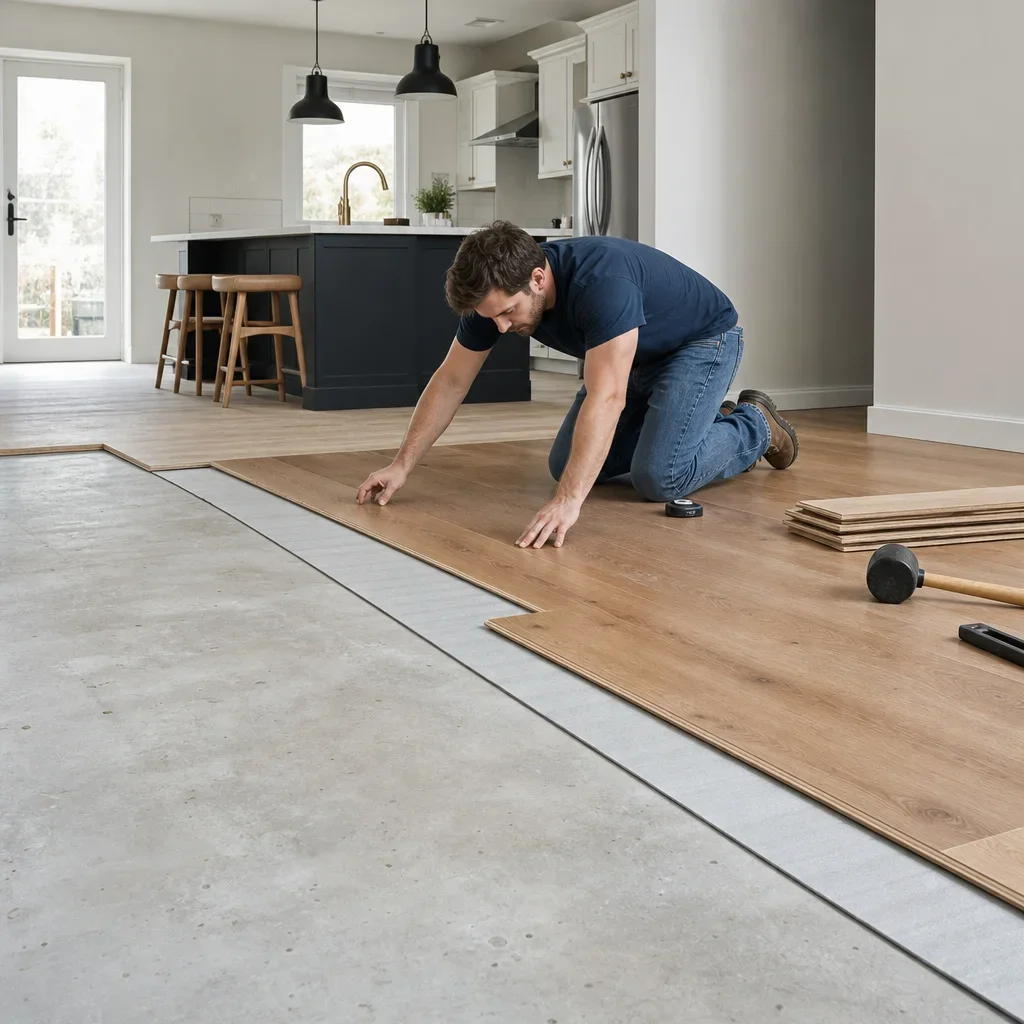
Many engineered hardwood products can be installed over concrete, and that is one of the biggest reasons buyers choose them. Moisture testing and product approval still come first, because concrete can hold or transmit moisture even when it looks dry.
Basements are often a reasonable location for engineered hardwood if the product is approved for below-grade use and the slab or subfloor passes moisture checks. That makes engineered a common answer for buyers who want real wood in a basement but know solid hardwood is usually the riskier route.
Kitchens are often suitable with sensible care. Spills need quick cleanup, and the room should not be treated like a waterproof zone, but engineered hardwood can work well in kitchens where the household wants warmth and continuity with the rest of the main floor.
Bathrooms and full wet rooms are usually a caution zone. Standard engineered hardwood is not the same as waterproof vinyl, so repeated standing water, shower overspray, and chronic humidity make bathrooms a poor fit unless a specific product is clearly approved.
Radiant heat compatibility is product-specific, not category-wide. Some engineered floors can go over radiant systems because the construction is more stable than solid wood, but the exact system type, temperature limits, and installation method must match the manufacturer specification.
Moisture resistant means the floor handles normal indoor humidity better than a more movement-prone product. That is where engineered wood often does better than solid hardwood, and it is one of the real benefits of engineered hardwood flooring.
Water resistant means the floor can tolerate limited spills for a limited time, depending on the finish, joint design, and warranty language. It does not mean you can leave standing water on the floor without risk.
Waterproof is a much stronger claim and usually belongs to certain vinyl products, not standard engineered wood. If you are asking is engineered hardwood waterproof or is engineered wood flooring waterproof, the safe general answer is no unless a specific manufacturer spec says otherwise.
Standing water can still damage wood surfaces, seams, cores, and the subfloor below. If your priority is a floor that can handle repeated wet incidents without swelling concerns, waterproof vinyl is usually the category to compare instead.
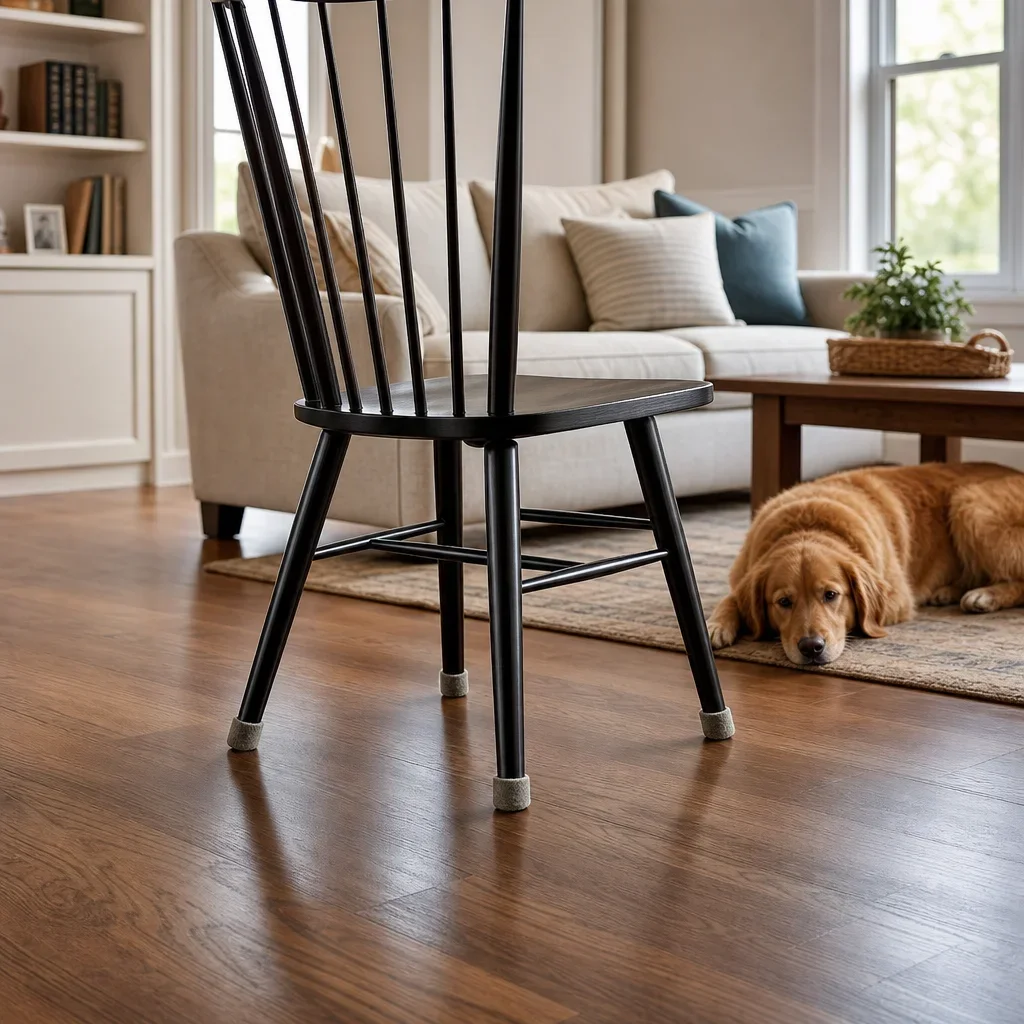
Engineered hardwood can be very durable, but durability depends on the wood species, finish system, wear layer, sheen level, household habits, and installation quality. A hard species with a good factory finish and matte texture will usually hide daily life better than a soft species with a glossy finish.
Dog nails can scratch engineered hardwood because the top layer is real wood. That means the answer to do dog nails scratch engineered hardwood is yes, especially on softer species, darker colours, and high-gloss finishes.
Dents are also possible under concentrated impact. Heavy furniture without pads, dropped objects, and grit tracked from outside can mark engineered floors just like solid wood floors.
Matte, wire-brushed, and textured finishes usually make wear less visible. That is one reason many families choose lower-sheen surfaces instead of high-polish looks.
Longevity depends less on the label engineered and more on build quality and care. Product quality, traffic level, moisture control, maintenance habits, and whether refinishing is possible all shape how long the floor stays attractive.
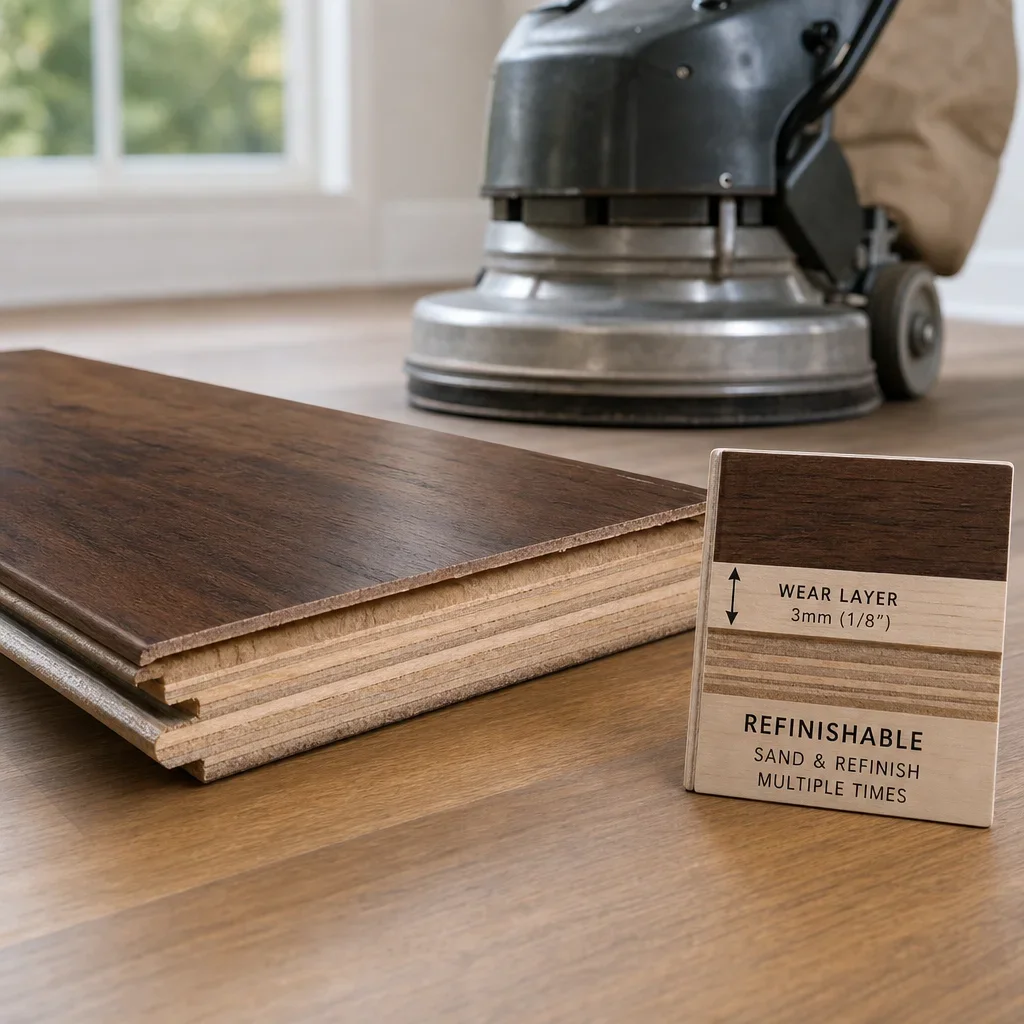
Some engineered hardwood can be lightly sanded or refinished, and some should not be sanded at all. The deciding factor is the real wood wear layer, not just the total thickness of the plank.
The wear layer is the top hardwood portion above the core. A thicker wear layer usually gives more restoration potential, while a very thin veneer may only support screen-and-recoat work, or no sanding at all.
Many buyers ask how many times can engineered hardwood be refinished, but there is no safe one-number answer across all products. What matters is wear-layer thickness, plank construction, tongue position, finish condition, and a professional assessment before any sanding starts.
The engineered hardwood advantages and disadvantages are clear here. You gain stability and installation flexibility, but you usually give up some of the lifetime refinishing headroom that solid hardwood offers.
Checking the manufacturer guidance before purchase matters because refinishing assumptions are expensive mistakes. If restoration potential is high on your list, ask for the wear-layer spec in writing before you choose the floor.
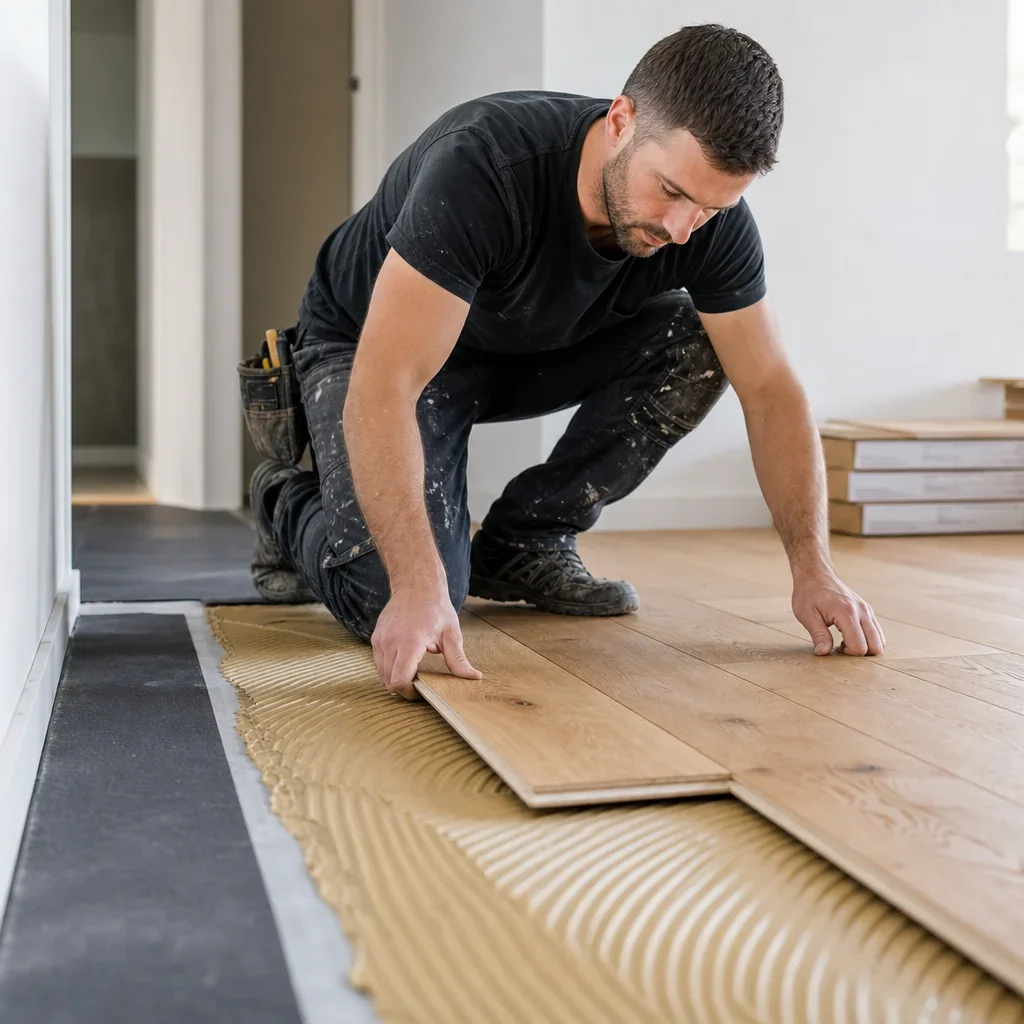
Engineered hardwood installation is flexible because the category can support several methods. Depending on the product, installers may use floating, glue-down, nail-down, or staple-down approaches.
Floating means the planks connect over an underlayment without being fastened directly to the subfloor. It is often faster and useful in condos and concrete applications, but it can sound less solid underfoot if the product, underlayment, or subfloor prep is poor.
Glue-down bonds the floor directly to the subfloor. This method often feels firmer and can reduce the hollow sound some people associate with floating floors.
Nail-down or staple-down installation is usually used over wood subfloors where the product allows it. That can create a more traditional feel, though it depends on the plank and project conditions.
The best method depends on the subfloor, room use, acoustic requirements, and product specification. Choosing a quality plank and matching it to the right installation method matters as much as the floor category itself.
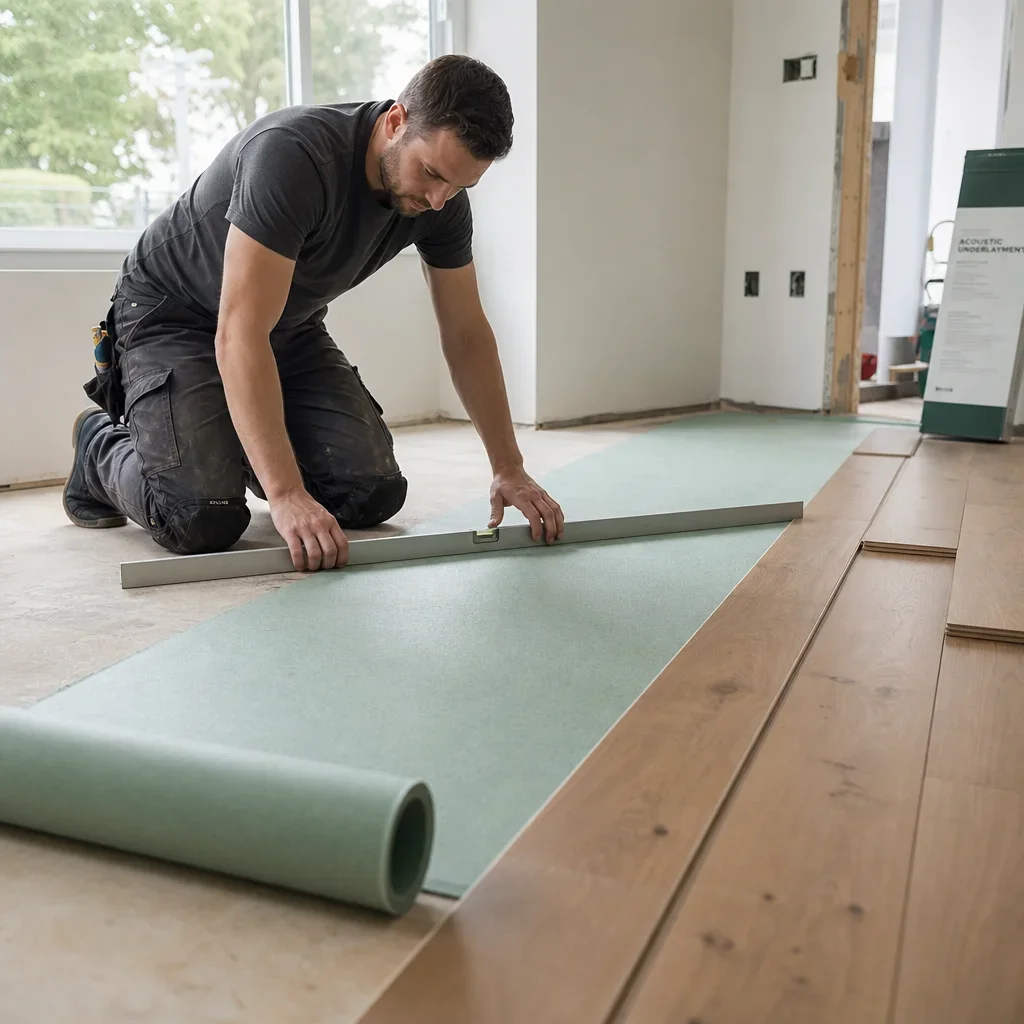
Hollow sound is usually a floating-floor issue, not a universal engineered-floor issue. When buyers say engineered hardwood sounds hollow, they are often describing a floor with too much air gap, weak underlayment, poor subfloor flatness, or light construction.
Better subfloor prep is the first fix. A flatter substrate supports the plank more evenly and reduces movement and echo underfoot.
Underlayment quality also matters. Acoustic products chosen for the flooring system and building requirements can improve sound control, especially in condos.
Glue-down installation can also help reduce hollow sound where the product and subfloor allow it. That is one reason the same engineered floor can feel very different from one project to another.
Plank construction affects sound as well. Heavier, better-built products usually feel and sound more substantial than thin, entry-level boards.
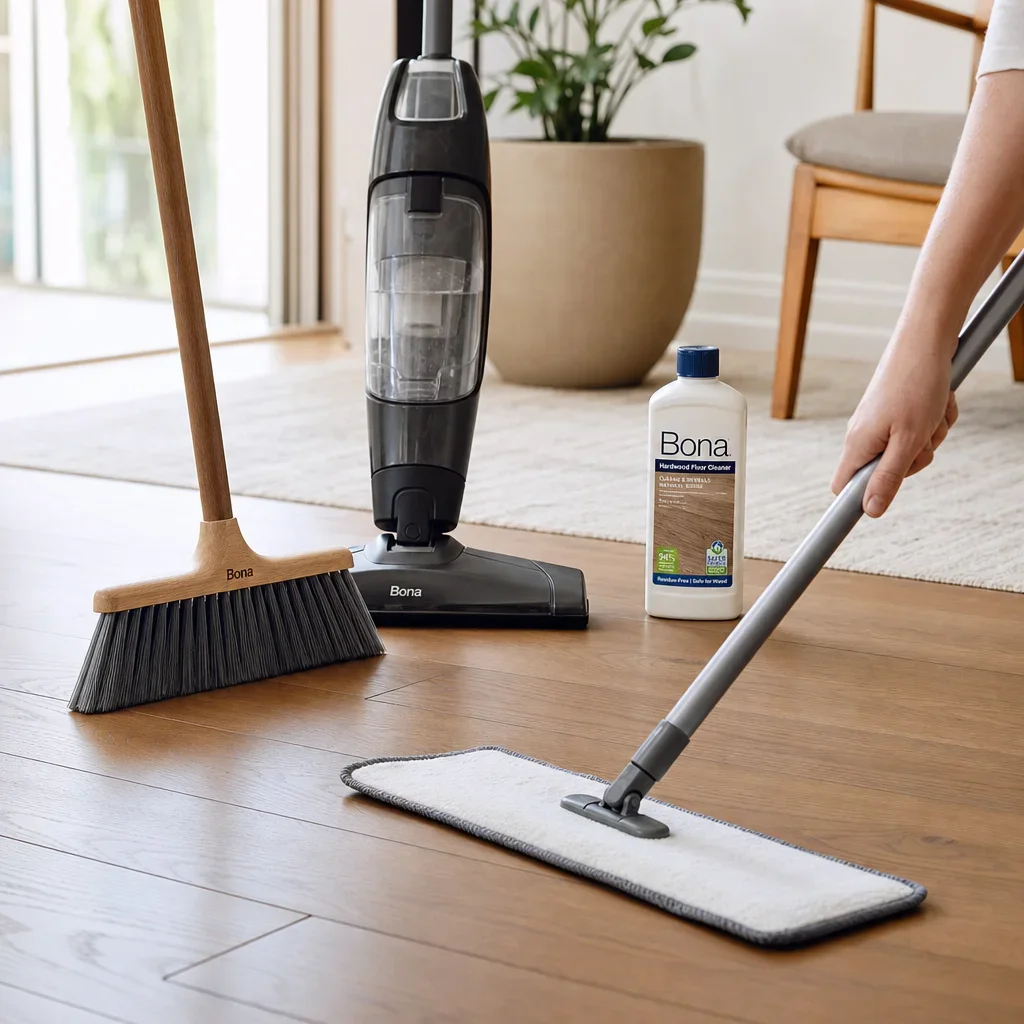
Yes, many engineered hardwood floors can be cleaned with a damp microfiber mop, but not a soaking-wet one. Excess water is one of the fastest ways to damage wood flooring, even when the product is more stable than solid hardwood.
You should not rely on dish soap, homemade mixes, or random online cleaner recipes unless the floor manufacturer approves them. If you are asking can you use Dawn dish soap on engineered hardwood or can you use Dawn to clean engineered hardwood floors, the safer answer is to use only cleaners approved for that floor finish because household soaps can leave residue or dull the surface.
Steam mops are another area where buyers make expensive assumptions. Unless the product documentation specifically allows steam, avoid it.
A hard-floor vacuum setting or soft broom is the safest routine start. Grit acts like sandpaper on wood finishes, so frequent dry cleaning matters more than aggressive wet cleaning.
Do
Do not
One of the quieter engineered hardwood advantages is design range. Buyers can choose from different species, colours, gloss levels, textures, and plank formats without being boxed into a narrow traditional hardwood look.
Engineered construction often makes wider plank visuals more practical. That matters for contemporary homes where broad, calm floor lines are part of the design.
Finishes also change how the floor lives day to day. Matte and low-sheen surfaces usually hide dust, scratches, and small dents better than glossy finishes.
Texture adds another layer of flexibility. Wire-brushed, hand-scraped, and lightly textured surfaces can make a floor feel less formal and more forgiving in busy homes.
Some suppliers also offer custom-made colours, surface treatments, and gloss levels, which is useful when a renovation needs a specific look rather than an off-the-shelf colour. That kind of flexibility is one reason engineered floors can suit both builder-grade updates and higher-end custom work.
Engineered hardwood can absolutely be a high-end flooring category. A quality product with a real hardwood wear layer, strong finish, wide-plank design, and professional installation is not viewed the same way as a low-end synthetic floor.
Category reputation varies because quality varies. Budget engineered products can look and feel basic, while premium lines can read as custom, architectural, and upscale.
Buyer perception usually places quality engineered hardwood above laminate and many lower-end vinyl products. That is one reason homeowners ask about resale value when comparing engineered hardwood vs laminate or vinyl.
Resale value is still product- and market-specific. No flooring category guarantees return on investment, but a well-chosen engineered floor in good condition usually presents better than a worn or obviously budget floor.
Engineered wood is generally considered safe when you choose products with credible emissions information and install them properly. Because engineered flooring uses adhesives and finishes, indoor-air quality depends on the specific product rather than the category name alone.
If you are asking is engineered wood safe or is engineered wood flooring toxic, the useful step is to look for low-VOC documentation and clear manufacturer information. Vague marketing words are less helpful than actual product specifications.
Engineered wood is not the same as MDF furniture board, and it should not be judged by the worst examples people have seen in unrelated products. Flooring-grade engineered wood is a separate category with its own construction, finish systems, and emissions documentation.
There is also no single answer to what is the healthiest flooring for a home. The better question is which floor fits the home's moisture level, cleaning needs, sensitivities, and real use pattern with the least downside.
The best engineered hardwood flooring is usually the product that matches the room, not the one with the loudest label. Wear layer, core type, finish quality, installation method, and room approval matter more than broad category claims.
Start with the wear layer because it affects longevity and refinishing potential. Ask exactly what the top layer is and whether the product can ever be sanded or only recoated.
Check the core construction next. A plywood-style core and a high-density fibre core can both perform well, but they behave differently and should be matched to the use case and installation method.
Review room approvals in writing. Ask whether the product is approved for concrete, below-grade use, floating installation, glue-down installation, or radiant heat.
Warranty language matters less than people think unless you read the exclusions. Moisture, improper cleaning, subfloor issues, and wrong installation methods are common carve-outs.
Samples should be viewed in the home's real lighting. Colour, grain, and sheen can look very different under showroom lights than in a north-facing room or open-concept main floor.
Installer experience matters because poor prep can ruin a good product. Flatness, moisture testing, transitions, and stair details all affect the final result.
For a side-by-side comparison, it also helps to review an [engineered hardwood flooring category page](/engineered-hardwood-flooring), a [solid hardwood flooring page](/solid-hardwood-flooring), and a direct [hardwood vs engineered hardwood comparison page](/hardwood-vs-engineered-hardwood).
Room choice is where the benefits of engineered wood flooring become practical. Engineered works best in spaces that need real wood looks plus better stability than solid hardwood can usually offer.
| Suitability | ||
|---|---|---|
| Ideal | Bedroom | Warm look, comfortable feel, lower spill risk |
| Ideal | Condo main area | Often well suited to concrete and multi-unit installation needs |
| Often suitable | Kitchen | Works with fast spill cleanup and sensible care |
| Often suitable | Radiant-heat room | Only when the product is specifically approved |
| Often suitable | Full bathroom | Standing water and chronic humidity are poor for wood |
| Usually not recommended | Chronic moisture problem area | Flooring choice will not solve a moisture issue |
If the room faces repeated wet events, compare engineered hardwood with a [vinyl flooring page](/vinyl-flooring) or an [engineered hardwood vs vinyl plank guide](/engineered-hardwood-vs-vinyl-plank). If the room is cost-driven, a [laminate flooring page](/laminate-flooring) may also be worth reviewing.
The biggest advantages of engineered hardwood flooring are better dimensional stability than solid wood, more installation flexibility, real wood appearance, and better suitability for concrete, condos, and some below-grade spaces.
The main downside is that refinishing is limited compared with solid hardwood, and standard engineered wood is not waterproof. Lower-quality products can also sound hollow or wear poorly.
It is better for some situations, not all. Engineered is often better over concrete, in condos, and where humidity changes are a concern. Solid is often better when long-term refinishing potential is the top priority.
Yes, many products can, if the floor is approved for below-grade use and the slab or subfloor passes moisture testing. Basement suitability is product-specific.
In general, no. Engineered hardwood is usually more moisture-stable than solid hardwood, but that is different from being waterproof.
Yes, many can be cleaned with a damp microfiber mop. Avoid soaking the floor and follow the product's cleaning instructions.
Do not assume yes. Dish soap can leave residue or affect the finish, so use only cleaners approved for your flooring product.
Yes, they can. The top layer is real wood, so species hardness, finish type, nail care, and household habits all matter.
Some can and some cannot. The answer depends on the thickness of the real wood wear layer and the product construction.
There is no one safe number for every product. Refinishing potential depends on wear-layer thickness, plank build, and a professional assessment.
It can be. Premium engineered floors with quality wear layers, finishes, and installation are commonly used in high-end homes and renovations.
It can help buyer perception, especially compared with lower-end alternatives, but there is no guaranteed return. Product quality, condition, and local buyer expectations all matter.
No. Engineered hardwood flooring is a real wood floor with a hardwood top layer over a layered core. MDF is a different fibreboard product and is not the same category.
It can be a sensible choice when you select products with low-VOC or emissions documentation and follow proper installation guidance. Check the actual product data rather than relying on broad claims.
Engineered hardwood has a real wood top layer. Laminate uses a photographic layer over a fibre core. Vinyl plank is a synthetic floor and is the common choice when waterproof performance matters most.
Engineered hardwood is often the right choice when you want real wood, better stability than solid, and more flexibility for concrete, condos, or some basement and kitchen applications. Its limits are just as important: it is not automatically waterproof, refinishing depends on the wear layer, and installation quality can make or break the result.
If you are comparing categories, the smartest next step is to see engineered, solid, laminate, and vinyl samples side by side and match the product to the room, not just the label. A showroom visit can make that easier, especially when you want to compare finishes, plank sizes, and room-specific options in person at our North York location at 2687 Steeles Ave. West and discuss installation support or financing if needed.