
For a quicker response, please send all inquiries
via info@canfloor.com or
text to
416-735-0075.
| Monday - Friday | 10:00 am - 7:00 pm |
| Saturday & Sunday | 10:30 am - 4:00 pm |
The cheapest floor on paper is not always the cheapest floor after installation. Ceramic tile vs hardwood flooring cost usually starts with ceramic looking cheaper on material, but tile labour, subfloor prep, and layout complexity can push the total close to engineered wood and, in some projects, into the same range as entry-level hardwood.
Ceramic tile is usually cheaper than hardwood at the entry material level, while solid hardwood usually costs more than engineered wood. CanFloor lists hardwood from $3.99 per sq.ft. and engineered wood from $2.99 per sq.ft.; by comparison, typical-market ceramic tile material often lands around $2 to $8 per sq.ft. and porcelain around $4 to $12 per sq.ft..
Total installed cost can narrow that gap because tile labour is usually heavier than wood labour. Typical-market tile installation often runs about $5 to $15 per sq.ft., while hardwood installation commonly falls around $4 to $8 per sq.ft. for straightforward jobs, with higher costs for premium species, patterns, stairs, or difficult layouts.
The best-value choice depends on the room, not just the sticker price. Tile vs wood flooring comes down to moisture exposure, comfort underfoot, acoustic needs, repair expectations, and how long you plan to stay in the home.
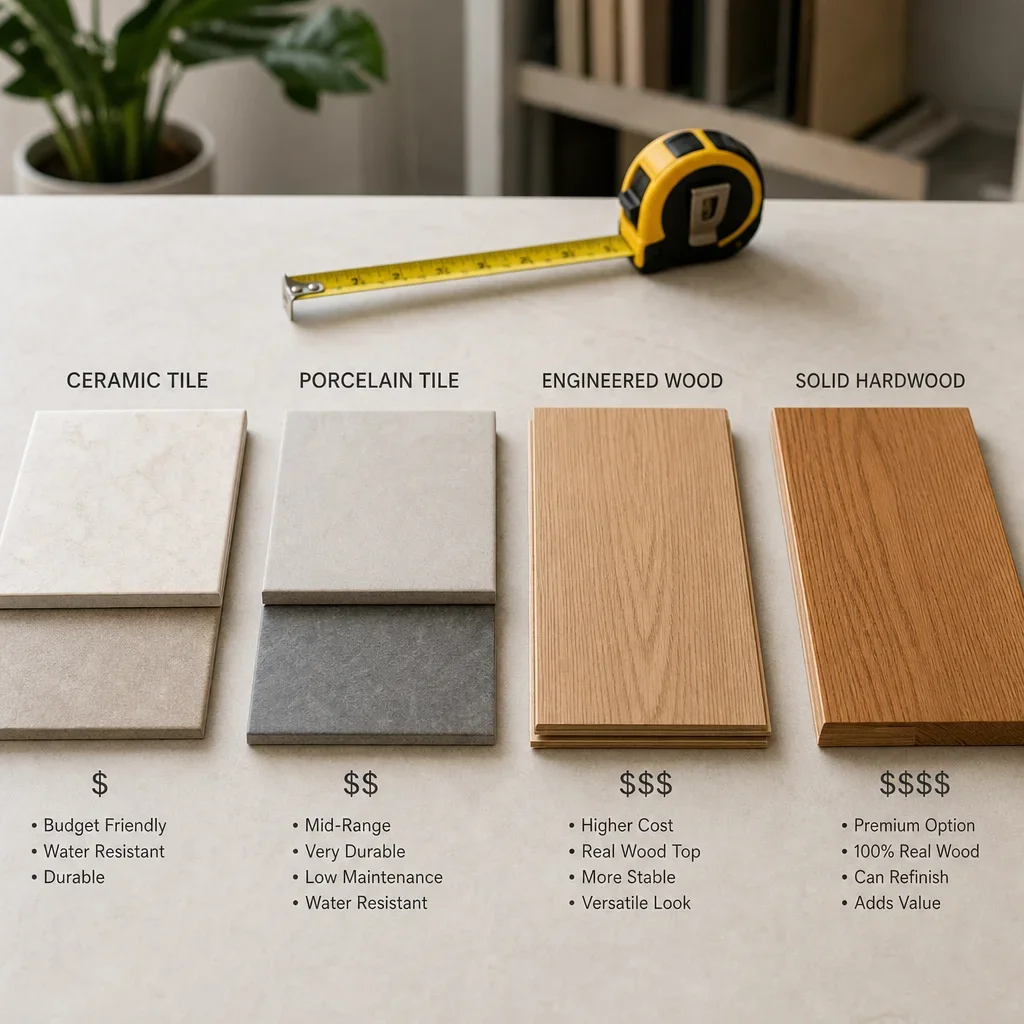
Ceramic tile usually wins on low entry material cost, but engineered wood often lands in the middle when homeowners want a wood look without solid hardwood pricing. The table below uses typical-market estimates for categories not priced by CanFloor and CanFloor's published starting prices for hardwood and engineered wood. Your actual quote depends on product grade, format, prep, and installation scope.
| Flooring type | Material cost per sq.ft. | Installation cost per sq.ft. | Typical total installed cost per sq.ft. | Water resistance | Refinishing potential | Comfort | Best-fit rooms |
|---|---|---|---|---|---|---|---|
| Ceramic tile flooring | $2 to $8 | $5 to $15 | $7 to $23 | High | None | Hard and cool | Bathrooms, laundry, entries |
| Porcelain tile | $4 to $12 | $5 to $15 | $9 to $27 | High | None | Hard and cool | Wet areas, heavy traffic |
| Engineered wood | From $2.99 at CanFloor | About $4 to $8 for straightforward installs | Roughly $7 to $15+ depending on product and method | Moderate, not for standing water | Some products only, depends on wear layer | Warmer than tile | Main floors, bedrooms, some kitchens |
| Solid hardwood | From $3.99 at CanFloor | About $4 to $8 for straightforward installs | Roughly $8 to $18+ depending on species and layout | Low | Yes, usually multiple times | Warmest feel of these four | Living rooms, bedrooms, main floors |
| Wood-look tile | Often about $2 to $11 | Usually $5 to $15 | Roughly $7 to $26 | High | None | Hard and cool | Kitchens, basements, wet zones |
Porcelain tile vs hardwood flooring cost is not a simple two-way comparison because porcelain often costs more than ceramic on material, while engineered wood can undercut some porcelain projects on total installed cost. Large-format tile, patterned layouts, stairs, floor leveling, and premium hardwood grades can move these ranges materially.
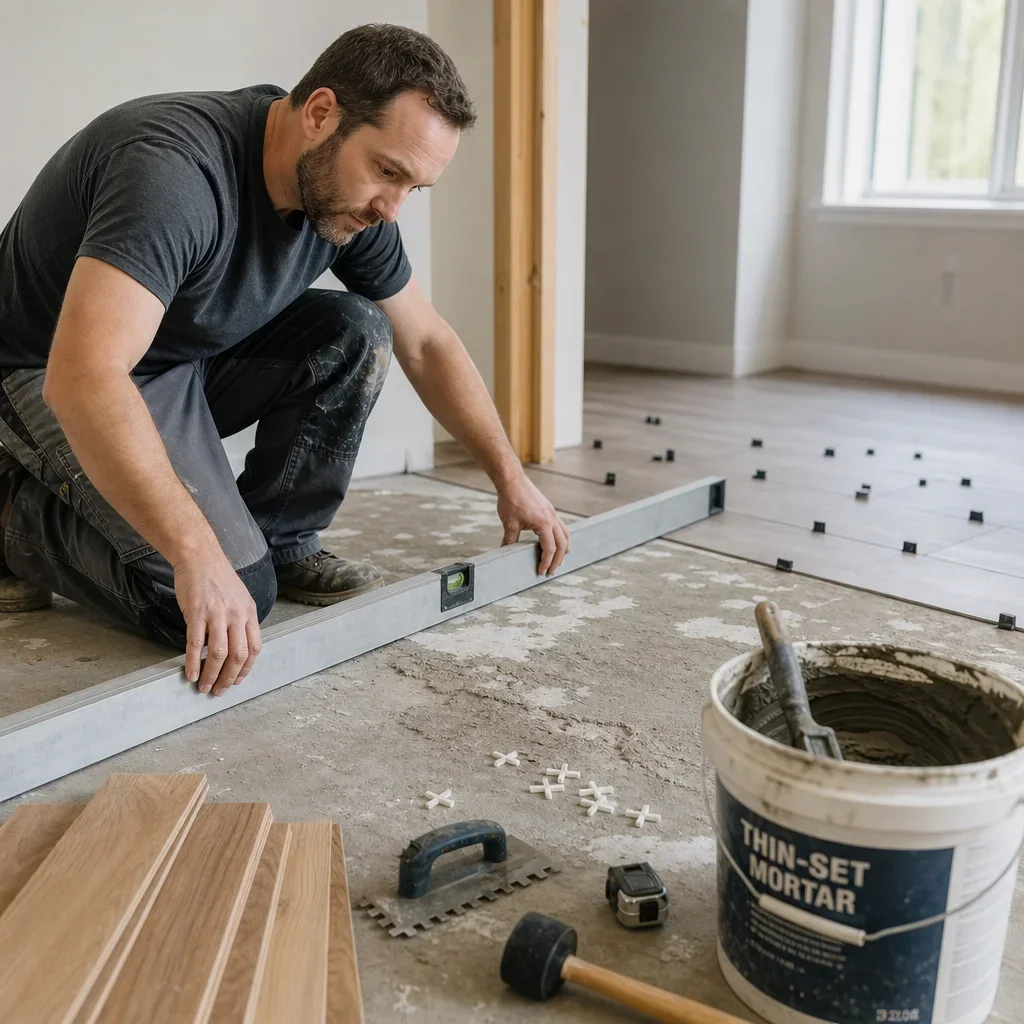
Subfloor condition changes the quote more than most homeowners expect. Tile needs a flat, stable base because lippage, cracked grout, and cracked tile are more likely when the floor moves; wood also needs prep, but tile is usually less forgiving of uneven surfaces.
Tile vs hardwood installation cost separates fastest on labour steps. Tile work includes layout, thinset or mortar, cuts, spacers, grout, cleanup, and cure time, while wood installs may be nail-down, staple-down, glue-down, or floating depending on the product and subfloor.
Add-ons can swing a quote by dollars per square foot or by the linear foot. Underlayment and related layers commonly add about $0.25 to $3 per sq.ft., and trim or transitions often run about $5 to $15 per linear foot depending on material and finish.
Small details create big line items on real projects. Demolition, disposal, furniture moving, baseboard removal and reinstallation, floor leveling, moisture barriers, stair work, and diagonal or herringbone layouts all add labour that a simple per-square-foot number hides.
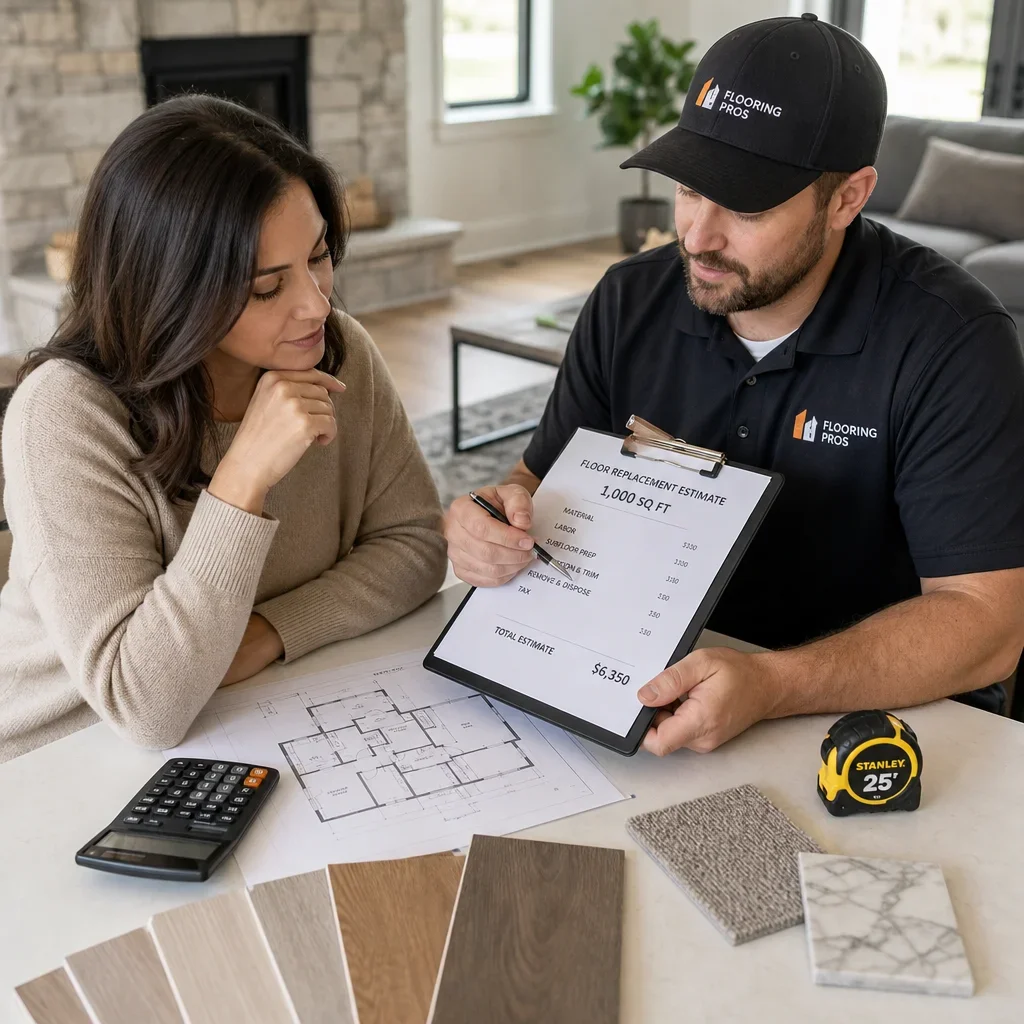
A 1,000 sq.ft. hardwood project is usually priced as material plus labour plus prep plus trim, not as one magic number. Using CanFloor's published starting hardwood price of $3.99 per sq.ft. and a typical straightforward wood-install labour range of $4 to $8 per sq.ft., basic material plus labour starts around $7,990 to $11,990 before prep, trim, and waste allowance.
A 1,000 sq.ft. engineered wood job can start lower on material if the product begins at $2.99 per sq.ft. at CanFloor. Using the same straightforward labour range of $4 to $8 per sq.ft., entry-level material plus labour starts around $6,990 to $10,990 before prep and finishing details.
A 1,000 sq.ft. ceramic tile project can start with lower material but still land high on total cost because labour is heavier. Using typical-market ceramic material of $2 to $8 per sq.ft. and tile labour of $5 to $15 per sq.ft., the broad installed range starts around $7,000 to $23,000 before major leveling, premium tile, or stair work.
A mid-range budget is more realistic than an entry-level formula for whole-home comparisons. Once you include waste, trims, transitions, prep, and contingency, many 1,000 sq.ft. projects land above the bare material-plus-labour math, especially when the layout includes multiple rooms, hallways, closets, or uneven subfloors.
The cheapest overall choice changes by room because water, wear, comfort, and sound matter differently in each space. Bathrooms and laundry rooms usually favour ceramic or porcelain on value because moisture resistance is part of the job, while living rooms and bedrooms often favour engineered or solid wood because comfort and acoustics matter more.
| Room | Lowest upfront cost | Best moisture resistance | Best comfort | Best overall value |
|---|---|---|---|---|
| Bathroom | Ceramic tile | Porcelain tile | Not hardwood | Tile |
| Kitchen | Ceramic tile or entry engineered | Tile | Engineered or hardwood | Split decision by spill risk |
| Entryway | Ceramic tile | Porcelain tile | Engineered | Tile in wet-boot homes |
| Basement | Tile or waterproof alternatives | Tile | Engineered only with caution | Usually not solid hardwood |
| Bedroom | Entry engineered | Not tile-driven | Solid or engineered wood | Wood |
| Living room | Entry engineered | Not tile-driven | Solid or engineered wood | Wood |
| Laundry room | Ceramic tile | Porcelain tile | Not hardwood-led | Tile |
| Open-plan main floor | Engineered in dry zones | Tile in wet zones | Wood | Mixed materials often win |
| Condo/apartment | Engineered often fits better | Tile in wet areas | Engineered | Depends on acoustic rules |
Tile vs hardwood in kitchen is the most debated room because both can work. Tile handles spills and wet boots better, while wood feels warmer, quieter, and easier on the legs during long periods of standing.
Mixing tile and wood across the home is usually a smart design and budget move when transitions are planned well. A practical layout is tile in bathrooms, laundry, and entries, with engineered or solid wood in living spaces and bedrooms.
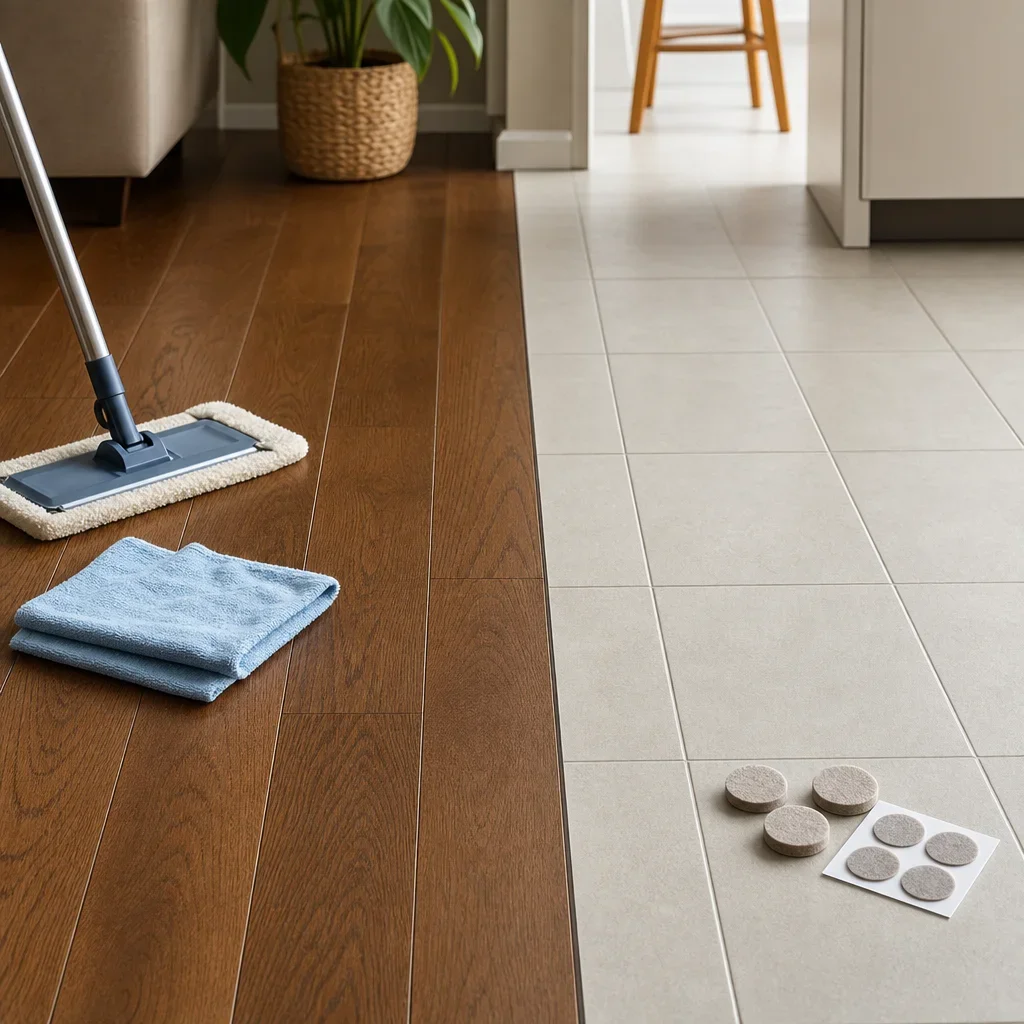
Tile vs hardwood total cost of ownership is different from day-one installed cost because maintenance and repair paths are different. Tile may have lower routine surface maintenance, while hardwood may cost more to protect but can be repaired and refinished instead of fully replaced.
Over about 5 years, most owners spend more time than money on both surfaces if the installation was done well. Tile may need grout cleaning or occasional sealing depending on tile and grout type, while wood needs felt pads, spill control, and finish-friendly cleaning.
Over about 5 to 10 years, hardwood may need more visible surface attention in busy homes. Solid hardwood can often be refinished multiple times over its life, while some engineered wood can be refinished lightly or once, depending on the wear layer and product construction.
Over about 20 years, the floor with the lower lifetime cost depends on whether you value repairability or moisture resistance. A well-kept hardwood floor can last decades and be renewed by refinishing, while ceramic or porcelain tile can also last decades and, in many installations, 50 years or more if the substrate stays stable and the tile remains available for repairs.
The most accurate way to compare tile vs hardwood maintenance cost is to ask what failure you are most likely to face. Grout staining, cracked tile, scratched finish, pet wear, chair wear, humidity movement, and water exposure do not cost the same to fix, and they do not happen in the same rooms.
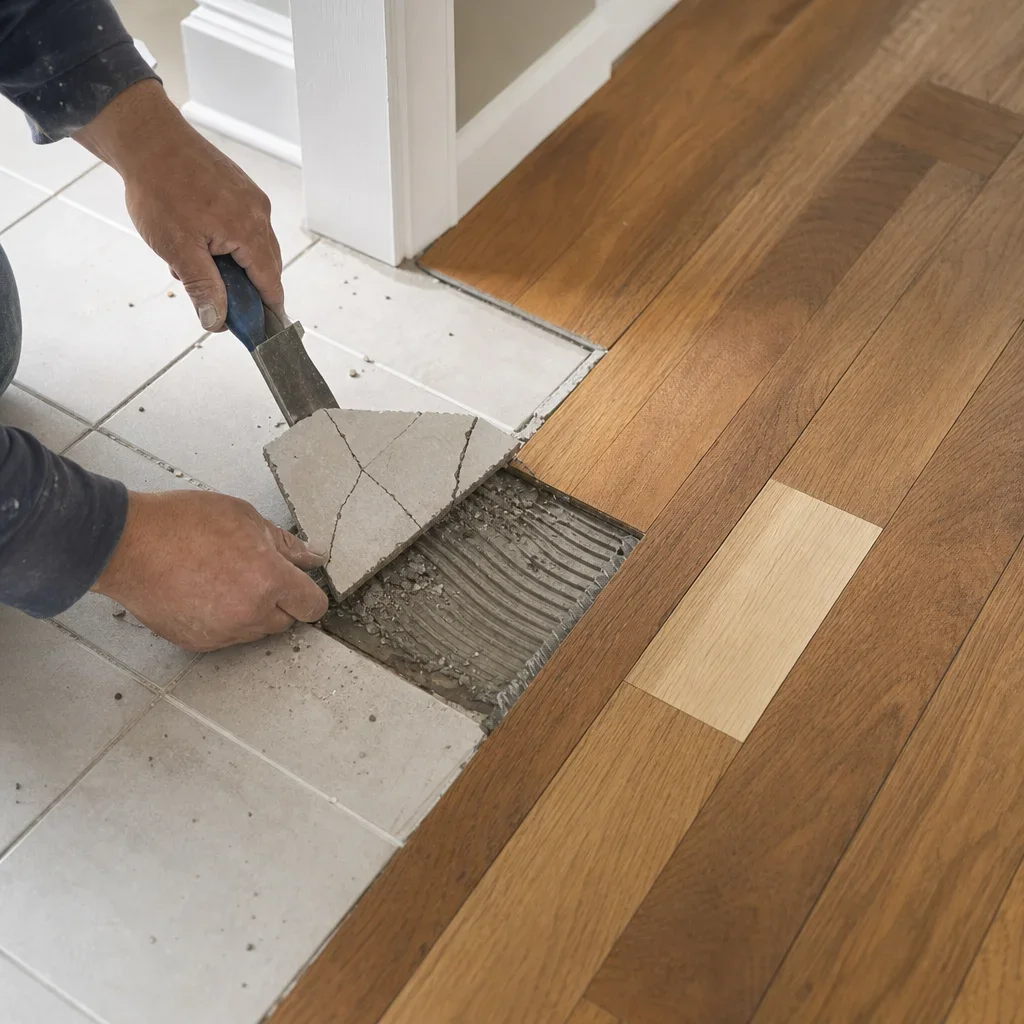
Tile usually lasts longer against water, while hardwood usually wins on repair flexibility. Ceramic and porcelain resist routine moisture better, but a cracked tile can be awkward to replace if matching stock is discontinued; scratched or dented hardwood may be blended, repaired, or refinished depending on severity.
The lifespan of hardwood floors depends on wood species, finish, traffic, humidity control, and whether the floor can be refinished. Solid hardwood commonly lasts for decades and, in many homes, far longer than a single ownership cycle when it is kept in a stable indoor environment.
Engineered wood sits between laminate-like convenience and solid hardwood longevity. Its durability depends on the core construction and the thickness of the real-wood wear layer, which is the top layer that determines whether refinishing is possible.
Tile damage is less frequent from daily scratching but more severe when impact happens. Dropping a heavy object can chip or crack tile, and replacing one tile in the middle of an old floor can be harder than people expect because dye lots, glaze, and size can change over time.
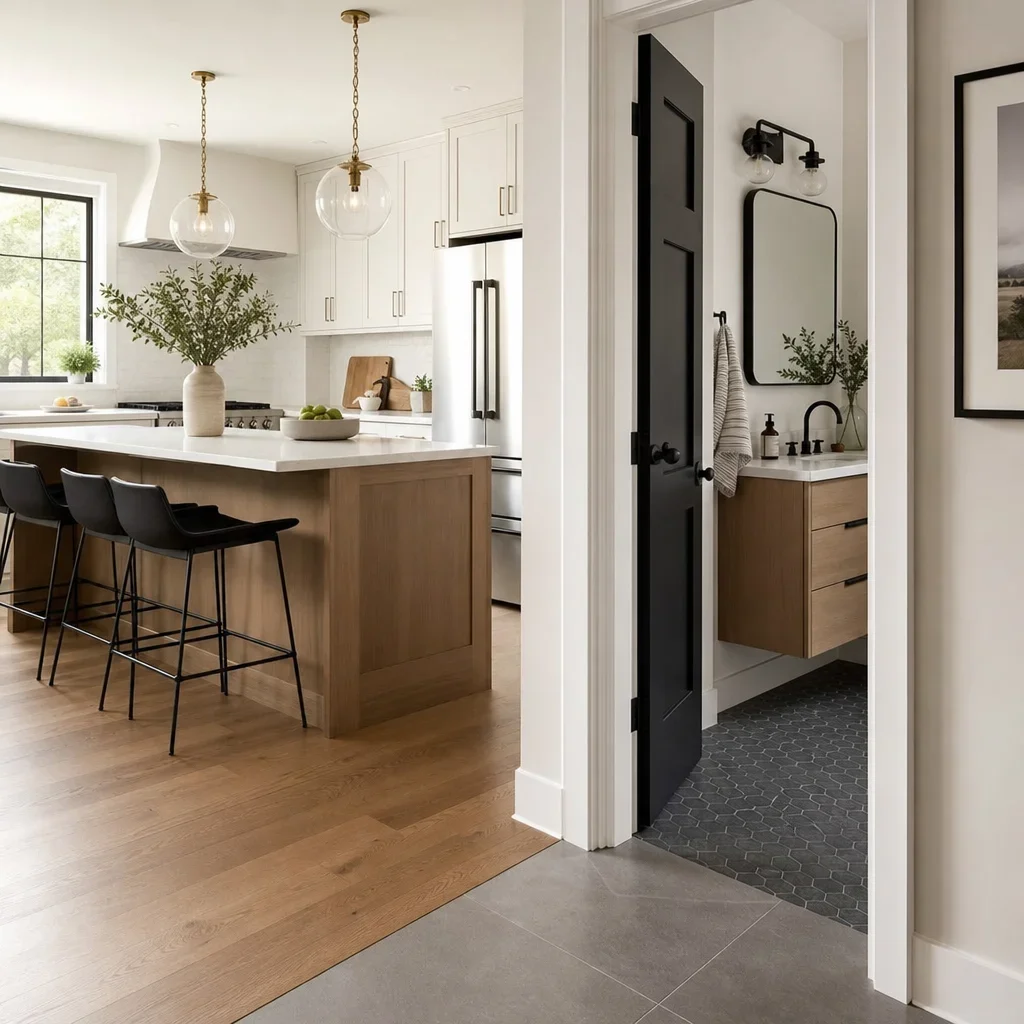
Tile handles moisture better than hardwood. That is the clearest answer in this whole comparison, and it matters most in bathrooms, laundry rooms, entryways, and basements.
Hardwood and standing water do not mix well. Occasional spills wiped quickly are one thing, but repeated splash zones, pet bowls, wet boots, plumbing leaks, and seasonal humidity swings can stain, cup, gap, or warp wood floors.
Engineered wood flooring vs tile cost becomes a room-choice question in kitchens because engineered can make sense where the homeowner wants warmth and wood character but accepts more care. Tile still has the safer edge where water exposure is routine or cleanup is constant.
Basements are a separate category because below-grade spaces carry moisture risk even without obvious leaks. Solid hardwood is usually the riskiest wood option below grade, while tile is more forgiving when the slab and moisture conditions are managed properly.
Indoor humidity matters for wood performance year-round. Hardwood is commonly happiest around 35% to 55% indoor relative humidity, which is one reason Ontario's seasonal swings can affect board movement if the home is too dry in winter or too humid in summer.
Wood usually feels warmer and less fatiguing underfoot, while tile usually feels cooler and harder. That comfort difference is one reason tile vs wood flooring decisions often split by room rather than by house-wide ideology.
Wood is usually quieter in daily living areas, especially when paired with the right underlayment or subfloor assembly. Tile reflects impact sound more because it is hard and dense, which can make open-plan homes and condos sound sharper if the room has few soft surfaces.
Tile noise can be reduced, but not by changing the tile itself after installation. Area rugs, runners, acoustic underlayments where the system allows them, soft furnishings, and better room balance all help reduce echo and footfall noise in large open spaces.
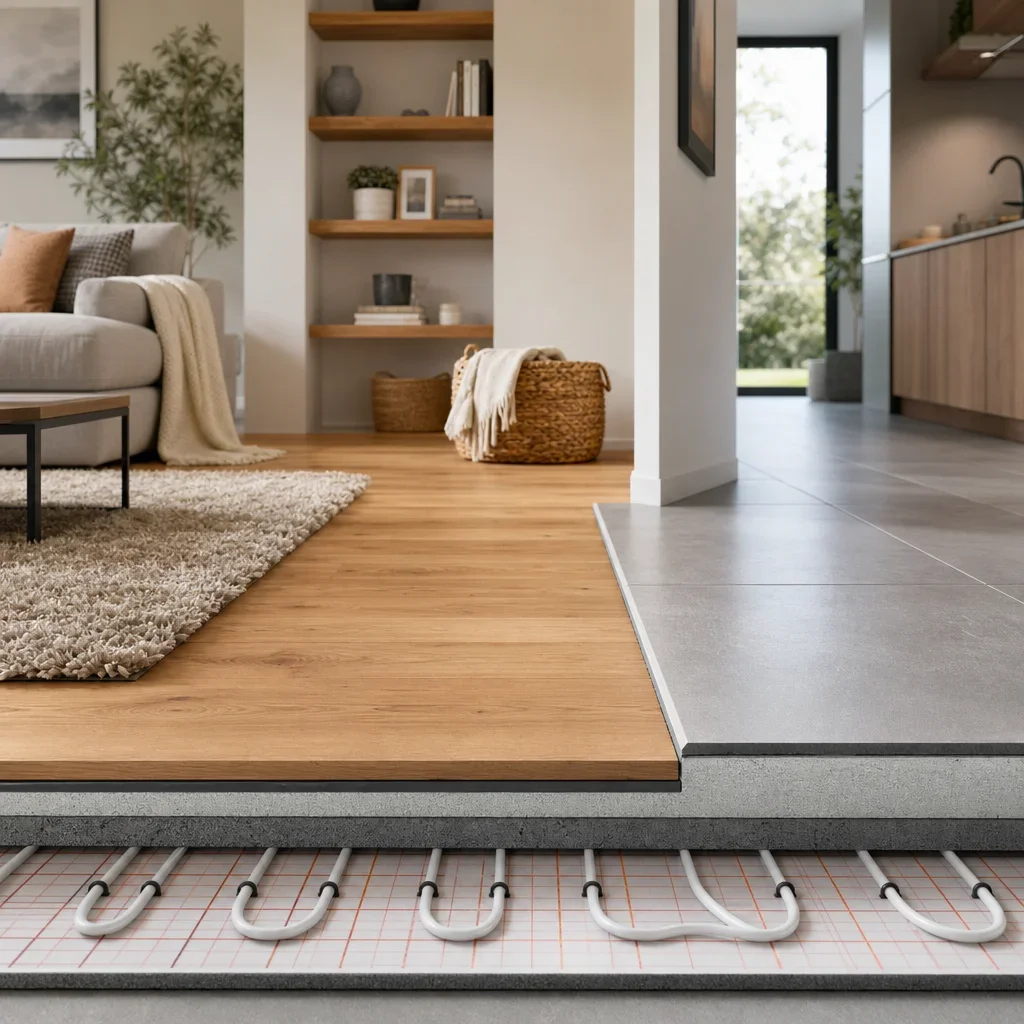
Tile is usually the stronger match for radiant heat because it transfers heat efficiently. Some engineered wood products can also work over radiant systems, but compatibility depends on the specific product and manufacturer instructions rather than a blanket rule.
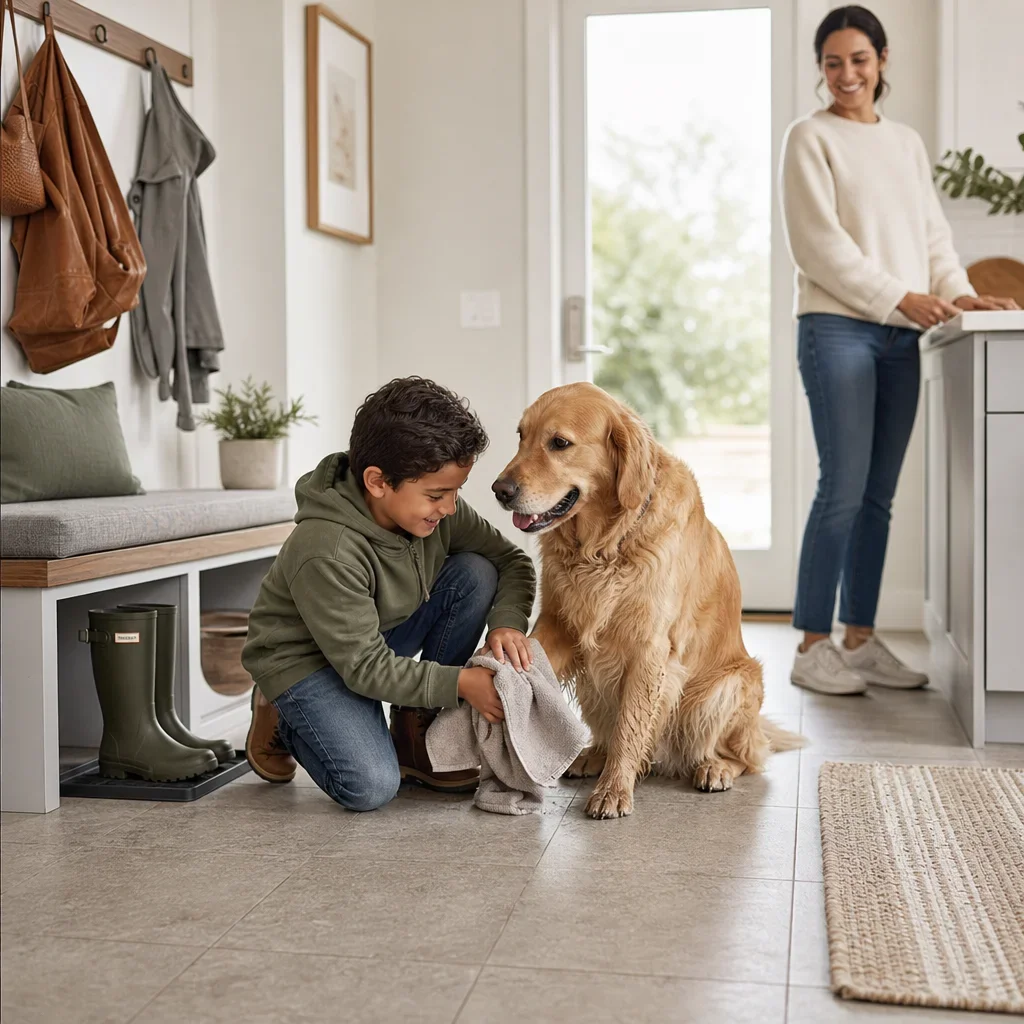
Homes with kids and pets need a floor that balances scratch resistance, traction, cleanup, and impact safety. Tile usually wins on scratch resistance and spill cleanup, while wood usually wins on softness under falls and day-to-day comfort.
No flooring is automatically the healthiest flooring for a home. Low-VOC materials, proper installation, dry conditions, and regular cleaning matter more than broad claims about one surface being universally healthier than another.
Slip resistance depends on finish, not just category. Some polished tile is slick when wet, some textured tile is grippier, and wood traction changes with finish sheen, cleaning residue, and footwear.
Hardness cuts both ways for children and older adults. Tile is durable but less forgiving in a fall, while wood is usually gentler on joints and dropped items but can still be slippery if the finish is glossy or the floor is dusty.
Hardwood vs tile resale value usually favours real wood in main living areas, but not in every room. Many buyers still respond well to wood floors in living rooms, dining rooms, and bedrooms, while bathrooms, laundry rooms, and practical entry spaces are often expected to have tile or another moisture-tolerant surface.
The floor that adds the most value is usually the one that suits the room and looks consistent with the home. A beautiful hardwood main floor can help resale appeal, but the wrong choice in a wet area can work against value if buyers see wear, swelling, or poor transitions.
Flooring trends for 2026 will matter less than timeless choices made room by room. Natural wood visuals, matte finishes, lighter-to-medium tones, and cleaner grain patterns are safer long-term bets than shiny orange tones, busy patterns, or abrupt room-to-room changes that make the house feel dated.
What makes a home look outdated is usually inconsistency more than age. Mismatched transitions, over-glossy finishes, worn grout, obvious water damage, and flooring that ignores how the room is used will date a home faster than choosing a classic material well.
Ceramic tile is strongest where water, dirt, and heavy traffic are part of daily life. Its main drawbacks are the hard feel underfoot, colder surface temperature, grout maintenance, and the risk of cracking from impact.
Ceramic tile pros
Ceramic tile cons
Porcelain tile is usually the tougher, denser tile option, but it often costs more than ceramic. That makes porcelain tile vs hardwood flooring cost a better comparison for premium wet-area projects than for budget remodels.
Porcelain tile pros
Porcelain tile cons
Engineered wood gives you a real-wood surface with a lower starting price than many solid hardwood options. Its main limitation is that not every product can be refinished the same way, so the construction matters as much as the colour.
Engineered wood pros
Engineered wood cons
Solid hardwood is the premium classic for dry living spaces and long-term resale appeal. Its biggest disadvantages are moisture sensitivity, scratching, denting, and the higher cost of better species or wider boards.
Solid hardwood pros
Solid hardwood cons
The best-value floor depends on what you are trying to optimize. If the goal is the lowest upfront cost in a wet room, ceramic usually leads; if the goal is balanced comfort and price across a main floor, engineered wood is often the middle ground; if the goal is premium resale appeal in dry living areas, solid hardwood usually earns its place.
| Budget level | Lowest upfront cost | Best moisture resistance | Best comfort | Best resale appeal | Best long-term flexibility |
|---|---|---|---|---|---|
| Low | Ceramic tile | Ceramic tile | Entry engineered | Limited | Ceramic in wet areas, engineered in dry rooms |
| Mid-range | Engineered wood or ceramic by room | Porcelain in wet zones | Engineered wood | Engineered wood | Mixed-material plan |
| Premium | Premium ceramic or porcelain | Porcelain tile | Solid hardwood | Solid hardwood | Solid hardwood in living spaces, tile in wet zones |
Wood-look tile cost compared with hardwood can make sense if you want a wood visual in a kitchen, basement, or wet entry. It usually gives you the moisture edge of tile, but it will not feel or sound like real wood once you live with it.
The right floor starts with the room, not the trend. Compare moisture exposure, subfloor condition, noise, comfort, maintenance tolerance, resale goals, and whether you want one continuous look or a smarter mix of surfaces.
Samples decide more projects than online photos do. Colour, gloss, texture, board width, grout line visibility, and the way light hits the floor can completely change which option looks right in your home.
A simple buyer checklist keeps the decision practical:
If you are comparing wood options in the GTA, seeing hardwood and engineered samples side by side helps. CanFloor's North York showroom can help homeowners and renovators compare room-by-room choices, installation needs, stairs, and financing options like Affirm, subject to current availability.
Usually on material, yes. Typical-market ceramic tile often starts around $2 to $8 per sq.ft., while CanFloor lists hardwood from $3.99 per sq.ft., but installed totals can overlap because tile labour is often higher.
Porcelain usually costs more than ceramic on material. Typical-market ceramic often falls around $2 to $8 per sq.ft., while porcelain often runs around $4 to $12 per sq.ft..
Using CanFloor's starting hardwood price of $3.99 per sq.ft. and a typical straightforward labour range of $4 to $8 per sq.ft., basic material plus labour starts around $7,990 to $11,990 before prep, trims, and other add-ons.
Sometimes, but not automatically. Wood-look tile material can be competitive with hardwood, yet tile labour often stays higher, so you need to compare the full installed quote rather than the carton price.
Tile usually wins on water resistance and long service life, while hardwood wins on renewability because it can often be refinished. Both can last decades when installed and maintained properly.
Tile is better for moisture and cleanup. Hardwood or engineered wood is better for warmth, comfort, and noise. Tile vs hardwood in kitchen comes down to whether spills or comfort matter more in that household.
The main drawbacks are the hard, cool feel underfoot, grout upkeep, and the chance of cracks from impact. Installation can also be labour-heavy compared with some wood floors.
Hardwood often has broader resale appeal in main living areas, while tile is usually expected in wet rooms. The better value is the material that fits the room and still looks right years later.
Yes, it often is. CanFloor lists engineered wood from $2.99 per sq.ft., compared with hardwood from $3.99 per sq.ft., though product quality and installation method still affect the final number.
Usually yes. Mixing tile in wet or high-dirt areas with engineered or solid wood in living spaces is one of the most practical ways to balance budget, comfort, and durability.
Compare the total installed cost, not just the material tag. That one step usually leads to the better floor.