
For a quicker response, please send all inquiries
via info@canfloor.com or
text to
416-735-0075.
| Monday - Friday | 10:00 am - 7:00 pm |
| Saturday & Sunday | 10:30 am - 4:00 pm |
The better floor is usually the one that fits the room, not the one that wins online arguments. In a ceramic tile vs engineered hardwood comparison, ceramic tile usually makes more sense in wet, spill-prone spaces, while engineered hardwood usually feels better and looks warmer in living areas.
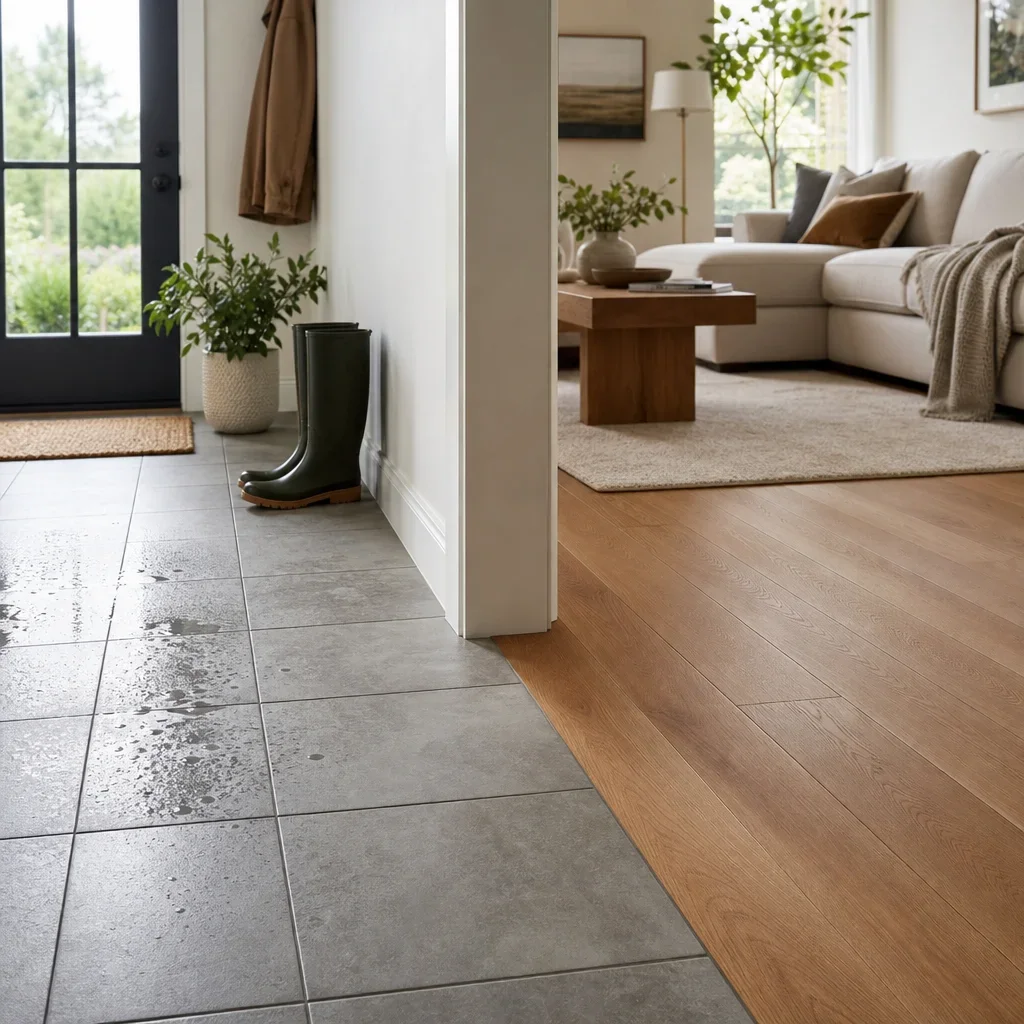
Ceramic tile is usually the safer pick for moisture, while engineered hardwood is usually the better pick for comfort and real-wood character. Ceramic stands up better to water, frequent mopping, and messy entry conditions; engineered hardwood flooring feels warmer, sounds softer, and gives you a real hardwood surface instead of a printed look.
Choose ceramic tile if standing water, wet shoes, laundry splashes, or bathroom use are part of daily life. Choose engineered hardwood if the room is mostly dry and you care more about warmth underfoot, visual continuity, and a less echo-prone feel.
| Factor | Ceramic Tile | Engineered Hardwood |
|---|---|---|
| Moisture resistance | Better for wet rooms | Better only in controlled, drier rooms |
| Underfoot feel | Harder and cooler | Warmer and more forgiving |
| Surface look | Clean, crisp, stone or wood-look options | Real wood top layer |
| Maintenance | Easy surface cleaning, grout needs attention | Easy daily care, water must stay limited |
| Damage pattern | Can chip or crack from impact | Can scratch, dent, or react to standing water |
| Installation | More labour-intensive | Often faster, depending on system |
| Repairability | Single cracked tile can be replaced, colour match may vary | Single boards may be replaced, refinishing depends on wear layer |
| Best rooms | Bathrooms, laundry, mudrooms, some kitchens | Living rooms, bedrooms, dining rooms, dry kitchens |
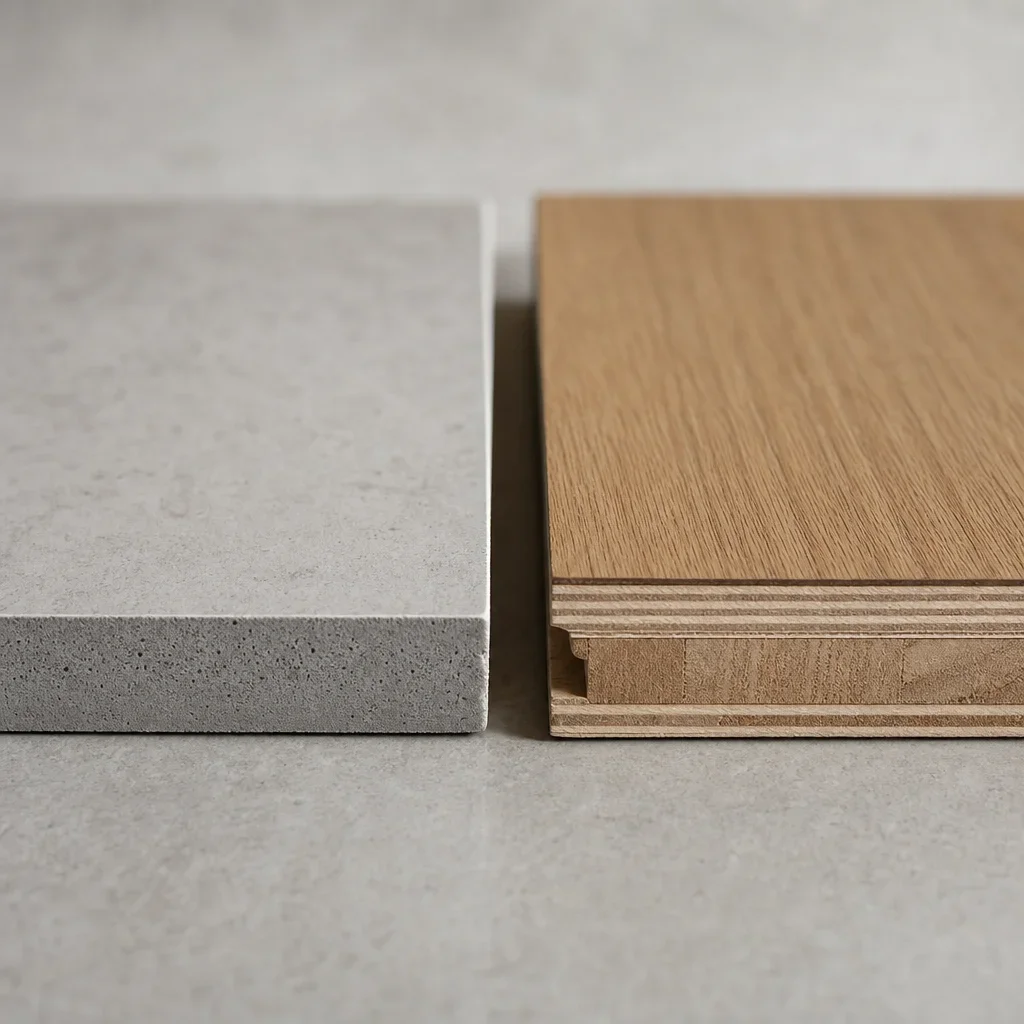
Ceramic tile is a hard-fired surface made from clay-based materials, while engineered hardwood is a layered wood floor with a real hardwood top layer over a more stable core. That construction difference is the whole reason these floors behave differently in moisture, temperature, comfort, and wear.
Engineered hardwood is typically built in multiple layers, often 3 to 7 layers depending on the product. The face is real wood, while the core is commonly plywood or high-density fibreboard, and that layered build helps it handle seasonal movement better than solid hardwood. This page compares ceramic tile vs engineered hardwood specifically, not ceramic versus solid hardwood.
Porcelain tile is not the same as ceramic tile, even though people use the terms together. Porcelain is generally denser and less absorbent than standard ceramic, and porcelain tile is commonly defined as having water absorption of 0.5% or less. If you are comparing a bathroom or basement floor, that distinction matters.
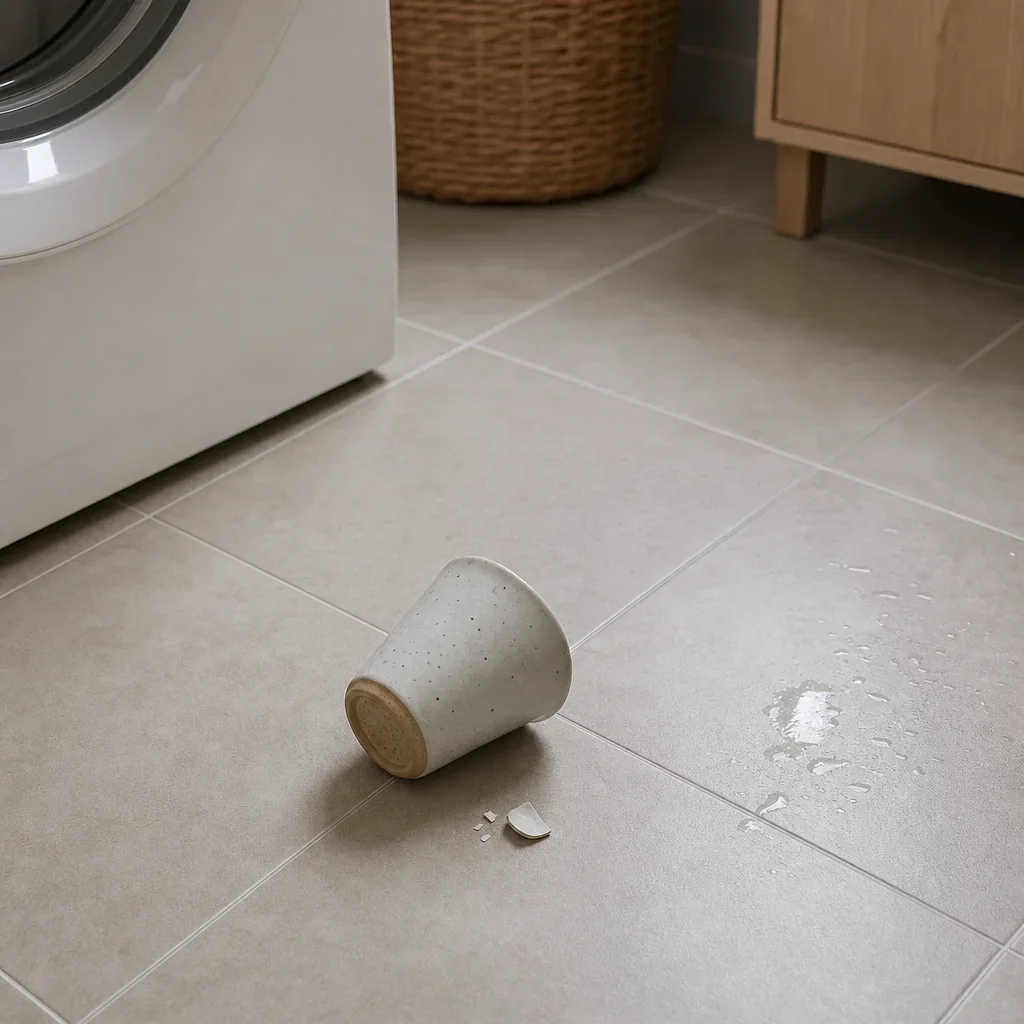
Ceramic tile wins when moisture control and easy surface cleanup matter more than softness. It is a strong fit for bathrooms, laundry rooms, entry areas, and homes where muddy shoes, pet bowls, and spills are routine.
The main advantages are moisture resistance, easy wipe-clean maintenance, strong wear performance, and a wide range of looks. Ceramic can mimic stone or wood visuals, and it works well in rooms where you want a durable, hard surface instead of a warm wood feel.
The main drawbacks are comfort and impact sensitivity. Ceramic tile feels harder and cooler underfoot, grout lines can stain or darken over time, and heavy impact can chip a tile or crack it if something hard drops in the wrong spot.
Slip resistance depends on the tile and finish, not just the material name. A glossy tile can feel slicker than a matte or textured one, so in kitchens, bathrooms, and entryways, the surface finish matters as much as the category.
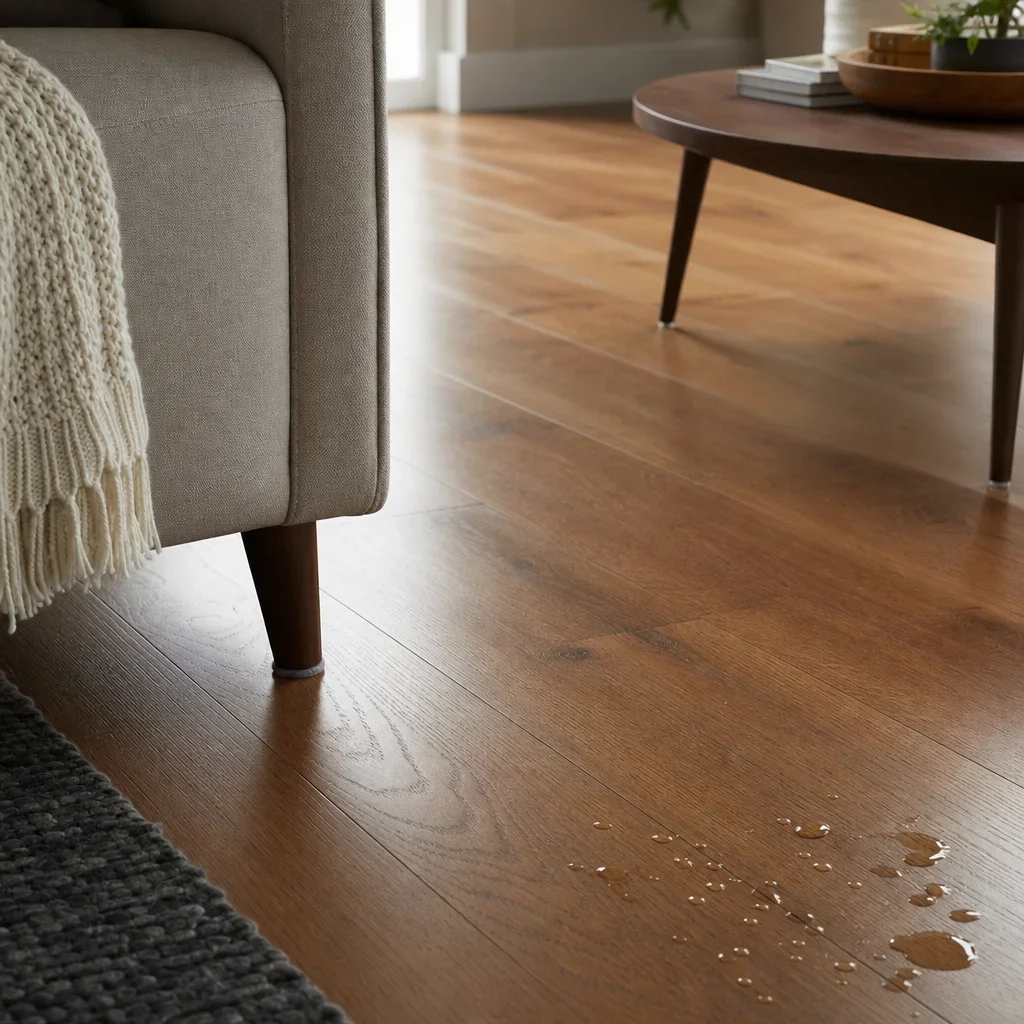
Engineered hardwood is usually the better answer when you want real wood, a warmer feel, and a softer daily experience. It suits living rooms, bedrooms, dining rooms, and many open-concept main floors where comfort and style matter more than maximum water resistance.
The biggest advantage is that the top layer is real hardwood, not a printed image. That gives engineered wood flooring a more natural grain, depth, and variation than most look-alike surfaces, and it usually feels less cold and less harsh than tile.
The biggest disadvantage is water. Engineered hardwood is more dimensionally stable than solid hardwood, but it is still not a waterproof floor, and standing water can stain, swell, cup, or damage boards and edges. That is why I would not treat it as a blanket choice for bathrooms or damp basements.
Refinishing depends on the wear layer, not the label. Some engineered floors can be refinished once or twice, while thinner wear-layer products may allow little or no sanding. That is a product-by-product question, not a category promise.
You can mop an engineered floor only with limited moisture and only if the manufacturer allows it. A damp microfiber mop is commonly acceptable, but wet mopping, steam mops, and pooled water are common ways people shorten the life of a wood floor.
The cheaper floor upfront depends on the product level and the labour, not just the shelf tag. In ceramic tile vs engineered hardwood cost comparisons, tile materials can be affordable, but tile labour is often higher because prep, layout, cutting, setting, grouting, and cure time add work.
Engineered hardwood also spans entry-level to premium, and installation cost changes with the method and subfloor. Floating floors are often simpler than glue-down installations, while tile usually demands flatter prep and more skilled finishing to avoid lippage and uneven joints.
Long-term value depends on where the floor goes. Tile can offer better value in wet areas because it lowers the risk of water-related damage, while engineered hardwood may offer better value in living spaces where buyers want the look and feel of real wood.
If you are comparing product categories only, CanFloor lists engineered wood from $2.99 per square foot. That is a starting product figure for its own engineered category, not a full installed ceramic tile vs engineered hardwood price comparison, and installed costs still depend on product grade, layout complexity, subfloor prep, transitions, trim, and room size.
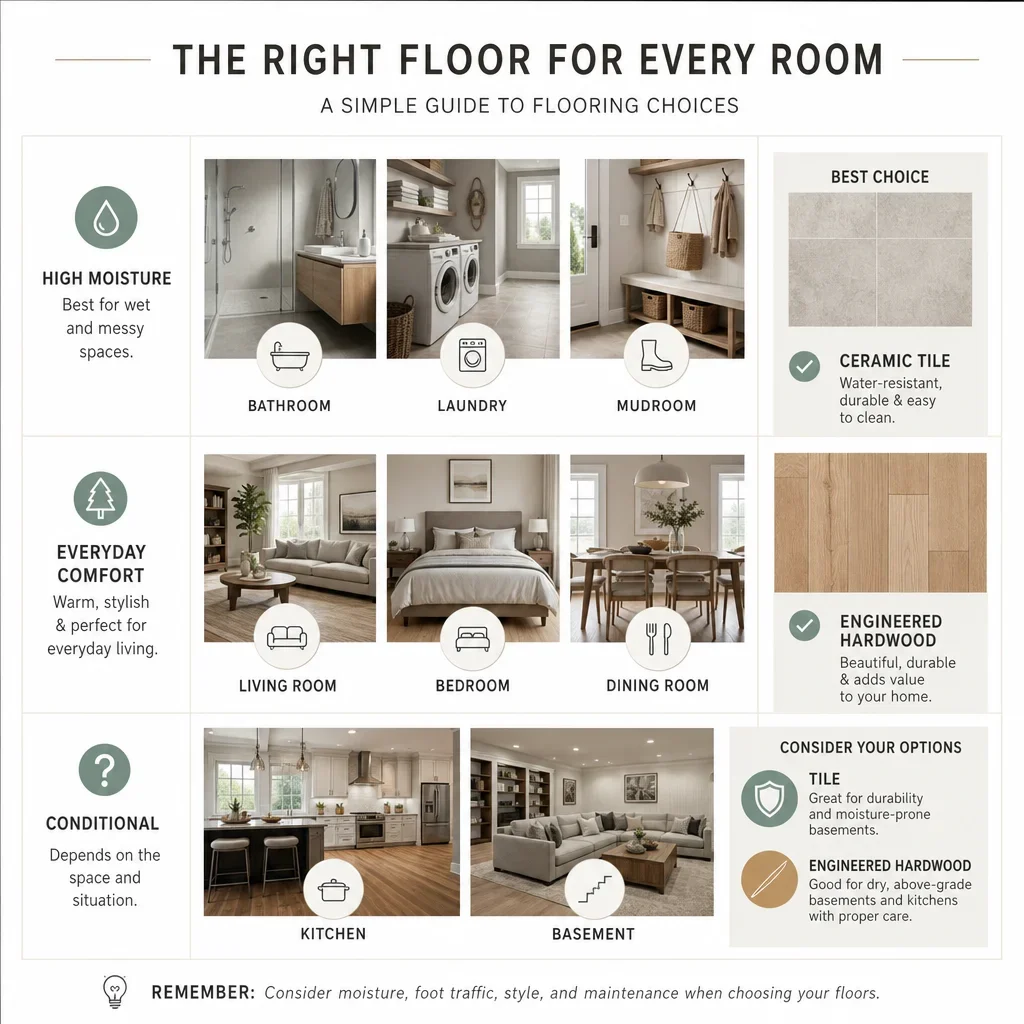
The best room-by-room answer is simple: tile for frequent water, engineered hardwood for dry comfort-focused spaces. When people ask about tile vs engineered hardwood in kitchen layouts or whole-home projects, room conditions decide faster than style boards do.
| Room | Better Bet | Why |
|---|---|---|
| Kitchen | Depends on spill level | Tile for heavy spills; engineered for warmth and open-concept flow |
| Bathroom | Ceramic tile | Better for daily water exposure |
| Laundry room | Ceramic tile | Better for splashes and appliance risk |
| Basement | Depends on moisture control | Tile is safer if dampness is a concern |
| Entryway / mudroom | Ceramic tile | Better for slush, salt, and wet shoes |
| Living room | Engineered hardwood | Warmer look and feel |
| Bedroom | Engineered hardwood | Quieter, softer, warmer underfoot |
| Dining room | Engineered hardwood | Better visual continuity with main living spaces |
| Condo over concrete | Depends on system and building rules | Both can work with the right assembly |
Kitchens are the true split decision. If your kitchen sees lots of spills, kids, pets, and constant cleanup, tile usually wins; if you want the same wood look flowing from kitchen into dining and living space, engineered hardwood can work well when spills are cleaned quickly and moisture stays controlled.
Bathrooms and laundry rooms lean strongly toward ceramic tile because water exposure is routine, not occasional. Engineered hardwood can sometimes be used in powder rooms with careful habits, but I would not treat that as a default recommendation.
Basements depend on moisture testing, humidity, and the condition of the concrete slab. If the basement is below grade and has any history of dampness, tile is usually the safer path; engineered hardwood over concrete needs the right product, the right underlayment or adhesive system, and a dry, tested slab.
Living rooms and bedrooms are where engineered hardwood usually earns its keep. The warmer feel, lower visual hardness, and real wood surface are exactly what many homeowners want in the rooms they use to relax.
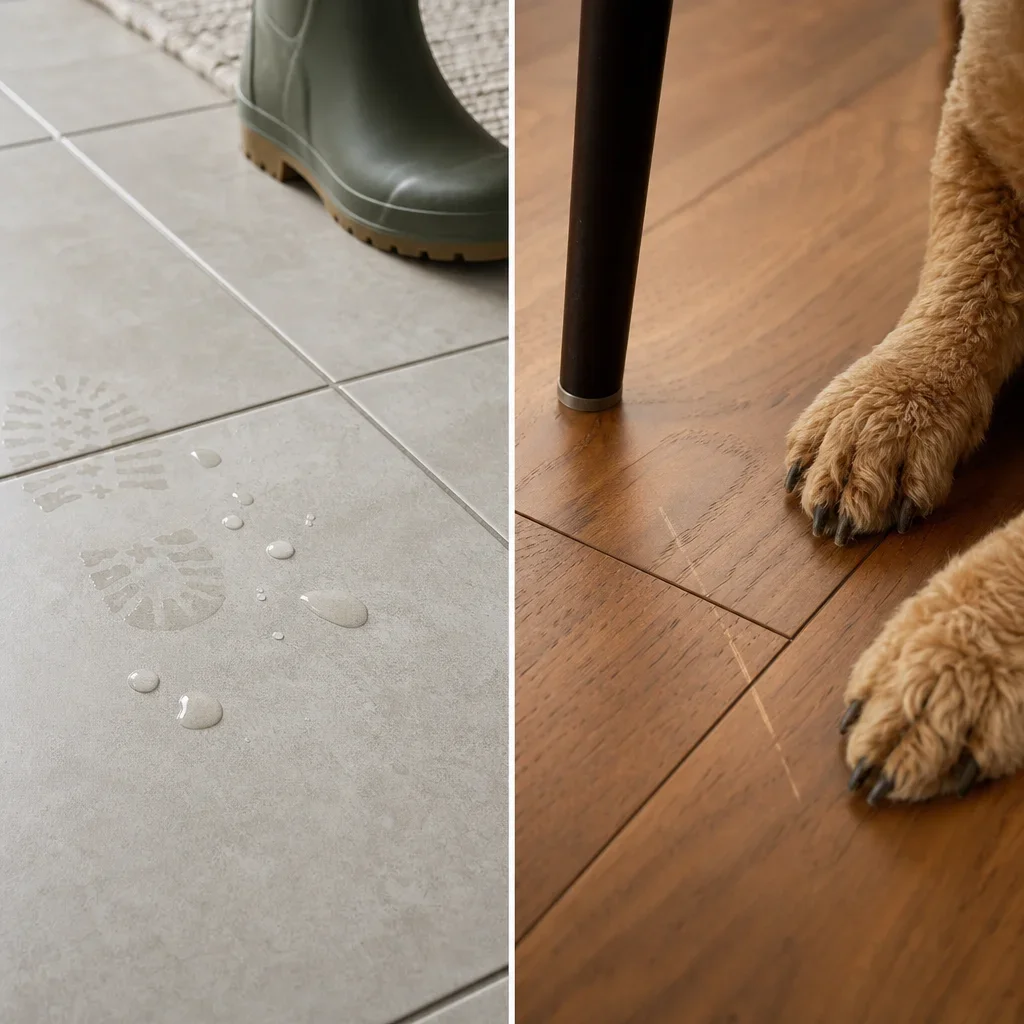
Ceramic tile handles water better, while engineered hardwood usually handles dropped-body comfort better. That sounds obvious, but it is the practical answer for busy family homes.
For moisture resistance, tile is the clearer winner. Water on the surface is usually less risky for ceramic tile than for engineered hardwood, although grout and substrate details still matter in wet assemblies.
For impact and wear, the damage pattern is different rather than universally better. Tile resists scratches well, but it can chip or crack from a heavy dropped object; engineered hardwood is less likely to crack from impact, but pet nails, chair legs, and grit can scratch or dent the finish.
For homes with kids and pets, the right answer depends on the kind of abuse the floor sees. If the issue is spilled water bowls, winter slush, and constant wiping, tile is easier to live with; if the issue is hard falls, long standing time, and wanting a less harsh floor in family rooms, engineered hardwood often feels better day to day.
This is a useful troubleshooting snapshot:
| Issue | Ceramic Tile | Engineered Hardwood |
|---|---|---|
| Scratches | Usually less visible on the tile surface | More likely over time |
| Dents | Not typical | Possible from furniture or impact |
| Chips | Possible on impact | Edge damage can happen, but not like tile chips |
| Cracks | Possible from impact or substrate movement | Boards do not crack the same way, but can cup or swell |
| Water exposure | Surface usually tolerates it better | Must be cleaned quickly |
| Stained joints / seams | Grout can discolour | Board joints can darken if moisture gets in |
| Local repair | Replace a tile if matching is available | Replace boards if the system allows |

Engineered hardwood usually feels warmer, quieter, and easier on the body than ceramic tile. That is a big reason people choose it in bedrooms, living rooms, and whole-home main floors.
Ceramic tile tends to feel cooler because it is dense and conducts heat away from your feet faster than wood does. Engineered hardwood feels less cold and less rigid, which matters if you stand for long periods in the kitchen or have kids playing on the floor.
Sound control usually favours engineered hardwood, especially with a good underlayment. Tile can sound harder and more echo-prone because it is a rigid surface, while wood systems often absorb more footfall noise depending on the assembly.
Slipperiness is finish-dependent, not absolute. A polished tile can be slick, but some wood finishes can also feel slippery with socks, so you want to judge the actual surface texture, not just the category name.
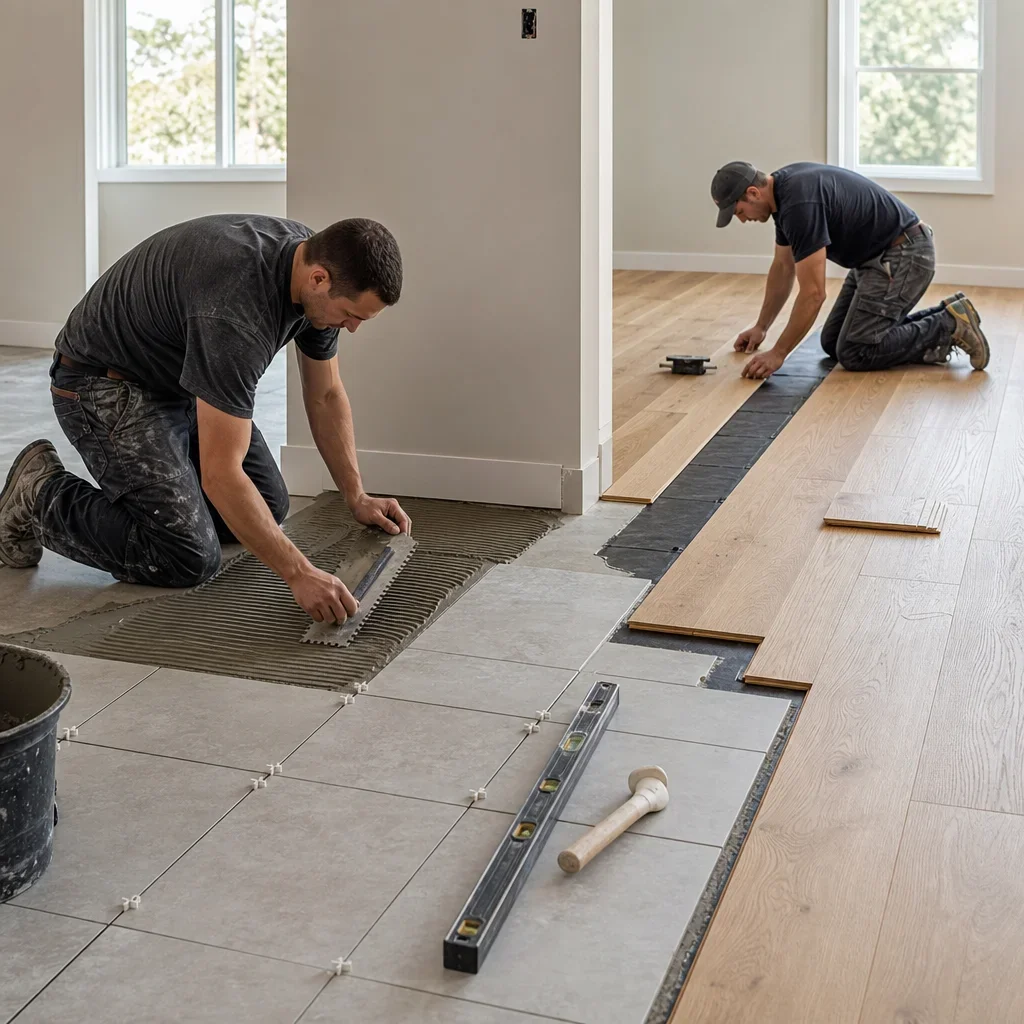
Engineered hardwood is usually easier and faster to install than tile, but only when the subfloor is suitable and the product is made for the method. Installation is where many ceramic tile vs engineered hardwood pros and cons become real costs.
Engineered hardwood commonly installs as floating, glue-down, or nail-down depending on the product and subfloor. Nail-down is usually for wood subfloors, glue-down is common over concrete and some wood subfloors, and floating systems are popular for faster installs in the right conditions.
Tile installation usually involves subfloor preparation, underlayment or membrane as needed, mortar, layout, cutting, setting, grouting, and cure time. That is why tile labour is often higher and why DIY results can go wrong if the floor is not flat enough or the layout is rushed.
Over concrete, both floors can work, but the prep rules are different. Tile needs a stable, suitable substrate and crack-isolation thinking where needed, while engineered hardwood over concrete depends on moisture testing and a system approved for that slab.
Radiant heat can work with both categories, but it is never a blanket yes. Tile is widely used over radiant systems because it transfers heat efficiently, while engineered hardwood may also work if the specific product and the heating system are approved together by the manufacturer.
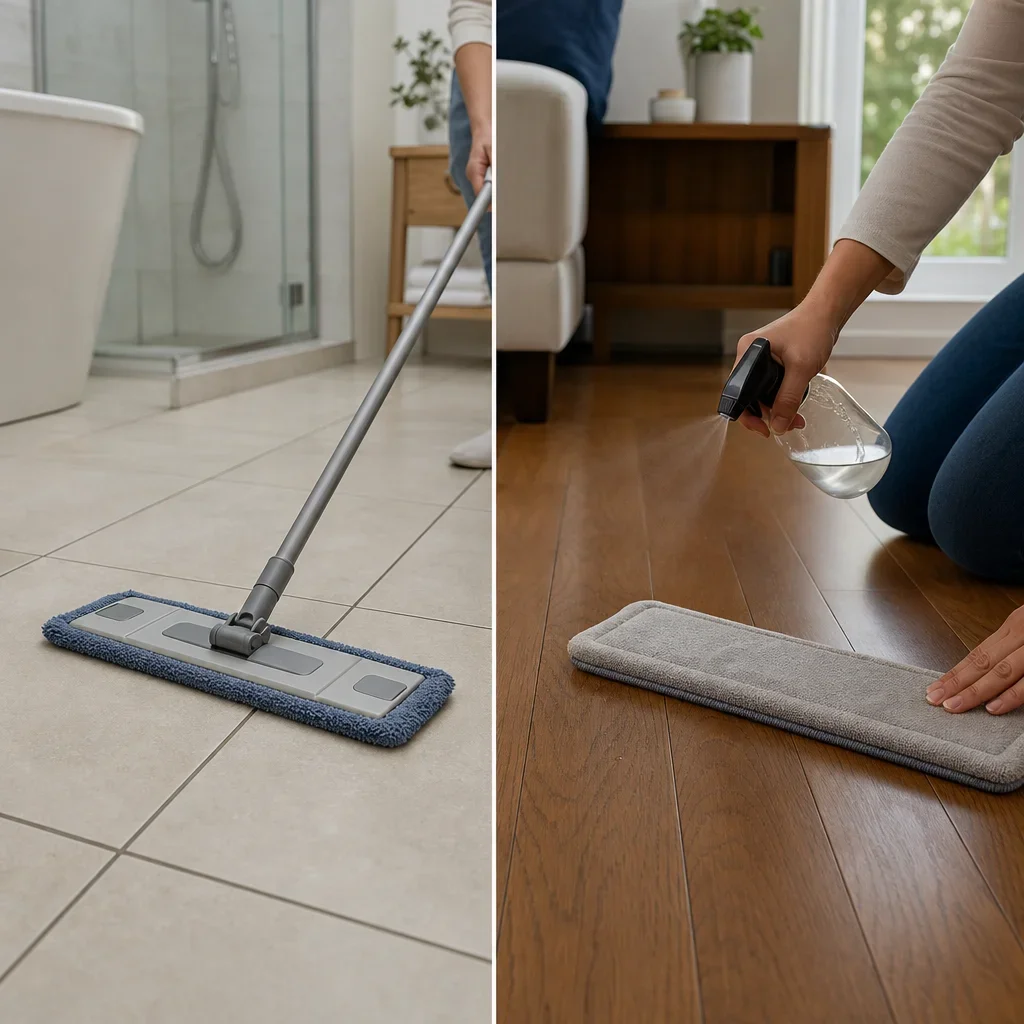
Ceramic tile is easier to clean with water, while engineered hardwood is easier to keep looking warm and natural in dry rooms. The maintenance difference is less about effort and more about what each floor tolerates.
Tile handles routine wiping and mopping well, but grout lines need more attention than many buyers expect. Depending on the grout and installation, sealing may be recommended, and stained grout can make a floor look older even when the tile itself is fine.
Engineered hardwood should be cleaned with controlled moisture, not soaked. For anyone asking can you mop an engineered floor, the safe general answer is a lightly damp microfiber mop with a manufacturer-approved cleaner, not a wet mop and not steam.
These daily-use rules keep the floor looking better longer:
Ceramic tile do's and don'ts
Engineered hardwood do's and don'ts
High-end homes usually mix materials instead of forcing one floor into every room. Real wood or quality engineered hardwood often carries the main living spaces, while tile is commonly used in bathrooms, entries, laundry rooms, and some kitchens.
The floor that never goes out of style is usually the one that looks natural and fits the house. Neutral to medium wood tones, matte finishes, and cohesive room-to-room transitions age better than heavy gloss, overly busy patterns, or abrupt material changes with no design reason.
For 2026, the strongest flooring trends still lean toward natural-looking surfaces, wider planks, and lower-sheen finishes. That does not make tile outdated at all; it just means wood-look continuity remains popular in main living areas, while clean, matte tile continues to hold its place in wet rooms.
What feels outdated is usually not the category but the execution. Very shiny finishes, loud patterns used everywhere, and flooring choices that fight the home's style tend to date faster than well-chosen wood or tile.
The healthiest flooring choice is usually the one that stays clean, manages moisture well, and comes from products with emissions information you can verify. Health claims should stay practical, not dramatic.
Tile can be a strong choice for easy cleaning and moisture management because it is a hard, wipeable surface. Engineered hardwood can also be a good indoor choice when the product and finish meet the emissions standards you are comfortable with, but certification claims should be checked on the exact product, not assumed by category.
Laminate usually enters the conversation when budget comes first and moisture exposure is moderate, not extreme. In a ceramic tile vs engineered hardwood vs laminate comparison, laminate is often the value play, engineered hardwood is the real-wood play, and ceramic tile is the moisture-first play.
Laminate can deliver a convincing wood look at a lower starting material cost, and CanFloor lists laminate from $1.69 per square foot. It is still a different category from engineered hardwood because it does not have a real wood top layer, and repair and moisture behaviour vary a lot by product.
If you want the warmth of wood at a lower entry price, laminate may deserve a look. If you want a real wood surface, engineered hardwood stays in a different lane; if you want the strongest answer to routine water, ceramic tile usually stays ahead.
The best shortlist starts with room risk, not colour. If the space sees standing water, frequent splashes, wet boots, or below-grade moisture concerns, ceramic tile moves to the front fast.
If comfort, warmth, and real-wood appearance matter most, engineered hardwood usually makes more sense in dry areas. That is especially true in bedrooms, living rooms, dining spaces, and open-concept layouts where you want a softer visual flow.
Use this quick decision tree:
The final filter should be in-person sampling. Colour, texture, sheen, board width, grout line size, and edge detail can change the decision once you see them in real light.
Ceramic tile is better for wet rooms and spill-prone spaces. Engineered hardwood is usually better for dry living areas where warmth, comfort, and a real wood look matter more.
Ceramic tile is better around water, but it is not automatically better everywhere. Hardwood-type floors usually feel warmer and more comfortable in living rooms and bedrooms.
The main disadvantages are that it feels hard and cool, grout needs maintenance, and tiles can chip or crack from impact.
The main disadvantage is moisture sensitivity. It can also scratch or dent, and refinishing options depend on the wear layer.
Yes, but only with limited moisture and only if the manufacturer allows it. A lightly damp microfiber mop is the safe general approach.
Tile is better for heavy-spill kitchens. Engineered hardwood can be better in dry, open-concept kitchens where warmth and visual continuity matter more.
Sometimes, but with real limits. Bathrooms and damp basements are not the default use case, and moisture testing and product approval matter.
Ceramic tile does. Engineered hardwood handles humidity changes better than solid hardwood, but it is still not a waterproof floor.
Either one can be cheaper depending on the product tier and the labour. Tile labour is often higher, while engineered hardwood installation can be simpler on the right subfloor.
Porcelain is generally denser and less absorbent than standard ceramic. That makes it a common step-up option for harder-use or wetter applications.
Many high-end homes use real wood or engineered hardwood in main spaces and tile in baths, entries, and utility zones.
Natural-looking wood tones and well-chosen neutral tile stay current longer than trend-heavy finishes.
If you are planning a whole-home project, the smartest answer is often not one material everywhere. It is using engineered hardwood where warmth matters and choosing a more water-tolerant surface where the room demands it. If you want to compare engineered hardwood samples in person and talk through room conditions, subfloor, and budget, a visit to the North York showroom is a practical next step.