
For a quicker response, please send all inquiries
via info@canfloor.com or
text to
416-735-0075.
| Monday - Friday | 10:00 am - 7:00 pm |
| Saturday & Sunday | 10:30 am - 4:00 pm |
The best waterproof engineered hardwood flooring is rarely the one with the biggest marketing claim. It is the product that fits your room, subfloor, traffic, and tolerance for moisture, while still giving you the real-wood look that makes best waterproof engineered hardwood flooring different from vinyl or laminate.
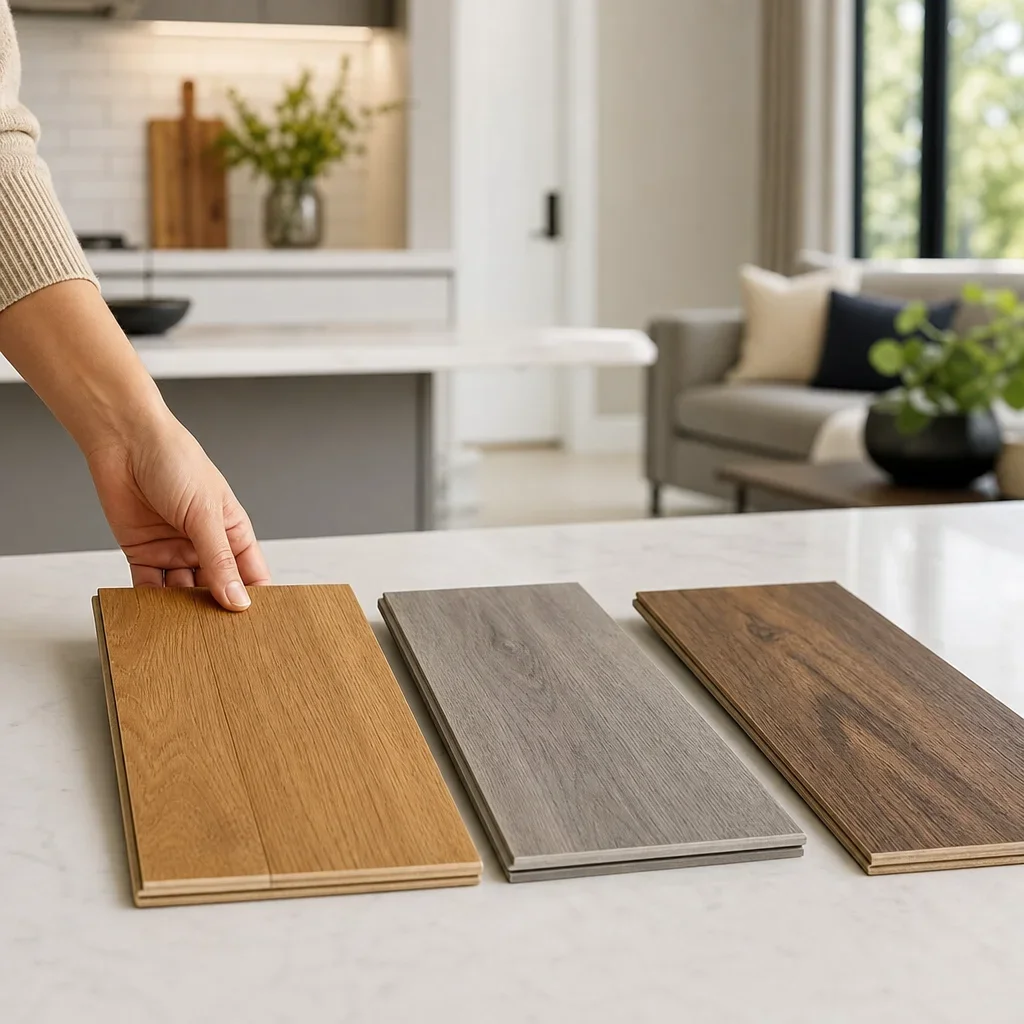
The best waterproof engineered flooring for most homes is the one that balances a real wood surface with realistic moisture protection, not the one that promises impossible performance. Waterproof engineered wood flooring is usually built with a real wood wear layer over a more moisture-resistant core, and that makes it a better fit than traditional solid hardwood where spills are part of daily life.
The most waterproof engineered hardwood flooring is still not the most waterproof flooring category overall. If your first priority is surviving repeated splashes, pet accidents, or bathroom water exposure, vinyl is usually the stronger category because SPC and other vinyl products are commonly sold as 100% waterproof, while real wood products need tighter conditions.
The better decision rule is simple: choose category first, then collection. Buyers who want authentic wood grain, warmer underfoot feel, and a higher-end look often land on waterproof engineered hardwood, while buyers who want maximum water tolerance usually end up comparing it against luxury vinyl plank instead.
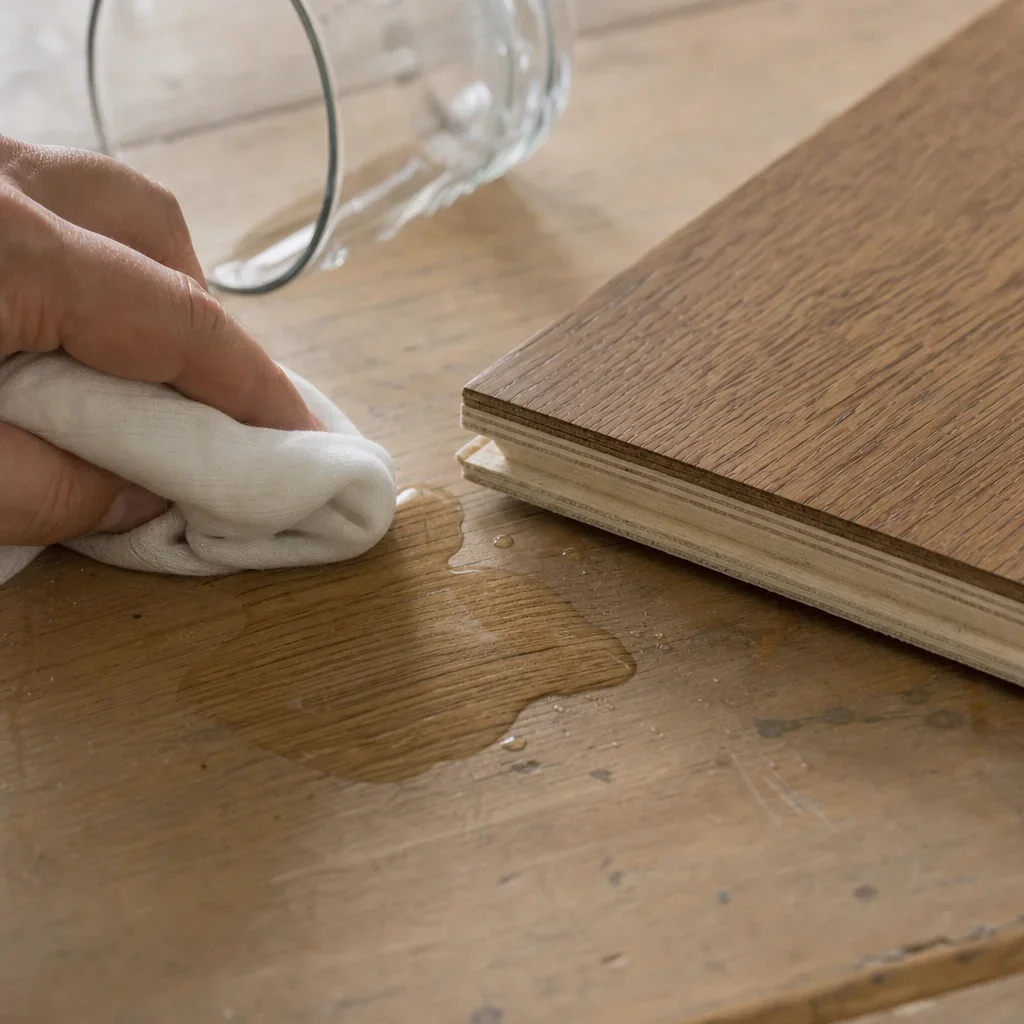
Waterproof engineered hardwood usually means a floor with a real wood top layer, a dimensionally stable core, and a locking system or edge treatment designed to resist surface moisture longer than standard hardwood. That is different from old-style engineered wood that was only mildly water-resistant.
Is engineered hardwood floor waterproof? Some products are marketed that way, but the honest answer is that engineered wood can be made more moisture-tolerant, not invincible. Water-resistant means it can handle limited moisture exposure; spill-resistant usually means everyday splashes; waterproof is a stronger claim, but it still does not mean safe against leaks, saturation, or flooding unless the manufacturer says so in writing.
Which flooring is 100% waterproof? In practice, that claim is more defensible with vinyl than with real wood. A wood surface can still react to enough water, especially if moisture reaches seams, edges, or the subfloor below.
Can engineered wood be waterproofed after the fact? Surface sealers may help with minor moisture at the top, but they do not change the core construction, the locking profile, or the installation limits. The real protection comes from how the flooring was manufactured and how it was installed.
The plain-English takeaway is that waterproof engineered hardwood buys you time, not immunity. It helps with spills, wet shoes, and routine kitchen messes, but it is not flood proof and it does not give you permission to ignore water.
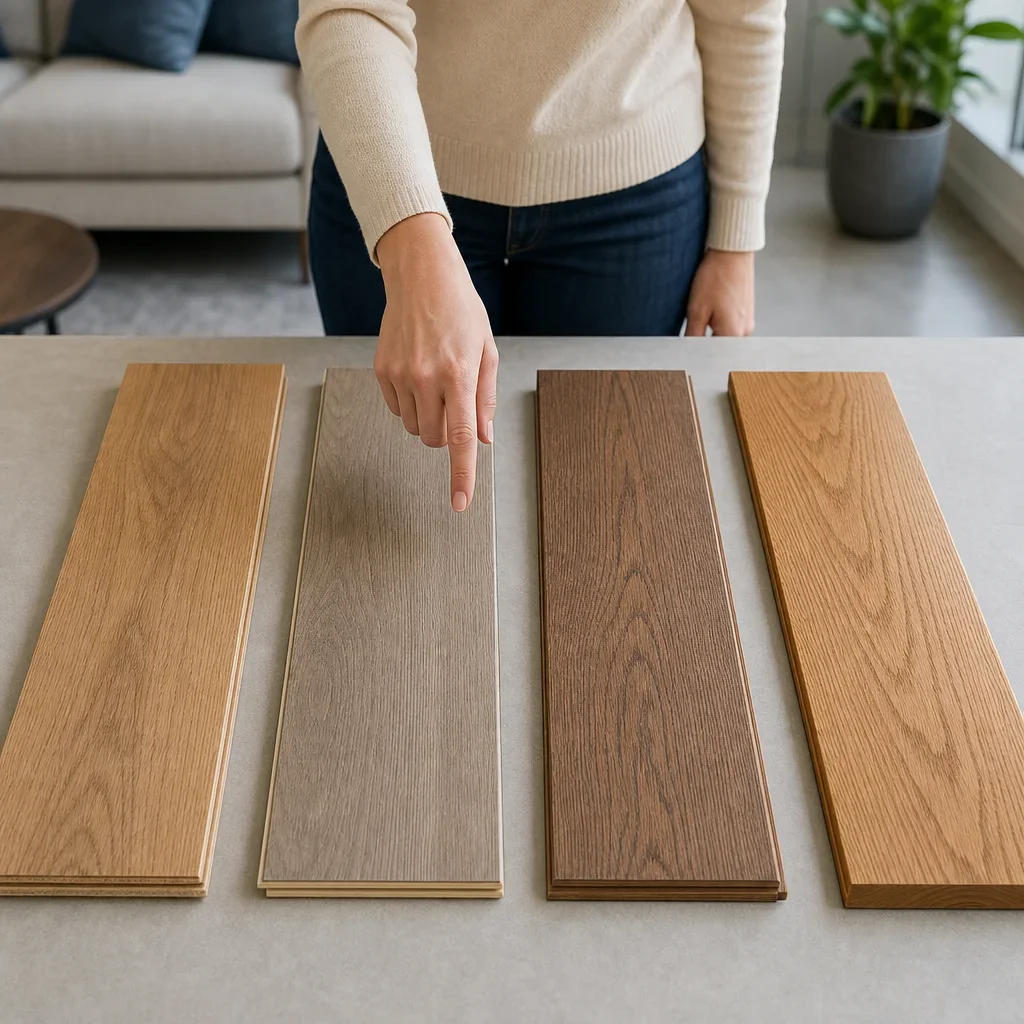
The main difference between waterproof engineered hardwood vs luxury vinyl plank is the surface itself: engineered hardwood has real wood on top, while vinyl uses a printed design layer. Real wood usually wins on natural variation and premium feel, while vinyl usually wins on water tolerance and price at the entry level.
Laminate competes on value and scratch visibility, but it is not the same as waterproof engineered wood flooring. Laminate has a photographic wood image rather than a real wood layer, and while some laminates handle spills well, swelling at joints is still a risk if water gets where it should not.
Solid hardwood remains the premium choice for dry, stable areas where long-term refinishing matters most. It is typically more sensitive to moisture movement than engineered construction, which is why kitchens, basements, and busy family homes often push buyers toward engineered options instead.
Use this category table before you compare any collection:
| Category | Surface | Water tolerance | Scratch/dent reality | Feel underfoot | Best fit |
|---|---|---|---|---|---|
| Waterproof engineered hardwood | Real wood | Better than traditional hardwood, but not flood proof | Finish and species matter more than the word waterproof | Warm, wood-like | Kitchens, main floors, some basements |
| Luxury vinyl plank | Synthetic wear layer | Often the strongest water performer | Good scratch resistance, but can gouge | Softer with pad, less wood-like | Bathrooms, basements, rentals, pet-heavy homes |
| Laminate | Printed wood image | Spill-resistant in some lines, but category varies | Often good against surface wear | Firmer, less natural | Budget-conscious dry or lightly wet areas |
| Solid hardwood | Real wood, full thickness | Lowest moisture tolerance here | Can scratch and dent, but can be refinished more | Premium wood feel | Dry main floors and high-end living areas |
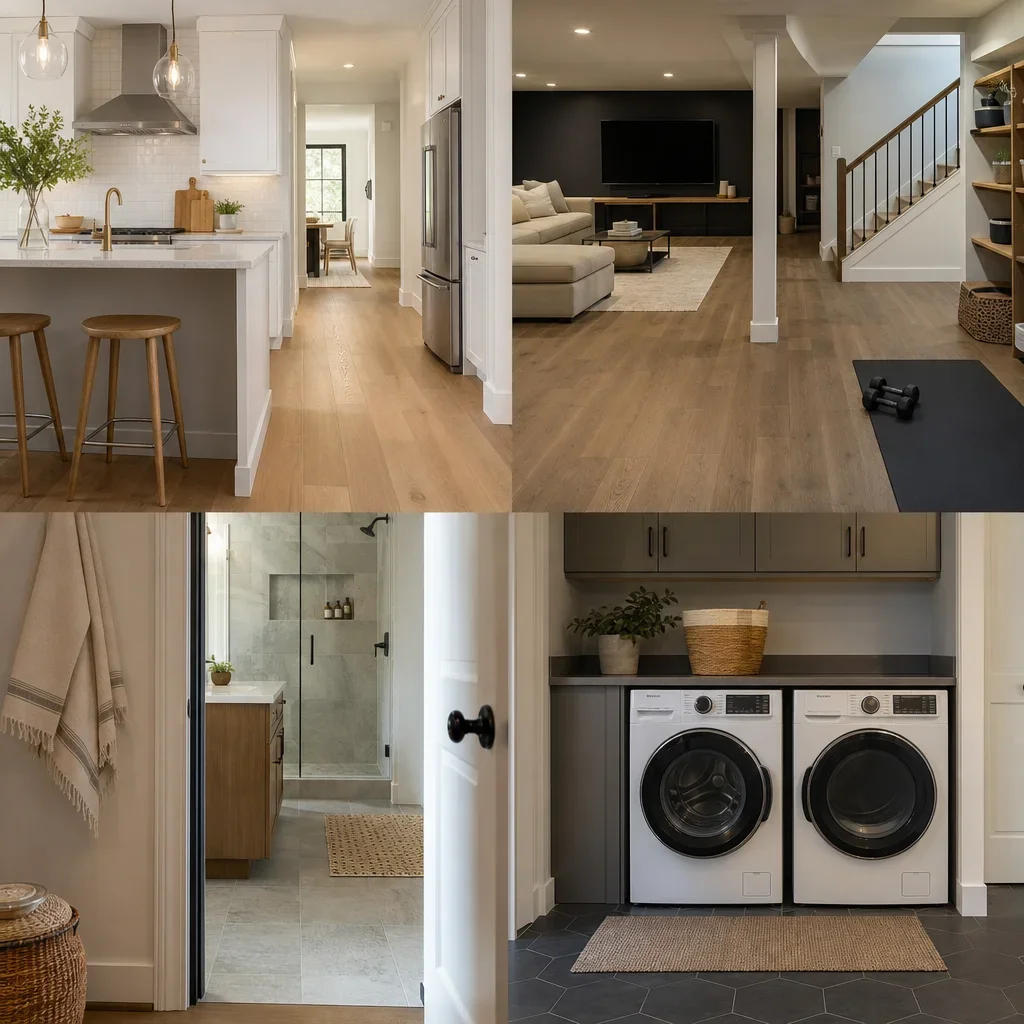
Waterproof engineered hardwood works best in rooms with occasional moisture, not constant wet conditions. Kitchens are usually the strongest case because splashes are common but standing water should be short-lived if the floor is maintained properly.
Basements can work, but only if the product is approved for below-grade installation and the slab or subfloor passes moisture testing. A good-looking floor fails fast when the concrete below it stays damp, so the subfloor matters as much as the plank.
Bathrooms are the room where marketing claims need the most caution. Waterproof engineered wood flooring for bathroom use can be possible with the right product, ventilation, layout, and installation details, but in full family bathrooms with frequent splashing, vinyl is often the safer category.
Laundry rooms sit in the middle. If the room is dry, the appliance connections are sound, and the product allows the space, engineered hardwood can work well, but it still will not protect you from a hose failure or hidden leak.
Use this room-by-room table as a practical filter:
| Room | Suitability | Caution level | Better alternative when risk is high |
|---|---|---|---|
| Kitchen | Good fit | Moderate | Vinyl if spills are frequent and heavy |
| Basement | Conditional fit | High | Vinyl if slab moisture is uncertain |
| Bathroom | Conditional, selective use | High | Vinyl for busy bathrooms and tub/shower zones |
| Laundry room | Conditional fit | Moderate to high | Vinyl if leak risk is a concern |
| Living room / bedroom | Very good fit | Low | Solid hardwood if moisture is not a concern |
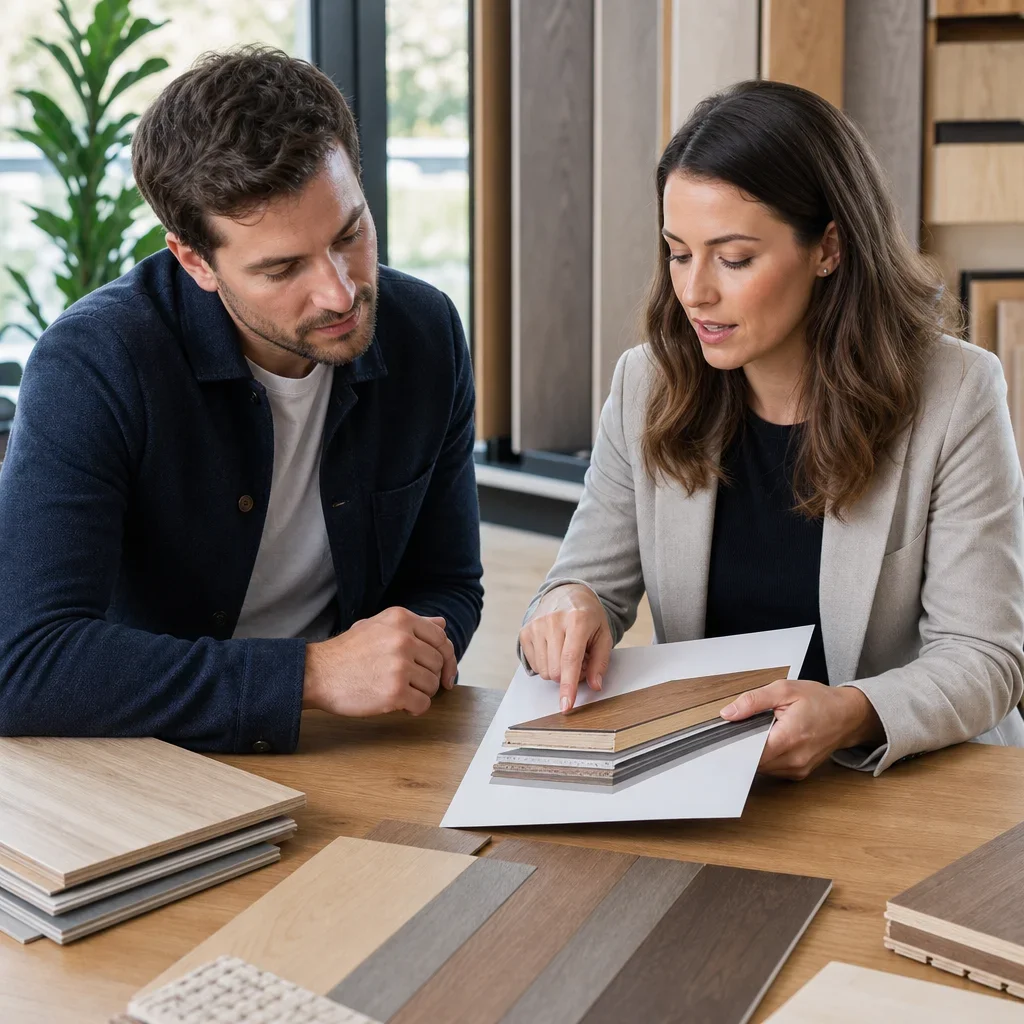
The highest quality engineered flooring is usually the collection that matches your priorities on core stability, finish quality, room approval, and visual realism, not the one with the loudest brand story. If you are asking what is the best brand of waterproof flooring, I would tell you to compare the product sheet, the installation guide, and the room limits before you compare the logo.
The key features to check are the core construction, locking profile, top wood species, finish type, plank dimensions, and whether the floor needs separate underlayment. Those details affect moisture performance, noise, board stability, and installation difficulty.
A simple decision matrix helps buyers narrow the field faster than scrolling brand claims:
| Priority | Best direction |
|---|---|
| Real wood appearance first | Waterproof engineered hardwood |
| Maximum water protection first | Vinyl |
| Pets and kids with rough use | Tough finish, lower-gloss, textured surface |
| DIY-friendly installation | Click-lock or floating formats |
| Quiet feel underfoot | Products approved for proper underlayment or glue-down |
| Tight budget | Compare vinyl, laminate, and entry engineered options |
| Basement slab | Only products approved for below-grade use |
| Bathroom with daily splash exposure | Usually compare vinyl first |
The best waterproof engineered hardwood flooring for one home may be the wrong pick for another. A downtown condo kitchen, a basement renovation, and a busy family bathroom all ask for different trade-offs.
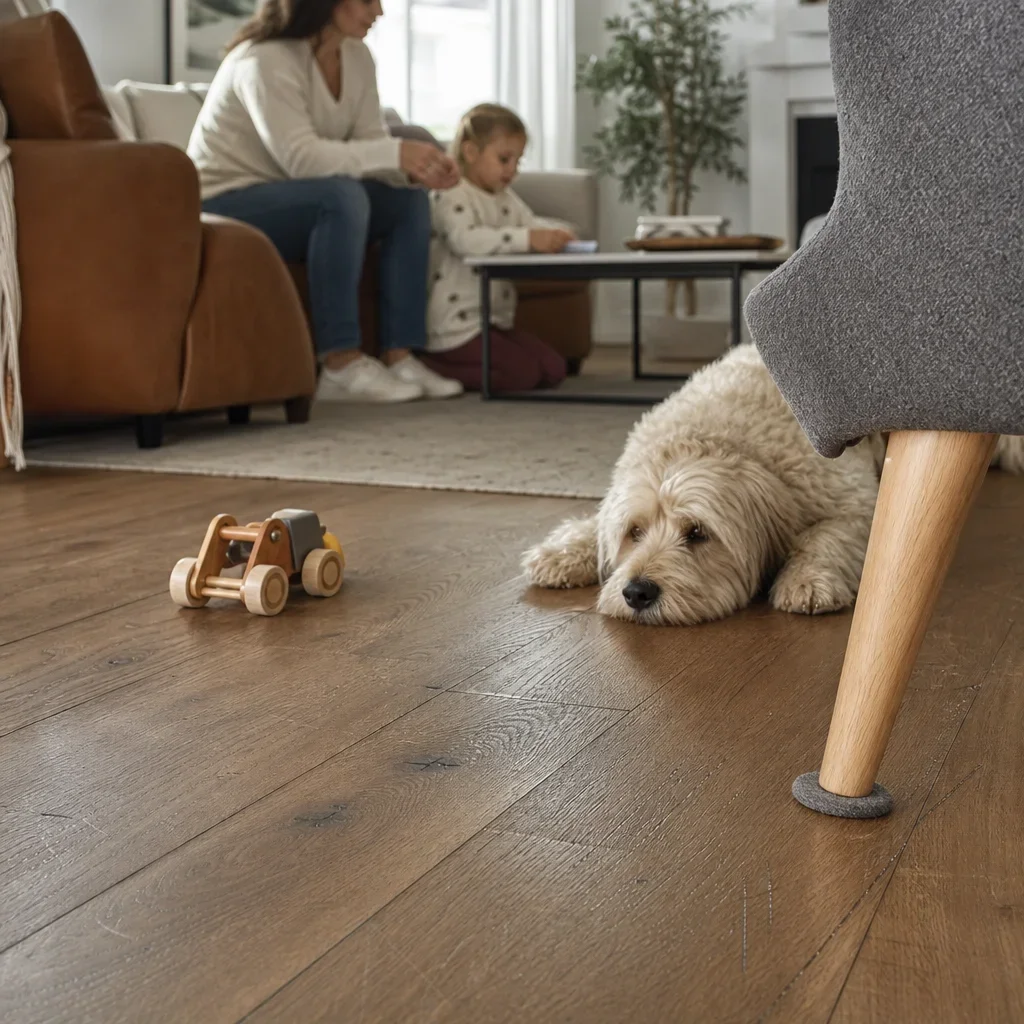
Waterproof does not mean scratch-proof. Moisture protection and surface durability are separate issues, so a floor that handles spills well can still show claw marks, chair wear, or dents from dropped objects.
Scratch visibility usually comes down to species, finish, texture, and colour. Matte finishes, wire-brushed surfaces, and lighter mid-tone colours tend to hide daily wear better than dark, smooth, high-gloss boards.
Dent resistance is tied more to the wood itself than the waterproof label. Harder species generally resist impact better, while softer species and very wide planks may show dents or pressure marks more easily in active homes.
For kids and pets, the best waterproof hardwood flooring is the one with realistic expectations built in. Look for durable finishes, lower sheen, and surfaces that disguise wear, then pair that with good habits like felt pads, prompt cleanup, and nail trimming.
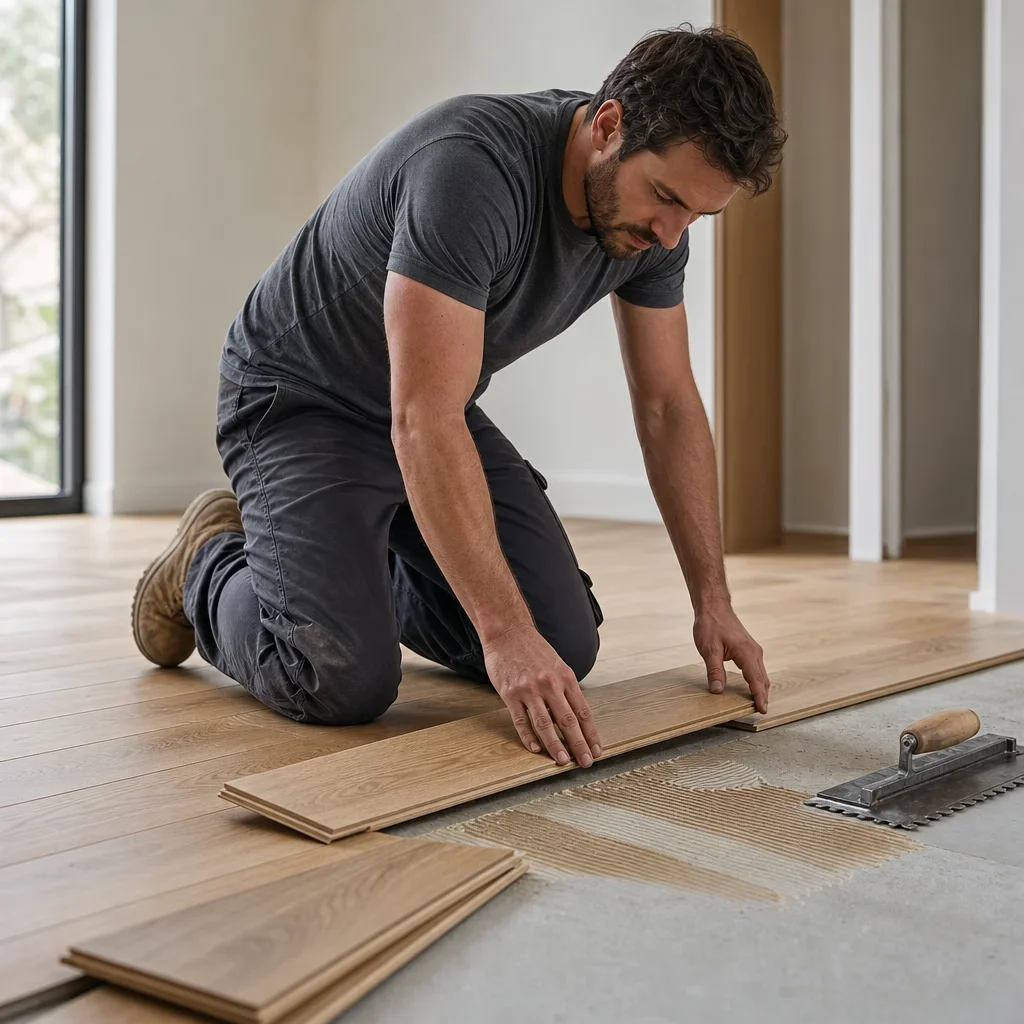
Waterproof engineered hardwood is commonly installed three ways: click-lock, floating, or glue-down. Click-lock boards connect mechanically, floating floors sit over the subfloor without being fastened across the entire surface, and glue-down planks are adhered directly to the subfloor.
Floating and click-lock installations are popular because they are faster to lay, easier to replace board by board, and often more appealing to capable DIY buyers. That said, the product guide controls the method, not your preference, and some floors perform best only with one approved system.
Glue-down is often better when you want a firmer feel underfoot, better sound control, or stronger stability on certain subfloors. It can also be the required method for some products and some room conditions.
Expansion gaps and transitions are not optional details. Wood-based floors still move with seasonal humidity, so the perimeter space, doorway transitions, and stair details must follow the exact install instructions.
Stairs usually need a different approach than open floor areas. In practice, stair cladding, nosings, and adhesive details make stairs a job for experienced installers much more often than a weekend DIY project.
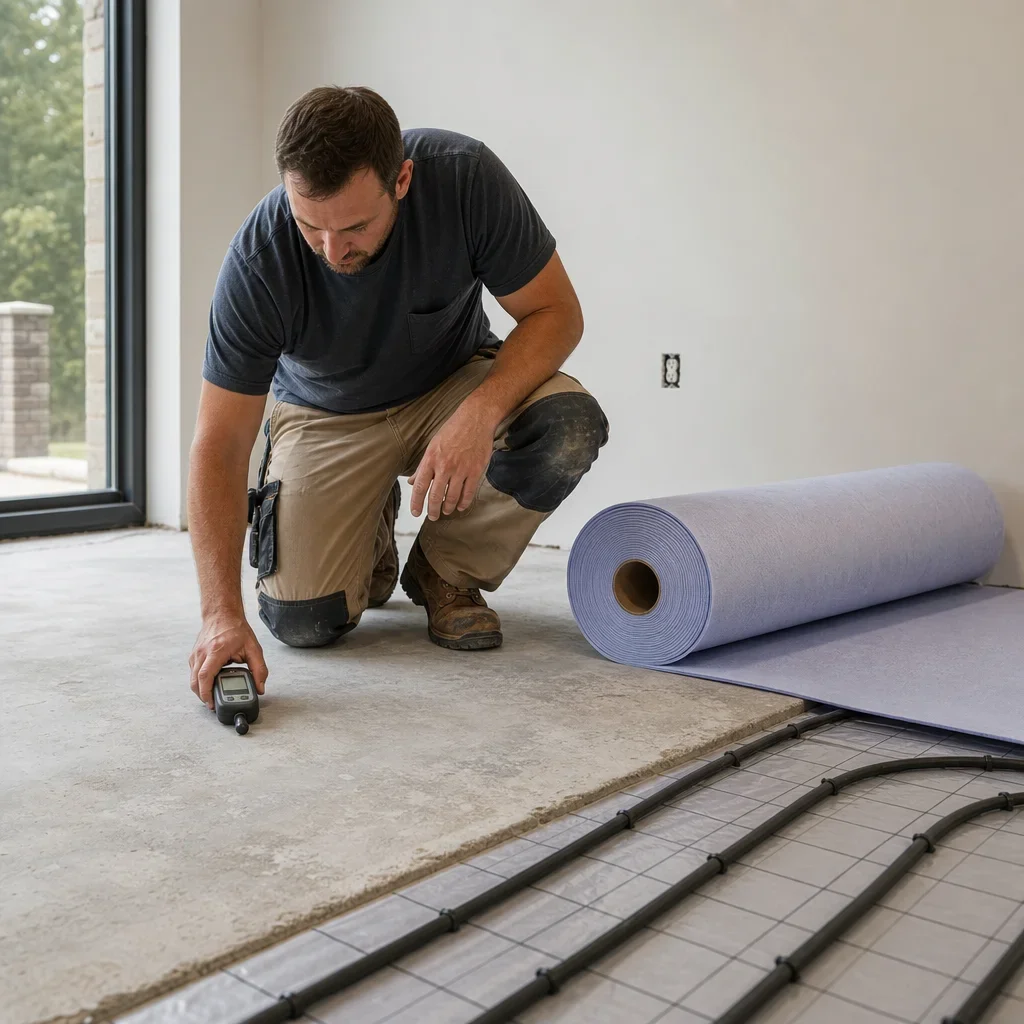
The subfloor decides whether a good floor stays good. Concrete slabs, plywood, and OSB each create different moisture and flatness issues, and waterproof hardwood flooring Canada buyers often run into trouble by focusing on the plank while ignoring the surface below it.
Moisture testing matters most on basements and main floors over concrete. Even a strong locking system will not save a wood-based floor if moisture keeps pushing up from the slab or gets trapped under the boards.
Underlayment must match the product instructions. Some floors use an attached pad, some require a separate underlayment, and some should not have extra layers because too much softness can stress the locking joints.
Radiant heat compatibility is product-specific, not category-wide. Some engineered floors work with approved radiant systems, but the installation guide controls the heat type, temperature limits, and warm-up procedure, so buyers need the exact product documentation before they commit.
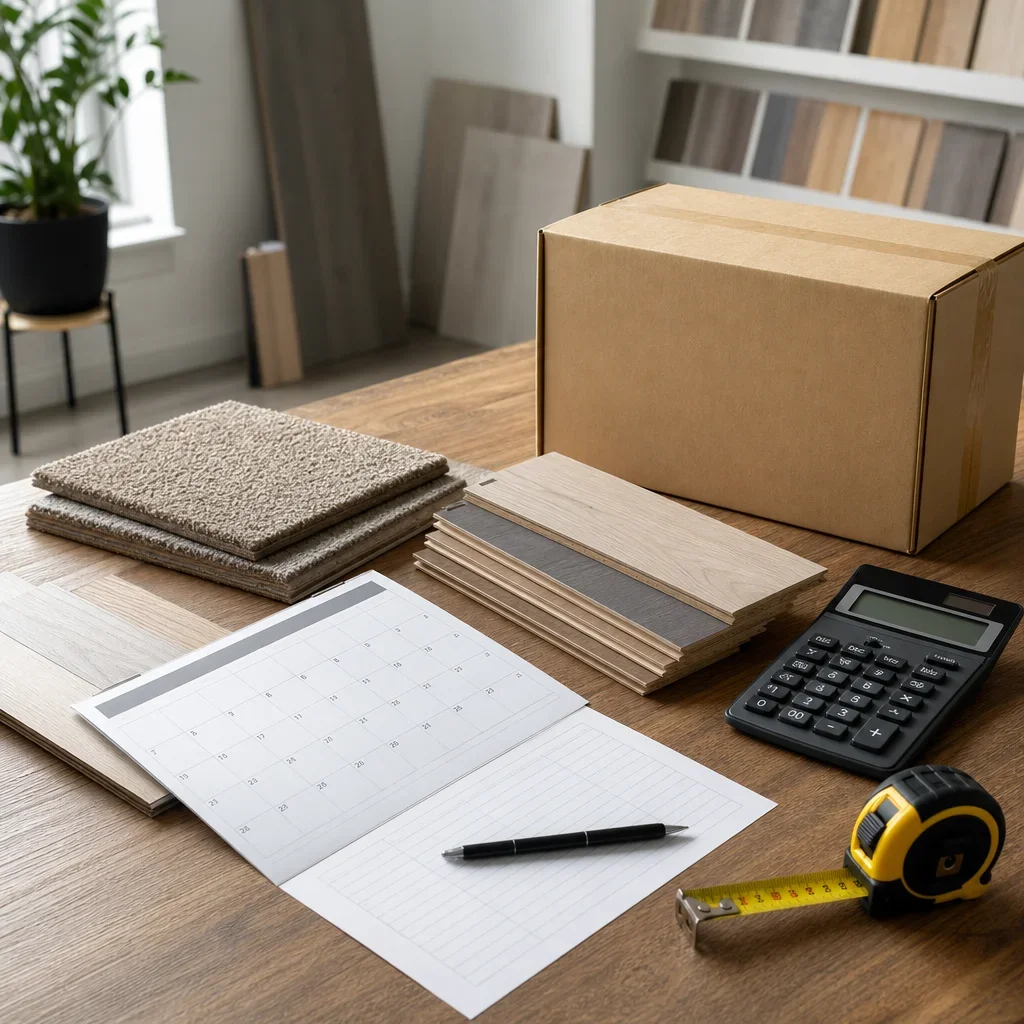
Waterproof engineered hardwood usually costs more than entry-level laminate or vinyl because you are paying for a real wood surface as well as improved moisture tolerance. At CanFloor, engineered wood flooring starts from $2.99 per square foot , but your actual price depends on the collection, plank size, finish, and whether the product you choose is a waterproof or water-resistant build.
The total project cost is more than the flooring carton. Buyers should compare material, underlayment, trims, stair parts, delivery, floor prep, and installation because a cheaper board can become the more expensive job once the full scope is added.
Value is easier to judge when you compare what one box covers, how the floor installs, and what rooms it is approved for. Headline price alone hides the details that affect labour, waste, and long-term satisfaction.
Stock and lead time matter if your renovation has a deadline. Some waterproof engineered wood flooring options may be available quickly, while custom colours, special-order visuals, or niche constructions can take longer, so it is smart to confirm availability before you remove the old floor.
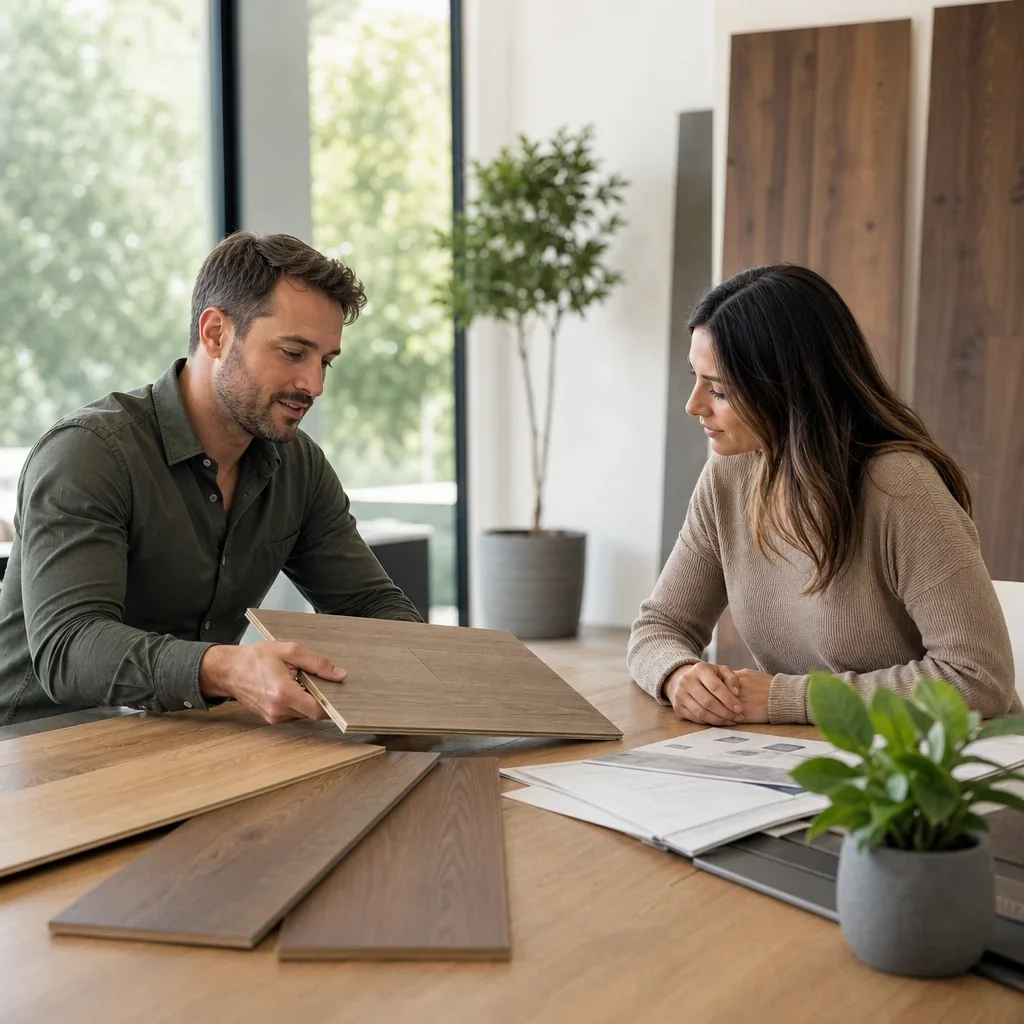
Samples and in-person comparison are worth more than online swatches. Colour, grain, gloss, and texture read differently under house lighting, which is why many buyers make better decisions after seeing engineered, vinyl, laminate, and solid hardwood side by side in a showroom.
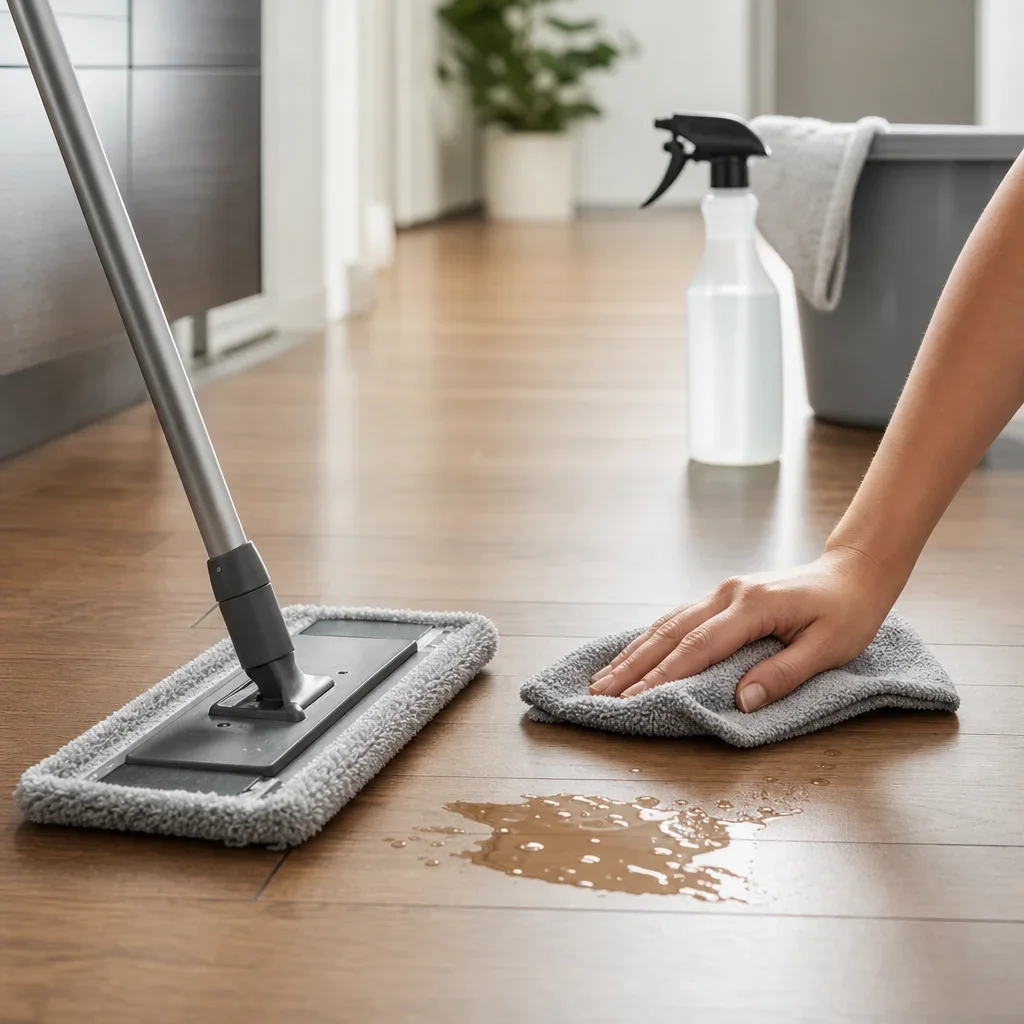
Waterproof engineered hardwood solves the panic of an everyday spill, not the need for regular care. It gives you a better buffer against surface moisture than standard hardwood, but it still needs prompt cleanup and sensible cleaning habits.
Can you mop an engineered floor? Damp cleaning may be allowed if the manufacturer says so, but wet mopping, soaking the floor, or leaving water in seams is still a bad practice for wood-based products.
Spills should be handled the same day, and immediately is better. Wipe the liquid, dry the seams, check where the moisture came from, improve airflow, and inspect the area later if the event was larger than a simple splash.
Steam mops, harsh cleaners, and over-watering are common ways owners damage a floor that was otherwise performing exactly as designed. The safest routine is a soft broom or vacuum approved for hard floors, plus the cleaner the product guide recommends.
Use this simple checklist after a spill:
The healthiest flooring to put in your house depends less on the category name and more on the product's emissions profile, adhesives, finishes, and documentation. Low-VOC claims, finish chemistry, and third-party certification matter more than whether the top layer is wood or synthetic.
Buyers looking for cleaner indoor air often ask about FloorScore, GREENGUARD Gold, or FSC. Those are real certification frameworks, but you should only rely on them when the exact product you are buying is backed by current documentation.
Real wood appeals to many homeowners because the surface is natural, but natural does not automatically mean low-emission. If indoor air quality or allergy sensitivity is a priority, ask for the product-specific spec sheet rather than assuming every engineered floor performs the same way.
The upside of waterproof engineered hardwood is clear: you get a real wood look with better moisture tolerance than traditional hardwood, often with more installation flexibility and better stability across changing conditions. That is why it has become a strong option for kitchens, condos, and family homes.
The downside of engineered hardwood flooring is just as important to understand. It is still not flood proof, not every collection is bathroom-safe, scratch and dent resistance vary by species and finish, and some products may have more limited refinishing potential than solid hardwood.
Choose vinyl instead when the room is regularly wet, the subfloor moisture risk is high, or maximum water resistance matters more than real wood. Choose solid hardwood instead when the room is dry, you want a traditional full-wood floor, and long-term refinishing is part of the plan.
The best brand of engineered hardwood floor is the one whose actual collection matches your room conditions and installation plan. I would avoid blanket rankings and compare only verified specs, because brand names do not install floors, product details do.
Use a collection comparison table like this when you shop:
| Compare this | Why it matters |
|---|---|
| Real wood species | Affects look and dent resistance |
| Core type | Affects stability and moisture handling |
| Installation method | Controls labour, DIY fit, and subfloor options |
| Approved rooms | Prevents bad room-product matches |
| Surface finish and texture | Changes scratch visibility and maintenance feel |
| Underpad / underlayment requirements | Affects sound, cost, and warranty compliance |
| Radiant heat approval | Critical before install, not after |
| Warranty wording | Shows what is actually covered |
| Stock or special order status | Affects project timing |
| Best use case | Helps separate bathroom, basement, pet, and premium-look options |
We would only compare a named collection or product brand once the current spec sheet is in hand. That is the honest way to answer what is the most waterproof engineered hardwood flooring without repeating unverified claims.
Some engineered hardwood products are sold as waterproof, but the category as a whole is not automatically waterproof. The claim depends on the construction, locking system, finish, and the manufacturer's written room approvals.
Yes. Waterproof engineered wood flooring is a real product category, but performance varies by collection, so the spec sheet matters more than the label on the display.
For a bathroom, the best waterproof engineered hardwood flooring is a selective, conditional choice rather than a universal one. In light-use bathrooms with good ventilation and careful installation, some products may work, but in splash-heavy bathrooms, vinyl is usually the safer pick.
Vinyl is the category most commonly sold with 100% waterproof claims. Real wood-based floors should be treated more cautiously, even when they are marketed as waterproof.
Engineered hardwood has a real wood top layer; luxury vinyl plank has a synthetic wear layer over a rigid or flexible core. That means engineered wood usually wins on authentic wood look and feel, while vinyl usually wins on moisture tolerance.
Yes, but only when the product is approved for below-grade use and the subfloor moisture conditions are acceptable. Basement success depends heavily on slab testing and installation details.
You can usually damp-clean it only if the product guide allows it. Wet mopping and soaking the floor are still poor practice for wood-based flooring.
Some products do, but not all. Radiant heat approval, installation method, and temperature limits must come from the specific manufacturer's instructions.
The main negatives are that it is not flood proof, bathroom suitability varies, scratch and dent performance differ by species and finish, and some products may have more limited refinishing options than solid hardwood.
Material pricing varies by collection and build. As a starting point, engineered wood flooring at CanFloor begins from $2.99 per square foot , but waterproof-qualified options, trims, prep, and installation can change the total meaningfully.
If you want to compare waterproof hardwood flooring in Canada without guessing from photos, seeing the boards in person is still the best step. At CanFloor, buyers can compare engineered hardwood beside vinyl, laminate, and solid hardwood at 2687 Steeles Ave. West, North York, Ontario , then narrow the choice by room, subfloor, and budget.
We supply and install flooring across Toronto and the GTA, and we also help buyers sort out where waterproof engineered hardwood makes sense and where another category is simply the better fit. Not sure if waterproof engineered hardwood is right for your bathroom or basement? Bring the room details and compare the options side by side.