
The biggest mistake shoppers make with hardwood flooring plank sizes is assuming there is one standard board. There isn't. In real hardwood and engineered wood flooring, size usually means width, length, and thickness, but most buying decisions come down to width and length first.
Most wood floor plank sizes sold for interior flooring fall into familiar width bands like 2 1/4 inch, 3 1/4 inch, 4 1/4 inch, 5 inch, 6 inch, and 7 inch or wider . Those are common market sizes, not a universal rule. The exact range depends on whether you are buying solid or engineered, the species, the grade, and the collection.
Most shoppers asking for the standard wood floor plank size are really looking for the most common middle ground. In practice, 3 1/4 inch and 5 inch boards are two of the widths buyers see again and again across traditional and contemporary floors . Narrower widths look more classic. Wider boards look calmer because you see fewer seams.
The length of wood floor planks is usually not one fixed number. Many products are sold in random lengths, which means one carton can include short, medium, and long boards rather than identical pieces . That is normal in hardwood flooring, and it affects how busy or seamless the finished floor looks.
Thickness matters too, but it answers a different question. Width changes the visual style. Length changes how many end joints you see. Thickness affects installation details, transitions, and in engineered floors, sometimes the wear layer and refinishability .
Width is the face measurement across the top of the board from side to side . When buyers compare wood plank widths, this is the number that makes a floor read as narrow, standard, or wide.
Length is the end-to-end measurement of each board . In many hardwood products, the carton includes random board lengths, so the floor will naturally have staggered end joints instead of every board stopping at the same place.
Thickness is the board depth from top surface to bottom . Buyers often confuse thickness with width, but they solve different problems. A thicker product may affect transitions, stairs, and installation method, while a wider product mostly changes the look and movement characteristics.
Fixed-length flooring means boards are produced in one set length or a tighter repeated set of lengths . Random-length flooring means cartons include a range of lengths, which is more common in real wood floors.
Mixed-width flooring uses two or more planned widths in the same floor . Random-width flooring usually means those widths are intentionally blended across the layout rather than kept to one single repeated width.
Average board length is the number many shoppers should care about most when reading specs . A product may say boards run up to 7 feet, but if the average length is much shorter, the finished floor will show more end joints than that headline suggests.
Nominal versus actual dimensions matters far more in framing lumber than in decorative flooring . Flooring products are usually sold by their finished product dimensions, but shoppers still run into lumber-style search results and confuse structural planks with interior flooring boards.
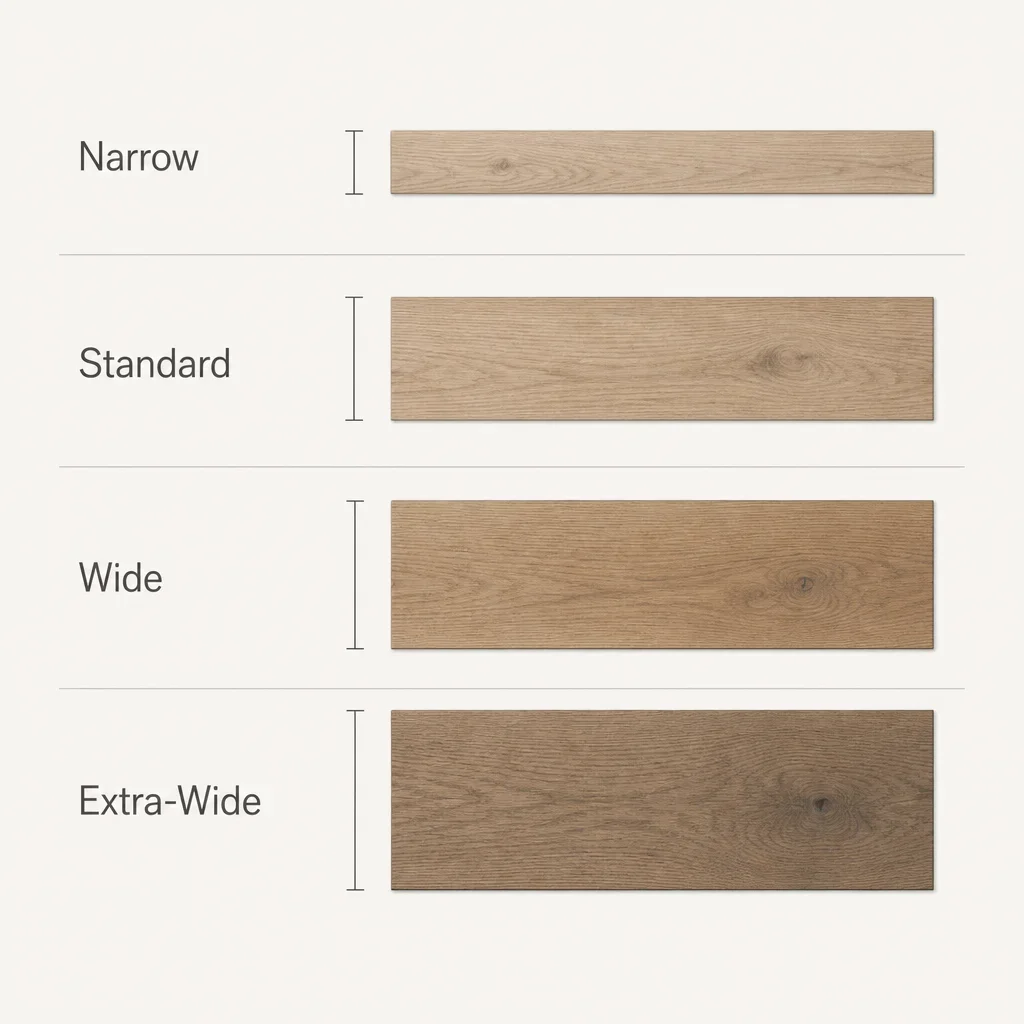
The simplest way to compare plank size hardwood flooring is by width band. There is no single industry cutoff that every brand uses, but these ranges are a practical buying guide.
| Width band | Common example widths | Look | Best for | Pros | Tradeoffs | Construction notes |
|---|---|---|---|---|---|---|
| Narrow | 2 1/4", 3 1/4" | Traditional, detailed, more seams | Older homes, formal rooms, busy grain | Classic look, often easier to blend into smaller rooms | More visible seams and butt joints | Common in solid and engineered |
| Standard / mid-width | 4 1/4", 5" | Balanced, versatile | Condos, living rooms, renovations | Strong middle ground between classic and modern | Less dramatic than extra-wide boards | Widely available in both constructions |
| Wide | 6", 7" | Open, calmer, more contemporary | Open layouts, larger rooms | Fewer seams, broader visual line | Subfloor prep and stability matter more | Often easier to find in engineered |
| Extra-wide | 8", 9"+ | Statement look, more custom | Large rooms, modern and rustic interiors | Very seamless visual effect | More layout, humidity, and product-spec sensitivity | Usually product-specific; engineered is common |
Narrow plank hardwood flooring usually reads more traditional because there are more lines across the floor . That extra seam pattern can work beautifully in heritage homes, classic millwork, and smaller rooms that need visual texture.
Standard wood plank widths sit in the middle because they fit the most spaces without looking too busy or too sparse . If you are unsure where to start, this band is usually the safest comparison point.
What is considered wide plank flooring depends on the source. In retail flooring, many buyers and brands start calling 5 inch or 6 inch boards wide plank, but there is no single universal legal definition . That is why two products can both be marketed as wide plank and still look quite different.
A 9 inch board is not automatically too wide. It is a specialty wide-plank look, and it usually performs best when the product construction, subfloor flatness, room scale, and indoor humidity are all taken seriously .
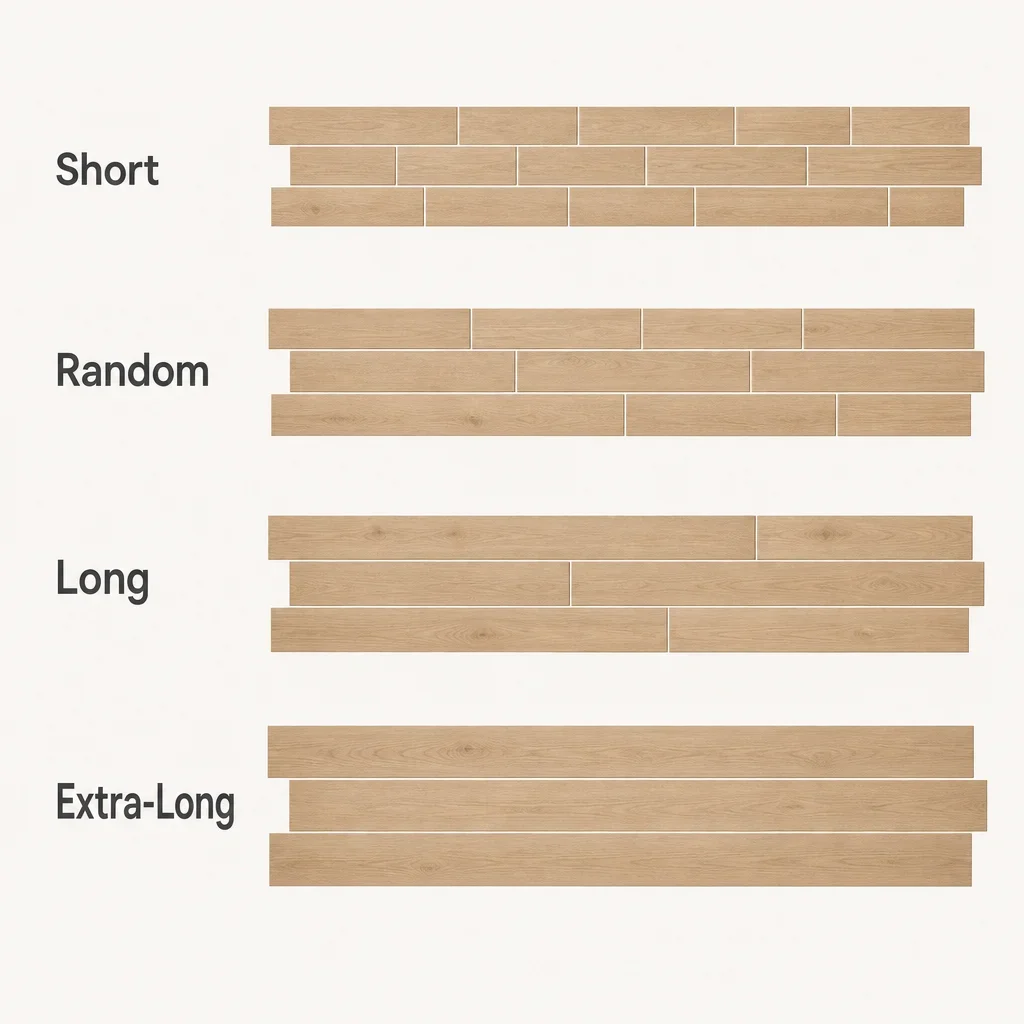
Length changes the rhythm of the floor more than most shoppers expect. Shorter boards create more end joints. Longer boards create a cleaner, quieter look.
| Length category | What it usually means | Visual effect | Best use | What to check |
|---|---|---|---|---|
| Short | Short board-heavy cartons or lower average length | More movement, more joints | Small rooms, rustic looks, tighter budgets | Average length, not just maximum length |
| Random / mixed | Cartons with multiple board lengths | Natural stagger, typical wood-floor look | Most homes | Minimum, maximum, and average board length |
| Long | More long boards in the mix | Fewer visible end joints | Living rooms, open layouts | Delivery, handling, room layout |
| Extra-long | Specialty long-length product lines | Seamless, premium visual | Large rooms, modern spaces | Subfloor flatness and install requirements |
Random-length hardwood flooring is the normal format in many collections . That means you should not expect every board to be the same length, and you should not judge the floor by the longest board in the photo.
Average board length matters because it predicts the final look better than a maximum-length claim . A carton advertised as up to 7 feet can still install with a much busier pattern if most boards fall well below that top length.
Species and grade can change available lengths . Cleaner grades and certain product lines may offer a longer average look, while more character-heavy grades or lower-cost lines can have more short boards in the mix.
Longer planks are not always better. In tight rooms, chopped-up layouts, or spaces with lots of doorways and transitions, extra-long boards can create more cuts and more planning pressure during installation .
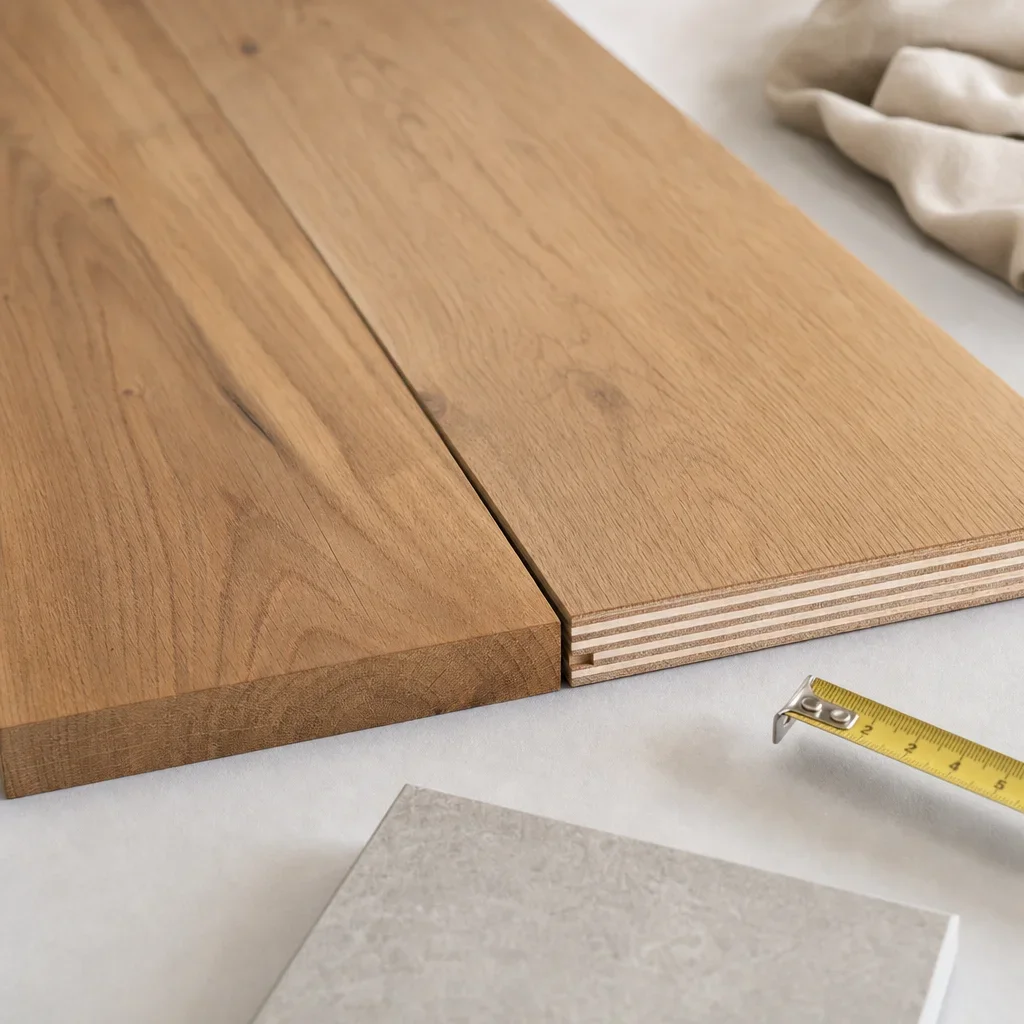
Construction is one of the main reasons plank sizes vary. Engineered hardwood is often offered in wider and longer formats because its layered construction is designed to improve dimensional stability compared with a single-piece solid board .
Solid hardwood still makes strong sense when you want a traditional width, a long service life, and the option to refinish the floor more than once over time . It remains a staple choice for classic 2 1/4 inch and 3 1/4 inch looks.
Wide and long boards are commonly easier to source in engineered collections than in solid hardwood lines . That does not make engineered better in every room. It means the construction often supports the larger format more comfortably.
Subfloor type, indoor humidity swings, and in some homes underfloor heating all matter before you choose extra-wide boards . Product specs and installation instructions earn their place here because a board that looks perfect on a sample can behave very differently in a dry condo or a humid main floor.
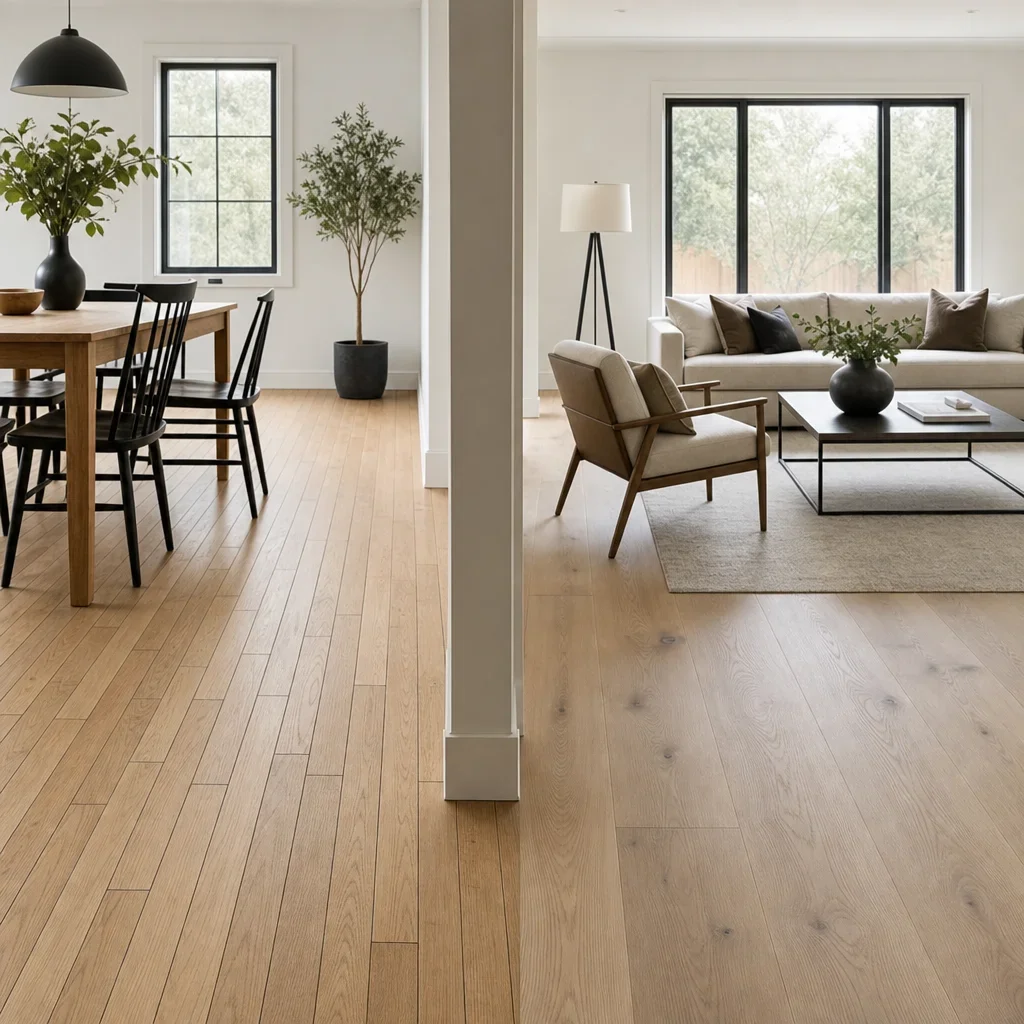
Wide plank vs narrow plank is mostly a style and proportion decision, not a right-versus-wrong decision . Narrow boards create a more patterned floor because you see more seams. Wide boards create a calmer field because each plank covers more visual area.
A wide plank floor can make a room feel larger, but not by magic . The effect depends on room shape, natural light, plank colour, grain variation, and the direction the boards run. A pale 6 inch board in an open condo will read very differently from a dark 7 inch rustic board in a small den.
Long and wide boards usually suit modern, Scandinavian, transitional, and some rustic interiors because they reduce visual clutter . Narrower strips still look current in traditional homes, herringbone-adjacent schemes, and spaces with detailed trim where a more classic rhythm fits the architecture.
Wood floors with different size planks can look more custom and more relaxed when the widths are planned well . Done badly, the same idea can look random in the wrong way, especially if transitions, vents, and stairs were not thought through before installation.
Small rooms usually look best with widths that feel balanced, not extreme . That often means mid-width boards rather than the very narrowest strips or the very widest statement planks.
Condos benefit from practical, proportional sizes because rooms are often broken up and sightlines are shorter . A 4 1/4 inch or 5 inch board can be a strong middle ground when you want a modern look without making every cut and threshold feel oversized.
Hallways and tighter spaces can handle narrow or mid-width boards well because the layout already creates visual direction . In long hallways, board direction can change the feel as much as board width.
Large open-concept homes usually carry wider boards more naturally because the scale supports them . Longer average lengths also help these spaces read less choppy because there are fewer end joints across broad sightlines.
Basement-grade or below-grade applications, where relevant, usually push buyers toward engineered wood instead of solid hardwood . That is a construction decision first, but it also expands the practical width options available.
A simple room guide helps narrow the field:
| Space type | Good starting width direction | Why |
|---|---|---|
| Small bedroom | Mid-width | Balanced look without overpowering the room |
| Condo living area | Mid-width to moderately wide | Modern look with manageable scale |
| Hallway | Narrow to mid-width | Works with directional layout |
| Standard family room | Mid-width to wide | Flexible for most styles |
| Large open-concept main floor | Wide to extra-wide if specs allow | Better proportion across long sightlines |
No, 9 inch planks are not inherently too wide . They are a very wide format, and they need the right room, the right product, and the right installation conditions.
Nine-inch boards usually work best in open layouts, calmer grain visuals, and lighter or more even-toned finishes . Those conditions help the width read intentional rather than heavy.
They can feel visually dominant in very small rooms or in spaces with a lot of short walls and interruptions . The issue is usually proportion, not a hard rule about the number itself.
Very wide boards also make subfloor prep and humidity control more important . Before choosing them, read the installation method, flatness requirements, and manufacturer limits for that exact product.
Yes, you can mix widths successfully when the floor is designed for it and the layout is planned before installation . Mixed-width hardwood flooring can look rich and custom, but it is not a good place to improvise on site.
Mixed-width flooring usually means a planned combination such as two or three set widths used together . Random width hardwood flooring patterns usually keep the widths varied across the floor rather than locked into one repeated strip size.
The cleanest results come from following the product spec and deciding the layout pattern before the first row goes down . Some designs look best with a controlled repeat. Others look better when the sequence is intentionally varied within a planned ratio.
Transitions at stairs, floor vents, islands, and room thresholds matter more when you use different size wood floor planks . These details can make a mixed-width floor look custom, or make it look accidental.
A simple do and don't list helps:
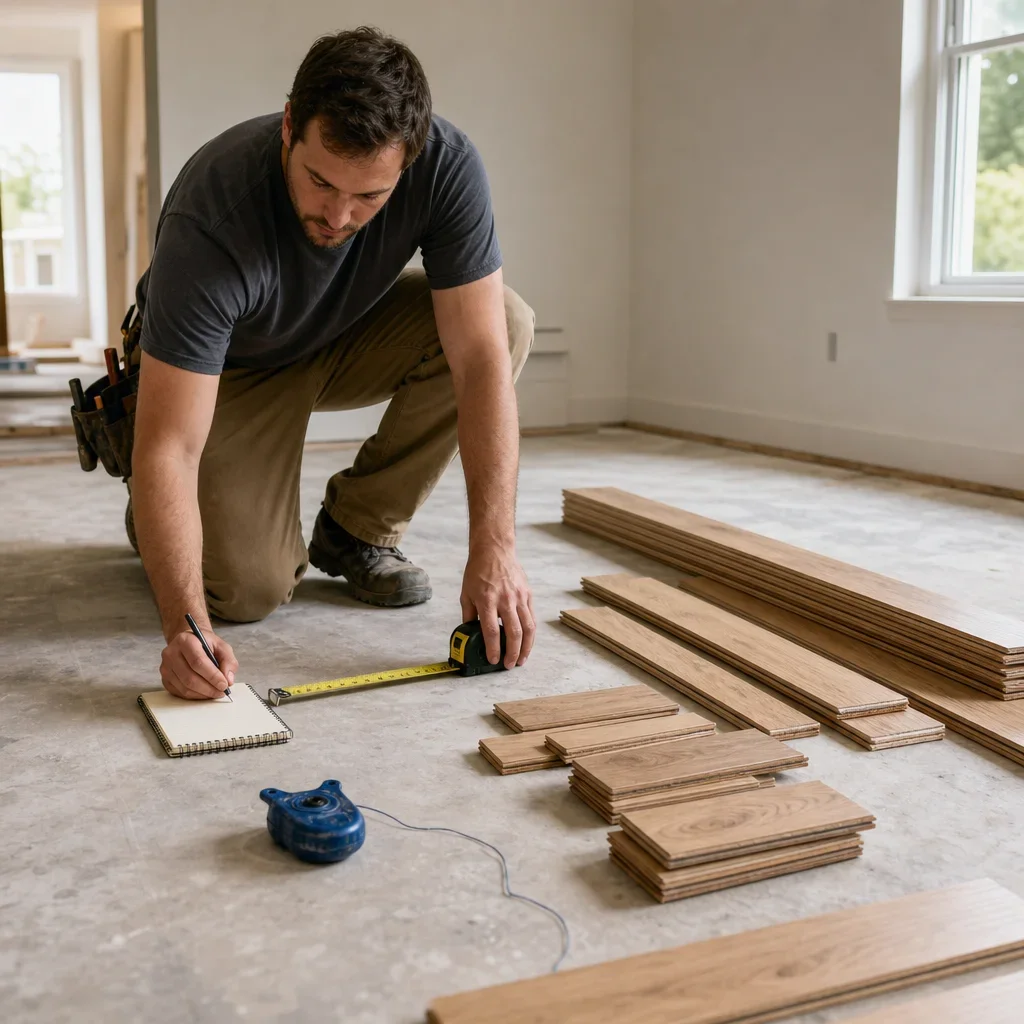
Wider and longer boards are usually less forgiving of subfloor variation than smaller boards . That does not mean they are a bad choice. It means the prep work matters more.
Mixed-width layouts need more planning because the installer has to balance the pattern while also managing cuts, joints, and room transitions . That extra rack-out time is one reason a simple single-width floor is not always directly comparable to a decorative mixed-width layout.
Plank size affects waste, but not in one universal percentage . Waste changes with room shape, board length mix, install direction, feature walls, closets, and whether the layout includes stairs or complex transitions.
Fewer seams do not automatically mean less waste . A long-board product in a chopped-up floorplan can still generate a lot of cuts, while a random-length product may use material more efficiently in the same space.
The practical move is to order based on room shape, product format, and installer guidance rather than a one-size-fits-all rule . This is also where a full-service supplier earns their keep, because the right overage on paper can look very different from one floorplan to the next.
Wider solid boards generally have less margin for humidity swings than narrower solid boards . Real wood moves seasonally, and the wider the face, the more that movement tends to show if indoor conditions are unstable.
Engineered products are often chosen for wide formats because the layered construction can help manage those movement pressures better than a single-piece board . That is one reason hardwood flooring plank sizes in wider formats often show up more often in engineered collections.
Subfloor flatness becomes more demanding as boards get wider and longer . A floor that is slightly uneven may still install acceptably with narrower pieces but create more issues with larger-format boards.
Pet hair, scratches, and dust visibility are driven more by colour, sheen, grain contrast, and finish than by width alone . Width still affects how many seams and bevel lines you see, so it changes the visual texture, just not the basic scratch resistance by itself.
Stable indoor climate matters for any wood floor . Humidification, dehumidification, and normal seasonal control are boring topics, but they save floors from avoidable gaps, cupping, and movement stress.
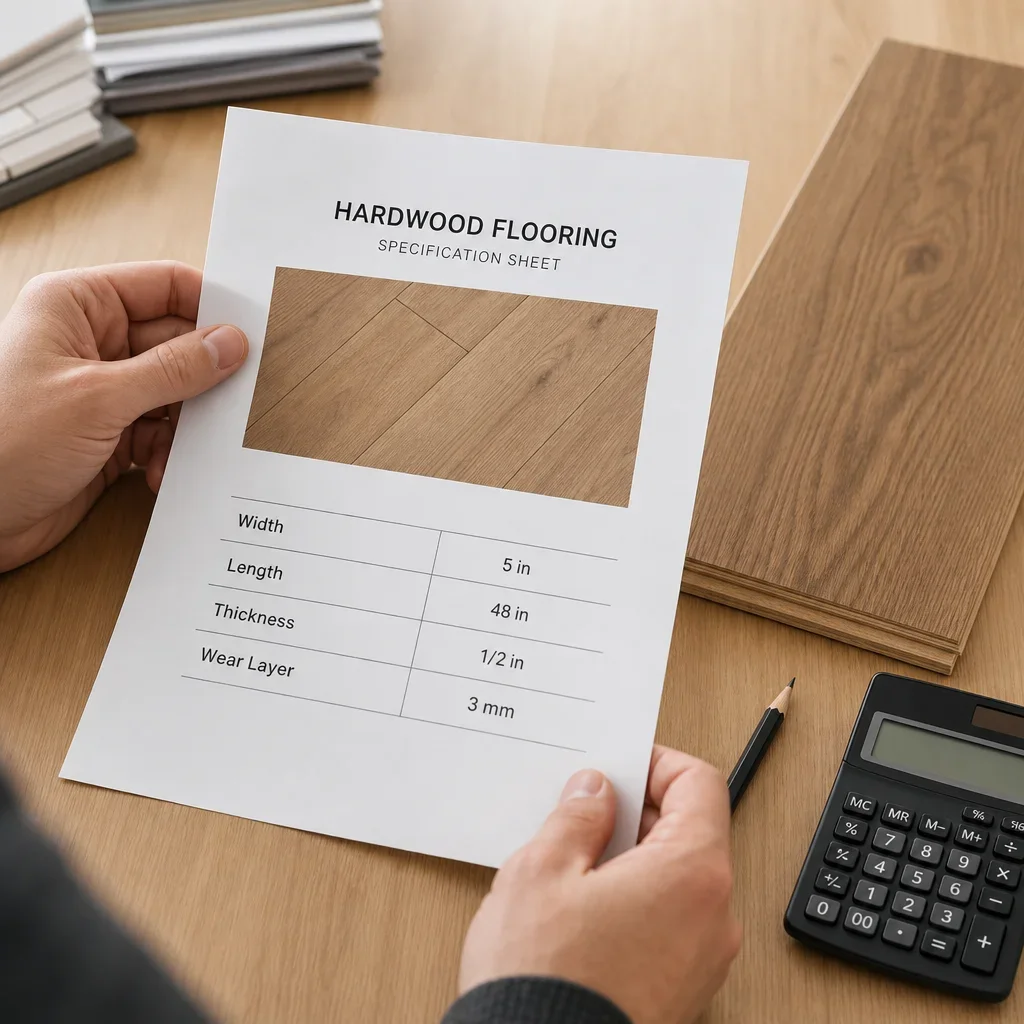
The spec sheet tells you more than the sample board does . Before you buy, check width, thickness, length format, average length if listed, wear layer on engineered products, installation method, and grade.
"Up to" language should be read carefully . If a product says boards run up to 7 feet, that does not mean every piece is 7 feet long, or even that most pieces are close to that length.
Average length is usually more useful than maximum length for predicting the installed look . It gives you a better sense of how many butt joints the floor may show once the cartons are spread across a room.
Many buyers compare wood floor plank sizes Canada listings in both inches and millimetres, so conversion matters. One inch equals 25.4 mm . A 3 1/4 inch board is about 82.55 mm, and a 5 inch board is 127 mm .
Use this quick checklist before ordering:
This guide is about interior decorative hardwood flooring, not framing lumber, craft boards, or structural decking planks . Search results for wood planks dimension often mix those products together, and that creates a lot of confusion.
Nominal and actual dimensions are mainly a lumber issue . A framing 2x4 does not measure a true 2 inches by 4 inches after surfacing, but decorative flooring is usually sold by its finished product dimensions.
If you are shopping for wood flooring plank sizes, ignore lumber charts unless the seller is clearly talking about flooring . The spec language, tolerances, and use cases are different.
Wide planks are still in style, but they are not the only stylish choice . Medium-to-wide boards remain popular because they create a cleaner visual line, especially in lighter contemporary wood looks.
Wide plank flooring is not automatically too trendy . A well-chosen 5 inch or 6 inch board can look current for years because style comes from the full combination of width, colour, grade, gloss, and room architecture.
Traditional widths like 3 1/4 inch and 4 1/4 inch still look current when the colour and finish feel right for the home . That is why good design beats trend chasing. The same width can look heritage, transitional, or modern depending on the overall build.
Start with construction before style. Solid and engineered do not offer the same comfort zone for every width and length format .
Then match the plank to the room scale and floorplan. Small, broken-up rooms usually reward balance. Large open rooms can carry wider and longer boards more naturally .
Next, decide what visual effect you want. Narrower boards create rhythm. Wider boards reduce seam lines. Mixed width hardwood flooring adds custom character when it is planned well .
After that, look at species, grade, colour, and sheen because those choices change how the same dimension reads in the room . A quiet white oak look and a high-character rustic hickory floor can feel completely different at the same width.
Finally, compare full-size samples side by side instead of choosing from a small chip . Seeing two widths in person is usually the fastest way to understand what will feel right in your home.
If you want to compare solid hardwood, engineered options, and wide-plank formats in person, visiting a showroom helps more than scrolling spec sheets alone. At CanFloor's North York location at 2687 Steeles Ave. West , buyers can compare widths, lengths, custom finish options, and installation details in one place.
What is the standard wood floor plank size?
There is no single universal standard size of wood floor planks . Common widths include 2 1/4 inch, 3 1/4 inch, 4 1/4 inch, 5 inch, 6 inch, and wider formats depending on the product .
What is the most common wood plank size?
Common choices in the market include 3 1/4 inch for a traditional look and 5 inch for a more current middle-ground look . The most common size depends on the collection and style.
How wide are standard hardwood planks?
Standard-looking hardwood plank sizes usually sit around the mid-width range, often near 3 1/4 inch to 5 inch . Exact naming varies by brand.
How long are wood floor planks?
Many hardwood floors are sold in random lengths rather than one fixed length . Always check the minimum, maximum, and average board length if it is listed.
What is considered wide plank flooring?
Many sellers describe 5 inch or 6 inch and wider boards as wide plank . There is no single universal cutoff used by every brand.
Is a 9 inch plank too wide?
Not automatically . Nine-inch boards suit the right room scale, product construction, subfloor, and humidity conditions.
What is the best width for hardwood floor planks?
The best width depends on your room size, layout, style goal, and whether you are choosing solid or engineered . Mid-width boards are the safest starting point for many homes.
Can you mix widths of hardwood flooring?
Yes, if the layout is planned and the product is suitable for mixed-width installation . Random-looking should still be intentional.
What is random-length hardwood flooring?
It means cartons include boards of different lengths rather than all one fixed size . That is common in real wood flooring.
Are wide planks going out of style?
No . Wide planks remain popular, but they share the market with classic mid-width and narrow plank looks.
The best next step is simple: compare at least two widths and read the spec sheet before you decide. Size changes the whole room, and it is much easier to judge on full boards than on a thumbnail online.