
Dark vs light laminate flooring usually comes down to one practical rule: light laminate is the safer everyday choice for small, dim, and busy homes, while dark laminate works best when the room already has space, light, and a clear design plan. There is no single best color for laminate flooring, because the right pick depends on daylight, room size, pets, children, cleaning tolerance, furniture, and the look you want.
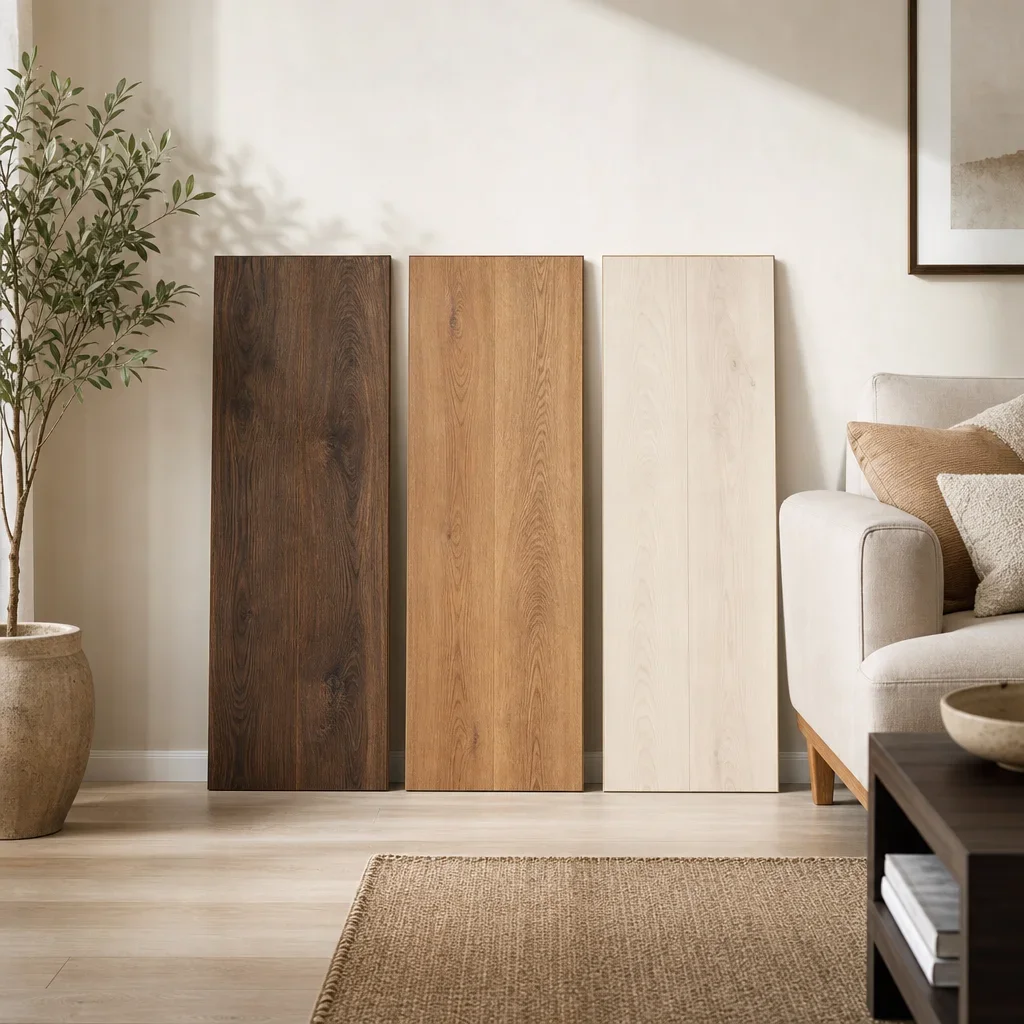
Light laminate flooring is usually easier to live with in compact rooms, lower-light spaces, rentals, and family homes because it tends to feel more open and shows less everyday dust than very dark smooth floors. Dark laminate flooring can look rich and dramatic, but it usually asks for more contrast, more light, and more upkeep to keep that look sharp.
Mid-tone laminate flooring is the compromise most people end up happiest with because it gives warmth without the high-maintenance look of very dark floors or the washed-out feel some very pale floors can create. In real homes, mid-tones also make it easier to balance cabinets, rugs, trim, and furniture.
Choose dark if you want contrast, the room gets strong natural light, and you do not mind seeing lint, footprints, or pet hair sooner. Choose light if the room is small, the daylight is limited, or you want a calm look that stays flexible as décor changes. Choose mid-tone if you want resale flexibility, easier maintenance, and a warmer look than very pale laminate.
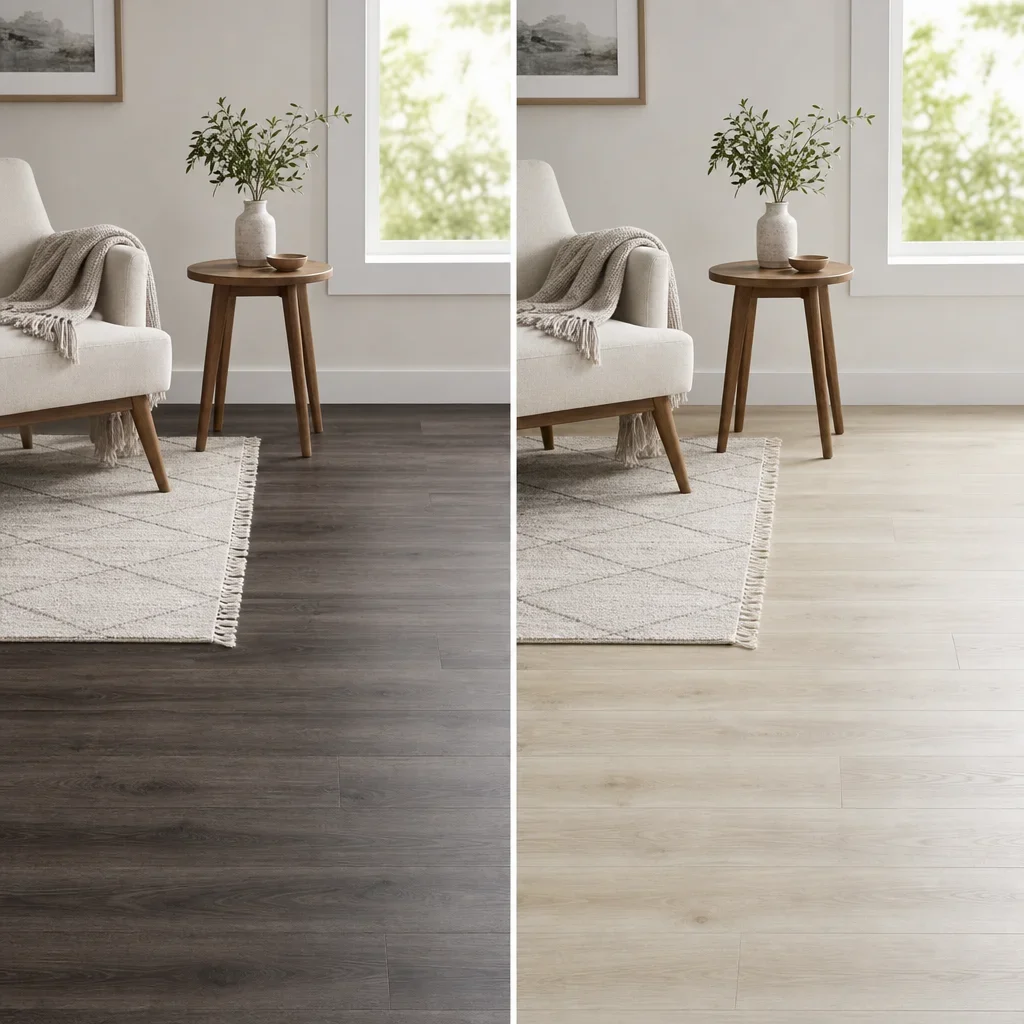
Dark vs light laminate flooring pros and cons are easiest to judge side by side, because colour changes what you notice every day more than how the floor is built.
| Factor | Dark laminate | Light laminate | Mid-tone laminate |
|---|---|---|---|
| Room size effect | Feels more grounded and visually heavier | Usually feels more open and airy | Balanced, neither too heavy nor too stark |
| Natural light | Works best in bright rooms | Helps dim rooms feel brighter | Handles mixed lighting well |
| Mood | Dramatic, formal, cozy, high-contrast | Calm, casual, airy, relaxed | Warm, versatile, understated |
| Dust visibility | Usually shows dust and lint faster | Usually hides dust better | Often the most forgiving |
| Pet hair visibility | High contrast can make hair stand out | Depends on hair colour and undertone | Often easier day to day |
| Scratch visibility | Can show light surface marks more clearly | Can show dirt in grooves or dark scuffs | Matte mid-tones usually hide wear best |
| Style fit | Modern, traditional, moody, upscale rooms | Scandinavian, coastal, minimalist, casual | Transitional, family homes, broad design styles |
| Resale flexibility | More selective | Broad appeal | Broadest appeal for many homes |
| Best room types | Bright living rooms, dining rooms, larger bedrooms | Basements, condos, hallways, smaller bedrooms | Whole-home installs, family homes, rentals |
Dark laminate flooring brings strong contrast and a more formal look, but it can make design mistakes stand out faster. If the floor is very dark and the finish is glossy, dust, pet hair, and footprints usually show more clearly than they do on lower-sheen options.
Light laminate flooring makes spaces feel easier to decorate around, and it usually works better when wall colour, cabinet colour, and furniture may change over time. The trade-off is that very pale boards can sometimes look flat in bright white rooms unless texture, rugs, or warmer accents add depth.
Mid-tone laminate flooring is the practical middle ground because it softens contrast and hides everyday mess better than the extremes. If you want one floor through several connected rooms, this is often the easiest path.
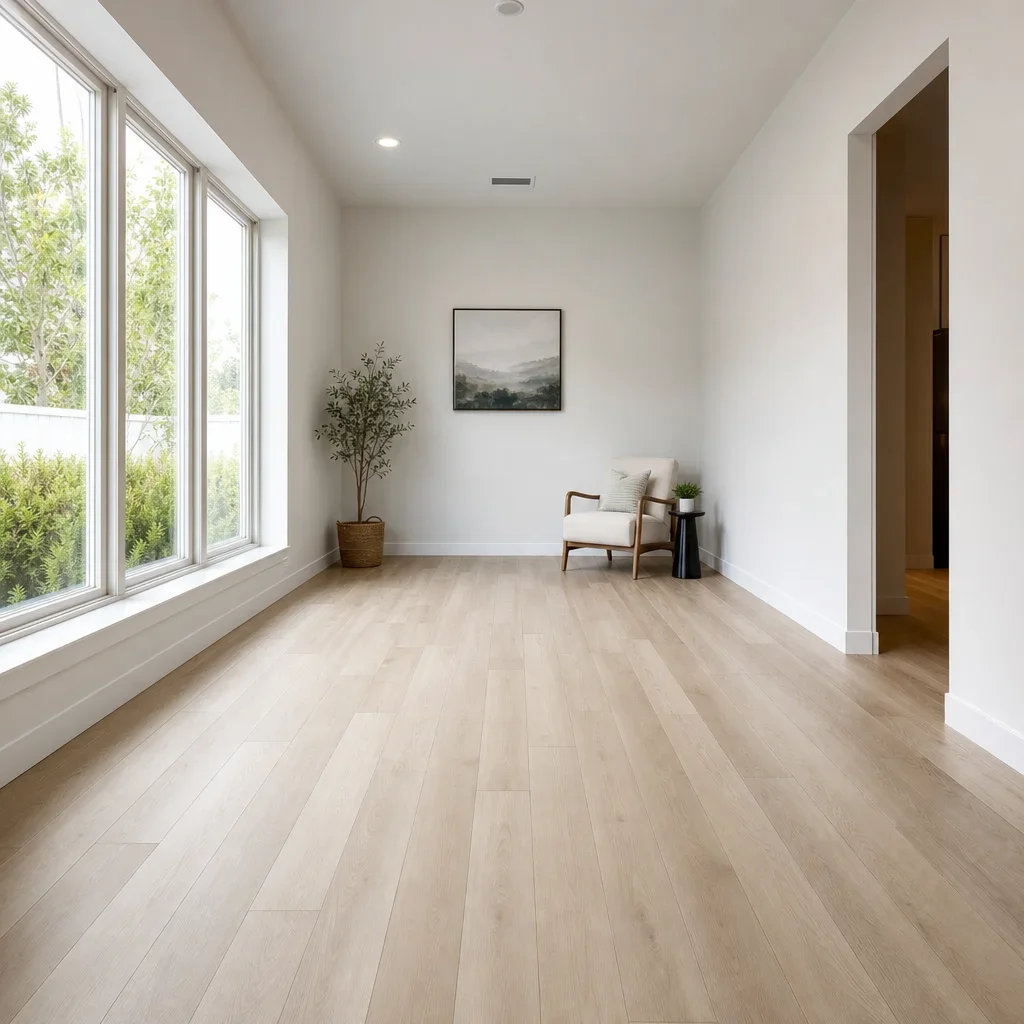
Light floors usually make a room look bigger because they bounce more visual brightness around the space and feel less visually heavy. This is design guidance rather than a hard rule, but in laminate the effect is usually strongest in smaller rooms with limited window light.
Dark floors can make a room feel smaller when the room is already short on daylight, wall colour is dark, and the furniture is bulky. In a large room with tall ceilings, pale walls, and wide windows, that same dark floor can look elegant instead of cramped.
Plank direction changes the effect almost as much as colour because boards laid along the room's longest sightline tend to stretch the visual length of the space. Using the same laminate through connected rooms can also make a home feel larger by reducing visual breaks.
Plank width and pattern matter because fewer seams usually create a calmer, more continuous look. A heavily varied pattern with short repeating boards can make any room feel busier, whether the floor is dark or light.
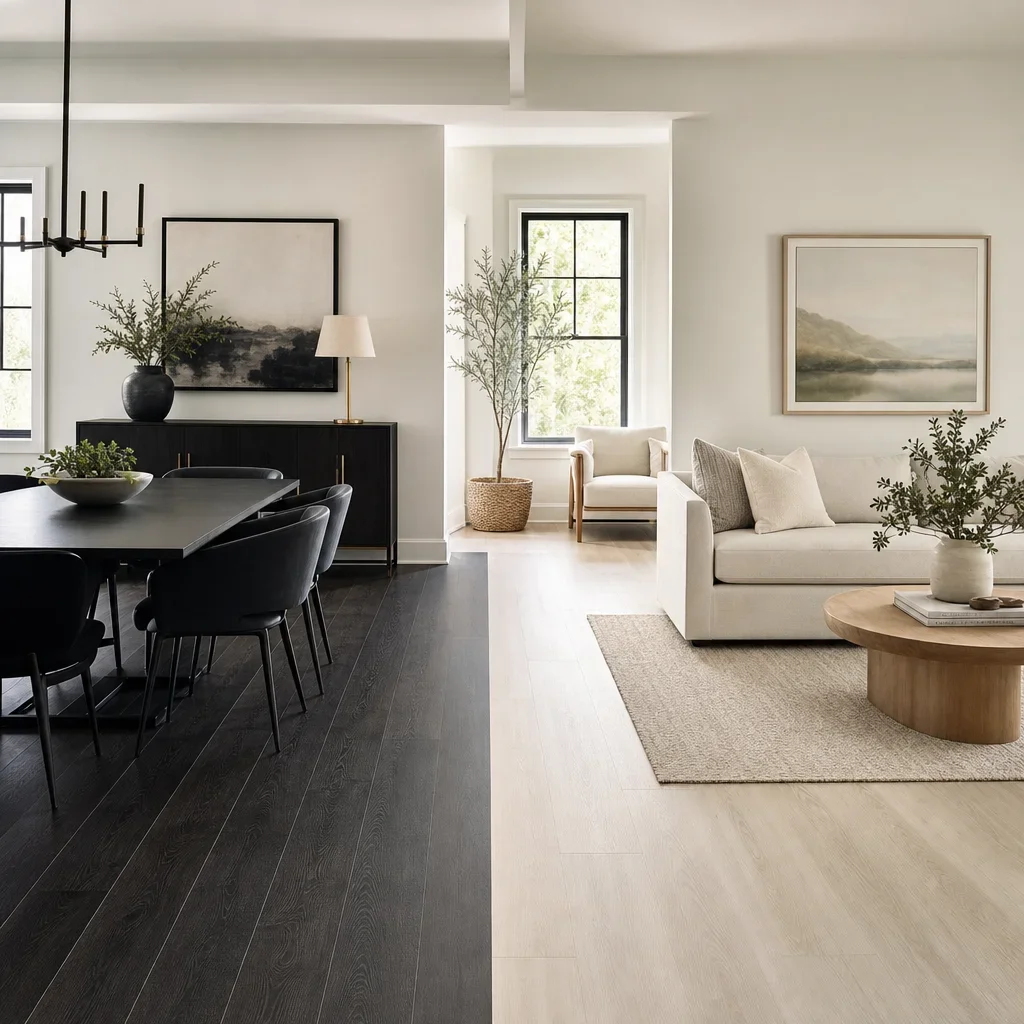
Dark laminate flooring usually reads as dramatic, tailored, and high-contrast, especially when paired with lighter walls and simple trim. It can also feel cozy in bedrooms and formal in dining rooms, but that mood depends on the whole palette, not just the floor.
Light laminate flooring usually feels calmer, more casual, and more airy, which is why it fits Scandinavian, minimalist, contemporary, and relaxed family interiors so easily. It also leaves more room for bold furniture, darker cabinets, or layered textures without making the room feel heavy.
Dark floors often suit traditional, moody modern, and some upscale transitional interiors because they create a stronger base under furniture. If you want a room to look more luxurious or sophisticated, dark can help, but only when the lighting, finish, and furnishings support it.
Light floors often suit farmhouse, modern organic, coastal, and casual transitional rooms because they keep the shell of the room visually open. If you want a space to feel warmer, calmer, or more airy, light and mid-tone floors usually get there faster than very dark ones.
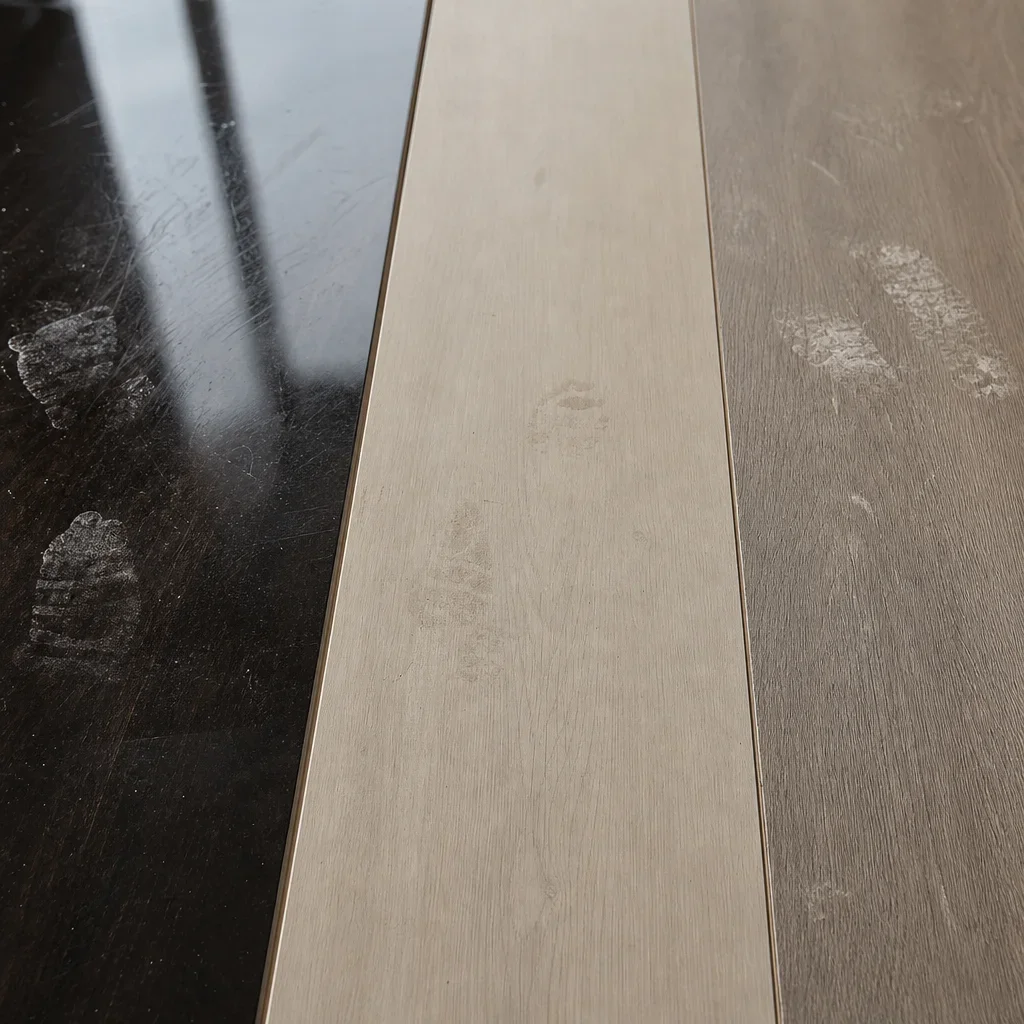
Very dark smooth laminate is usually the hardest to keep looking clean because it tends to show dust, lint, footprints, and pet hair quickly. This is one of the biggest reasons buyers like the look of dark floors in the showroom but regret them at home.
Very light laminate usually hides ordinary dust better, but it can show muddy spots, dark crumbs, and deep dirt in textured grain if cleaning slips. The undertone matters too, because cool grey-beige boards can show warm dirt differently than warmer oak looks.
Matte vs gloss laminate is not a small detail because lower-sheen finishes usually hide surface mess better than glossy ones. Textured embossing also helps disguise minor scuffs and dust because it breaks up reflected light.
Mid-tone laminate with a matte or lightly textured finish is often the easiest day-to-day option because it softens contrast from both dust and scratches. If you want practical over perfect, this is the range I would start with in most family homes.
Laminate should be cleaned with dry dusting, a soft broom, or a microfiber mop, then a manufacturer-approved laminate cleaner when needed. Excess water is still a problem for many laminate products, and steam should only be used if the product maker specifically allows it.
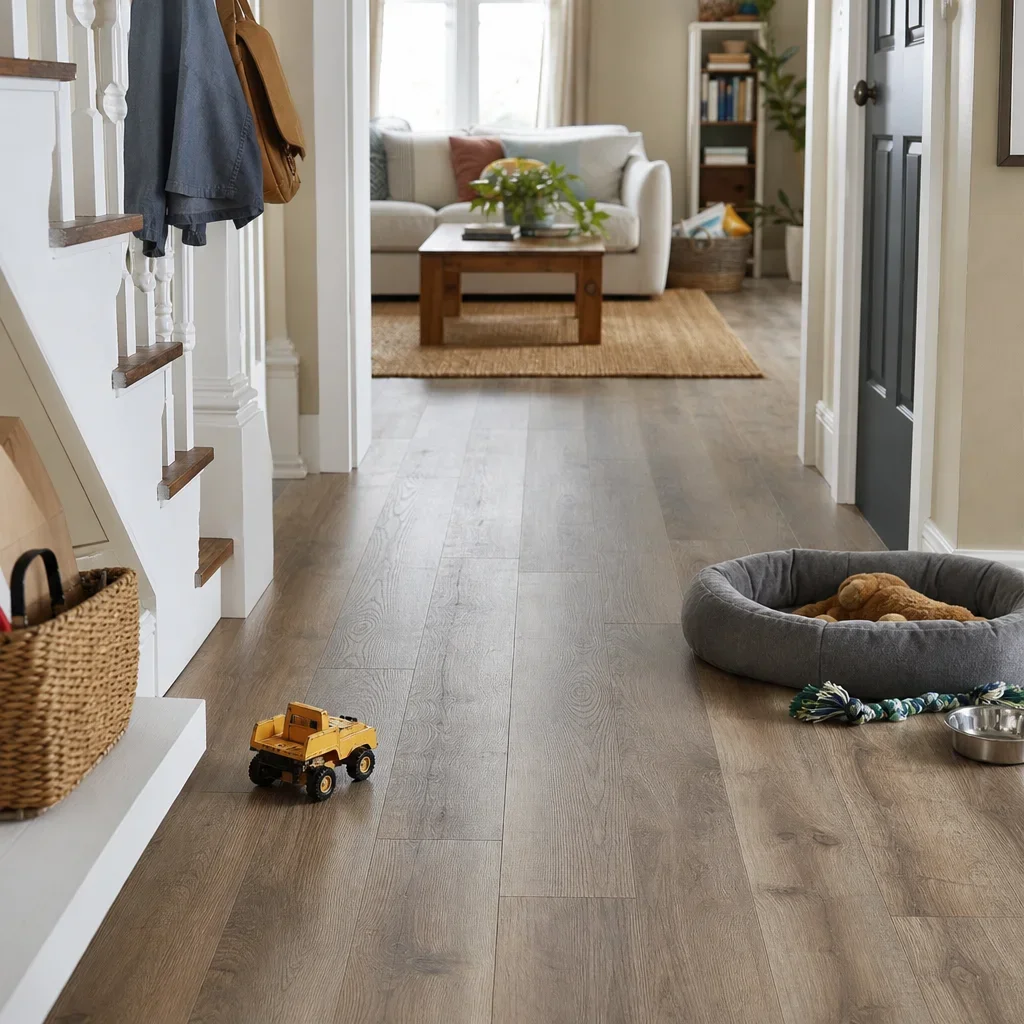
Busy homes usually do better with lighter or mid-tone laminate in a matte or textured finish because those combinations tend to hide the day-to-day evidence of real life better. Colour changes what you notice, while product build changes how the floor actually wears.
AC4 laminate and AC5 laminate are wear ratings used to compare durability classes, but the better choice depends on the product line and the use case rather than colour alone. If pets are a factor, compare the AC rating, surface texture, locking system, warranty terms, and the realism of the pattern before you compare shade.
Pet claws usually show more on dark glossy floors because the contrast makes light surface marks easier to see. Hair visibility depends on the pet, since white hair stands out on dark laminate and black hair stands out on pale boards.
Tracked-in grit, toys, crumbs, and chair movement matter more in family homes than trend colour does. For that reason, a forgiving finish and a realistic wood visual usually matter more than choosing the darkest or lightest board on the rack.
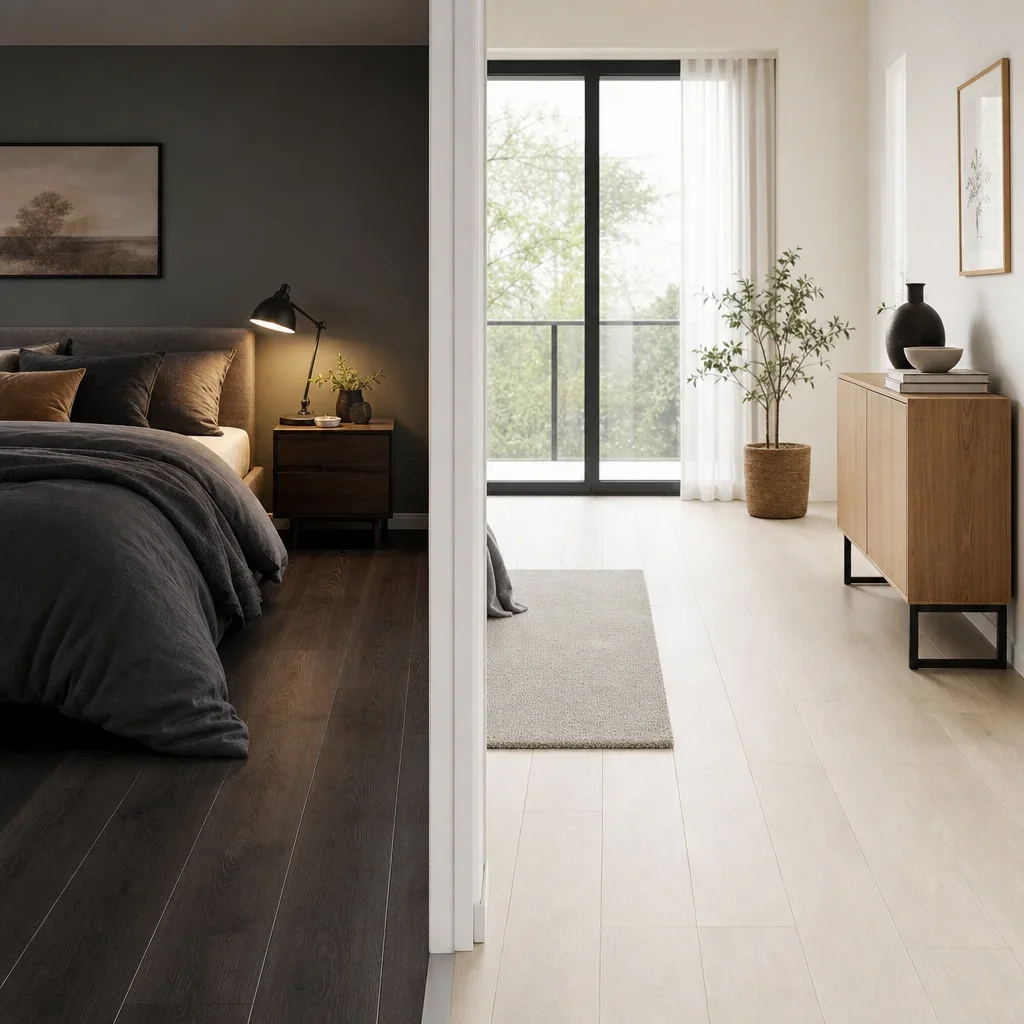
Bedrooms can take either direction, but the mood changes fast: dark laminate feels cozier and more dramatic, while light laminate feels calmer and more open. In smaller bedrooms, light usually gives you more flexibility with bedding and wall colour.
Living rooms usually suit dark floors when the room is bright and spacious enough to handle contrast. In condos, semis, and average-sized family rooms, lighter laminate usually keeps the space feeling wider and easier to furnish.
Hallways and entry zones usually look cleaner longer in mid-tone or lighter laminate because footprints, lint, and tracked-in dust stand out less than they do on very dark boards. This matters even more in Toronto and GTA homes through slush and shoulder-season dirt.
Basements usually benefit from light laminate because many basement rooms have limited natural light and lower ceilings. A pale or mid-tone wood look can help the space feel less closed in.
Kitchens and dining areas need colour coordination as much as practicality because crumbs, spills, and cabinet contrast all show up here. If the cabinets are already dark, a lighter floor often keeps the room from feeling bottom-heavy.
Home offices and compact condo spaces often look better on camera with lighter floors because the room reads brighter in video calls and photos. Dark floors can still work, but they need stronger lighting and simpler furniture shapes.
Dark floors look best when the room has enough contrast above them, which usually means lighter walls, lighter trim, or both. White or off-white baseboards do not have to match the laminate exactly because trim works by contrast and undertone, not by copying the floor colour.
Light floors work well with white, greige, taupe, black, walnut, and natural wood accents because they give you a neutral base. If the whole room is pale, add texture through rugs, fabrics, and furniture so the space does not feel flat.
Cabinet colour changes the decision more than many people expect because floors and cabinets take up most of the visual weight in a room. White kitchens pair easily with both dark and light laminate, wood kitchens need undertones checked carefully, and black cabinets usually need either enough daylight or a lighter floor to avoid a heavy look.
Rugs and furniture should create balance instead of competing wood tones in every direction. If you already have dark furniture, a lighter floor often prevents the room from looking crowded, while dark floors usually benefit from some lighter upholstery or area rugs.
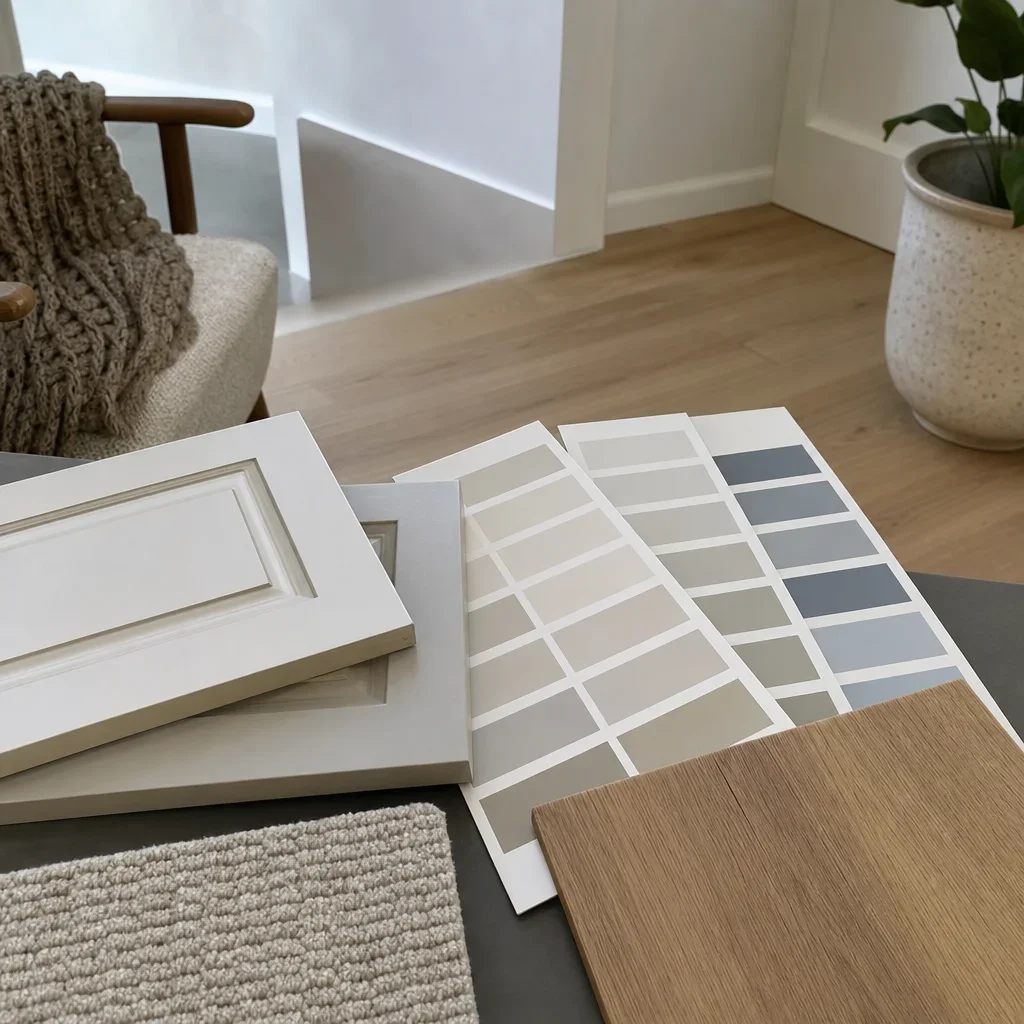
The safest way to coordinate is to compare undertones first because warm oak, cool grey, red-brown, and beige-tan woods do not mix equally well. A larger sample viewed beside cabinets, paint, and fabric in morning and evening light will tell you more than a tiny swatch ever will.
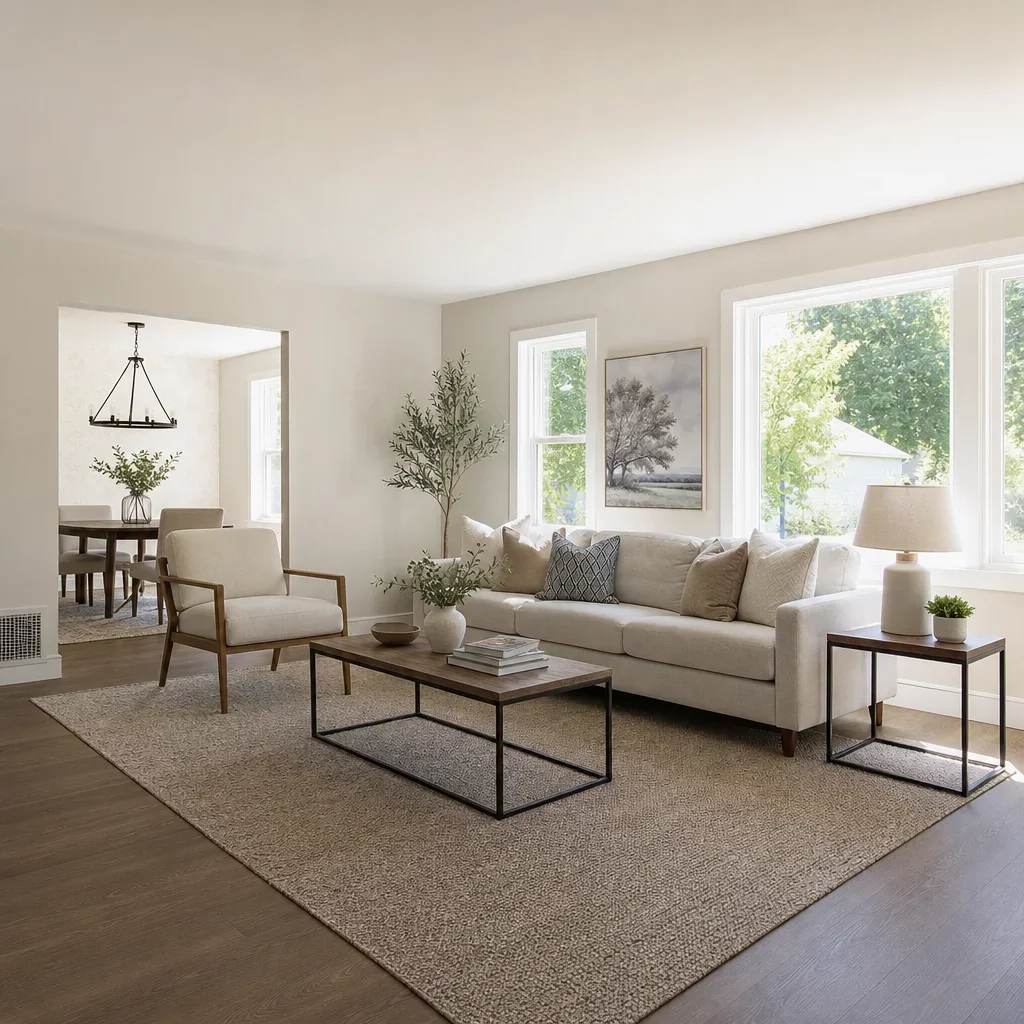
For resale, lighter and mid-tone laminate usually appeal to a broader range of buyers because they feel easier to decorate around and less demanding to maintain. That does not mean dark floors hurt resale by default, only that they are more style-specific.
Dark floors can still work well in bright homes, larger rooms, and interiors that are clearly designed around contrast. If the rest of the home supports that look, dark laminate can feel intentional rather than risky.
Mid-tone laminate is often the safest compromise for resale because it feels warm, realistic, and broadly adaptable without showing everyday mess as quickly as very dark boards. If you are choosing for a rental, a future sale, or a whole-home update, this is usually the most flexible lane.
Light or dark floors for resale is really a question of buyer range, not magic value. No colour guarantees return, and the layout, condition, finish quality, and installation quality still matter more than trend chasing.
Are dark laminate floors in style? Yes, but they are more selective than they were in some past cycles, and they work best when the room has the light and design contrast to support them. They are not automatically out of style.
The most popular laminate flooring color in 2026 should be treated as a trend-sensitive claim, not a permanent fact, because colour preferences shift by market, product line, and home style. In general, many buyers are still drawn to natural-looking oak visuals, lighter woods, and mid-tone laminate with realistic texture.
If you are asking what color flooring is in style in 2026, the safer answer is to focus on believable wood visuals, balanced undertones, and lower-sheen finishes instead of chasing one hot shade. Trend-led extremes date faster than well-chosen neutrals.
Are dark wood floors out of style in 2026? Not necessarily. They are simply less universal than soft natural tones, which means they need the right room, the right finish, and the right supporting palette.
Are darker floors more timeless? Sometimes, but only when they resemble classic wood tones rather than flat, overly glossy, near-black planks. Timelessness usually comes from realism and proportion more than from going dark.
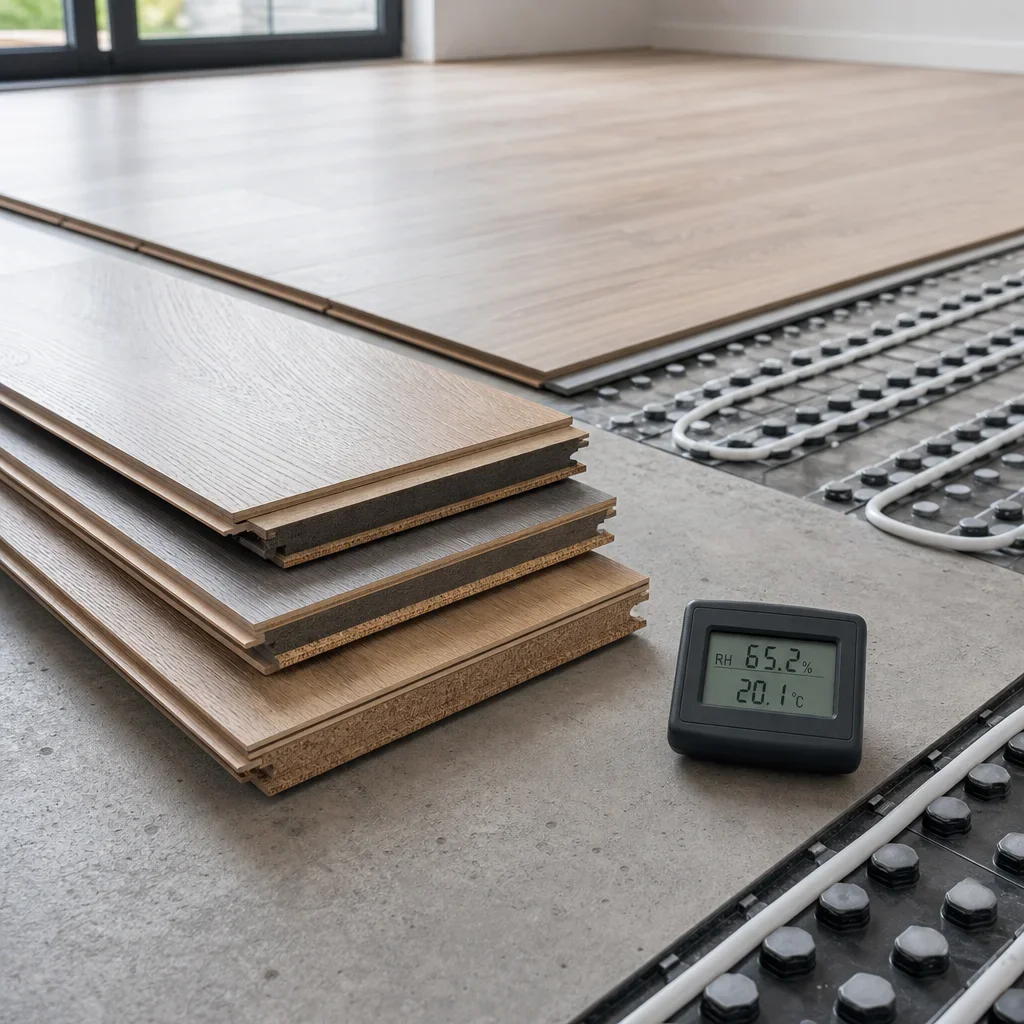
Colour itself usually does not determine laminate performance or price as much as construction, thickness, wear rating, locking system, and water-resistance features do. At CanFloor, laminate flooring starts from $1.69 per square foot , but the exact product line, finish, and installation scope are what move the final number most.
A dark board can cost more than a light one if it belongs to a different collection, but that is about the product line rather than the shade itself. In other words, dark vs light laminate flooring cost is not a reliable decision tool on its own.
Laminate can perform well in normal indoor humidity when it is acclimated and installed properly, but standing water is still a problem unless the product is specifically made for higher moisture resistance. If humidity, basement use, or kitchen exposure is part of the plan, confirm the product specs instead of assuming colour changes performance.
Underfloor heating compatibility depends on the product specification and installation method, not whether the laminate is dark or light. Always check the manufacturer's instructions before buying, because some laminate lines are approved for radiant heat and others are not.
The biggest mistake is choosing from a tiny sample because laminate colour shifts under daylight, warm bulbs, and evening shadows. A board that looks balanced at noon can look much darker or much cooler after sunset.
Ignoring undertones causes more disappointment than choosing the wrong shade depth. Floors, cabinets, countertops, paint, and furniture all carry warm, cool, beige, grey, red, or yellow undertones, and those signals need to agree.
High-gloss dark laminate is one of the easiest ways to create a maintenance headache in a pet-heavy or dusty home. If you love darker floors, choose a matte or textured surface before you chase maximum drama.
Choosing by trend instead of room conditions is another common mistake because laminate lives at eye level every day. The better question is not whether a colour is fashionable but whether you will still like how it looks on a Tuesday morning with crumbs, backpacks, and pet hair on it.
Confusing colour with durability leads people to buy the wrong product for the wrong reason. Shade affects visibility, while AC rating, board construction, and finish affect wear performance.
Mixing too many wood looks through adjacent rooms makes the home feel chopped up faster than most people expect. If you need transitions, keep the undertones related and the visual change intentional.
If the room is small, dim, heavily used, or full of pets and kids, light or mid-tone laminate is usually the better choice. That is the most practical answer for everyday living.
If the room is large, bright, and you want contrast with lighter walls or cabinets, dark laminate can work beautifully. It makes more sense when you are choosing for mood as much as maintenance.
If you want one floor through most of the home, mid-tone laminate is usually the safest call because it balances openness, warmth, and resale flexibility. It is also the easiest option when you are coordinating stairs, hallways, and several rooms at once.
Use this simple path:
Seeing full-size samples beside cabinets, wall paint, and furniture is still the fastest way to avoid a mistake. If you want to compare dark, light, and mid-tone laminate in person, our North York showroom can help you line them up side by side for supply and installation quotes.
A bright condo living room with white walls, black accents, and limited floor area usually suits light or mid-tone laminate because the floor helps the room feel wider without fighting the daylight. This is where pale oak and soft natural wood visuals usually outperform very dark boards.
A larger detached-home dining room with big windows, white trim, and lighter upholstery can carry dark laminate well because the room already has enough brightness to balance it. In that setting, dark floors can look more sophisticated than heavy.
A basement family room usually benefits from lighter laminate because the lower ceiling and reduced daylight already compress the space visually. Going too dark here can make the room feel lower and more enclosed.
The best color for laminate flooring is the one that fits the room's light, size, décor, and maintenance demands. For most homes, mid-tone and lighter natural wood looks are the safest all-round choices.
Light flooring is usually better for small, dim, and busy homes, while dark flooring suits larger, brighter rooms where drama and contrast matter more.
Light floors usually make a room look bigger because they feel more open and less visually heavy. Consistent flooring through connected spaces helps too.
They can in low-light or compact rooms, especially with dark walls and bulky furniture. In bright, open rooms, they can look elegant instead.
Yes. They are just more selective and design-dependent than lighter natural wood looks.
No fixed rule says they are out. Trend direction currently leans more toward natural, light, and mid-tone visuals, but dark floors still work in the right room.
Some are, especially classic walnut or deep brown wood looks with realistic texture. Very glossy, near-black planks tend to date faster.
Trend claims should be verified as collections change, but natural oak-inspired mid-tones and lighter woods remain strong choices for broad appeal.
Mid-tone laminate usually hides the widest range of everyday dust and hair best. Matching the floor roughly to the pet's coat also helps.
Usually yes, because matte finishes reflect less light and make minor surface marks less obvious.
Look at AC4 laminate and AC5 laminate as common durability classes to compare, then confirm the product's intended use, warranty, and finish. The right choice depends on the specific line, not just the label.
For many homes, yes. It gives warmth, broad design flexibility, and easier maintenance visibility than the extremes.
It can affect buyer appeal, but not in a guaranteed way. Lighter and mid-tone floors usually have broader resale flexibility.
Usually no, not by itself. Price is driven more by the product collection, construction, thickness, and features.
It can handle normal indoor humidity when installed correctly, but standing water remains a risk unless the product is made for higher moisture exposure.
Some products can, some cannot. Check the specific product specs before buying.
In design, the rule of 3 flooring usually means limiting the number of different floor finishes in a home so the space feels cohesive. It is a style guideline, not a building rule.
The lowest-maintenance choice is rarely the darkest or the palest board on the wall. If you are still deciding, compare a dark, a light, and a mid-tone sample in your actual room before you buy.