
The best hardwood flooring finishes are rarely the ones that look best under showroom lights alone. The right finish is the one that fits your traffic, your wood species, your tolerance for maintenance, and whether the floor is factory-finished or site-finished.
A hardwood floor finish is the protective layer that sits on or in the wood and controls wear resistance, stain resistance, moisture resistance, sheen, and final colour appearance. The wood itself, the stain colour, and the top finish are three separate parts of the floor system.
A finish does two jobs at once: it protects the floor from daily abrasion and changes how the floor looks in your room. Surface finishes such as polyurethane create a film on top of the wood, while penetrating finishes such as oil soak into the fibres and leave a more natural feel.
No single option is the best hardwood floor finish for every home because traffic, pets, kids, sunlight, odour sensitivity, and maintenance tolerance all change the answer. In most current residential buying decisions, the short list is water-based polyurethane, oil-based polyurethane, factory-applied aluminum oxide or UV-cured systems, natural oil, and hard wax oil.
For most households, water-based polyurethane or a quality factory-applied UV-cured finish is the practical choice because it balances durability, clarity, and lower yellowing. If you want the safest all-around sheen choice, satin or matte usually hides dust, micro-scratches, and footprints better than glossier finishes.
If maximum wear resistance matters most, a factory-finished aluminum oxide finish or UV-cured finish is usually the strongest candidate. If you want a warmer amber look on traditional wood tones, oil-based polyurethane is often the better visual fit. If repairability and a low-sheen natural look matter more than low maintenance, hard wax oil is worth serious consideration.
| Priority | Usually the best fit | Why |
|---|---|---|
| Best for most homes | Water-based polyurethane | Clearer look, lower ambering, practical maintenance |
| Best for maximum durability | UV-cured or aluminum oxide finish | Very high wear resistance on many prefinished products |
| Best for warm traditional colour | Oil-based polyurethane | Adds amber warmth over time |
| Best for natural look and spot repair | Hard wax oil | Lower sheen, easier local touch-ups on some floors |
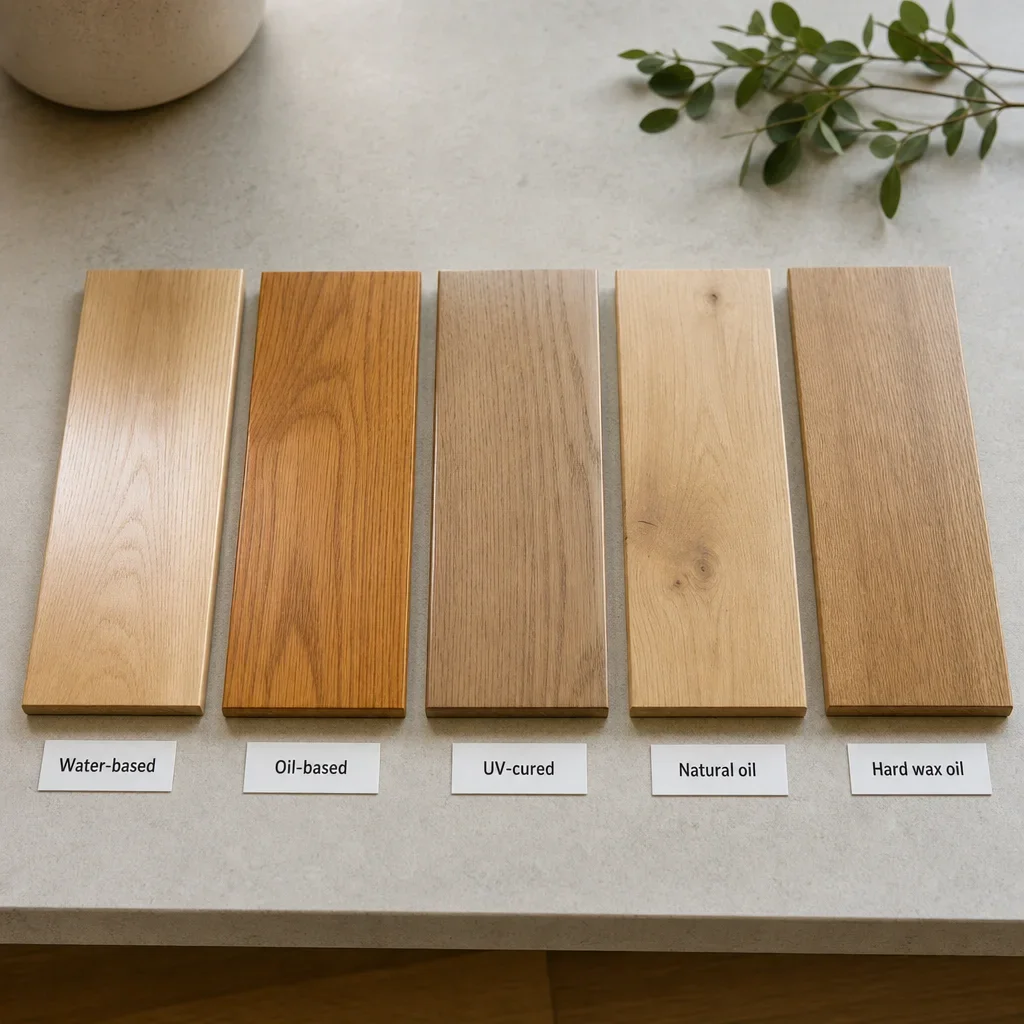
The main finish families are polyurethane, factory-cured finishes, oil systems, wax, shellac, and a few specialized professional coatings. Most buyers comparing the best hardwood flooring finishes in Canada will spend nearly all their time choosing between water-based polyurethane, oil-based polyurethane, UV-cured or aluminum oxide factory finishes, and hard wax oil.
Water-based polyurethane dries faster than oil-based polyurethane in relative terms, stays clearer over time, and is a common choice for white oak, maple, and other lighter floors. It is a surface finish, so it forms a protective film that helps with stain resistance and day-to-day cleaning.
Oil-based polyurethane gives wood a warmer amber tone, usually has stronger odour during application, and is often chosen for more traditional hardwood visuals. It is still a durable surface finish, but the colour shift over time is part of the look, not a defect.
An aluminum oxide finish is typically factory-applied on prefinished hardwood and engineered wood flooring, and it is known for strong wear resistance. A UV-cured finish is also applied in controlled factory conditions and cured under ultraviolet light, which helps deliver a hard, consistent surface and quicker move-in compared with finishing boards on site.
Hard wax oil is a penetrating finish with a soft surface character and a natural, low-build look. It can be more forgiving for localized repairs than many film finishes, but it asks for more maintenance awareness and is not the lowest-effort choice for a busy family floor.
Natural oil finishes penetrate the wood and highlight texture rather than building a thicker film above it. They appeal to design-focused buyers who want the floor to feel more like wood and less like a coated surface.
Wax is now a niche finish rather than the modern default because it generally needs more ongoing maintenance and creates compatibility issues if someone later wants to recoat with polyurethane. Shellac is mostly a legacy or restoration finish and is not the first recommendation for most current residential hardwood installations.
Moisture-cured urethane and conversion varnish exist as specialized professional systems, but they are not the standard finish conversation for most homeowners shopping wood floors. Their performance and application requirements are product-specific enough that buyers should ask the manufacturer or installer exactly what system is being used.
| Finish type | Surface or penetrating | Typical look | Durability | Repairability | Odour during application | Best for |
|---|---|---|---|---|---|---|
| Water-based polyurethane | Surface | Clear to slightly warm | High | Moderate | Lower than many oil systems | Light woods, contemporary looks, practical family use |
| Oil-based polyurethane | Surface | Warm, ambering | High | Moderate | Stronger | Traditional colour, richer warmth |
| UV-cured finish | Surface | Depends on product | High to very high | Moderate to lower, product-dependent | Factory-applied | Prefinished flooring, quicker occupancy |
| Aluminum oxide finish | Surface | Depends on product | Very high wear resistance | Moderate to lower, product-dependent | Factory-applied | High traffic prefinished floors |
| Hard wax oil | Penetrating/surface hybrid | Natural, low sheen | Moderate | Higher for spot repairs | Product-dependent | Natural aesthetics, design-led homes |
| Natural oil | Penetrating | Very natural | Moderate to lower | Higher for localized work | Product-dependent | Texture-forward wood appearance |
| Wax | Penetrating/top treatment | Soft sheen | Lower | Moderate | Product-dependent | Older or specialty floors |
| Finish type | Main advantages | Main drawbacks |
|---|---|---|
| Water-based polyurethane | Clearer colour, practical maintenance, good family choice | Can look less warm on traditional species |
| Oil-based polyurethane | Richer tone, classic appearance | Stronger odour, more yellowing over time |
| UV-cured or aluminum oxide finish | Excellent wear resistance, controlled factory application | Repairs and colour matching can be less simple than site-finished systems |
| Hard wax oil | Natural look, localized maintenance can be easier | Needs more upkeep awareness, not the most protective against heavy abuse |
| Natural oil | Texture and authenticity | More maintenance commitment |
| Wax | Traditional look | Niche use, compatibility limits, more upkeep |
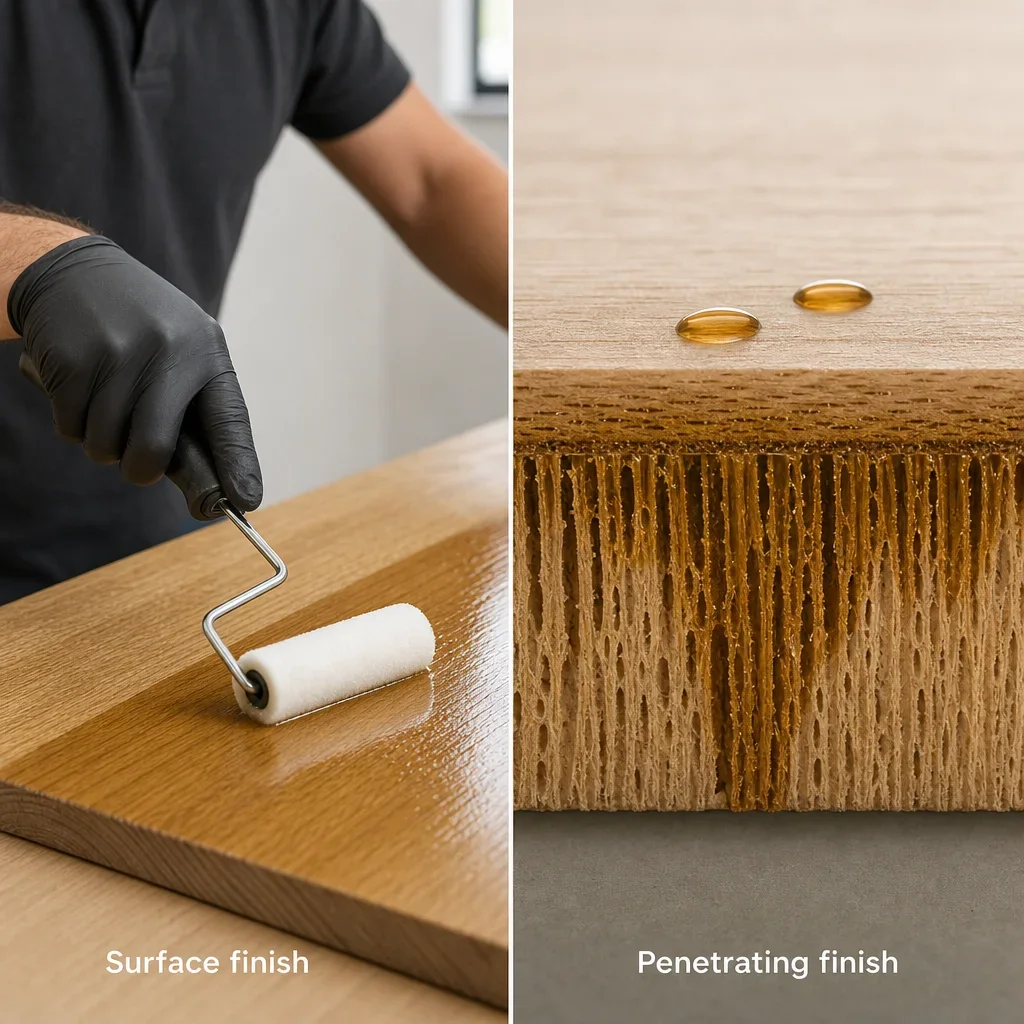
Surface finishes protect the floor by building a film above the wood, and penetrating finishes protect it by soaking into the fibres with less visible build on top. Polyurethane, aluminum oxide, and many UV-cured coatings are surface finishes, while natural oils are the classic penetrating option.
Surface finishes are usually better for busy family homes because they offer stronger day-to-day stain resistance and simpler routine cleaning. They also let you choose from matte, satin, semi-gloss, and gloss sheens more predictably.
Penetrating finishes usually win on natural feel and localized repair potential, but they ask the owner to accept more maintenance involvement. That trade-off is worth it for some buyers, especially when the design goal is a low-sheen floor that looks quiet and organic rather than highly sealed.
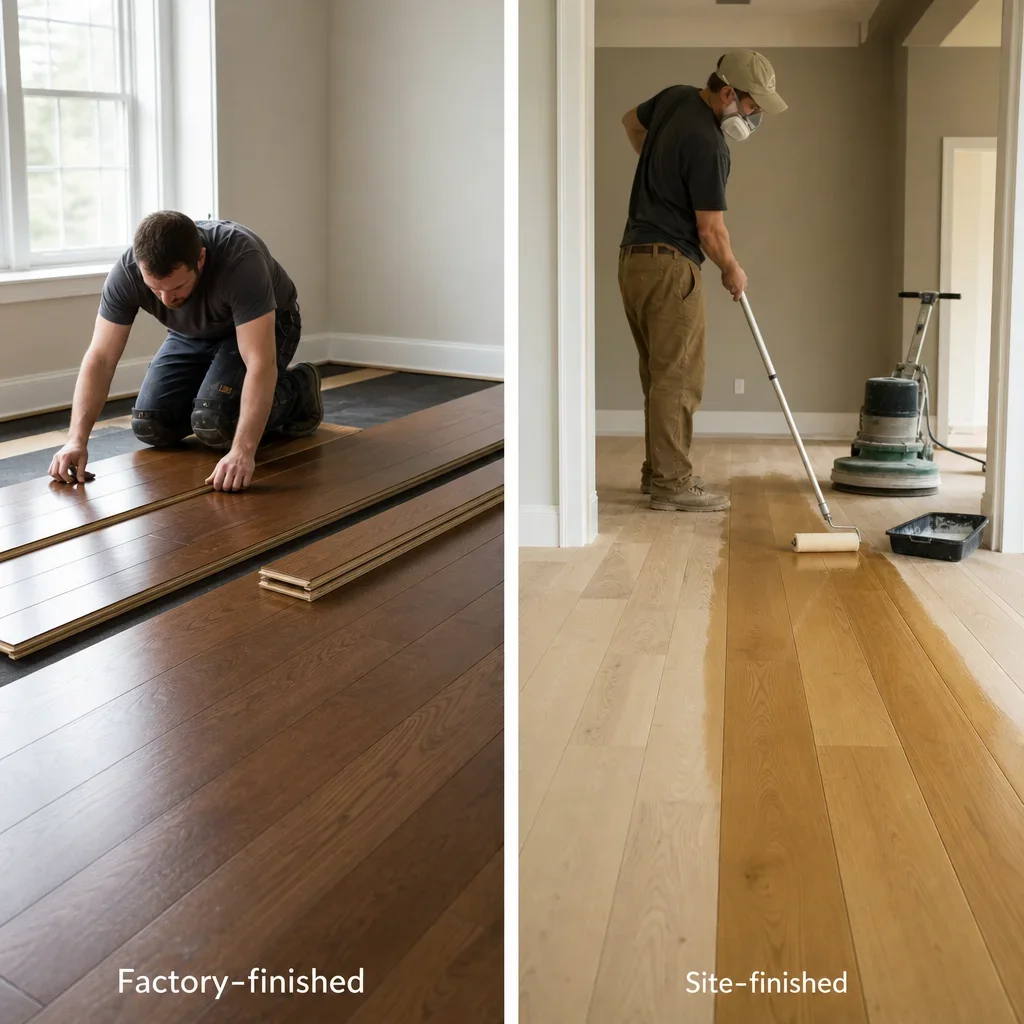
Factory-finished hardwood comes coated before installation, while site-finished hardwood is sanded, stained if needed, and finished after it is installed in the home. That one difference affects customization, odour, disruption, repair strategy, and how quickly the room can be used.
Factory-finished floors usually offer stronger consistency because the coating is applied under controlled manufacturing conditions. This is where UV-cured finish systems and many aluminum oxide finish systems show up most often.
Site-finished vs factory-finished hardwood is really a choice between speed and control. Site finishing gives more flexibility for custom stain, sheen matching, and blending with existing hardwood, while factory finishing usually reduces installation disruption and move-in delay.
Factory-finished boards can also have micro-bevels at the edges, while site-finished floors usually create a flatter, more continuous surface across the room. If you are matching stairs, landings, or an older floor, site finishing can be a useful advantage, but it should be reviewed project by project.
For buyers in Toronto and the GTA, hardwood flooring finishes in Canada should also be considered with seasonal indoor humidity in mind. A good finish helps protect the wood surface, but humidity control, product construction, and proper installation matter just as much as the coating itself.
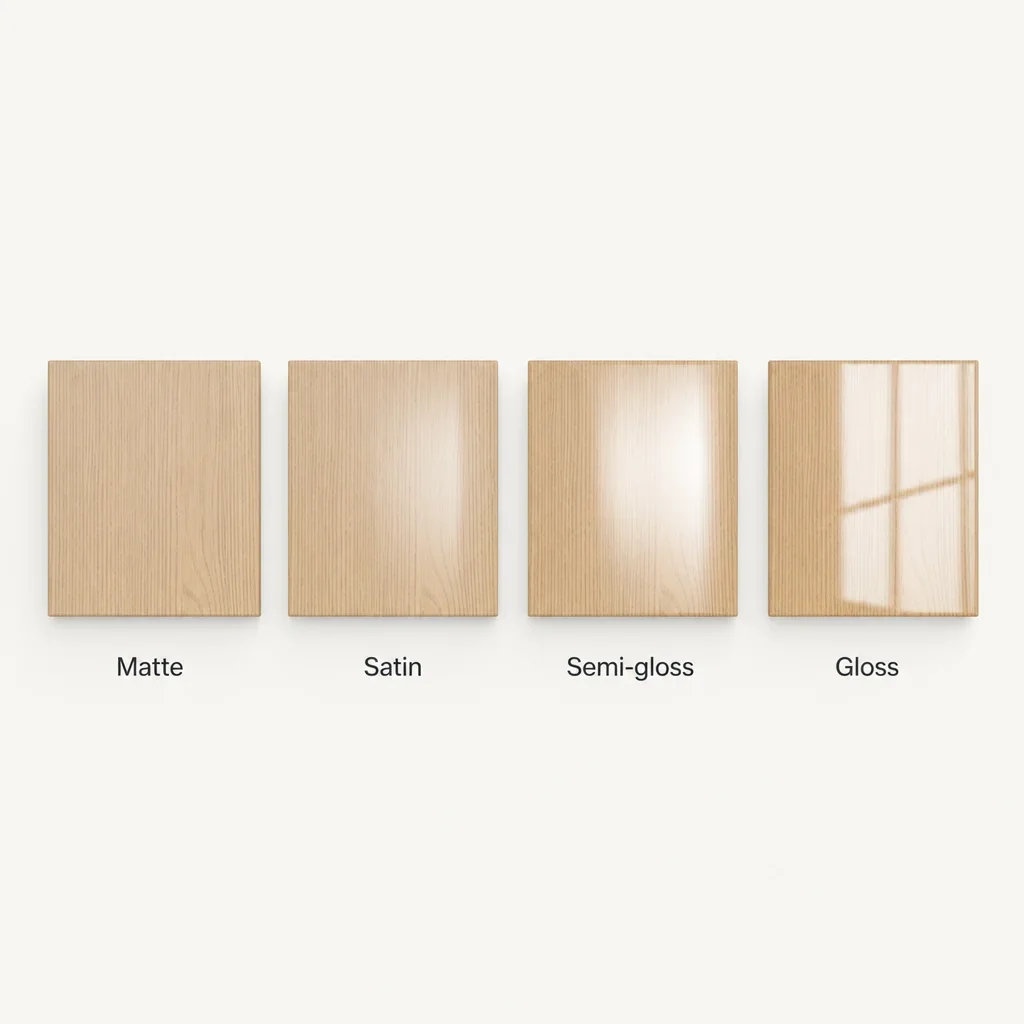
The main sheens for hardwood floors are matte, satin, semi-gloss, and gloss. Lower sheens reflect less light, while higher sheens reflect more and make the coating itself more visible.
Matte is the calmest-looking option and usually does the best job hiding dust, footprints, and fine surface scratches. It is a strong fit for contemporary interiors, lighter planks, and larger open rooms with a lot of daylight.
Satin sits in the practical middle and is the safest answer for most homes. When people ask about hardwood floor finishes satin or gloss, I usually tell them satin gives enough richness without advertising every mark the way a glossier floor can.
Semi-gloss brings more shine and more formal contrast, but it also makes daily wear easier to see. Gloss reflects the most light and can look dramatic on a sample board, yet it tends to show micro-scratches, dust, and pet traffic the fastest.
| Sheen | Look | Hides dust and scratches | Best fit |
|---|---|---|---|
| Matte | Soft, low reflection | Best | Contemporary rooms, pets, kids |
| Satin | Balanced, gentle glow | Very good | Most homes, most species |
| Semi-gloss | Noticeable shine | Moderate | Formal spaces, lower traffic |
| Gloss | High reflection | Lowest | Specialty looks, lower abuse areas |
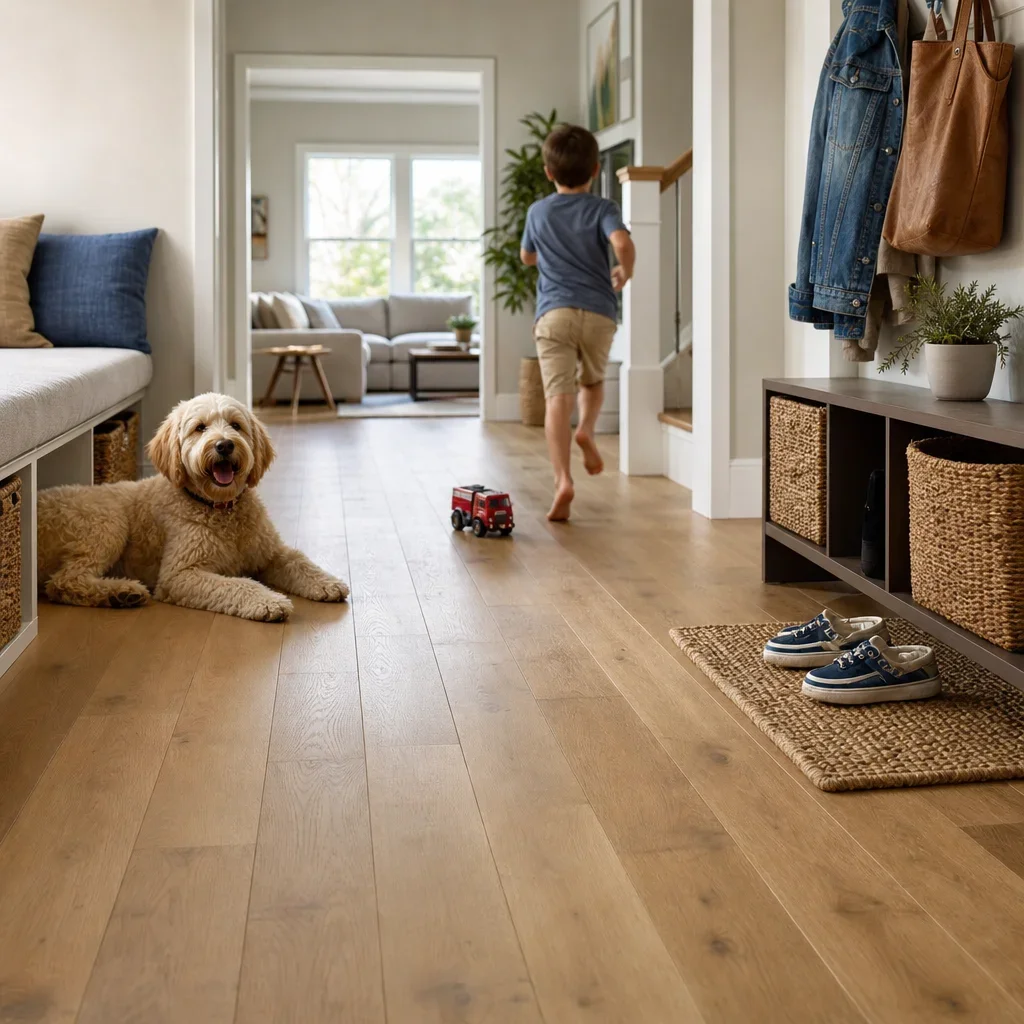
For high-traffic households, the safest starting point is a durable surface finish in matte or satin, usually water-based polyurethane for site finishing or a quality factory-applied UV-cured or aluminum oxide system for prefinished flooring. A lower sheen matters because scratch visibility is often the real day-to-day complaint, not just the coating's hardness.
For homes with pets and kids, matte or satin usually beats gloss because it forgives claw marks, crumbs, and constant traffic better. If the household is rough on floors, I would compare a strong factory finish against a site-finished water-based polyurethane and ask not just how durable it is, but how repairable it will be later.
For low-odour or lower-VOC priorities, water-based systems are usually the first category to review, though exact product chemistry varies by manufacturer and should be confirmed on the product data sheet. For quick use after installation, factory-finished flooring usually has the advantage because the finish is already cured before the boards arrive.
For a clear finish that does not yellow as much, water-based polyurethane is usually the preferred direction. This matters most on white oak, maple, pale stains, and modern natural floors where ambering would shift the intended colour.
For a warm amber look, oil-based polyurethane remains a classic choice because it adds visible warmth over time. It tends to pair more naturally with cherry, walnut, and darker traditional visuals than a very clear coating does.
For kitchens, a durable surface finish is usually the better answer because kitchens combine traffic, spills, and chair movement. The finish helps, but felt pads, quick spill cleanup, and a stable indoor climate still matter because no hardwood finish turns wood into a waterproof floor.
For stairs, durability and traction both matter, so a lower sheen is usually smarter than a glossy one. Matching stair parts can also affect whether site finishing or a custom factory program makes more sense on a given project.
For bathrooms and chronically damp basements, real hardwood is generally not the first recommendation because persistent moisture risk is a product issue, not just a finish issue. In those spaces, buyers should usually compare wet-area alternatives such as vinyl rather than expect a hardwood coating to solve the environment.
| Situation | Better finish direction | Better sheen direction | Main note |
|---|---|---|---|
| Busy family room | Water-based polyurethane or UV-cured factory finish | Matte or satin | Prioritize scratch visibility and easy cleaning |
| Hallway | Aluminum oxide or UV-cured prefinished, or strong site-finished polyurethane | Satin | High wear path needs durable surface protection |
| Bedroom | Most finish types can work | Matte, satin, or semi-gloss | Lower traffic allows more design flexibility |
| Kitchen | Durable surface finish | Matte or satin | Wipe spills fast; finish is not waterproofing |
| Stairs | Durable surface finish | Matte or satin | Balance wear resistance with safer-looking traction |
| Pet household | Durable surface finish or repair-friendly hard wax oil if maintenance is accepted | Matte | Lower sheen hides wear best |
| Kids and toys | Durable surface finish | Satin | Practical middle ground |
| Design-led low-traffic home | Hard wax oil or natural oil | Matte | Best for natural look, with more upkeep |
| Rental property | Factory-finished durable system | Satin | Practical turnover and wear resistance |
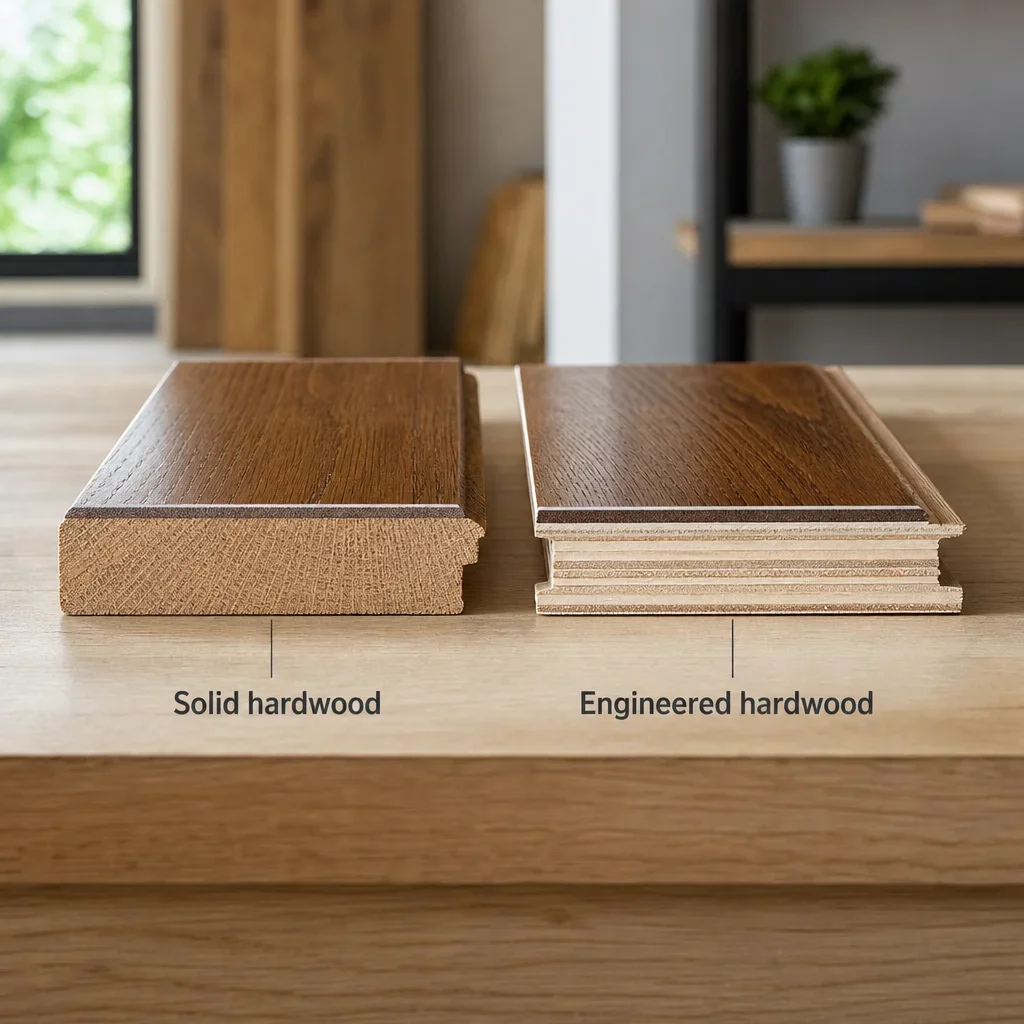
Yes, finish choice often changes because many engineered hardwood floors are sold with the finish already applied at the factory. In those cases, you are choosing a product-plus-finish package, not just a finish in isolation.
Solid hardwood usually gives more future flexibility for sanding and refinishing, but the exact long-term options depend on board thickness, construction, and the floor's condition later on. Engineered hardwood can also be refinishable in some cases, but that depends on the wear layer and product design, so buyers should ask the dealer for that product-specific answer.
If you need a custom stain, a seamless match to existing flooring, or a tailored stair finish, solid hardwood with site finishing may offer more control. If you want faster installation and a known factory finish system, engineered hardwood or prefinished solid can be the easier buying path.
The most durable hardwood floor finish is not automatically the best overall because durability, appearance, yellowing, odour, and repairability do not all rank the same way. Factory UV-cured and aluminum oxide finishes usually rank near the top for wear resistance, but they are not always the easiest to touch up invisibly.
Water-based polyurethane usually ranks high for practical durability, low yellowing, and broad buyer appeal. Oil-based polyurethane ranks high for durability too, but lower for colour stability if the goal is a very pale floor.
Hard wax oil and natural oil generally rank lower on brute-force surface protection than heavy-duty factory coatings, but higher for natural appearance and localized maintenance potential. That is why a family that wants the hardest finish and a designer who wants the easiest invisible repair may end up with different answers.
| Finish type | Wear resistance | Scratch visibility control | Yellowing tendency | Odour concern during application | Spot repair ease | Full refinishing complexity |
|---|---|---|---|---|---|---|
| Aluminum oxide finish | Highest | Depends on sheen | Product-dependent | Factory-applied | Lower to moderate | Moderate to higher |
| UV-cured finish | High to very high | Depends on sheen | Product-dependent | Factory-applied | Lower to moderate | Moderate to higher |
| Water-based polyurethane | High | Good in matte or satin | Lower | Lower | Moderate | Moderate |
| Oil-based polyurethane | High | Good in matte or satin | Higher ambering | Higher | Moderate | Moderate |
| Hard wax oil | Moderate | Good in low sheen | Product-dependent | Product-dependent | Higher | Moderate |
| Natural oil | Moderate to lower | Good in low sheen | Product-dependent | Product-dependent | Higher | Moderate |
| Wax | Lower | Good in soft sheen | Product-dependent | Product-dependent | Moderate | Compatibility-sensitive |
Finish cost is driven more by the system and the labour than by one simple price label. Material choice, sanding and prep, number of coats, stairs, site conditions, occupancy constraints, and whether the floor is factory-finished or site-finished all affect the final cost.
Factory-finished floors usually reduce on-site disruption because the coating work is already done before installation. Site-finished floors may cost more in labour and downtime when custom stain matching, sanding, or multiple finishing steps are needed.
Faster-drying finishes can shorten downtime, but exact timing is product-specific and should come from the manufacturer or installer because temperature, humidity, airflow, and coat build all change the window. That is why we avoid treating generic internet cure times as a promise on a live project.
Up-front cost and lifetime cost are not the same thing. A finish that costs more initially but lasts longer between major restoration work can be the better value, while a cheaper finish that shows wear quickly may cost more in disruption later.
The fastest way to judge finish quality is to ask exactly what system is being used, where it is applied, and how it will be maintained later. “Polyurethane” by itself is not enough detail, because water-based, oil-based, site-applied, and factory-cured systems behave differently.
A good dealer should be able to explain whether the floor is factory-finished or site-finished, what sheen is available, how the finish behaves on your chosen wood species, and what touch-up or recoat options exist later. If they cannot explain recoating compatibility, that is a warning sign.
Samples should be reviewed in both natural and artificial light because sheen and colour shift visibly through the day. This matters even more when comparing hardwood flooring finishes colours on white oak, maple, walnut, or darker stains, since the same finish can read cooler or warmer depending on species.
A clear topcoat is never visually neutral in every case because some finishes stay relatively clear while others warm and amber over time. That means finish choice is part of the colour decision, not just the protection decision.
Light species and pale stains usually look cleaner under water-based polyurethane because it preserves a more natural colour. Darker or more traditional woods such as walnut and cherry often suit the added warmth of oil-based polyurethane.
Hardwood flooring finishes colours can also be customized through stain recipes, wire-brushed or smooth surfaces, and gloss level choices. A satin white oak and a satin walnut do not read the same way because species grain, undertone, and light absorption all affect the result.
One of the newest trends in hardwood floors is a lower-gloss, more natural look rather than a mirror-like surface. Matte and satin finishes, lighter natural tones, and quieter surface textures are common requests because they feel current and are easier to live with day to day.
Routine maintenance is simpler than most buyers think: keep grit off the floor, use felt pads, clean with a damp-not-wet method, and use a cleaner approved for the finish type. Entry mats at doors matter because sand and grit act like abrasives on any coating system.
Film finishes such as polyurethane are often good candidates for screening and recoating when the wear is in the finish layer rather than through to bare wood. Penetrating systems such as oil or hard wax oil may allow localized refresh work, but they usually involve a different maintenance rhythm than a sealed polyurethane floor.
Factory finishes can be very durable, but their repair strategy may differ from a site-finished floor because board replacement, sheen matching, and edge blending are handled differently. That is why buyers should ask about future touch-ups before they buy, not after damage happens.
Recoating an existing floor is also a compatibility issue. Wax residues, unknown old coatings, cleaners that leave buildup, and some specialty finishes can interfere with adhesion, so a professional assessment is smart before any restoration plan is chosen.
The most expensive mistake is choosing gloss from a sample board without thinking about daily scratch visibility. A dramatic finish on a 12-inch sample can become high-maintenance across a full living room.
Another common mistake is chasing the hardest finish and ignoring repairability. The best hardwood flooring finishes are not ranked by hardness alone, because a floor you cannot easily blend or refresh may frustrate you more than one that takes a graceful touch-up.
Buyers also get into trouble when they ignore how species and finish interact. Maple, white oak, red oak, walnut, and cherry do not all take the same stain or topcoat the same way, so the finish should always be reviewed on the actual colour and species combination.
The wrong expectation for wet areas is another problem. Hardwood in a bathroom or a damp basement is still a moisture-risk decision even if the finish itself is excellent. Finish is protection, not immunity.
The last mistake is skipping compatibility checks before recoating an old floor. I tell buyers to compare the future maintenance path, not just the new-floor look, because that is where a lot of long-term cost shows up.
Use this checklist before you buy any real wood floor finish system.
For most homes, water-based polyurethane or a quality factory-applied UV-cured finish is the safest general answer because both balance durability and everyday practicality. If your priority is warmth, oil-based polyurethane may suit you better, and if your priority is natural character and repairability, hard wax oil may be the better fit.
The common categories are water-based polyurethane, oil-based polyurethane, UV-cured finishes, aluminum oxide finishes, natural oil, hard wax oil, wax, and shellac. Most modern residential buyers focus on the first five because they cover the main practical choices.
The standard sheens are matte, satin, semi-gloss, and gloss. Matte and satin are usually the most forgiving in daily use because they show less dust and less fine scratching.
Polyurethane is still the most common broad finish family in current residential flooring, with many prefinished products using factory-cured systems such as UV-cured coatings or aluminum oxide-enhanced finishes.
Satin and matte are the most practical style directions for many current homes because they balance appearance with lower visible wear. Exact popularity varies by dealer mix, product line, and design style.
Satin is the safer choice for most homes because it gives some richness without highlighting every footprint or scratch. Gloss is more reflective and more formal, but it usually shows wear faster.
Factory-applied UV-cured and aluminum oxide finish systems usually lead the durability conversation for wear resistance. The trade-off is that repair strategy can be less simple than with some site-finished systems.
Factory-finished flooring is coated before it arrives at the job site, while site-finished flooring is coated after installation. Factory finishing usually means faster occupancy and consistent coating, while site finishing usually means more custom colour and sheen control.
Surface finishes build a protective film on top of the wood, while penetrating finishes soak into the wood fibres. Surface finishes are usually more practical for busy households, while penetrating finishes usually offer a more natural look and feel.
A durable surface finish in matte or satin is usually the best starting point for pet and kid households. Lower sheen matters because it helps hide the wear that active homes create.
Water-based polyurethane is usually the better choice when you want a clearer finish with less ambering. It is especially useful on lighter woods and pale stains.
Sometimes yes, but engineered products are often sold with a factory-applied finish already selected by the manufacturer. Solid hardwood usually allows more site-finish customization, especially for stain matching and refinishing flexibility.
The safest answer is to check the original product information or have the floor assessed before recoating. Old wax, unknown coatings, and specialty finishes can create adhesion problems if a new product is applied on top without confirming compatibility.
In flooring sales, the rule of 3 usually refers to narrowing decisions by three core filters: look, performance, and budget. It is not a universal technical standard, so if a dealer uses the phrase differently, ask what they mean in that context.
If you are comparing site-finished vs factory-finished hardwood, satin vs gloss, or solid vs engineered wood, seeing full-size samples helps more than reading labels online. CanFloor is a Toronto-based flooring retailer and direct manufacturer at 2687 Steeles Ave. West, North York, Ontario with custom-made colours, surface, and gloss levels, plus supply and installation support including stairs.
Hardwood flooring starts from $3.99 per sq. ft. and the showroom can help you compare finish systems in person against your traffic, pets, style, stairs, and budget. If you are between two looks, bring your cabinet colour, paint swatch, or a photo of the room and compare them under real light before you decide.